 Skip to content
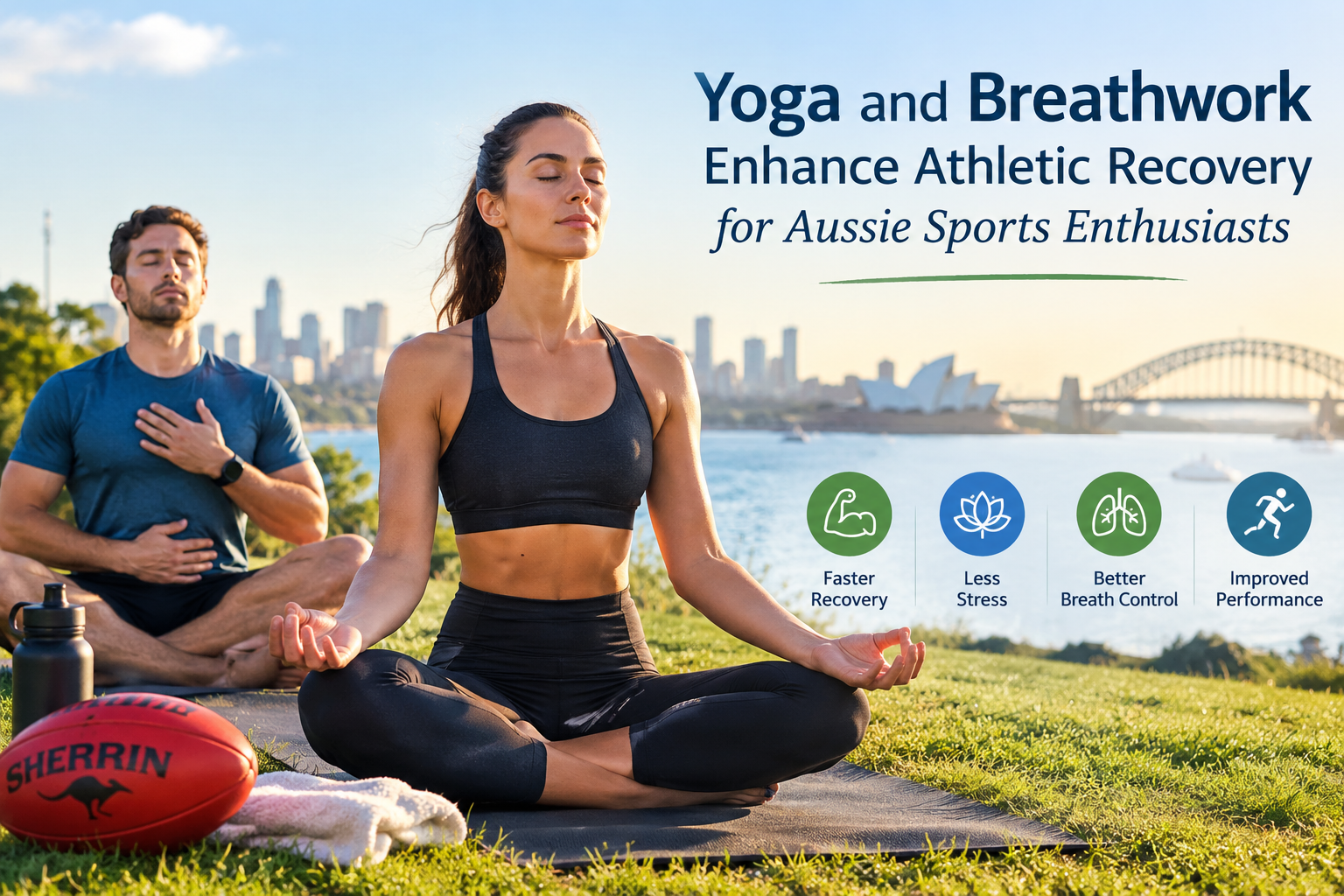
A practical, evidence-informed guide for Australian footy players, runners, surfers, cricketers and gym-goers who want to recover faster, sleep better and train consistently without burning out.
Ask any Australian athlete what separates a good season from a great one, and the answer is rarely a new training program. It is usually recovery. Between the Saturday-morning parkrun, the midweek footy session, the dawn surf and the weekend cricket match, many Aussies train hard and rest badly. Sore hamstrings, tight hips, broken sleep and a racing mind become the accepted cost of being active.
Yoga and breathwork offer a practical, low-cost answer. Both are ancient systems, yet both line up closely with what modern sports science says about recovery: calm the nervous system, restore range of motion, improve sleep and manage stress. Neither replaces good coaching, nutrition or medical care, but both can sit comfortably alongside them.
This guide explains how yoga and breathwork support recovery, which techniques are worth trying first, and how to fit them around a busy Australian training week. It is written for informational purposes and reflects widely taught yoga practice and general exercise physiology, not personal medical advice.
1. Why Recovery Is the Missing Piece in Australian Sport
Sport is central to Australian life, and so is the habit of pushing through. Weekend warriors squeeze sessions around work and family, semi-professional players juggle full-time jobs, and endurance athletes chase the next triathlon or trail race. In that environment, recovery tends to be treated as whatever time is left over.
Training only produces adaptation when the body is given time to rebuild. Tissue repair, hormonal regulation and memory of movement patterns all happen during rest, not during the session itself. When recovery is consistently short-changed, athletes commonly report lingering fatigue, irritability, flat performances and a higher chance of overuse niggles. Building recovery into the week deliberately is one of the most sensible upgrades an athlete can make.
2. What Actually Happens in Your Body After Hard Training
After an intense session, the body sits in a heightened state. Heart rate stays elevated, muscles feel tight, and the sympathetic nervous system, often called the fight-or-flight system, remains active. Delayed onset muscle soreness usually peaks a day or two after unfamiliar or heavy work, and sleep can suffer when the body cannot switch off.
Recovery is partly a physical process and partly a nervous system process. Stretching and mobility address the first. Slow, controlled breathing addresses the second by encouraging the parasympathetic, or rest-and-digest, state in which repair is prioritised. Yoga is one of the few practices that combines both in a single session.
3. How Breathwork Shifts the Body Into Recovery Mode
Breathing is unusual because it runs automatically yet can also be controlled consciously. That makes it a direct handle on the nervous system. Slow nasal breathing, particularly with a longer exhale than inhale, is widely understood to stimulate the vagus nerve and increase heart rate variability, a marker often used to gauge how well the body is adapting to training load.
In plain terms, deliberate breathing tells the body it is safe to stand down. Heart rate settles, muscle tension eases and the mind quietens.
4. Simple Breathing Techniques to Try After Training
You do not need special equipment or a full hour. The techniques below come from traditional pranayama and are commonly adapted for sport. Start with two or three minutes and build gradually.
Diaphragmatic breathing: lie on your back with knees bent, one hand on the belly. Inhale through the nose so the belly rises, then exhale slowly. This is the foundation for every other technique and helps undo the shallow chest breathing common after hard efforts.
Extended-exhale breathing: inhale for a count of four and exhale for a count of six to eight. Lengthening the exhale is one of the most reliable ways to slow the heart rate after a session, and it is easy to do in the car park or the change room.
Alternate nostril breathing (Nadi Shodhana): sit comfortably and gently alternate the breath between nostrils, keeping the pace smooth and quiet. Many people find it steadying before sleep or before a competition.
Ujjayi breath: a soft, slightly audible breath through the nose, often used during flowing yoga. It gives the mind a steady rhythm to follow and helps regulate the pace of movement.
Keep every technique comfortable. If you feel dizzy, lightheaded or anxious, return to normal breathing straight away. Avoid forceful breathing or long breath holds unless you have been taught them by a qualified teacher.
5. Yoga Postures That Support Muscle Recovery
The most useful recovery poses target areas that Australian sports load repeatedly: hips, hamstrings, calves, lower back, shoulders and the upper spine. Hold each gently for one to three minutes, breathing slowly, and never stretch into sharp pain.
Low lunge and pigeon-style hip openers ease the hips after running, cycling and kicking sports. Supported forward folds and reclined hamstring stretches help tight posterior chains. Child’s pose and gentle spinal twists relax the lower back, while thread-the-needle and cow-face arms release shoulders that have been swimming, paddling, bowling or lifting. Legs up the wall is a favourite after long runs because it is passive, calming and easy to do at home.
6. Choosing the Right Style of Yoga for Your Sport
Not all yoga suits every stage of training. Slower, restorative and yin-style classes suit heavy training weeks and the day after competition. Flowing styles suit lighter days when you want mobility, balance and body awareness without heavy load. For athletes who enjoy moving with the breath, Vinyasa Yoga in Rishikesh India is a good example of a style that links sequences of postures to inhalations and exhalations, building strength, flexibility and rhythm together.
7. Deep Rest and Better Sleep With Yoga Nidra
Sleep is arguably the single most powerful recovery tool, yet many athletes with early starts and late games do not get enough of it. Yoga Nidra is a guided practice of deep relaxation, usually done lying down, in which the body rests while the mind stays gently aware. Learning Yoga Nidra in Rishikesh from experienced teachers is one way to understand how this technique is traditionally structured and why it is valued for deep rest.
A ten to twenty minute session can be done on a mat, on the couch or in bed. Many people use it in the evening after training to unwind, or in the afternoon as a reset when a full night’s sleep was not possible. It does not replace sleep, but it can make a short night feel more manageable and help the body wind down before bed.
8. The Mental Side of Recovery and Performance Pressure
Recovery is not only physical. Selection pressure, coach feedback, injuries, tight finances and the pressure to perform can wear athletes down, from junior levels through to community clubs. Persistent stress affects sleep, appetite, motivation and enjoyment of the sport.
Yoga and breathwork give athletes a way to check in with themselves. Slow breathing, mindful movement and quiet reflection support emotional regulation and help separate a bad session from a bad day. Those interested in this angle can explore Yoga for Mental Health in Rishikesh India to see how traditional practice approaches stress, focus and emotional balance. If low mood or anxiety persists, speak with a GP or psychologist. Yoga is a helpful support, not a substitute for professional care.
9. Sport-Specific Ideas for Aussie Athletes
AFL and rugby league players: prioritise hip mobility, hamstring length and shoulder release, and use extended-exhale breathing on the bus or in the change room after matches. Cricketers: focus on the lower back, hips and shoulders, and use slow breathing to stay composed through long days in the field.
Runners and triathletes: legs up the wall, gentle calf and hip stretches and diaphragmatic breathing suit recovery after long efforts. Surfers and swimmers: thoracic spine rotation, shoulder openers and calm nasal breathing help offset repetitive paddling. Gym and CrossFit members: use breath-led cooldowns to bring the heart rate down before leaving the floor.
10. A 20-Minute Post-Training Recovery Routine
Here is a simple sequence to try after a hard session or on a rest day. Minutes 1 to 3: lie on your back and practise diaphragmatic breathing. Minutes 4 to 8: move slowly through low lunge, hamstring stretch and a gentle spinal twist on each side. Minutes 9 to 13: child’s pose and thread-the-needle, breathing evenly. Minutes 14 to 17: legs up the wall with a four-in, six-out breath. Minutes 18 to 20: rest quietly on your back and notice how the body feels.
11. Going Deeper: Learning From the Source
Yoga and pranayama come from India, and Rishikesh, on the banks of the Ganges, is widely regarded as a centre of traditional study. Athletes who fall in love with the practice sometimes choose to immerse themselves for a week or longer. A Yoga Retreat in Rishikesh offers daily practice, guided breathwork, meditation and time away from the pressures of training and competition, which can suit athletes in the off-season or recovering from a long campaign.
12. Safety, Limits and When to See a Professional
Yoga and breathwork are generally low risk when practised gently, but they are not suitable for everyone in every situation. Anyone with heart or blood pressure conditions, respiratory issues such as asthma, pregnancy, recent surgery or an active injury should speak with a doctor or physiotherapist before starting, especially before breath retention practices.
Never use yoga to mask pain or train through injury. Sharp, persistent or worsening pain, numbness, swelling or a sudden loss of performance deserve proper assessment from a qualified health professional. Think of yoga and breathwork as one part of a wider recovery plan that also includes sleep, nutrition, hydration, sensible training load and professional care when needed.
Frequently Asked Questions (FAQs)
Q1. Is yoga good for muscle recovery after sport?
Gentle, slow yoga can ease stiffness, improve mobility and encourage relaxation after training. It works best as part of a broader recovery routine and should never be forced through pain.
Q2. How long should a breathwork session be for athletes?
Two to ten minutes is enough for most people to notice a calming effect. Start short, stay comfortable and build up gradually.
Q3. How often should I do yoga if I train four or five times a week?
Two to three lighter sessions a week is a sensible starting point. Choose restorative or gentle flowing classes on hard training days and save more active styles for lighter ones.
Q4. Can breathwork improve sleep for athletes?
Slow breathing and relaxation practices such as Yoga Nidra help many people unwind before bed. Results differ between individuals, and ongoing sleep problems should be discussed with a doctor.
Q5. Is yoga suitable for contact-sport players with old injuries?
Often yes, with modifications, but it is important to get advice from a physiotherapist or doctor first and to tell your teacher about any injuries.
Q6. Do I need to travel to India to benefit from yoga?
No. Regular practice at home or with a local qualified teacher delivers real benefits. Travelling to study at the source is an option for those who want a deeper experience.
Final Thoughts
Recovery is where training turns into progress, and yoga and breathwork give Australian athletes a simple, accessible way to improve it. A few minutes of slow breathing, some mindful mobility and a little deep rest each week can help you sleep better, move more freely and stay mentally fresh through the season.
Start small, stay consistent and listen to your body. Whether you play footy on Saturday, chase personal bests on the road or spend the summer in the surf, building these practices into your routine is an investment in longer, happier and more durable sport.
