 Skip to content
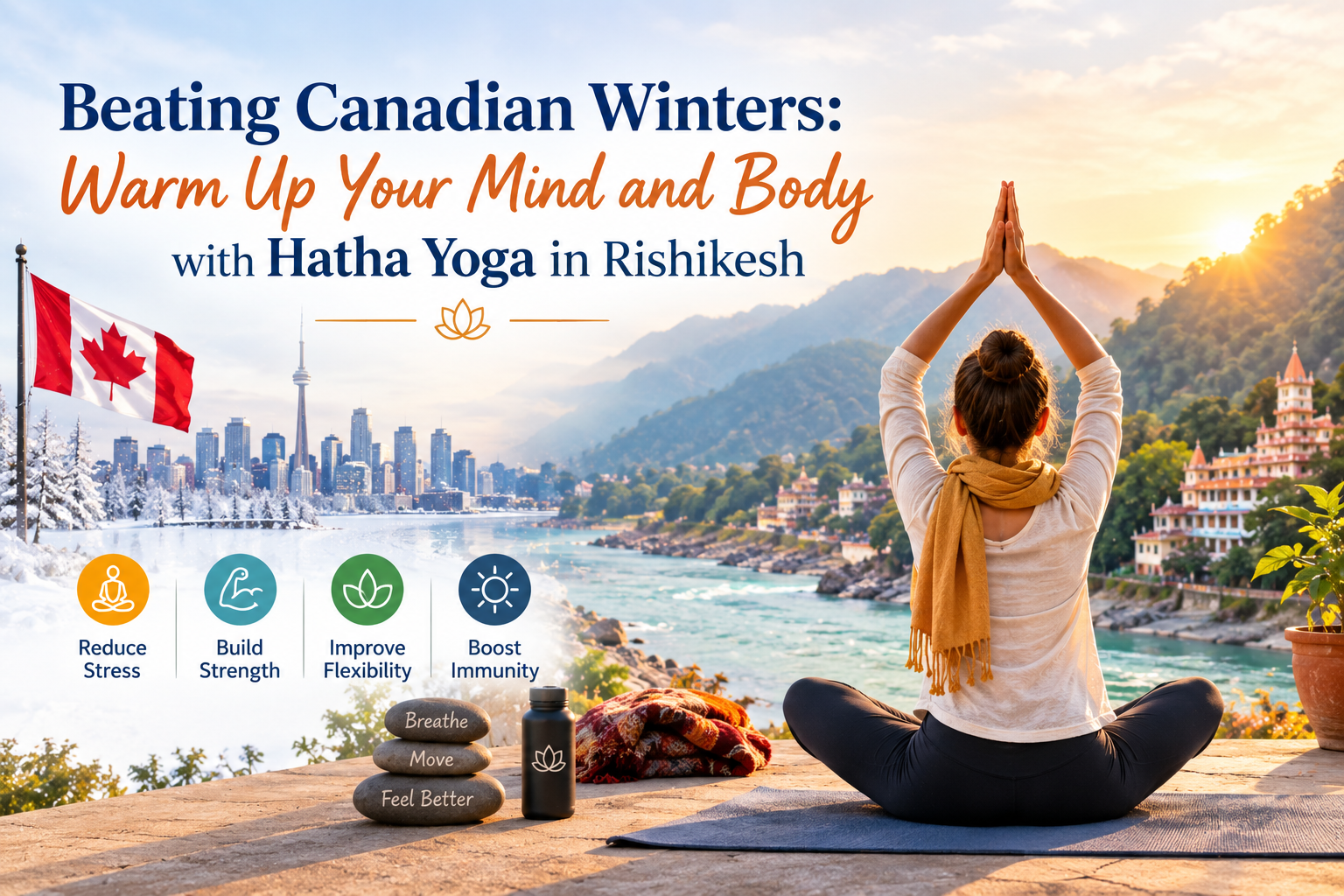
A practical, honest guide for Canadians who are tired of grey skies and frozen sidewalks, and who want to know what a winter of Hatha yoga in the foothills of the Himalayas can actually offer.
By February, many Canadians are worn down by the cold. The days are short, commutes happen in the dark, and time outdoors shrinks to the walk between the car and the door. Muscles stiffen, sleep gets restless and motivation drops. Some people feel it as an ordinary case of the winter blues, while others notice a deeper seasonal dip in energy and mood.
Hatha yoga is a gentle, steady way to respond. It combines physical postures, conscious breathing and stillness, and it is widely taught for good reason: it is accessible, slow-paced and easy to adapt. Practising it in Rishikesh, where the Ganges leaves the mountains and yoga has been taught for generations, adds sunshine, clean mountain air and a calmer daily rhythm. This guide explains how Hatha yoga can support your body and mind through the cold months, what to expect in Rishikesh, and how to plan the trip sensibly. Conditions and rules change, so treat the details as a starting point and confirm them before you travel.
1. Why Canadian Winters Take Such a Toll
Canadian winters affect more than your mood. Cold weather makes us tense our shoulders and hips, and sitting indoors for long stretches tightens the hamstrings, lower back and chest. Less daylight can also disturb sleep and energy levels. Many people experience “winter blues,” which is common and usually mild.
A smaller number experience seasonal affective disorder (SAD), which is a recognised health condition. Yoga is a supportive habit and not a treatment. If low mood is persistent, heavy or affecting daily life, please speak to a doctor or qualified mental health professional, and treat any yoga practice as a complement to that care rather than a replacement.
2. What Hatha Yoga Actually Is
The word Hatha is often explained as the union of opposing energies, and in modern practice it describes a traditional, slower style built on three pillars: asana (physical postures), pranayama (breath regulation) and relaxation or meditation. Classical texts such as the Hatha Yoga Pradipika describe the system, and most schools in India still teach from that foundation.
Compared with faster, flowing styles, a Hatha class holds each pose for several breaths. This gives beginners time to understand alignment and gives experienced students time to refine it. That pacing makes it especially suitable for winter, when the body needs a warm-up and not a rush. If you are curious about more dynamic options later, you can also explore how classes differ in a place that teaches many styles, such as Vinyasa Yoga in Rishikesh India, but Hatha is the most sensible place to begin.
3. How Hatha Yoga May Help Your Body in Winter
Regular gentle practice is associated with better flexibility, balance and posture, and it may ease the stiffness that comes from cold weather and indoor living. Poses that open the chest and hips, such as cobra, bridge and pigeon variations, counter the hunched posture many of us adopt when bundled up.
Warming sequences such as sun salutations (Surya Namaskar) raise body temperature gradually and get the circulation moving. Standing poses build leg strength that helps on icy ground, and gentle twists and forward folds release the back. Keep in mind that everyone’s body is different. Move within your comfort range, tell your teacher about injuries or medical conditions, and never push into pain. Yoga should feel challenging at times but never sharp or unsafe.
4. How Hatha Yoga May Help Your Mind
Slow breathing and focused attention are common tools for calming an overactive mind. Many people report feeling more settled, sleeping better and thinking more clearly after a few weeks of consistent practice, and research generally supports yoga as a helpful practice for stress. The effects vary from person to person.
For Canadians dealing with the long, dark stretch of winter, the structure of a daily practice can also be valuable in its own right. A set time to wake, move, breathe and sit still gives the day a shape when the weather offers none. If you want to understand how yoga is used to support emotional wellbeing more broadly, this overview of yoga for mental health in Rishikesh India gives useful context, though it does not replace professional care.
5. Why Rishikesh Works So Well as a Winter Escape
Rishikesh sits at the foothills of the Himalayas beside the Ganges, surrounded by forested hills. It has been associated with yoga and meditation for a very long time, and today it has a large community of teachers, schools and students from around the world.
The winter months, roughly October to March, are the most comfortable for practice. Daytime temperatures are usually mild and pleasant, with plenty of sunshine, although mornings and evenings can be properly chilly, especially in December and January. That is a very different kind of cold from a Canadian January, but you should still pack layers. The setting supports the practice too. Morning classes with mountain air, river sounds and a short walk to a quiet riverside spot make it easier to slow down than it is at home.
6. What a Typical Day of Hatha Yoga Looks Like
Daily schedules vary between schools, but a typical day includes an early morning session of pranayama and asana, a nourishing vegetarian breakfast, a second class or lecture on yoga philosophy or anatomy, some free time, an afternoon practice and an evening meditation or relaxation session.
The rhythm is what many Canadians find most restorative. Early to bed, early to rise, simple food and no constant screen time is a real contrast to winter routines at home. If you are new to yoga, choose a beginner-friendly class. If you want to go deeper, ask about longer courses. Be honest with teachers about your experience, and be sceptical of any school that promises dramatic results quickly.
7. Pranayama: Warming the Body From the Inside
Pranayama, or breath practice, is a core part of Hatha yoga. Some techniques are traditionally described as warming and energising, others as cooling and calming. Simple options for beginners include slow diaphragmatic breathing, alternate nostril breathing (Nadi Shodhana) and gentle, even inhalations and exhalations.
More forceful techniques, such as rapid breathing or breath retention, should only be learned in person from a qualified teacher. They are not suitable for everyone, particularly people with high blood pressure, heart conditions, respiratory problems or pregnancy. A good teacher will introduce breathwork gradually and explain contraindications. If you feel dizzy or uncomfortable, return to natural breathing and rest.
8. Rest as Part of the Practice: Yoga Nidra
Winter fatigue is not only physical. Many of us are mentally exhausted from long, dark days and busy schedules. Guided deep relaxation is one way yoga addresses this. In the practice known as yoga nidra, you lie comfortably while a teacher guides your attention through the body, breath and sensations.
If you would like to understand how this style of rest is taught, see this explanation of Yoga Nidra in Rishikesh. Many students find it a natural companion to an active Hatha practice, since it balances effort with ease. It is not a substitute for sleep or medical advice, but as a relaxation tool it is gentle and accessible.
9. Choosing a Retreat or Programme That Fits You
Rishikesh offers everything from a single drop-in class to residential courses lasting weeks. If you are unsure, start short. A one-week yoga retreat in Rishikesh is a reasonable way to find out whether the environment, teaching style and daily routine suit you before committing to something longer.
When comparing options, look for these signs of a trustworthy school:
- Clear information about teachers, their training and years of teaching experience
- A transparent daily schedule, price and cancellation policy
- Small class sizes and attention to individual needs
- Honest independent reviews from past students, not only testimonials on the school’s own site
- Willingness to discuss health conditions and modify practice for them
Ask questions before you pay, and trust your instincts if something feels vague or overly promotional.
10. If You Are Thinking About Teacher Training
Some Canadians who arrive for a winter retreat find that they want to teach or to study more seriously. If that is you, take time rather than deciding on the spot. Research the school’s registration, syllabus, lead teachers and the balance between asana, philosophy, anatomy and teaching practice.
Begin by reading about the process, then compare programmes carefully. A structured Yoga Teacher Training in Rishikesh course typically runs for several weeks of full-time study. Be aware that certification standards and the recognition of qualifications differ between countries and organisations, so check what will be accepted where you plan to teach, such as Yoga Alliance or a Canadian studio’s own requirements.
11. Practical Planning for Canadian Travellers
Getting there usually means flying to Delhi and continuing by road or a short domestic flight to Dehradun, the nearest airport, followed by a drive to Rishikesh. Expect a long journey, and consider arriving a day or two early to recover from jet lag. India is roughly ten to eleven hours ahead of Eastern Canada, depending on the time of year.
Check the current visa requirements and passport validity rules for Canadian citizens well in advance, since these change. Consult your doctor or a travel health clinic about recommended vaccinations and food and water precautions, and arrange comprehensive travel insurance that covers medical care. Carry a small first aid kit, drink only bottled or properly filtered water, wear layers for cool mornings and evenings, and dress modestly in temples and around town. Book your first few nights in advance, and keep the rest of your itinerary flexible.
12. Bringing the Warmth Back Home
The real test of any yoga trip is what continues after you fly home. Rather than trying to reproduce a full retreat schedule, keep a small daily routine. Ten to twenty minutes of sun salutations, a few minutes of breathing practice and a short relaxation before bed is enough to begin with.
Find a qualified local teacher or class so you can continue learning safely, and be patient with yourself on the days when the cold and dark win. Consistency matters more than intensity. Small daily practices, done gently, tend to serve people better than dramatic bursts followed by long gaps.
Frequently Asked Questions (FAQs)
Q1. Is Hatha yoga good for beginners?
Yes. Hatha classes are generally slower and hold poses longer, which makes them well suited to beginners. Tell your teacher about any injuries or health conditions so they can offer modifications.
Q2. When is the best time to visit Rishikesh to escape Canadian winter?
October to March is generally the most comfortable period, with pleasant days and cool mornings and evenings. December and January can feel quite chilly at dawn, so pack layers.
Q3. Can yoga cure seasonal depression?
No. Yoga can be a supportive habit that helps some people feel calmer and more energised, but it is not a cure or a replacement for medical care. If your mood is persistently low, please consult a health professional.
Q4. How long should I stay for a meaningful experience?
Even one week can be a helpful introduction. Two to four weeks allows more time to settle into the routine and notice the effects of a regular practice.
Q5. Do I need prior yoga experience to join a retreat?
Not necessarily. Many retreats welcome beginners, but check the level of each programme before booking and ask how classes are adapted for different abilities.
Q6. Is Rishikesh safe for solo travellers from Canada?
Many solo travellers visit Rishikesh comfortably, but normal precautions apply. Book reputable accommodation, avoid travelling alone after dark in remote areas, share your itinerary with someone at home and check current travel advisories from the Government of Canada before you go.
Final Thoughts
A Canadian winter can feel endless, but it does not have to be spent simply enduring it. Hatha yoga offers a gentle, time-tested way to loosen the body, settle the breath and steady the mind, and Rishikesh provides an unusually supportive setting for it, with sunshine, mountain air and a community built around the practice.
Go with realistic expectations, choose your school carefully, protect your health and stay open to a slower pace. Whether you spend a week or a season in the foothills, the habits you build there may well be the ones that help you feel warmer, calmer and more grounded when you return to the snow.
