 Skip to content
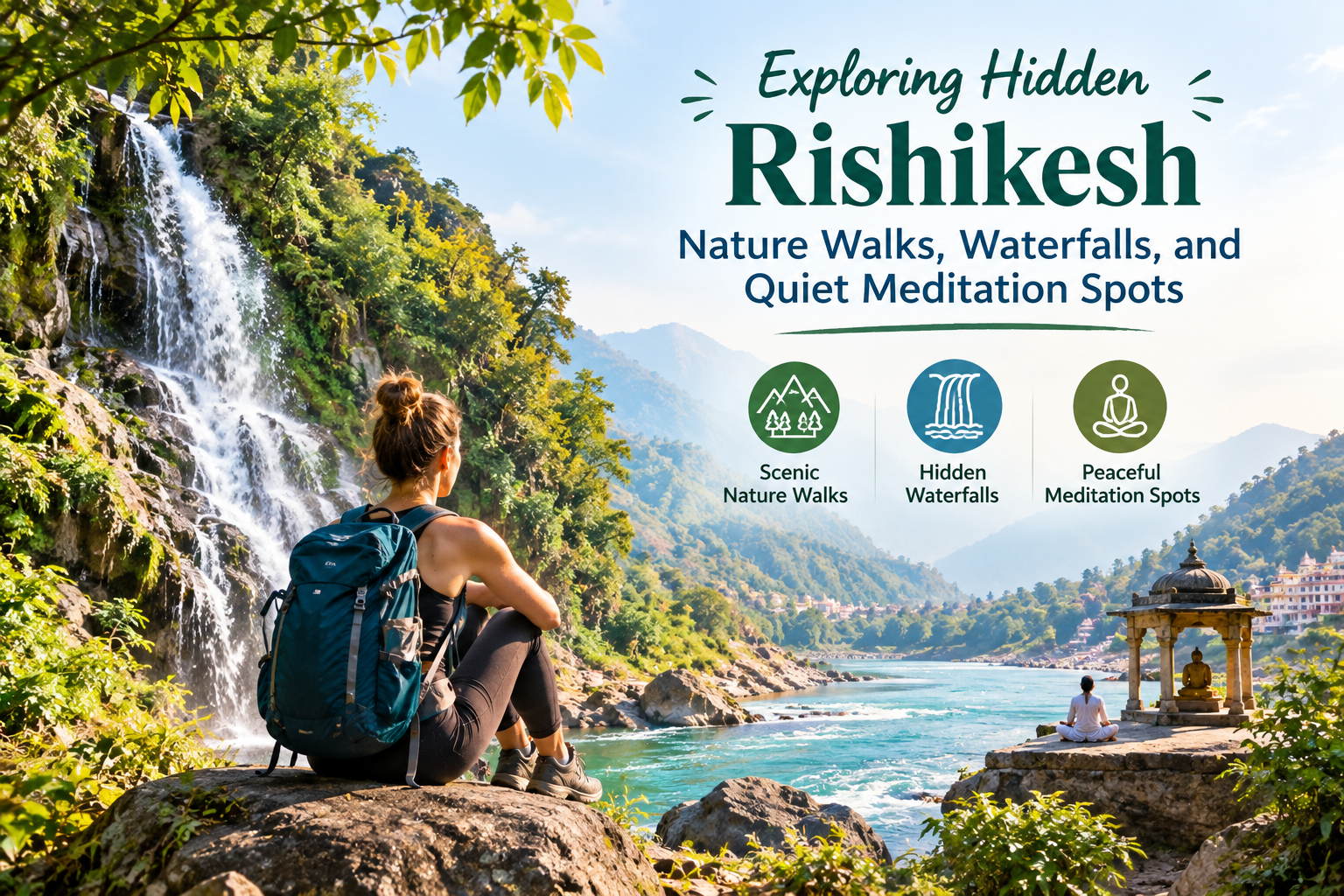
A practical, honest guide to the quieter side of Rishikesh: forest trails, seasonal waterfalls, sunrise viewpoints and peaceful places to sit in stillness, away from the busiest ghats and cafes.
Most travellers know Rishikesh for Laxman Jhula, the evening Ganga aarti and the rows of riverside cafes. These places are worth seeing, but they are also crowded, especially in the peak seasons. Step a little further out, and the town changes character. Forest paths run beside streams, small waterfalls tumble through the foothills of the Himalayas, and quiet corners along the Ganges invite you to simply sit.
This guide covers the quieter side of Rishikesh: walks, waterfalls, viewpoints and meditation spots that reward a slower pace. It is written for curious travellers, yoga students and anyone looking for calm rather than a checklist of attractions. Conditions here change with the season and the weather, so treat the details as a starting point and confirm local rules and trail conditions before you set out.
Rishikesh sits where the Ganges leaves the mountains and enters the plains, surrounded by hills and the forests of Rajaji National Park. That geography explains both its natural beauty and its long reputation as a place for contemplation. Sages and seekers have chosen these forests and riverbanks for reflection for centuries, and many spots still carry that quiet atmosphere today.
1. Why Look Beyond the Famous Ghats
The central stretch of Rishikesh is lively and often noisy, with traffic, shops and groups moving through narrow lanes. There is nothing wrong with that energy, but it is not what most people picture when they think of peaceful nature and meditation. A short walk, a short taxi ride or an early start can put you in a very different setting.
Exploring the lesser-visited places also spreads visitors more evenly and supports the small village businesses along the routes. Wherever you go, arrive with patience, carry your rubbish back out and treat the landscape as a shared and fragile space.
2. The Best Time to Explore Nature Around Rishikesh
Timing shapes the whole experience. The cooler months from October to March are generally the most comfortable for walking, with clear air and pleasant daytime temperatures. Early mornings can be chilly, so carry a light layer. April to June gets hot, so start at dawn and finish before midday.
The monsoon, roughly July to September, brings the waterfalls to life and turns the hills bright green, but it also brings landslides, slippery rocks and sudden rises in stream and river levels. Authorities sometimes restrict access to waterfalls and river beaches during heavy rain. If you visit in the monsoon, check local conditions the same morning, never enter fast-moving water and turn back if the weather changes.
3. Neer Garh Waterfall: A Gentle Forest Walk
Neer Garh is one of the most accessible waterfalls near the town, reached by a short walk from the Neelkanth road not far from Laxman Jhula. The path passes through forest and along a stream, and the route has steps and crossings that most reasonably fit visitors can manage. The falls come in a series of pools and cascades rather than one dramatic drop.
Go early on a weekday if you can. By late morning on weekends, it can fill up with day trippers. The rocks around the pools are slippery, so wear shoes with good grip, keep valuables in a waterproof bag and avoid swimming where the current is strong or the depth is unknown. Entry arrangements and fees can change, so check on arrival.
4. Phool Chatti and Other Quieter Cascades
Further along the Neelkanth road, Phool Chatti and the Patna area offer additional waterfalls that attract fewer people than the busiest spots. The drive winds through forested hills with glimpses of the Ganges below, and the scenery alone is a reason to make the trip.
Because water levels vary enormously between seasons, a waterfall that is impressive in August can be a trickle in April. Ask local guides or your accommodation about current conditions before making the journey. Hire a local driver if you are unsure of the road, and avoid travelling these routes after dark.
5. Kunjapuri Temple for Sunrise Over the Himalayas
Kunjapuri Devi Temple sits on a hilltop above Rishikesh and is a popular sunrise viewpoint. On a clear morning, the first light touches the snow peaks of the Himalayan range, and the valley below settles into a quiet blue haze. Many visitors reach it by taxi before dawn and walk the final steps to the temple.
The viewpoint is well known, so it is not exactly secret, but arriving early and staying after the crowd leaves turns it into a peaceful place to sit. Bring a warm layer, since the hilltop is much colder than the town in winter, and remember that it is an active temple, so dress modestly and remove shoes where asked.
6. Vashishta Cave and the Quiet Upper Ganga
Vashishta Cave lies upstream of Rishikesh along the Badrinath road, on the banks of the Ganges. It is traditionally associated with the sage Vashishta, and meditators have long used its calm interior. Groups sometimes gather here, but at quieter times, the cave offers a still, cool space for silent sitting.
The Ganges in this stretch is wider, the surroundings are less built up and the sound of the river is constant and soothing. Respect the space by keeping voices low and photographing only where it is allowed. The upper river is cold and powerful, so stay out of the water unless you are with qualified guides.
7. Chaurasi Kutia and the Forest Ashram Ruins
Chaurasi Kutia, often called the Beatles Ashram, sits within forested land near the river. The weathered meditation cells and murals have made it a curiosity for many visitors, and the surrounding forest gives it a hushed atmosphere. Access rules, opening hours and ticketing are set by the authorities managing the area and have changed over time, so verify them before you go.
If you visit, treat it as a place of quiet rather than a photo stop. Sit for a few minutes in one of the shaded corners, notice how the sounds of the forest replace traffic noise, and leave the site cleaner than you found it.
8. Peaceful Places to Sit and Meditate
Not every quiet place needs a long journey. Sandy patches along the Ganges beyond the busiest ghats, small riverside temples in the early morning and quiet stretches of the walking paths near Tapovan and Laxman Jhula are all good options before the day gets busy. Dawn is the most reliable time everywhere. The air is cool, the light is soft and most people are still asleep.
Look for a spot with a flat place to sit, some shade and enough distance from foot traffic. Choose somewhere safe with good footing, well away from steep edges and river currents. Keep valuables minimal, and let someone know where you are going if you plan to sit alone in a remote area.
9. A Simple Outdoor Meditation Practice
You do not need experience to make use of these spots. Sit comfortably with your spine upright, close your eyes or soften your gaze and take a few slow breaths. Then listen. Notice the river, the wind, birds, distant temple bells. Let each sound come and go without following it. When your mind wanders, gently return to the breath. Five to fifteen minutes is enough to begin.
For deeper relaxation, guided lying-down practices are traditionally used to release tension. Learning about Yoga Nidra in Rishikesh shows how this style of deep rest is structured, and many people find it a natural companion to a day of walking. If you have a health condition or feel unwell during any practice, stop and seek qualified advice.
10. Why Time in Nature Feels So Restorative
Walking in green, quiet environments is widely associated with lower stress and improved mood, and many people report clearer thinking after time outdoors. Combined with slow breathing or meditation, the effect can feel even stronger. Rishikesh offers an unusually good setting for this, with forest, water and mountain views close together.
Yoga philosophy has long emphasised simplicity, awareness and living in harmony with your surroundings. Reading about the Values of Yoga in Life India gives helpful context for why these quiet walks and pauses can feel meaningful rather than merely relaxing. Nature time is a supportive habit, not a treatment, so anyone struggling with persistent low mood or anxiety should speak with a health professional.
11. Turning a Visit Into a Deeper Practice
Some travellers find that a few days of wandering makes them want to stay longer and learn properly. A structured Yoga Retreat in Rishikesh combines daily yoga, breathwork, meditation and healthy meals with time to explore the surrounding nature, which suits those who prefer guidance over improvising their own itinerary.
Others go further and choose to study formally. People who want to teach usually begin by researching a registered Yoga Teacher Training in Rishikesh India programme and checking the credentials of teachers, the syllabus and the daily schedule before booking. Ask plenty of questions, read independent reviews and choose a school that is transparent about its methods and standards.
12. Practical Tips and Responsible Travel
Carry water, sun protection and a small first aid kit, and wear sturdy shoes rather than flip-flops on forest paths. Keep to marked trails, respect any restrictions inside the forest reserve and avoid feeding monkeys or other wildlife. Mobile signal can be patchy in the hills, so download maps beforehand.
Dress modestly near temples, remove shoes where required, and keep noise low in meditation areas. Take your rubbish with you, avoid plastic where possible and never leave offerings or waste in the river. Rules, entry fees and road conditions change, so confirm current information with your accommodation or local guides before each trip.
Frequently Asked Questions (FAQs)
Q1. What are the best hidden waterfalls near Rishikesh?
Neer Garh, Phool Chatti and the waterfalls around the Patna area along the Neelkanth road are popular choices. Water levels and access change with the season, so check local conditions before you go.
Q2. When is the best time to visit Rishikesh for nature walks?
October to March offers the most comfortable weather for walking. The monsoon makes the waterfalls lively but brings slippery trails, landslide risk and sudden water rises.
Q3. Is it safe to swim in the waterfalls and the Ganges?
Only in shallow, calm areas that are clearly permitted. Currents can be strong and rocks slippery, and access is sometimes restricted during heavy rain. When in doubt, stay out of the water.
Q4. Where can I meditate quietly in Rishikesh?
Riverside spots away from the main ghats, early morning temple courtyards, Vashishta Cave and forest edges are all good options. Dawn is generally the calmest time.
Q5. Do I need a guide for these walks?
Short trails like Neer Garh are manageable independently for most people. A local guide or driver is helpful for longer or more remote routes, and for understanding current conditions.
Q6. Can I combine sightseeing with a yoga programme?
Yes. Many retreats and courses schedule free time and excursions around daily classes, so students can explore nature while keeping a steady practice.
Final Thoughts
Hidden Rishikesh is less about finding a secret place and more about arriving with a quieter attitude. A forest walk at sunrise, a shaded seat beside a waterfall or a few silent minutes on a riverbank can offer a calmer view of the town than any crowded viewpoint.
Plan around the season, respect the land and its people, and keep your itinerary light. With a little patience, the quieter side of Rishikesh tends to reveal itself, and it often stays with travellers long after the trip ends.
