 Skip to content
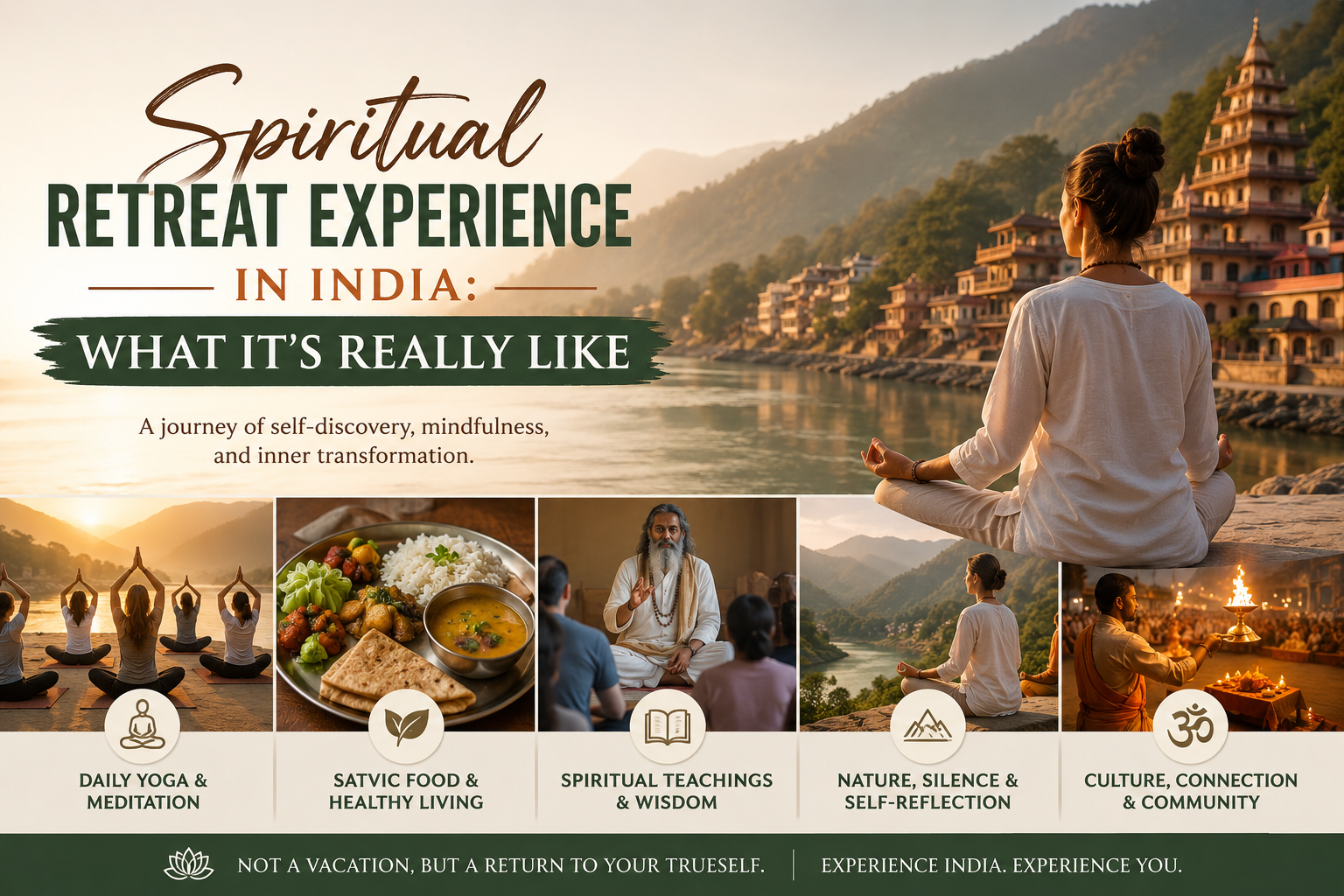
Spiritual Retreat Experience in India: What It’s Really Like
There’s a particular kind of curiosity that brings people to India in search of something spiritual. Sometimes it’s a vague sense of being disconnected from oneself. Sometimes it’s a major life transition — a divorce, a career change, the loss of someone close. And sometimes it’s simply a pull toward something ancient, something that feels truer than the pace of modern life allows.
Whatever brings someone to a Spiritual Retreat Experience in India, the experience itself rarely matches expectations — and that’s usually a good thing. This article explores what a genuine spiritual retreat in India actually involves, what to expect emotionally and practically, and how to find an experience that offers real depth rather than a curated “spiritual tourism” package.
Setting Expectations: It’s Not a Vacation
The first thing to understand is that a spiritual retreat is fundamentally different from a typical vacation, even a relaxing one. Vacations are often about escape — getting away from routine, responsibilities, and discomfort. Spiritual retreats, by contrast, often involve leaning into discomfort: early mornings, periods of silence, simple food, physical challenges, and confronting thoughts and emotions that usually stay buried under the noise of daily life.
This doesn’t mean spiritual retreats are unpleasant. Many people describe them as the most peaceful, restorative experiences of their lives. But the peace tends to come through the process, not by avoiding it. If you arrive expecting only relaxation and find yourself instead facing unexpected emotions during a meditation session, know that this is a normal and often valuable part of the experience.
The Setting Matters More Than You’d Think
India offers spiritual retreat experiences across an enormous range of settings — from Himalayan ashrams to coastal meditation centers to urban spiritual communities. But certain locations carry a particular energy that’s difficult to articulate until you experience it firsthand.
Rishikesh is one such place. Nestled where the Ganges emerges from the Himalayas, it has been a destination for sages, seekers, and spiritual seekers for thousands of years. The sound of the river, the temple bells echoing across the valley at dawn and dusk, and the surrounding forested hills create an atmosphere that many describe as inherently conducive to introspection — even before any formal practice begins.
If you’re curious about why this particular region has held such significance for so long, What Makes Rishikesh the Yoga Capital of the World? provides useful historical and cultural context that helps explain why the setting itself becomes part of the spiritual process.
A Day in the Life: Structure as a Spiritual Tool
One of the more surprising aspects of spiritual retreats for first-timers is how structured the days are. This structure isn’t arbitrary — it’s designed to gradually quiet the mind by removing decision fatigue and creating a container within which deeper practices can unfold.
A typical day might include:
- Pre-dawn wake-up, often around 5:00 or 5:30 AM
- Silent or guided meditation
- Asana practice (movement is often used as preparation for meditation, not as an end in itself)
- Pranayama (breathwork practices)
- A simple vegetarian breakfast, often eaten in silence
- Philosophy or scripture study (this might include teachings from texts like the Bhagavad Gita, Yoga Sutras, or Upanishads)
- Karma yoga — selfless service, which might involve helping prepare meals, cleaning communal spaces, or assisting with ashram tasks
- Rest or personal reflection time
- Evening satsang (spiritual gathering, often including chanting, discussion, or storytelling)
- Final meditation before bed
The repetition isn’t monotonous — it’s intentional. Many practitioners describe how the consistency of the schedule allows them to drop into deeper states of awareness over the course of days, something that’s nearly impossible to achieve in the scattered structure of normal life.
Confronting the Mind: What Happens During Silence
Periods of silence — whether a few hours, a full day, or longer — are common in spiritual retreats, and they tend to be one of the most talked-about aspects of the experience afterward. Without the usual distractions of conversation, phones, or entertainment, the mind often becomes much louder before it becomes quieter.
It’s common to experience waves of restlessness, boredom, emotional release, or even unexpected memories surfacing during silent periods. This is sometimes called “unwinding” — the nervous system releasing stored tension that’s been suppressed for years. Teachers at established ashrams are usually well-equipped to support participants through this process, often through one-on-one check-ins or group discussions where people can share their experiences.
If this process sounds intimidating, it’s worth noting that retreat centers vary significantly in how much silence they incorporate. Some programs include just a single silent day, while others — particularly longer meditation retreats — might involve several days or more. Choosing a program with an intensity level that matches your current capacity is important, and most reputable centers are happy to discuss this beforehand.
The Role of Teachers and Gurus
A significant part of the spiritual retreat experience in India involves direct contact with teachers — sometimes called gurus, though this term carries more weight and tradition than its casual Western usage suggests. A genuine teacher-student relationship in the Indian spiritual tradition is built on trust, humility, and often years of study, though even short-term interactions during a retreat can be profoundly impactful.
Many retreat participants describe specific moments — a comment made during a philosophy discussion, a correction during meditation, or simply an interaction during a meal — that shifted their entire perspective. This is part of why the lineage and background of teachers matters so much when choosing a retreat center. Programs rooted in established traditions, such as those exploring the Nath Sampradaya and the Hatha Yoga Tradition, often offer a depth of teaching that’s difficult to find in more commercialized settings.
Integrating Karma Yoga and Selfless Service
Many spiritual retreats incorporate karma yoga — the practice of selfless action — as a core component. This might involve simple tasks like washing dishes, sweeping floors, or helping in a community kitchen. While this might seem like an odd inclusion in a “spiritual” program, karma yoga is considered one of the most direct paths to dissolving ego and cultivating presence.
Participants often report that these seemingly mundane tasks become some of the most meditative parts of their day — there’s something powerful about doing physical work without the usual mental commentary about whether the task is beneath you, boring, or unfair. For those interested in the deeper philosophy behind this practice, Jnana & Karma Yoga in Rishikesh explores how these two paths — the path of knowledge and the path of action — complement each other within the broader yogic tradition.
Visiting Sacred Sites
Beyond the daily retreat schedule, many programs include visits to nearby temples, ashrams, and sacred sites. These excursions aren’t just sightseeing — they’re often woven into the spiritual narrative of the retreat, offering context for the philosophy being studied and a chance to witness living traditions in practice.
For those curious about what such excursions typically involve, Spiritual Places to Visit in Rishikesh During Yoga TTC outlines some of the most meaningful locations, from ancient temples to meditation caves used by sages for centuries.
Frequently Asked Questions
Do I need to be religious to benefit from a spiritual retreat in India?
Not at all. While many retreats draw from Hindu and yogic philosophical traditions, the practices themselves — meditation, breathwork, self-reflection — are universal and don’t require any particular religious belief. Many participants come from entirely secular backgrounds and find deep value in the experience regardless.
How long should a first spiritual retreat be?
For first-timers, a retreat of 7 to 10 days strikes a good balance — long enough to move past the initial adjustment period and experience some depth, but not so long that it feels overwhelming. Some people choose to start shorter and build up to longer retreats over time.
What if I struggle with the early mornings or strict schedule?
This is common, especially in the first few days. Most retreat centers understand this and won’t penalize participants for needing extra rest, though they do encourage gentle persistence, as the schedule itself is often part of what creates the shift people are seeking.
Is it safe to travel alone for a spiritual retreat in India?
Many people, including solo female travelers, attend spiritual retreats in India safely every year, particularly at established centers with good reputations and structured programs. Researching the center thoroughly, reading reviews, and choosing locations with consistent foreign visitor traffic — like Rishikesh — can add an extra layer of comfort for solo travelers.
Can a spiritual retreat be combined with yoga teacher training?
Yes, and this is actually quite common. Many teacher training programs are structured as spiritual retreats with an educational component layered on top. If you’re considering this path, Things to Know Before Doing Yoga Teacher Training in India offers practical guidance on what to expect when combining deep personal practice with formal certification.
How do I know if a retreat center is legitimate versus just a commercial operation?
Look for centers with established histories, qualified and experienced teachers, transparent information about their philosophy and daily schedule, and genuine community ties — rather than those that seem designed primarily around Instagram-worthy aesthetics. A center’s connection to authentic lineages and traditions, such as those rooted in the teachings explored in Preserving the Soul of Classical Yoga, is often a good indicator of depth over decoration.
Final Thoughts
A spiritual retreat experience in India isn’t something that can be fully described in advance — much of its value comes from the direct, lived experience rather than any explanation of what to expect. What can be said with confidence is that the combination of ancient setting, structured practice, qualified teachers, and intentional simplicity creates conditions for genuine inner shifts that are difficult to access elsewhere.
For those ready to take this step, exploring a Yoga Retreat in Rishikesh offers a well-established starting point — a place where centuries of spiritual tradition continue to welcome those seeking something deeper than what daily life typically offers.
