 Skip to content
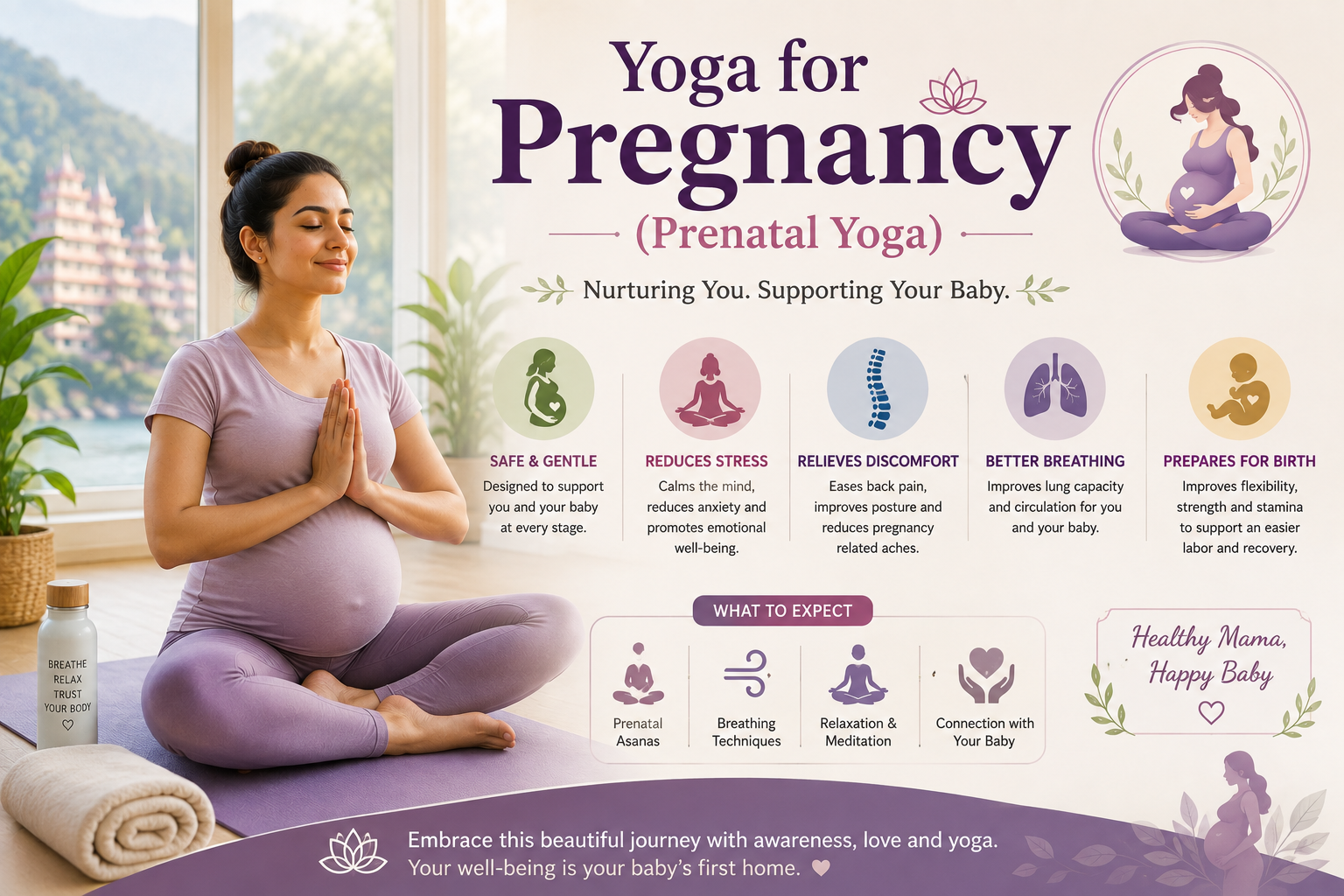
An informational guide to prenatal yoga — covering what a modified pregnancy practice can genuinely offer the body and mind, where popular claims about guaranteed easier labour or a “perfect” pregnancy go further than the evidence supports, and why medical guidance should always sit alongside any prenatal practice.
Prenatal yoga is one of the most widely recommended pregnancy wellness practices, and it is often marketed with sweeping promises: that a specific sequence will guarantee an easier labour, eliminate back pain entirely, or replace medical monitoring altogether. The more accurate picture is more modest and, for most healthy pregnancies cleared by a doctor, genuinely useful: gentle, well-adapted movement can support mobility, breath awareness, and calm during a time of significant physical change, without controlling how labour ultimately unfolds. What prenatal yoga can realistically offer is a supportive, low-impact way to stay active, ease common discomforts, and build breathing tools that may help during labour.
This guide walks through what a prenatal practice generally involves, where it is genuinely supported by current understanding of pregnancy and movement, and where popular claims outpace the evidence. Prenatal yoga should always be approached as a complement to, not a replacement for, regular prenatal medical care, and anyone considering it should have their doctor’s or midwife’s clearance first, particularly given how much individual pregnancies can vary.
1. What Prenatal Yoga Actually Involves
Prenatal yoga typically adapts familiar postures, breathing techniques, and relaxation practices to accommodate a changing body, shifting balance, and the demands of pregnancy. Classes usually move at a gentler pace than a general studio class, prioritise stability over depth or intensity, and place a strong emphasis on breath awareness and relaxation. Prenatal yoga is not simply a regular class practised more cautiously; it is a distinct approach built specifically around the needs of a pregnant body.
2. Why Some Claims About Prenatal Yoga Go Too Far
It is common to see wellness content suggesting that a specific prenatal sequence guarantees a shorter labour, prevents complications, or ensures a pain-free birth. These claims are not well supported, since labour and delivery outcomes are shaped by many factors, including individual anatomy, medical circumstances, and events no amount of preparation can fully control. The more accurate picture is that a consistent, well-adapted practice can support comfort, mobility, and a sense of preparedness during pregnancy and may offer helpful breathing and relaxation tools for labour, without guaranteeing a specific delivery experience.
3. What the General Evidence Suggests
Research on gentle prenatal movement, including yoga, shows reasonably consistent support for short-term improvements in comfort, sleep quality, and perceived stress during pregnancy, along with modest evidence supporting continued physical activity as generally beneficial for uncomplicated pregnancies. Evidence that yoga specifically shortens labour or prevents complications is considerably thinner, and much of what is presented as proof of dramatic birth outcomes is anecdotal. The fair summary: prenatal yoga offers genuine support for comfort and wellbeing during pregnancy, while claims about guaranteed labour outcomes outpace what has been demonstrated.
4. Considerations Across the Trimesters
A prenatal practice generally needs to adapt as pregnancy progresses, since the body’s needs, balance, and energy shift considerably from the first trimester through the third. Early pregnancy often calls for a gentler approach given fluctuating energy, the second trimester frequently allows a more active practice as energy stabilises, and the third trimester typically shifts toward supported, stability-focused postures as balance changes. Because every pregnancy is different, these general patterns should always be discussed with a doctor or a qualified prenatal instructor rather than followed as a fixed rule.
5. Postures and Movements Generally Considered Supportive
Many prenatal classes emphasise postures that support hip mobility, gentle spinal movement, and pelvic floor awareness, often practised with props such as blocks, bolsters, or a wall for added stability. Supported seated postures, gentle standing stretches, and modified cat-and-cow style spinal movement tend to be well tolerated across much of pregnancy when taught by a qualified instructor. The specific postures appropriate for any individual should always be confirmed with a doctor or prenatal-trained teacher, since what suits one pregnancy may not suit another.
6. Movements and Positions Generally Avoided During Pregnancy
Certain categories of movement are widely advised against during pregnancy, including deep twists that compress the abdomen, prolonged lying flat on the back after the first trimester, deep backbends, intense core work, and any practice involving significant heat, such as hot yoga. These general precautions exist because they may affect blood flow, balance, or abdominal pressure in ways less predictable during pregnancy, though specific guidance for any individual should always come from a doctor or midwife rather than general content alone.
7. Breath Work During Pregnancy
Breath awareness is one of the more consistently emphasised elements of prenatal yoga, since slow, steady breathing can support a sense of calm and may offer a useful tool during the more intense moments of labour. Many prenatal classes introduce simple, steady breathing patterns well before the third trimester, allowing time to become familiar with them rather than learning a new skill under the stress of labour itself. Any breathing technique should be introduced gently and confirmed as appropriate by a healthcare provider, particularly for anyone managing a pregnancy-related respiratory or cardiovascular concern.
8. Pelvic Floor and Core Awareness
Pregnancy places significant, changing demands on the pelvic floor and core, and many prenatal programmes include gentle awareness work in this area to support comfort during pregnancy and recovery afterward. This is generally taught as gentle engagement and awareness rather than intense strengthening work, since the priorities during pregnancy differ from general core training. A qualified prenatal instructor or pelvic health physiotherapist is the most appropriate source of individualised guidance here.
9. Managing Common Pregnancy Discomforts
Many pregnant practitioners turn to gentle movement to help manage common discomforts such as lower back tension, hip tightness, and digestive changes. For digestive concerns specifically, an article such as Yoga for Constipation outlines gentle approaches some people find helpful, though during pregnancy any such practice should be adapted with a prenatal-qualified teacher and confirmed as appropriate by a doctor.
10. Supporting Mental and Emotional Wellbeing
Pregnancy can bring significant emotional shifts alongside the physical ones, and many people find that a gentle, consistent practice supports a greater sense of calm. Broader principles connecting movement with psychological wellbeing, of the kind discussed in Yoga for Mental Health in Rishikesh India, can offer a useful general framework, though anyone experiencing persistent low mood, anxiety, or significant emotional distress during pregnancy should speak with a doctor or mental health professional rather than relying on movement alone.
11. Restorative Practice and Rest
Rest and restorative practice deserve as much attention as active movement during pregnancy, particularly as the body carries increasing physical demands. Guided relaxation approaches, such as those explored in Yoga Nidra in Rishikesh, illustrate how structured rest can be woven into a broader practice, offering a restful counterbalance to more active prenatal sessions, particularly valuable in the more demanding final weeks of pregnancy.
12. Styles That Tend to Suit a Pregnancy Practice
Not every yoga style adapts equally well to pregnancy. Prop-supported, alignment-focused approaches, such as the principles found in Iyengar Yoga in Rishikesh India, often suit pregnancy well because of their emphasis on stability and support. A gently modified flow, drawing on the connected, breath-led approach of Vinyasa Yoga in Rishikesh India, can also work for some practitioners in earlier pregnancy when significantly slowed and adapted, though intensity should always be reduced and confirmed as appropriate with a doctor.
13. Preparing for the Postpartum Period
A thoughtful prenatal practice often looks ahead to recovery after birth, since the transition back into movement postpartum benefits from realistic expectations set during pregnancy itself. A guide such as Postpartum Yoga Benefits outlines how a gentle return to practice is generally approached after birth, offering a useful reference for anyone wanting to understand the fuller arc from pregnancy through recovery.
14. Where Prenatal Yoga Fits Within Broader Women’s Health
Prenatal yoga sits within a much wider picture of how movement can support women’s health across different life stages. Resources such as Yoga for Women’s Health offer helpful context on how a practice might adapt across menstruation, pregnancy, and beyond, while a later-stage guide like Yoga for Menopause shows how the same underlying principles of gentle, adaptive movement continue to apply well beyond the childbearing years.
15. Finding a Qualified Prenatal Instructor
Because pregnancy involves genuine physiological considerations, finding a teacher with specific prenatal training matters more than it does for a general class. Understanding how instructors are typically trained and credentialed, as outlined in a Yoga Instructor Certification Guide in India or a structured How to Get Yoga Certified in Rishikesh India roadmap, can help expecting parents understand what training to look for before joining a prenatal class.
16. Learning to Teach Prenatal Yoga
For existing teachers or graduates considering a specialization, prenatal yoga generally requires dedicated training beyond a foundational qualification. A properly structured Yoga Teacher Training in Rishikesh programme at a recognised Best Yoga School in Rishikesh can provide the anatomical grounding needed before pursuing prenatal-specific study, and a well-regarded Yoga TTC India programme often serves as the foundation many prenatal specialists build on.
17. Values, Mindset, and Deepening the Practice
Approaching pregnancy yoga with patience and realistic expectations tends to matter more than following any particular sequence precisely. Broader reflections on the Values of Yoga in Life India can offer a useful frame for approaching a pregnancy practice with acceptance rather than pressure, while those wanting a more immersive experience, once cleared by their doctor, might explore a gentle, well-supervised Yoga Retreat in Rishikesh, alongside a dedicated guide to Yoga During Pregnancy for a deeper, trimester-specific breakdown.
Safety Notes and When to See a Doctor
Prenatal yoga can genuinely support comfort and wellbeing during pregnancy, but it should never replace regular prenatal medical care or a doctor’s individualised guidance.
- Anyone considering prenatal yoga should obtain clearance from their doctor or midwife first, particularly with a high-risk pregnancy or pre-existing condition.
- Classes should always be led by an instructor with specific prenatal training, not simply a general yoga teacher.
- Dizziness, unusual shortness of breath, vaginal bleeding, contractions, or reduced fetal movement are signals to stop immediately and seek medical attention.
- Postures involving lying flat on the back, deep twisting, or significant heat should be avoided unless specifically confirmed as safe by a healthcare provider.
- Every pregnancy is different, and general guidance should always be adapted to individual medical advice rather than followed as a universal rule.
Frequently Asked Questions (FAQs)
Q1. Is it safe to start yoga for the first time during pregnancy?
Many people do begin gentle prenatal yoga during pregnancy, though starting any new activity should first be confirmed with a doctor, and a prenatal-specific class is generally the safest starting point for a beginner.
Q2. Which trimester is generally considered best to begin prenatal yoga?
There is no required starting point, though many find the second trimester, once early symptoms often ease, a comfortable time to begin, provided their doctor has confirmed it is appropriate for their specific pregnancy.
Q3. Can prenatal yoga guarantee an easier or shorter labour?
No single practice can guarantee a specific labour outcome, since delivery is shaped by many individual medical factors. Prenatal yoga may support comfort and preparedness, but it does not control how labour unfolds.
Q4. Are there poses that should always be avoided during pregnancy?
Certain categories, such as deep twists, prolonged time flat on the back after early pregnancy, and intense backbends, are generally advised against, though specific guidance should come from a doctor or qualified prenatal instructor.
Q5. Is hot yoga ever appropriate during pregnancy?
Hot yoga is generally advised against during pregnancy due to concerns about overheating, and most prenatal-qualified instructors do not recommend it without explicit medical guidance.
Q6. How is prenatal yoga different from a regular yoga class?
Prenatal yoga is specifically adapted for a changing body, with modified postures, a gentler pace, and a strong emphasis on breath and relaxation, rather than simply a general class practised more cautiously.
Q7. What is the most realistic way to think about prenatal yoga’s benefits?
The most accurate framing is that prenatal yoga offers genuine support for comfort, mobility, and emotional wellbeing during pregnancy, alongside breathing tools that may help during labour, rather than a guarantee of a specific birth experience.
Final Thoughts
Prenatal yoga is not a guarantee of a perfect pregnancy or labour so much as a gentle, supportive companion through a period of significant physical and emotional change, and the most honest, evidence-aligned view of its role is a modest one: easing common discomforts, supporting breath and calm, and offering a consistent, adaptable practice throughout pregnancy. This is a more realistic picture than some wellness marketing suggests, but it is also a far safer one.
Approached with a doctor’s clearance, a qualified prenatal instructor, and realistic expectations about what movement can and cannot control, prenatal yoga can offer many expecting parents a genuinely supportive way to stay comfortable, connected, and calm throughout pregnancy.
