 Skip to content
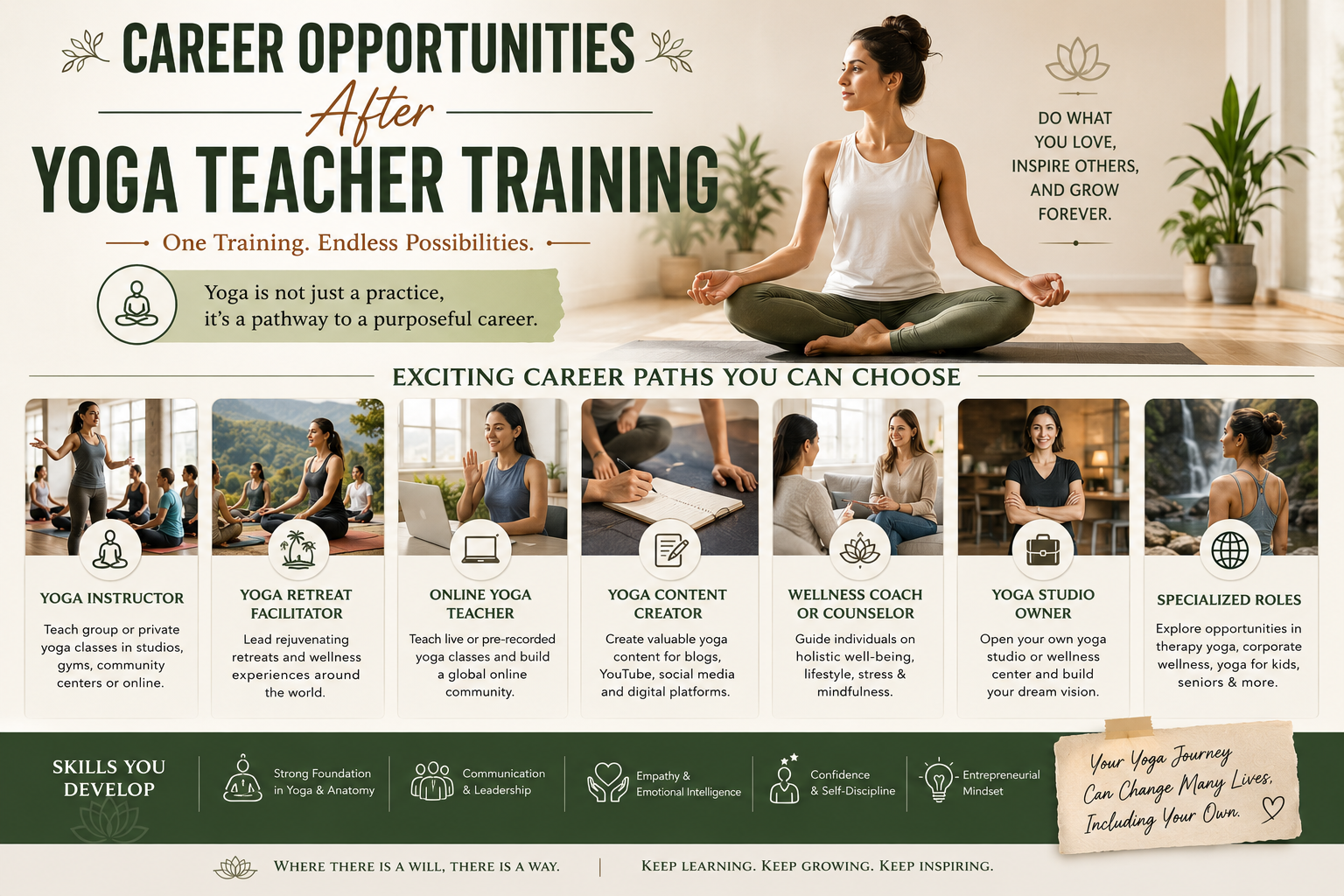
When most people think about what comes after yoga teacher training, the image that comes to mind is fairly narrow: teaching group classes at a local studio. And while that’s certainly one path, it’s only a small slice of what’s actually possible once you hold a yoga teaching certification. The wellness industry has expanded dramatically in recent years, and yoga certification — particularly when combined with additional skills or specializations — opens doors to career paths that many new graduates never considered.
This article explores the range of career opportunities available after completing Yoga Teacher Training in Rishikesh India, from traditional teaching roles to less obvious paths that combine yoga with other fields entirely.
Studio and Gym-Based Teaching
This is the most traditional path, and for good reason — it remains one of the most accessible ways to start building teaching experience and income. Studios and gyms regularly hire teachers for group classes, and many offer flexible scheduling that works well alongside other commitments.
The reality of this path, especially early on, is that most new teachers don’t start with a packed schedule of premium classes. Instead, building a sustainable studio teaching career typically involves accumulating multiple classes across different studios, building a reputation gradually, and often substitute teaching extensively before securing regular slots. It’s a path that rewards persistence and consistency more than immediate success.
Private and Semi-Private Instruction
Private yoga instruction — whether one-on-one or with small groups — represents a significant income opportunity for many teachers, often paying considerably more per session than group classes. Clients seeking private instruction often have specific goals: recovering from injury, preparing for a particular event, working around physical limitations, or simply preferring personalized attention over group settings.
Building a private client base typically takes time and often benefits from some specialization — clients are often searching for teachers who address their particular needs, whether that’s prenatal yoga, yoga for athletes, or therapeutic applications for specific conditions. Teachers who’ve pursued additional training in styles like Iyengar Yoga in Rishikesh India, known for its precision and therapeutic applications using props, often find this background particularly valuable for private clients with specific physical needs.
Online Teaching and Content Creation
The shift toward online yoga instruction, accelerated significantly in recent years, has created an entirely new category of career opportunity. Teaching online removes geographic limitations — your potential audience isn’t confined to your local area, and you can build a following that spans countries and time zones.
Online teaching can take many forms: live virtual classes, pre-recorded course content, YouTube channels, or memberships offering ongoing content. While building an online presence takes time and consistency, it offers something traditional teaching doesn’t: the potential for passive income through recorded content, and the ability to reach niche audiences that might not have access to specialized teaching locally.
For teachers considering this path, understanding both the opportunities and challenges of building an online teaching practice is essential before diving in — it requires different skills than in-person teaching, including comfort with technology, content creation, and often a degree of marketing and self-promotion that doesn’t come naturally to everyone.
Corporate Wellness Programs
Many companies now offer wellness programs for employees, including on-site or virtual yoga classes, as part of broader efforts to address workplace stress and improve employee wellbeing. Teachers who can adapt their teaching to office environments — often shorter sessions, accessible to people with no prior yoga experience, and sometimes done in work clothes — can find steady, often well-compensated work through corporate wellness contracts.
This path often requires some adaptability beyond standard studio teaching: shorter class formats, simplified sequences accessible to complete beginners, and sometimes the ability to address very specific concerns like desk-related tension or stress management during high-pressure periods.
Yoga Therapy and Specialized Populations
For teachers interested in the therapeutic applications of yoga, pursuing additional training to work with specific populations — those recovering from injury, managing chronic conditions, navigating mental health challenges, or working with older adults — opens a path that combines teaching with a more healthcare-adjacent role.
This often involves additional certification beyond the foundational 200-hour level, and frequently overlaps with related fields like physical therapy, occupational therapy, or counseling. Teachers drawn to this path often find that exploring the connections between yoga and mental wellbeing — as covered in Yoga for Mental Health in Rishikesh India — provides a meaningful foundation for this kind of specialized work.
Retreat Leadership and Hosting
Once teachers have developed both teaching experience and a following (whether locally or online), leading retreats becomes a viable path — and one that many teachers find deeply rewarding, combining teaching with travel and the creation of immersive experiences for participants.
Retreat leadership requires more than just teaching skill — it involves logistics, hospitality considerations, marketing, and often partnerships with venues or local guides, particularly for retreats held abroad. Many teachers who eventually lead retreats first attended retreats themselves as participants, gaining firsthand understanding of what makes for a meaningful experience before attempting to create one.
Studio Ownership
For teachers with an entrepreneurial inclination, opening a yoga studio represents a significant but potentially rewarding career path. This is, of course, a substantial undertaking — involving business planning, location selection, hiring other teachers, marketing, and the countless operational details of running a small business.
Studio ownership isn’t typically a path for brand-new teachers; most owners have several years of teaching experience and often some business background before taking this step. However, for those with a long-term vision, it represents one of the more substantial career trajectories available within the yoga industry.
Combining Yoga with Ayurveda and Holistic Health
Many teachers find that combining yoga instruction with complementary modalities — particularly Ayurveda — creates a more comprehensive offering for clients and opens additional income streams. Pursuing additional training, such as an Ayurvedic Massage Course in Rishikesh India, allows teachers to offer bodywork alongside yoga instruction, appealing to clients seeking more holistic wellness support.
This combination is particularly common among teachers who’ve trained in India, where the integration of yoga and Ayurveda is foundational rather than an afterthought, giving graduates a more naturally integrated skill set from the start.
Writing, Speaking, and Education
Some teachers find their path leads less toward direct instruction and more toward education and communication — writing about yoga philosophy, history, and practice; speaking at workshops or conferences; or even contributing to teacher training programs themselves as assistant trainers or guest lecturers on specific topics.
This path often appeals to teachers with a particular interest in the philosophical and historical dimensions of yoga — those drawn to topics like Vashistha Rishi and Yoga Vashistha Teachings or the lineages and traditions that inform contemporary practice. While this path rarely provides a complete income on its own initially, it often complements other teaching work and can grow into a more significant focus over time.
Building a Sustainable Income: Diversification Is Key
One of the most important realities for new teachers to understand is that very few yoga teachers rely on a single income source, especially in the early years. Most sustainable yoga careers involve a combination of several of the paths described above — perhaps a few studio classes, some private clients, an online presence, and occasional workshops or retreats.
This diversification isn’t a sign of struggling to “make it” as a teacher — it’s simply how the industry tends to work, and many experienced teachers maintain diverse income streams even after years of teaching, both for financial stability and because variety keeps teaching engaging.
Frequently Asked Questions
Can I make a full-time living as a yoga teacher?
Yes, many teachers do, though it often takes time to build to that point and frequently involves the kind of diversification described above. Location, specialization, and entrepreneurial effort all play significant roles in determining how quickly and sustainably this is achievable.
Do I need additional certifications beyond the 200-hour level to access these career paths?
Not necessarily for all paths — studio teaching, for example, is often accessible with just a 200-hour certification. However, paths like yoga therapy, specialized populations, or certain corporate wellness contracts often benefit from or require additional training, such as a 300 Hours YTTC Rishikesh India or specialized workshops in relevant areas.
How long does it typically take to build a sustainable teaching career?
This varies enormously, but most teachers report that the first one to two years involve significant building — accumulating experience, developing a teaching style, and gradually building both reputation and income streams. Patience and consistency tend to matter more than any single strategic decision.
Is online teaching a realistic full-time career on its own?
For some teachers, yes — particularly those who build a strong following and diversify their online offerings (live classes, recorded content, memberships). However, building to this point typically takes considerable time and consistent effort, and most teachers find it works best as part of a broader portfolio rather than a sole income source from the start.
What’s the most in-demand specialization right now?
This shifts over time and varies by location, but areas connected to mental health and stress management have seen significant growth in demand, reflecting broader societal interest in these topics. Teachers exploring this direction often find resources on the connection between yoga and psychological wellbeing particularly relevant to current market needs.
Should I specialize immediately after certification, or wait?
Most experienced teachers recommend gaining some general teaching experience first before specializing. This allows you to discover what you’re naturally drawn to and where your teaching resonates most, rather than committing to a specialization before you’ve had enough experience to know if it’s the right fit.
Final Thoughts
The career landscape for certified yoga teachers is far broader than many people realize when they begin training. While traditional studio teaching remains a valuable starting point for building experience, the paths available afterward — online teaching, corporate wellness, retreat leadership, specialized populations, and combinations with complementary fields like Ayurveda — mean that a yoga teaching certification can be the foundation for a career that looks quite different depending on your interests, skills, and the direction you choose to take it.
