 Skip to content
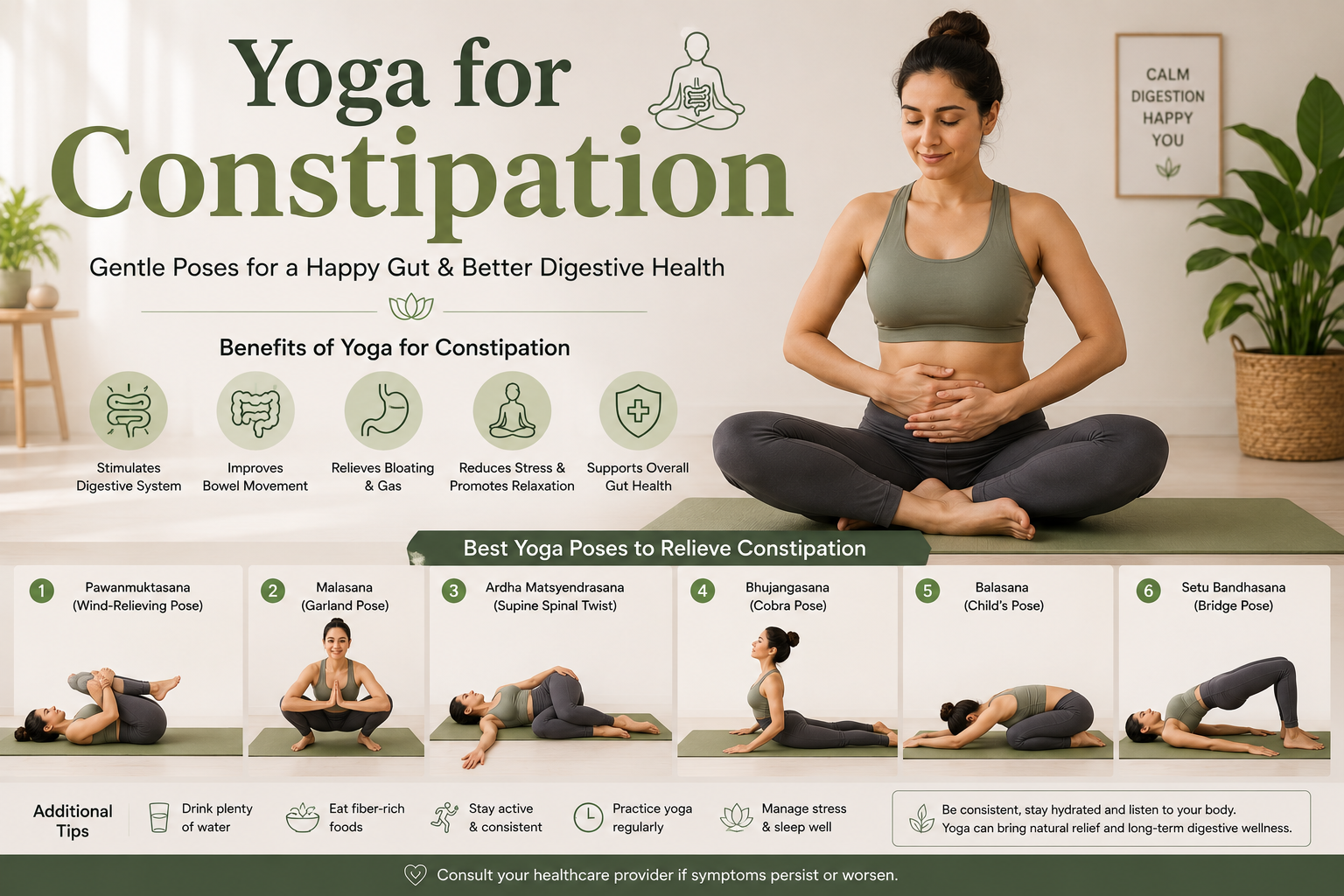
An informational guide to how yoga supports healthy digestion and bowel regularity — covering the gut-nervous system connection, useful postures and breathing techniques, and when constipation needs medical attention rather than a mat.
Constipation is one of the most common digestive complaints, and while diet, hydration, and physical activity are usually the first factors considered, the nervous system’s influence on gut motility is often underappreciated. The digestive tract is deeply connected to the autonomic nervous system, and chronic stress, sedentary routines, and shallow breathing patterns can all slow the gut down in ways that a purely dietary approach may not fully address. This is precisely where yoga’s core strengths — movement, breath regulation, and nervous system balance — become relevant to a symptom that might not, at first glance, seem like an obvious fit for a yoga practice.
This guide walks through how yoga can support healthy, regular digestion, which postures and breathing techniques are most commonly used, and where the limits of a self-directed practice lie. Yoga is not a substitute for medical evaluation of persistent or severe constipation, but it is one of the more thoroughly researched and long-practised complementary approaches available for supporting gut health as part of a broader lifestyle approach.
1. The Gut-Nervous System Connection Behind Constipation
Digestion is regulated largely by the autonomic nervous system, and specifically by the balance between its sympathetic (stress-response) and parasympathetic (rest-and-digest) branches. When the sympathetic branch dominates, as it does under chronic stress, blood flow and motility in the digestive tract can decrease, since the body is prioritising other functions. Yoga’s core mechanism, activating the parasympathetic nervous system through breath and movement, works directly on this shared underlying factor, which is why a practice built around slow breathing and gentle movement can meaningfully support digestive function even without addressing diet directly.
2. Common Contributing Factors Yoga Can Help Address
Constipation has many possible causes, and not all of them respond to yoga in the same way, but several common contributing factors are well matched to what a regular practice offers:
- Sedentary routines and prolonged sitting, which yoga’s regular movement directly counters.
- Chronic stress and shallow, restricted breathing, which pranayama practice is specifically designed to address.
- Poor abdominal and pelvic floor coordination, which certain postures and breath work can help retrain.
- Disrupted sleep and irregular daily rhythms, which a consistent practice routine can help stabilise over time.
Dietary fibre, adequate hydration, and regular physical activity remain foundational to healthy bowel function, and yoga is best understood as a complement to these basics rather than a replacement for them.
3. Twisting Postures for Digestive Stimulation
Twisting postures such as Ardha Matsyendrasana (Half Lord of the Fishes Pose) and simple supine twists are among the most commonly recommended postures for digestive support. The gentle compression and release created by twisting the torso is traditionally associated with stimulating blood flow to the abdominal organs and encouraging peristalsis, the wave-like muscular contractions that move waste through the intestines. These postures work best when performed slowly, with the breath guiding the movement, rather than forced into a deep range.
4. Forward Folds and Abdominal Compression
Seated and standing forward folds, such as Paschimottanasana and Uttanasana, gently compress the abdominal region and are often included in digestion-focused sequences for this reason. The mild pressure created against the abdomen, combined with the calming, inward-focused nature of forward folds, supports both the mechanical and nervous system sides of healthy digestion. As with twists, these postures should be approached gradually, particularly for beginners or anyone with lower back sensitivity.
5. Squatting and Hip-Opening Postures
Malasana, or Garland Pose, mimics the deep squatting position long associated with easier, more complete bowel movements, since this posture naturally aligns the rectum in a way that reduces strain during elimination. Regular practice of supported squatting, even outside of active elimination, can help build the hip and ankle mobility this posture requires, and some practitioners find it useful to briefly adopt a similar supported squat position, such as with a footstool, during actual bowel movements.
6. Pranayama and Breath Work for Gut Motility
Breath-regulation practice is arguably the single most direct tool yoga offers for constipation, precisely because of how strongly the breath influences the autonomic nervous system balance described earlier. Pranayama for Stress Relief explores these techniques in depth, and several of them — particularly slow diaphragmatic breathing and gentle abdominal breathing practices — are also directly relevant to digestion, since deep diaphragmatic movement provides a rhythmic internal massage to the abdominal organs with every breath.
7. Kapalabhati and Agnisar Kriya: Traditional Digestive Techniques
Certain traditional breathing and cleansing techniques, such as Kapalabhati (a forceful exhalation practice) and Agnisar Kriya (rhythmic abdominal churning performed on an empty stomach), are specifically associated in yogic tradition with stimulating digestive fire and abdominal circulation. These techniques are more advanced than general pranayama and are best learned directly from a qualified teacher, since incorrect technique or inappropriate use — for example, during pregnancy, menstruation, or with certain abdominal or cardiovascular conditions — can be counterproductive or unsuitable.
8. The Role of Stress Reduction in Chronic Constipation
For many people, constipation is not a purely mechanical issue but one closely tied to ongoing stress, anxiety, or a persistently overstimulated nervous system. Yoga for Emotional Balance looks at how consistent practice supports the nervous system pathways involved in mood regulation, and the same pathways are deeply intertwined with gut function through what is often called the gut-brain axis. Addressing chronic stress through a regular practice can, for some people, meaningfully ease digestive symptoms that dietary changes alone have not resolved.
9. Restorative Practice and the Rest-and-Digest Response
Deep relaxation practice deserves specific mention here, since the parasympathetic “rest-and-digest” state it cultivates is quite literally named for its role in digestive function. Guided relaxation in the style of Yoga Nidra in Rishikesh supports this state directly, offering a period of genuine physiological rest that can be difficult to access through willpower alone, particularly for people whose constipation is closely linked to chronic tension or an overactive stress response.
10. Metabolic Health and Digestive Function
Digestive regularity and broader metabolic health are more closely connected than they might initially appear, since conditions affecting insulin sensitivity and gut motility often overlap. Yoga for Diabetes Management discusses how yoga’s effect on stress hormones and metabolic regulation can support blood sugar balance, and many of the same postures and breathing practices that benefit metabolic health also support the digestive system more broadly, making a well-rounded practice useful across both concerns simultaneously.
11. Building a Realistic Digestive-Health Routine
A yoga routine aimed at supporting healthy digestion tends to work best when it is consistent and gentle rather than occasional and intense. A few general principles apply broadly:
- A short morning sequence of twists, forward folds, and gentle squatting postures, ideally practised before or shortly after breakfast.
- 5–10 minutes of daily pranayama, particularly diaphragmatic breathing, practised on an empty stomach where possible.
- Regular restorative practice or Yoga Nidra during higher-stress periods, when digestive symptoms often worsen.
- Adequate hydration, fibre intake, and physical activity throughout the day, since yoga works best as a complement to these fundamentals rather than a substitute for them.
12. Safety Notes and When to See a Doctor
Yoga can be a genuinely useful complementary practice for supporting healthy digestion, but it should never delay appropriate medical evaluation. A few guidelines apply broadly:
- Persistent constipation lasting more than a few weeks, or any sudden change in bowel habits, should be evaluated by a doctor to rule out underlying medical causes.
- Constipation accompanied by severe abdominal pain, unexplained weight loss, or blood in the stool warrants prompt medical attention rather than a self-directed yoga routine.
- Advanced techniques such as Kapalabhati or Agnisar Kriya should be learned under qualified guidance and avoided during pregnancy, menstruation, or with certain pre-existing health conditions.
- Yoga should complement, not replace, any prescribed medical treatment for diagnosed digestive conditions such as irritable bowel syndrome or other gastrointestinal disorders.
13. Learning These Practices Properly
Because digestive-health-focused yoga draws on a specific combination of postures, breath techniques, and traditional cleansing practices, learning from a qualified teacher who understands these nuances makes a meaningful difference to both safety and effectiveness. A structured Yoga Teacher Training in Rishikesh programme typically covers pranayama, traditional kriyas, and therapeutic sequencing relevant to digestive health in depth, offering value even to those with no interest in teaching professionally, who simply want a safer, more comprehensive understanding of how to apply yoga to their own digestive wellbeing.
Frequently Asked Questions (FAQs)
Q1. Can yoga really help with constipation?
Yes, for many people. Yoga supports digestion indirectly through stress reduction and improved nervous system balance, and directly through postures and breathing techniques that stimulate abdominal circulation and motility, though it works best alongside adequate fibre, hydration, and physical activity.
Q2. Which yoga poses are best for constipation relief?
Twisting postures such as Ardha Matsyendrasana, forward folds such as Paschimottanasana, and squatting postures such as Malasana are among the most commonly recommended, since each supports digestive function through gentle abdominal compression or stimulation.
Q3. What is the best time of day to practise yoga for digestion?
Morning practice, particularly before or shortly after breakfast, is often recommended, since it can help establish a regular bowel pattern and takes advantage of the body’s natural morning digestive activity, though a consistent practice at any time of day still offers benefit.
Q4. Are Kapalabhati and Agnisar Kriya safe for everyone?
No. These traditional techniques are generally avoided during pregnancy and menstruation, and are best learned under qualified guidance, since incorrect technique or use with certain health conditions can be counterproductive or unsuitable.
Q5. Can stress really cause constipation?
Yes. Chronic stress shifts the nervous system toward a sympathetic, or fight-or-flight, state that can slow digestive motility, which is part of why nervous-system-focused practices such as pranayama and restorative yoga can meaningfully support digestive symptoms tied to stress.
Q6. How long does it take to see digestive benefits from yoga?
Many people notice some improvement within a few weeks of consistent daily practice, though results vary depending on the underlying cause of constipation, and persistent symptoms should still be discussed with a doctor rather than managed through yoga alone.
Q7. Should yoga replace medical treatment for chronic constipation?
No. Yoga is best used as a complementary practice alongside appropriate medical evaluation and treatment, particularly for constipation that is severe, persistent, or accompanied by other concerning symptoms.
Final Thoughts
Digestive health is shaped by far more than diet alone, and the nervous system’s quiet but powerful influence over gut function is exactly where yoga’s strengths come into play. Through a combination of gentle movement, targeted postures, and breath-based stress regulation, a consistent practice offers a genuinely useful, well-supported way to support the body’s natural digestive rhythm.
Approached patiently, alongside sound dietary habits and medical guidance where needed, yoga offers one of the more sustainable, accessible complementary practices available for supporting healthy, regular digestion over the long term.
