 Skip to content
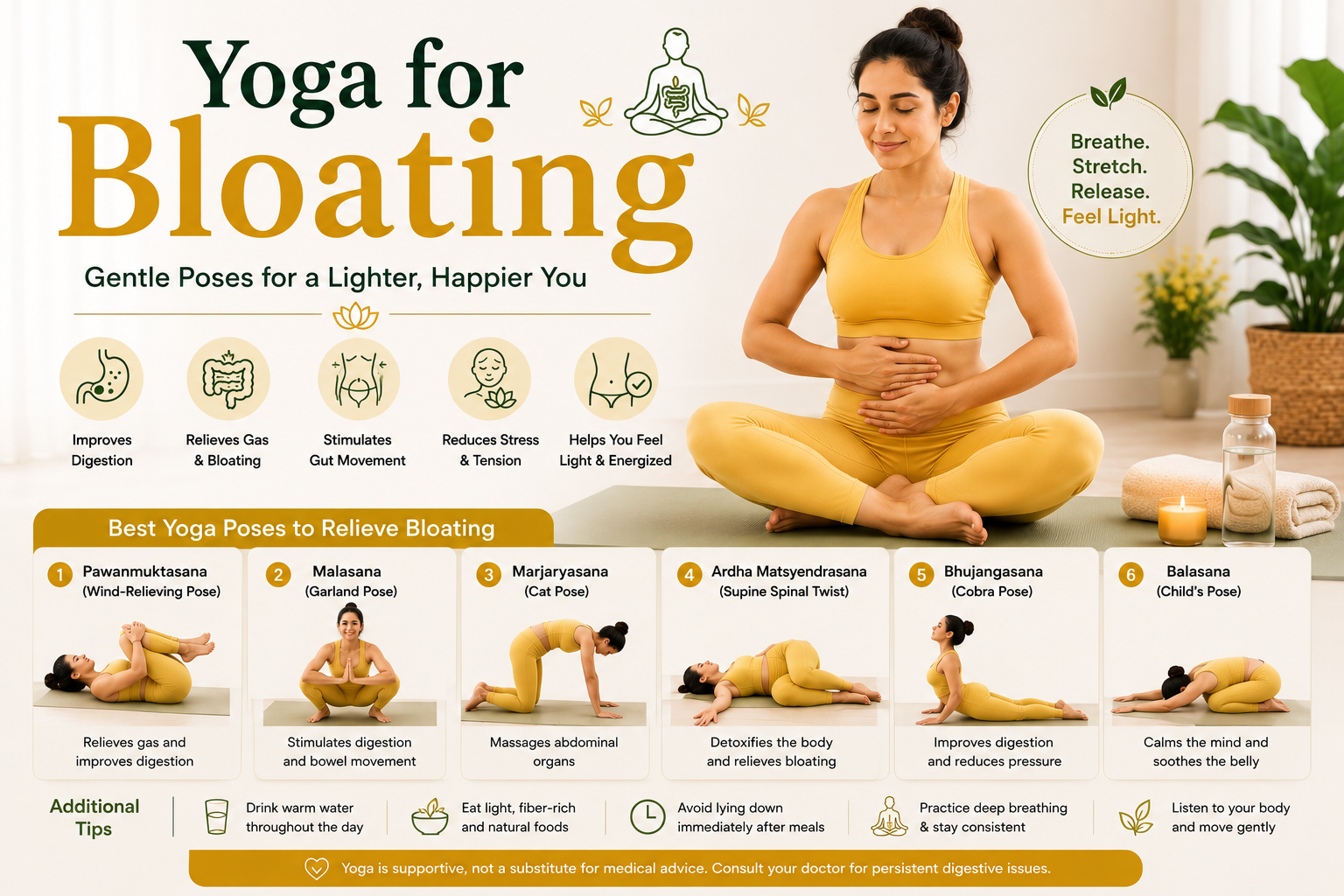
An informational guide to how yoga supports relief from bloating and abdominal discomfort — covering the causes worth understanding, useful postures and breathing techniques, and when bloating needs medical attention rather than a mat.
Bloating — that familiar sense of abdominal fullness, tightness, or visible distension — is one of the most common digestive complaints, and it can stem from several different sources at once: trapped gas, slowed motility, altered gut bacteria, food sensitivities, or a nervous system that is quietly stuck in a stress response. Because bloating so often has more than one contributing cause, a single dietary fix does not always resolve it, and this is where yoga’s particular strengths become genuinely relevant. Gentle movement, targeted postures, and breath-based nervous system regulation address several of these contributing factors at once, rather than any single mechanism.
This guide walks through why bloating happens, which postures and breathing techniques are most commonly used to ease it, and where the limits of a self-directed practice lie. Yoga is not a substitute for medical evaluation of persistent or severe bloating, but it is one of the more thoroughly researched and long-practised complementary approaches available for supporting digestive comfort as part of a broader lifestyle approach.
1. Why Bloating Happens: A Quick Overview
Bloating is generally the result of gas accumulation, fluid retention, or slowed movement through the digestive tract, and often some combination of the three. Common contributing factors include eating quickly or talking while eating, which increases swallowed air; certain carbohydrates that ferment readily in the gut; hormonal fluctuation, particularly around the menstrual cycle; and chronic stress, which can slow gut motility and heighten sensitivity to normal digestive sensations. Understanding which of these factors is most relevant to an individual case helps determine which yoga tools are likely to be most useful.
2. The Gut-Nervous System Link in Bloating
The digestive tract is often described as having its own nervous system, sometimes called the enteric nervous system, which communicates constantly with the brain through what is known as the gut-brain axis. When the body’s stress response is frequently activated, this communication can heighten gut sensitivity and slow motility, both of which contribute directly to the sensation of bloating, even when the actual volume of gas or fluid present is unremarkable. Yoga’s core mechanism, calming the nervous system through breath and movement, works on this pathway directly, which is part of why bloating often responds to practices that do not target digestion in an obviously mechanical way.
This also explains a pattern many people notice but rarely name: the same meal can feel entirely comfortable on a calm day and produce noticeable distension on a stressful one, even though nothing about the food itself has changed. Recognising bloating as a nervous-system-influenced symptom, rather than purely a mechanical one, is often the first step toward finding an approach that actually helps, since it broadens the toolkit beyond diet alone to include breath, movement, and rest.
3. Twisting Postures for Gas Release
Gentle twisting postures such as Ardha Matsyendrasana and simple supine twists are among the most frequently recommended for bloating relief, since the compression and release created through twisting the torso is traditionally associated with encouraging trapped gas to move through the digestive tract. These postures work best performed slowly and without forcing the twist to its deepest range, allowing the breath to guide the movement rather than working against tightness in the abdomen.
4. Wind-Relieving Pose and Knee-to-Chest Variations
Pawanmuktasana, literally translated as the wind-relieving pose, is named specifically for its traditional association with easing trapped gas, and involves drawing one or both knees toward the chest while lying on the back. This gentle compression against the lower abdomen, combined with slow breathing, is one of the most direct and commonly taught postures for bloating discomfort, and is generally considered gentle enough to use even during an active episode of bloating rather than only as preventive practice.
5. Cat-Cow and Gentle Spinal Movement
Marjaryasana-Bitilasana, or Cat-Cow pose, involves a rhythmic, breath-linked movement between spinal flexion and extension that gently massages the abdominal organs with each repetition. This kind of slow, repetitive movement can help ease the sense of tightness or fullness associated with bloating, and is often used as a gentle warm-up before more targeted postures such as twists or forward folds.
6. Forward Folds and Squatting for Digestive Comfort
Seated forward folds and supported squatting postures, such as Malasana, apply gentle pressure to the abdominal region in a way that can ease built-up gas and support more complete elimination. As with other digestion-focused postures, these should be approached gradually and without force, particularly if the abdomen already feels tender or distended, since pushing into a deep fold when already bloated can sometimes increase discomfort rather than ease it.
7. Pranayama for Bloating Linked to Stress
Because stress and an overactive nervous system contribute so directly to bloating for many people, breath-regulation practice is one of the most useful tools available, independent of any specific posture. Pranayama for Stress Relief explores these techniques in depth, and slow diaphragmatic breathing in particular offers a rhythmic internal massage to the digestive organs with every breath, while also shifting the nervous system toward the parasympathetic state most conducive to comfortable digestion.
8. Bloating Linked to Anxiety and a Racing Nervous System
Bloating and anxiety frequently occur together, since a heightened, anxious nervous system state can both slow digestion and increase sensitivity to normal gut sensations, sometimes creating a cycle where digestive discomfort itself becomes a source of further worry. Yoga for Panic Attacks looks at how grounding, breath-focused practice can interrupt this kind of heightened nervous system state, and the same calming approach that supports panic and anxiety symptoms often eases the digestive tension that frequently accompanies them.
9. Restorative Practice for Chronic, Stress-Linked Bloating
For bloating that seems to worsen during periods of high stress or poor sleep, restorative practice deserves particular attention. Guided relaxation in the style of Yoga Nidra in Rishikesh supports the deep parasympathetic rest that digestion depends on, offering a period of genuine physiological recovery that can ease chronic digestive tension in a way that active postures alone may not fully achieve, particularly for people whose bloating is closely tied to an ongoing stress load.
10. Hormonal and Cyclical Bloating
Many women notice bloating that fluctuates predictably with the menstrual cycle, often worsening in the days before menstruation due to hormonal shifts affecting fluid retention and gut motility. Gentle, restorative practice, along with hip-opening and mild twisting postures, is often favoured during this window over more vigorous sequences, and consistent practice across the month, rather than only when symptoms appear, tends to offer more noticeable support over time.
It can help to track which days of the cycle bloating tends to peak, since this often reveals a predictable pattern that makes it easier to plan gentler practice, lighter meals, or extra rest in advance rather than reacting to discomfort once it has already set in. Over several cycles, many women find that this kind of anticipatory adjustment reduces both the intensity and the surprise of premenstrual bloating.
11. Building a Realistic Routine for Bloating Relief
A yoga routine aimed at easing and preventing bloating tends to work best when practised consistently and gently rather than reserved only for flare-ups. A few general principles apply broadly:
- A short daily sequence combining Cat-Cow, a gentle twist, and Pawanmuktasana, ideally practised in the morning or a few hours after eating.
- 5–10 minutes of daily diaphragmatic breathing, particularly useful during or after meals when bloating tends to build.
- Regular restorative practice or Yoga Nidra during higher-stress periods or the days leading into menstruation.
- Eating slowly, staying adequately hydrated, and noticing any specific foods that reliably worsen symptoms, since yoga works best as a complement to these basics rather than a replacement for them.
12. Safety Notes and When to See a Doctor
Yoga can be a genuinely useful complementary practice for easing bloating, but it should never delay appropriate medical evaluation. A few guidelines apply broadly:
- Bloating that is severe, persistent, or steadily worsening over weeks should be evaluated by a doctor to rule out underlying digestive or gynaecological causes.
- Bloating accompanied by significant pain, fever, unexplained weight loss, or blood in the stool warrants prompt medical attention rather than a self-directed yoga routine.
- Deep twists and abdominal-compressing postures should be approached cautiously, or avoided, during pregnancy, and modified guidance should be sought from a qualified prenatal teacher.
- Yoga should complement, not replace, any prescribed medical treatment for diagnosed conditions such as irritable bowel syndrome, coeliac disease, or other gastrointestinal disorders.
13. Learning These Practices Properly
Because bloating can stem from several different underlying causes, learning a well-rounded, correctly sequenced practice from a qualified teacher makes a meaningful difference to both comfort and results. A structured Yoga Teacher Training in Rishikesh programme typically covers therapeutic sequencing, pranayama, and traditional digestive techniques in depth, offering value even to those with no interest in teaching professionally, who simply want a safer, more comprehensive understanding of how to apply yoga to their own digestive comfort.
Frequently Asked Questions (FAQs)
Q1. Can yoga really help reduce bloating?
Yes, for many people. Yoga supports digestive comfort both directly, through postures that encourage gas movement and ease abdominal tension, and indirectly, through stress reduction and improved nervous system balance, though it works best alongside sensible eating habits and hydration.
Q2. What is the single best yoga pose for bloating?
There is no single best pose for everyone, but Pawanmuktasana, the wind-relieving pose, is among the most commonly recommended, since it directly and gently compresses the lower abdomen while remaining accessible even during an active episode of discomfort.
Q3. Can I practise yoga for bloating right after eating?
Gentle postures such as seated twists or Cat-Cow are generally fine shortly after a meal, but more intense postures, deep forward folds, and inversions are usually better spaced at least an hour or two after eating to avoid additional discomfort.
Q4. Why does my bloating get worse before my period?
Hormonal shifts in the days before menstruation commonly affect fluid retention and gut motility, which is why many women notice more pronounced bloating during this window, and gentler, more restorative practice is often favoured during this time.
Q5. Can anxiety or stress really cause physical bloating?
Yes. A heightened, stress-activated nervous system can slow digestion and increase sensitivity to normal gut sensations, which is part of why breath-focused, nervous-system-calming practices often ease bloating that seems to have no other clear dietary cause.
Q6. How often should I practise yoga to notice less bloating?
A short daily practice combining gentle postures and breath work tends to offer more consistent benefit than occasional, longer sessions, since digestive rhythm generally responds better to regularity than to intensity.
Q7. When should bloating be checked by a doctor rather than managed with yoga?
Bloating that is severe, persistent, steadily worsening, or accompanied by pain, fever, unexplained weight loss, or blood in the stool should always be evaluated by a doctor rather than managed through yoga alone.
Final Thoughts
Bloating rarely has a single cause, and that is exactly why yoga’s broad, multi-pathway approach — gentle movement, targeted postures, and nervous system regulation through breath — tends to offer such consistent, well-rounded support. Rather than chasing a single fix, a steady practice works quietly on several contributing factors at once.
Approached patiently, alongside sound eating habits and medical guidance where needed, yoga offers one of the more sustainable, accessible complementary practices available for easing bloating and supporting long-term digestive comfort.
