 Skip to content

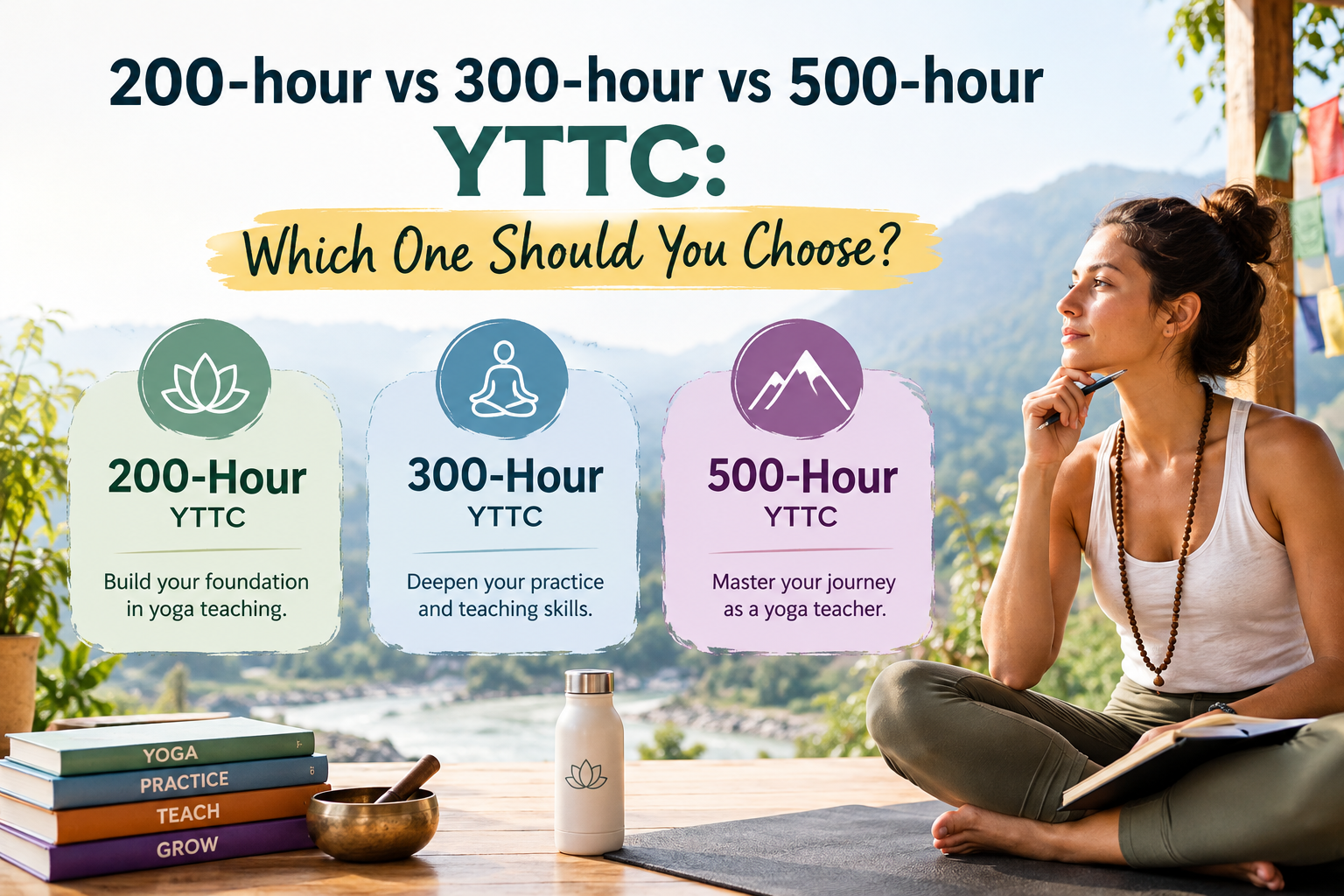
An informational guide to the three most common yoga teacher training levels, covering what each one actually teaches, who it suits, how the hours build on one another, and how to choose a program that matches your experience, goals, and budget.
Choosing a yoga teacher training course can feel confusing, mostly because the numbers sound like a ladder where a bigger number always means a better teacher. The more accurate picture is simpler: 200, 300, and 500 hours describe stages of training, not rankings of skill, and the right choice depends on where you are in your practice and what you want to do with the certificate. Many people also assume they must pick the longest course available, which is rarely necessary or even helpful.
This guide explains what each level covers, how they connect, and the questions worth asking before you enrol. If you are comparing options for Yoga Teacher Training in Rishikesh, the same principles apply wherever you train.
1. What Does “YTTC” Hour Count Actually Mean?
YTTC stands for Yoga Teacher Training Course, and the hour count refers to the total contact and non-contact hours a program includes. The 200-hour, 300-hour, and 500-hour figures follow the standards set by Yoga Alliance, the largest international registry for yoga schools and teachers. Those hours are typically divided across techniques and practice, teaching methodology, anatomy and physiology, yoga philosophy and ethics, and supervised practicum.
It helps to know that the hour count is a minimum standard, not a measure of quality. Two 200-hour programs can differ greatly in teaching depth, class size, and teacher experience. Registration requirements can also change, so it is sensible to confirm current rules directly with Yoga Alliance or the school before you commit.
2. The 200-Hour YTTC: The Foundation Level
The 200-hour course is the standard entry point for becoming a certified yoga teacher. It builds the foundation: core postures and alignment, pranayama (breathwork), meditation basics, an introduction to anatomy, yoga philosophy, and the first practice of sequencing and teaching a class.
This level suits complete beginners to teaching, practitioners who want a structured deeper understanding of their own practice, and anyone planning to teach in studios, gyms, or community settings. You do not need to be able to perform advanced postures to join, but a regular practice beforehand makes the training far easier. Many people attend a 200-hour course with no intention of teaching at all, simply to learn yoga properly, and that is a perfectly valid reason.
A good 200-hour program leaves you able to lead a safe, well-structured beginner to intermediate class. It does not make you an expert, and honest schools say so.
3. The 300-Hour YTTC: The Advanced Level
The 300-hour course is designed for people who have already completed a 200-hour training. It is not a stronger version of the same material; it goes deeper into specialised areas such as advanced sequencing, therapeutic applications, in-depth anatomy, subtle body concepts, teaching skills for different populations, and a more serious study of philosophy.
This level suits teachers who have taught for some time and have run into the limits of their foundation training. Most people find a 300-hour course far more valuable after real teaching experience, because they arrive with specific questions rather than general curiosity. Taking it straight after a 200-hour course is possible, but it can feel less useful if you have not yet taught.
4. The 500-Hour YTTC: What It Really Means
The 500-hour designation is usually reached by combining a 200-hour and a 300-hour training, rather than by enrolling in one single course from the start. Some schools run a continuous program that bundles the two, but the credential generally represents 200 hours of foundation plus 300 hours of advanced study.
For teachers, this matters mostly for career positioning. A 500-hour qualification can support applications for teacher trainer roles, senior positions at studios, or specialised work, though studios and students care just as much about experience, teaching quality, and reputation. If you want a fuller overview of the progression, the Yoga Instructor Certification Guide in India breaks down how the levels fit into a long-term teaching path.
5. Side-by-Side: How the Three Levels Compare
A simple way to compare the levels is by purpose. The 200-hour course builds the base and teaches you how to teach. The 300-hour course refines and specialises what you already know. The 500-hour credential reflects the completed pathway of both.
- Entry requirement: 200-hour has no formal prerequisite beyond commitment; 300-hour normally expects a completed 200-hour; 500-hour is reached through both.
- Focus: foundation and basic teaching skills, versus advanced and specialised study, versus the combined pathway.
- Best timing: at the start of your journey, after meaningful teaching experience, or as a planned long-term goal.
- Typical commitment: about three to four weeks for an intensive 200-hour residential course, with advanced levels often running longer or in modules.
These durations vary by school, so treat them as rough guides rather than fixed rules.
6. Which One Should You Choose?
If you have never completed a teacher training, the answer is almost always the 200-hour course. There is no shortcut around it, and it is the level most employers and registries expect first.
If you already hold a 200-hour certificate and have been teaching, a 300-hour course makes sense when you can name what you want to learn, whether that is therapeutic yoga, advanced pranayama, or teaching specific groups. If you hold both, you are already at the 500-hour level, and the better next step may be mentoring, assisting senior teachers, or focused workshops rather than more hours.
A useful test is to ask yourself what problem the training will solve. If the honest answer is “I want a bigger certificate,” that is a weak reason. If it is “I want to teach confidently and safely,” the right level will become clear.
7. Choosing the Right Style and Content
The hour count tells you very little about what you will actually study. Style and lineage shape the experience just as much. A dynamic, flow-based course such as Vinyasa Yoga in Rishikesh India focuses on linking breath and movement and on creative sequencing, while a precise, alignment-focused approach like Iyengar Yoga in Rishikesh India emphasises detailed technique, props, and long holds.
Philosophy is equally important. Programs that include Jnana & Karma Yoga in Rishikesh teach the paths of knowledge and selfless action alongside postures, which gives teachers a broader foundation than physical practice alone. Reading about the values of yoga in life can also help you decide whether a program’s philosophy matches what you want from the training.
8. Why Many Students Train in Rishikesh
Rishikesh is widely known as a centre for yoga study, with a long tradition of teaching, many schools, and an environment that supports immersive learning away from daily distractions. People often search for the Best Yoga School in Rishikesh, but the label “best” depends on your goals, so it is worth judging schools on specific criteria rather than rankings.
Useful criteria include the experience and lineage of the lead teachers, class size, a clear daily schedule, honest information about accreditation, and recent reviews from graduates. Visiting or speaking with a school before booking also reveals a great deal. If you are comparing broader options, a Yoga TTC India search will show many programs, so the same checks apply.
For step-by-step planning, this resource on How to Get Yoga Certified in Rishikesh India walks through the path from beginner to professional.
9. What a Good Program Includes Beyond Postures
A strong teacher training should teach more than how to do poses. Look for time devoted to anatomy and injury awareness, teaching methodology and cueing, ethics, and supervised practice teaching with feedback. Restorative and relaxation methods are also valuable. Training in practices such as Yoga Nidra in Rishikesh shows teachers how to guide deep rest, which many students need.
Mental wellbeing is another growing area. Teachers who understand how breath, movement, and stillness affect stress can serve students better, and resources on Yoga for Mental Health in Rishikesh India explore this in more depth. Remember, though, that a yoga teacher is not a therapist, and good training makes that boundary clear.
10. Residential Training vs Retreat-Style Learning
Many people combine learning with a restorative break. A Yoga Retreat in Rishikesh can be a helpful first step if you are unsure about committing to a full teacher training, since it lets you experience the setting, teaching style, and daily rhythm without the pressure of certification. A retreat is not a substitute for teacher training, but it is a low-risk way to test whether a school and a place suit you.
11. Who Should Be Cautious
Teacher training is physically and mentally demanding, with long days of practice, study, and teaching. Anyone with a diagnosed cardiovascular condition, recent surgery, a significant injury, or a pregnancy should speak with a doctor before enrolling in an intensive course. People managing mental health conditions should consider whether an immersive, high-intensity environment is right for them and speak with a qualified professional beforehand. Beginners with very little practice experience should build a regular routine for a few months before starting.
12. Red Flags When Choosing a YTTC
Some warning signs suggest a program may not deliver what it promises.
- Promises that you will become a “master” or “guaranteed professional teacher” within a very short time.
- Unclear or unverifiable accreditation, or refusal to explain what the certificate does and does not allow.
- Very low prices that leave no room for qualified teachers, small groups, or proper accommodation.
- Large class sizes with little individual feedback on teaching practice.
- Pressure to sign up quickly, or to take a higher-hour course than you need.
13. Practical Tips Before You Enrol
A few practical steps can protect both your money and your experience.
- Ask for a full syllabus and daily schedule, and check how many hours are contact hours with a teacher.
- Confirm the lead teachers’ qualifications and years of teaching experience.
- Read recent reviews on independent platforms, not only the school’s own website.
- Clarify what is included in the fee, such as meals, accommodation, and materials.
- Check refund and cancellation policies in writing.
- Decide on your reason for training, and choose the level that fits it.
Frequently Asked Questions (FAQs)
Q1. Can I skip the 200-hour course and join a 300-hour course directly?
Most recognised 300-hour programs expect a completed 200-hour training first. Always check the school’s entry requirements.
Q2. Is a 500-hour certificate better than a 200-hour one?
It shows a longer period of study, but it does not automatically make someone a better teacher. Experience, teaching quality, and continued learning matter just as much.
Q3. How long does a 200-hour course take?
Intensive residential programs often run around three to four weeks, while part-time formats can stretch over several months. Durations vary by school.
Q4. Do I need to be advanced at yoga to join a 200-hour course?
No. You do not need advanced postures, but a consistent practice beforehand and a willingness to learn will help you get far more from the course.
Q5. Will a certificate guarantee me a teaching job?
No. Certification qualifies you to begin teaching, but finding work depends on experience, communication skills, and building relationships with studios and students.
Q6. Should I do a retreat before a teacher training?
It can help. A retreat is a gentle way to test a school and location before committing to a longer, more demanding course.
Q7. What is the most sensible way to choose between the three levels?
Start from your current experience and goals. Take the 200-hour course first, consider the 300-hour course after real teaching experience, and treat 500 hours as the result of that journey rather than a starting target.
Final Thoughts
The 200-hour, 300-hour, and 500-hour courses are best understood as stages on one path rather than competing products. The 200-hour course builds the foundation, the 300-hour course deepens and specialises it, and the 500-hour credential reflects having completed both. The right choice is the one that matches where you are today, not the largest number on offer.
Choose a school for its teachers, its honesty about what the certificate means, and its fit with your goals, and give yourself time to practise and teach between stages. Approached this way, teacher training becomes a steady, rewarding investment in your own understanding and in the students you will one day guide.
