
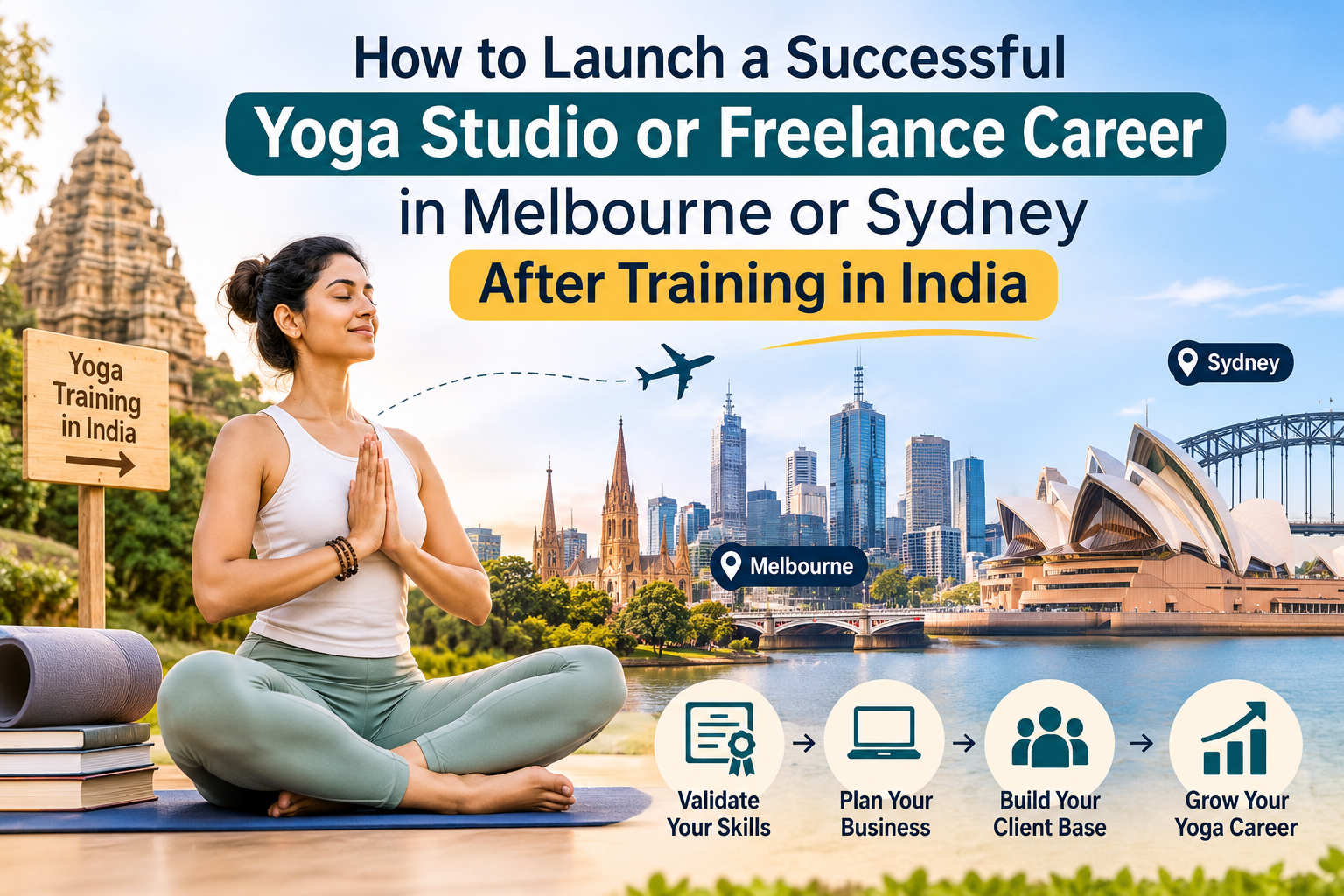
Every year, graduates return from India with a certificate, a deeper practice, and a big question: what happens now? Melbourne and Sydney both have busy, well-informed yoga communities, which means opportunity but also competition. Students there are used to qualified teachers, clear class descriptions, and professional standards.
This guide explains how to turn your training into a sustainable career, whether you want to freelance, rent space, or eventually open your own studio. It is general information, so always confirm current legal, tax, and association requirements with official sources before acting.
1. Why Training in India Still Carries Weight
India is the birthplace of yoga, and many Australian students value teachers who have studied its philosophy, breathing, and meditation at the source. Completing yoga teacher training in Rishikesh gives you more than technique. You learn in an environment where daily life revolves around practice, which shapes how you teach.
That said, your location of training does not replace professionalism. Whether you attended the best yoga school in Rishikesh or any other, studios will judge you on your teaching, your communication, and your credentials. A reputable yoga TTC India programme with published teachers, curriculum, and group sizes makes it easier to explain your background with confidence.
2. Check Your Credentials Before You Apply
Before approaching studios, make sure your paperwork is in order. Keep your certificate, syllabus, hours breakdown, and teacher details together. If you are still choosing a pathway, the yoga instructor certification guide explains how courses and hours are structured, and the roadmap on how to get yoga certified in Rishikesh shows the steps from beginner to professional.
Most 200-hour graduates are able to start teaching, but more advanced training builds credibility. Many teachers later add a 300 hour yoga teacher training in Rishikesh or progress towards a 500 hours YTTC to deepen their skills.
In Australia, the main professional body is Yoga Australia, and some studios prefer or require membership or recognition. Requirements for overseas training can change, so contact the association directly and ask how your course is assessed. If you are not an Australian citizen or permanent resident, also check your visa work rights with the Department of Home Affairs.
3. Choose a Teaching Niche
Trying to teach everything usually means being remembered for nothing. Choose one or two styles you practise daily and can explain clearly. A few common options are listed below.
Vinyasa: flowing, breath-led classes popular in studios and gyms. A foundation in Vinyasa yoga in Rishikesh India helps with sequencing and pacing.
Ashtanga: a structured, disciplined series for committed students, supported by training in Ashtanga yoga in Rishikesh India.
Iyengar: precise, alignment-focused teaching suited to beginners, older students, and those managing injuries, with roots in Iyengar yoga in Rishikesh India.
Kundalini: breath, sound, and meditation-focused classes drawn from Kundalini yoga in Rishikesh India.
Restorative and Nidra: slower, rest-based sessions, where yoga nidra in Rishikesh training gives you tools for guided relaxation.
4. Deepen Your Skills and Add Services
Graduates who keep studying tend to stand out. Continuing education such as advanced yoga practices in Rishikesh India can refine your technique and confidence, while an Ayurvedic massage course in Rishikesh India may add a complementary wellness skill, subject to any local licensing and insurance rules for bodywork.
Philosophy also helps you speak with authority. Studying Jnana and Karma yoga in Rishikesh and reflecting on the values of yoga in life India will help you teach beyond postures and answer thoughtful student questions. If your classes will touch on stress and emotional wellbeing, learning about yoga for mental health in Rishikesh India can help you understand the limits of your role. You teach supportive practices; you do not diagnose or treat.
5. Freelance, Studio Employment, or Your Own Studio?
There are three common routes, and many teachers combine them.
Freelance: you teach at gyms, studios, community halls, workplaces, or online. It offers flexibility and low start-up cost, but income can be irregular at first.
Studio employment: you teach scheduled classes for an established studio. It gives you a ready audience and a reference, but you follow their style and pay rates.
Own studio: you control the brand and the space, but you also carry rent, insurance, staffing, and marketing costs.
Most successful studio owners begin as freelancers. Teaching for a year or two lets you learn what students actually want, build a following, and test your pricing before taking on a lease.
6. Set Up the Business Side Properly
Treat teaching as a small business from day one. Common steps for Australian freelancers include registering for an Australian Business Number (ABN), choosing a structure such as sole trader, keeping records of income and expenses, and understanding when GST registration becomes necessary. Check the Australian Taxation Office for current thresholds and rules, or speak to a registered accountant.
Insurance is essential. Most studios ask for public liability cover, and many teachers also hold professional indemnity insurance. If you plan to teach children or work in schools, a Working with Children Check is typically required, and the rules differ between Victoria and New South Wales. For a studio, also look into lease terms, council requirements, and venue permissions with a qualified adviser.
7. Find Your First Students
Start small and local. Offer a few community or donation-based classes, teach friends of friends, and ask for honest feedback. Approach studios with a short professional introduction, your credentials, a clear class description, and an offer to cover a cover-class or trial slot. Corporate wellness sessions, co-working spaces, and local clubs can also be steady sources of work.
Your retreat experience can be a point of difference. If you plan to guide your own students later, understanding how a yoga retreat in Rishikesh is structured will help you design programmes that are restful, clearly scheduled, and honest in their promises.
8. Pricing and Income Expectations
Prices vary by suburb, class type, and experience, so research what comparable teachers charge rather than guessing. Many new teachers start with casual class rates, add private sessions, and slowly build up workshops and corporate work. Income in the early months is often modest, and most teachers combine teaching with other work until their schedule fills.
Avoid underpricing yourself to win students, since it can be hard to raise rates later. Also account for travel time, preparation, insurance, music licensing where applicable, and unpaid admin when working out what you really earn per hour.
9. Build Trust: The E-E-A-T of a Yoga Teacher
Students choose teachers they trust. Show your experience with a clear bio, your training history, and honest descriptions of your classes. Demonstrate expertise by continuing to study and by explaining sequences and safety in plain language. Be transparent about what you offer, and never claim to cure illness or replace medical care.
Ask for a health check-in with new students, offer modifications, and encourage anyone with a medical condition, injury, or pregnancy to consult their doctor. Reviews, referrals, and consistent, reliable teaching build authority far more quickly than dramatic claims.
10. Marketing Without Overpromising
A simple website, a Google Business Profile, a regular newsletter, and a consistent social presence are enough for most freelancers. Write class descriptions that tell students what to expect, the level, and what to bring. Share short, useful content such as a breathing tip or a posture explanation rather than constant promotion.
Collaborations also work well: physiotherapists, cafes, local gyms, and workplaces often welcome teachers who are reliable and professional. Protect your reputation by delivering what you advertise.
11. A Simple 90-Day Launch Plan
In the first month, finalise your credentials, insurance, ABN, and class concept. In the second month, begin teaching a few casual classes, collect feedback, and approach two or three studios. In the third month, refine your timetable and pricing, add a workshop or private offering, and start tracking which classes fill. Review honestly at day ninety and adjust before expanding.
12. A Simple Checklist Before You Launch
Is your certificate, hours breakdown, and teacher information ready to share?
Have you checked Yoga Australia and your visa work rights?
Do you have an ABN, record-keeping, and appropriate insurance?
Can you describe your niche and ideal student in one sentence?
Do you have a clear class description, pricing, and health check-in process?
Have you planned a realistic income buffer for the first months?
13. Common Mistakes and Red Flags
Teaching without insurance or the right registrations.
Opening a studio before testing demand as a freelancer.
Promising to heal injuries, anxiety, or illness through yoga.
Copying another teacher’s sequences, wording, or branding.
Ignoring student feedback, safety, or modifications.
14. Who Should Be Cautious
New teachers should stay within their training. Students who are pregnant, recovering from surgery, living with heart conditions, or managing mental health concerns need extra care and should be encouraged to speak to their doctor. Do not give medical, nutritional, or psychological advice beyond your qualification, and refer students to qualified professionals when needed. Look after your own wellbeing too: a demanding teaching schedule can lead to burnout if you do not build in rest.
Frequently Asked Questions (FAQs)
Q1. Is a yoga certificate from India accepted in Australia?
Often it is accepted by studios, but recognition varies by studio and association. Contact Yoga Australia and the studios you want to teach at to confirm their requirements.
Q2. Do I need an ABN to teach yoga as a freelancer?
Most freelancers who invoice for their work need an ABN. Confirm your situation with the Australian Taxation Office or an accountant.
Q3. Should I open a studio straight after training?
Usually not. Teaching as a freelancer first lets you build a following and test demand before taking on rent and staff.
Q4. Is 200-hour training enough to start teaching?
It is a common starting point, and many teachers begin there, then continue with further training as they gain experience.
Q5. Do I need insurance?
Yes, in practice. Most studios and venues expect public liability cover, and professional indemnity is also widely held.
Q6. How long does it take to build a full schedule?
It varies. Many teachers take months to a year or more, so plan for a gradual build.
Q7. Can I teach online as well?
Yes. Online classes can supplement in-person work, but they require clear communication and safety guidance because you cannot adjust students physically.
Final Thoughts
A successful yoga career in Melbourne or Sydney rests on credentials, clarity of niche, sound business setup, and trust built one class at a time. Your training in India gives you a strong foundation, but consistent teaching, continued learning, and honest communication are what sustain a career.
Start small, stay within your scope, and grow at a pace your finances and energy can support. Verify current legal and association requirements, and seek professional advice wherever your situation calls for it.