 Skip to content

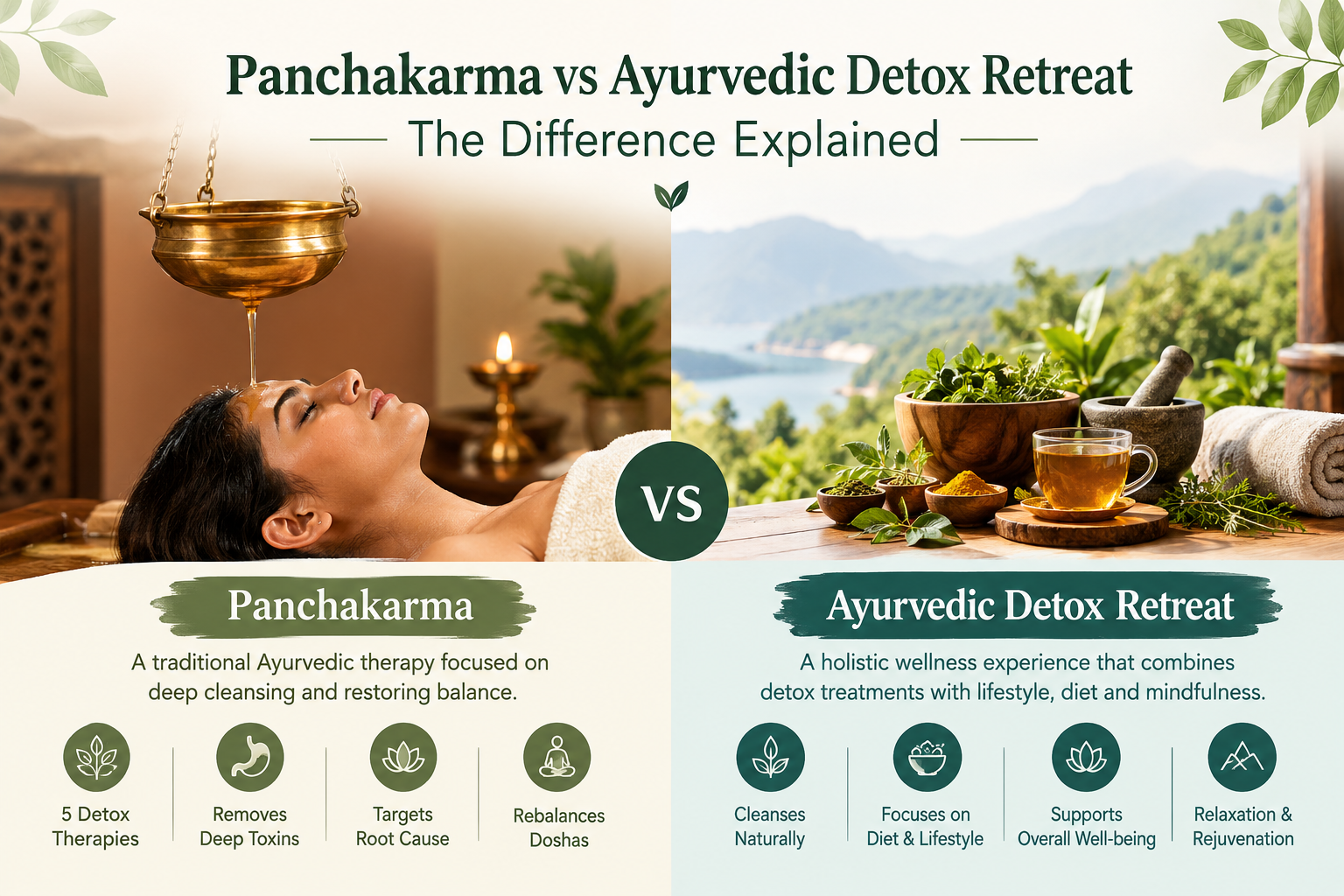
An informational guide to the differences between Panchakarma and an Ayurvedic detox retreat, covering purpose, duration, supervision, intensity, cost, and how to decide which one suits your health and goals.
Panchakarma and Ayurvedic detox retreats are often described in the same breath, and many travellers to Rishikesh assume they are one and the same. They are not. Both draw on Ayurveda, India’s traditional system of health, and both may involve herbal oils, simple food, and rest. But Panchakarma is a structured, practitioner-led therapeutic protocol, while a detox retreat is usually a lighter wellness stay built around diet, routine, and relaxation.
This guide explains how the two differ, who each suits, what to ask before booking, and which health situations call for extra care, so you can choose based on your needs rather than a brochure.
1. What Is Panchakarma?
The word Panchakarma comes from Sanskrit and means “five actions”. In classical Ayurveda it refers to a set of cleansing and rejuvenation procedures designed to help the body release accumulated imbalances, known as doshas and ama. The classical five are vamana (therapeutic emesis), virechana (purgation), basti (medicated enemas), nasya (nasal administration of oils), and raktamokshana (bloodletting, rarely offered today).
A genuine Panchakarma programme is personalised. An Ayurvedic physician assesses your constitution (prakriti), your current imbalance (vikriti), your digestion, age, and medical history before choosing which procedures, if any, are appropriate. It is closer to a supervised treatment course than a holiday, and it generally needs at least 14 to 21 days to be done properly.
2. What Is an Ayurvedic Detox Retreat?
An Ayurvedic detox retreat is a shorter wellness stay that borrows gentle elements from Ayurveda. Typical programmes combine warm, easily digested meals, herbal teas, daily oil massage (abhyanga), steam, yoga, breathing practice, and meditation. The goal is to rest the digestion, lower daily stress, and build healthier routines.
Most retreats run from three to ten days and welcome people with no Ayurvedic background. They do not usually involve the strong procedures of Panchakarma, and the emphasis is on relaxation and habit-building rather than clinical treatment.
3. The Core Differences at a Glance
The simplest way to separate the two is to ask whether you want a therapy or an experience. The main differences are listed below.
Purpose: Panchakarma is a therapeutic protocol guided by a physician, while a detox retreat supports relaxation, light cleansing, and routine.
Duration: Panchakarma usually runs two to four weeks, while retreats often last three to ten days.
Supervision: Panchakarma requires a qualified Ayurvedic doctor (BAMS or equivalent), while retreats are often led by wellness therapists and yoga teachers.
Intensity: Panchakarma can leave you tired or low in energy during treatment, whereas a retreat is generally gentle.
Personalisation: Panchakarma is built around a detailed consultation, while retreat plans are often shared across a group.
4. The Three Stages of Panchakarma
Traditional Panchakarma follows three phases. Purvakarma is the preparation stage, usually lasting several days, with internal oil intake (snehapana), external oil massage, and sweating therapy to loosen accumulated toxins. Pradhanakarma is the main stage, in which the chosen cleansing procedures are performed under supervision. Paschatkarma is the recovery stage, with a carefully graded diet (samsarjana krama), rest, and lifestyle guidance as digestion returns to normal.
Skipping the preparation or recovery stages is a common shortcut in poorly run programmes. Because the aftercare is where much of the benefit and safety lies, a good clinic will explain all three clearly.
5. Daily Routine and Intensity
A Panchakarma day is structured around treatments. You may wake early, take prescribed herbal preparations, receive therapies in the morning, and then rest for much of the day on a simple diet such as kitchari. Visitors are usually asked to limit travel, screens, and strenuous exercise, and tiredness is common as the body adjusts.
A detox retreat day is lighter and more varied. Expect a gentle yoga class, a warm breakfast, a massage or steam session, a short lecture on Ayurvedic principles, free time, and an evening meditation. Skipping a session to rest is normally fine.
6. Who Supervises Your Programme: Why Credentials Matter
Supervision is the most important quality marker. In India, Ayurvedic physicians complete a formal degree, typically the Bachelor of Ayurvedic Medicine and Surgery (BAMS), and are registered with state or national councils. A Panchakarma programme should be overseen by such a doctor, who also takes a medical history and monitors you through the process.
When you compare providers, ask for the physician’s qualifications and registration, how many years they have practised, how many guests each therapist handles, and whether the clinic has an emergency plan and access to a hospital. Published credentials and open answers matter more than a polished website.
7. Cost and Time Commitment
A detox retreat is the lower-commitment option in money and time, and fits within a short leave. Panchakarma costs more overall because of the physician’s fees, therapies, medicines, and longer stay, and it needs several uninterrupted weeks, including a gentle period afterwards.
Compare what is included rather than only the headline price. Check whether the fee covers the consultation, herbal medicines, therapies, meals, accommodation, and follow-up advice, and look for clear written cancellation and refund terms.
8. Who Should Choose Which?
A detox retreat suits you if you are new to Ayurveda, feeling run down by routine, or want a calm reset without clinical procedures. It is also a sensible trial if you are considering Panchakarma later and want to test the food, climate, and therapies.
Panchakarma suits you if you are ready to commit several weeks, are willing to follow dietary and lifestyle rules strictly, and want a physician-guided programme tailored to you. It is not a quick fix, and it is not appropriate for everyone, which is why the initial consultation matters.
9. Heart Health, Blood Pressure, and Detox Programmes
Strong cleansing procedures place real demands on the body through fluid loss, changes in appetite, and shifts in blood pressure. If you have a heart condition or high blood pressure, speak to your cardiologist and the programme physician before booking, and expect to be steered toward gentler therapies or away from some procedures altogether.
Supportive habits can still help. Many people explore breathing exercises for heart health to practise calm, controlled breathing, and a careful introduction to yoga for high blood pressure can help you understand which postures are usually modified. Daily routines such as regular sleep, moderate movement, and balanced meals are explained in this overview of lifestyle changes for a healthy heart, which is useful whichever programme you choose. These are supportive practices, not treatments, and they do not replace your prescribed medication.
10. Diet, Fasting, and Aftercare
Food is central to both formats, but in different ways. Retreats generally serve light, vegetarian, freshly cooked meals. Panchakarma uses stricter, staged diets, often built on kitchari, and sometimes a short period of reduced food intake as part of preparation.
Be cautious about adding extra fasting on top of a programme. If you are curious about the topic, reading about intermittent fasting and yoga can help you understand how eating windows interact with practice, but it should be discussed with your physician first, especially if you have diabetes, low blood pressure, or take regular medication. After either programme, return to normal food and activity gradually; sudden heavy meals, alcohol, or intense workouts can undo the benefit and strain digestion.
11. Can You Do Both?
Yes, and many people do. A common path is to attend a short detox retreat first, maintain simple routines at home for a few months, and then consider Panchakarma once you know how your body responds to Ayurvedic food and therapies. Repeating Panchakarma is usually timed with the seasons and advised by a physician rather than done on a fixed schedule.
12. How to Judge a Programme: A Simple Checklist
Use these questions to compare options fairly.
Is the programme led or approved by a registered Ayurvedic physician?
Will you have a personal consultation before any treatment begins?
Is there a clear, written daily schedule with proper rest?
Are the therapies, medicines, and meals explained in advance?
Does the clinic ask about your medical history and current medication?
Are inclusions, pricing, and refund terms stated clearly?
Do recent independent reviews describe an experience similar to what is advertised?
13. Red Flags to Watch For
Promises to cure diabetes, heart disease, cancer, or any diagnosed condition.
Advice to stop prescribed medicine without your doctor’s approval.
Strong purgation or emesis offered with no consultation or monitoring.
Guaranteed weight loss, “total toxin removal”, or life transformation in a few days.
Unclear pricing, hidden charges, or pressure to pay quickly.
14. Who Should Be Cautious
Panchakarma in particular is not suitable for everyone. Pregnancy, recent surgery, heart disease, uncontrolled high blood pressure, kidney or liver conditions, severe weakness, and a history of eating disorders all call for medical advice before booking. Children, older adults, and people with long-term illnesses need individually adjusted plans. Even a gentle detox retreat should be discussed with your doctor if you take regular medication. Tell the programme in advance about your health, and be honest about supplements and prescriptions.
Frequently Asked Questions (FAQs)
Q1. Is Panchakarma the same as an Ayurvedic detox?
No. Panchakarma is a physician-guided therapeutic protocol, while a detox retreat is a lighter wellness stay that uses gentle Ayurvedic practices.
Q2. How long should Panchakarma last?
A proper programme commonly runs 14 to 21 days or longer, including preparation and recovery. Very short “Panchakarma” packages deserve questions.
Q3. Is a detox retreat safe for beginners?
Generally yes for healthy adults, as the practices are gentle. Share your health history and medication with the retreat first.
Q4. Can Panchakarma cure chronic disease?
No. Ayurveda may support wellbeing alongside medical care, but you should be cautious of any claim to cure a diagnosed illness.
Q5. Which is better for stress relief?
A detox retreat is usually the better fit, as it is restful and flexible. Panchakarma can leave you feeling tired during treatment.
Q6. Can I exercise during Panchakarma?
Strenuous exercise is normally discouraged. Gentle walking or light breathing practice may be allowed if your physician agrees.
Q7. Can I take Panchakarma with high blood pressure or heart problems?
Only after clearance from your cardiologist and the programme physician. Some procedures may be modified or avoided.
Final Thoughts
The difference between Panchakarma and an Ayurvedic detox retreat comes down to purpose and supervision. A detox retreat is about rest, simple food, and healthier routines. Panchakarma is a structured treatment course guided by a qualified physician. Neither is better in every case, and each can suit a different stage of life.
Choose the format that fits your health, your time, and your real goals. Look for qualified doctors, a clear plan, transparent terms, and realistic promises, and seek professional medical advice wherever your wellbeing calls for it.
