 Skip to content
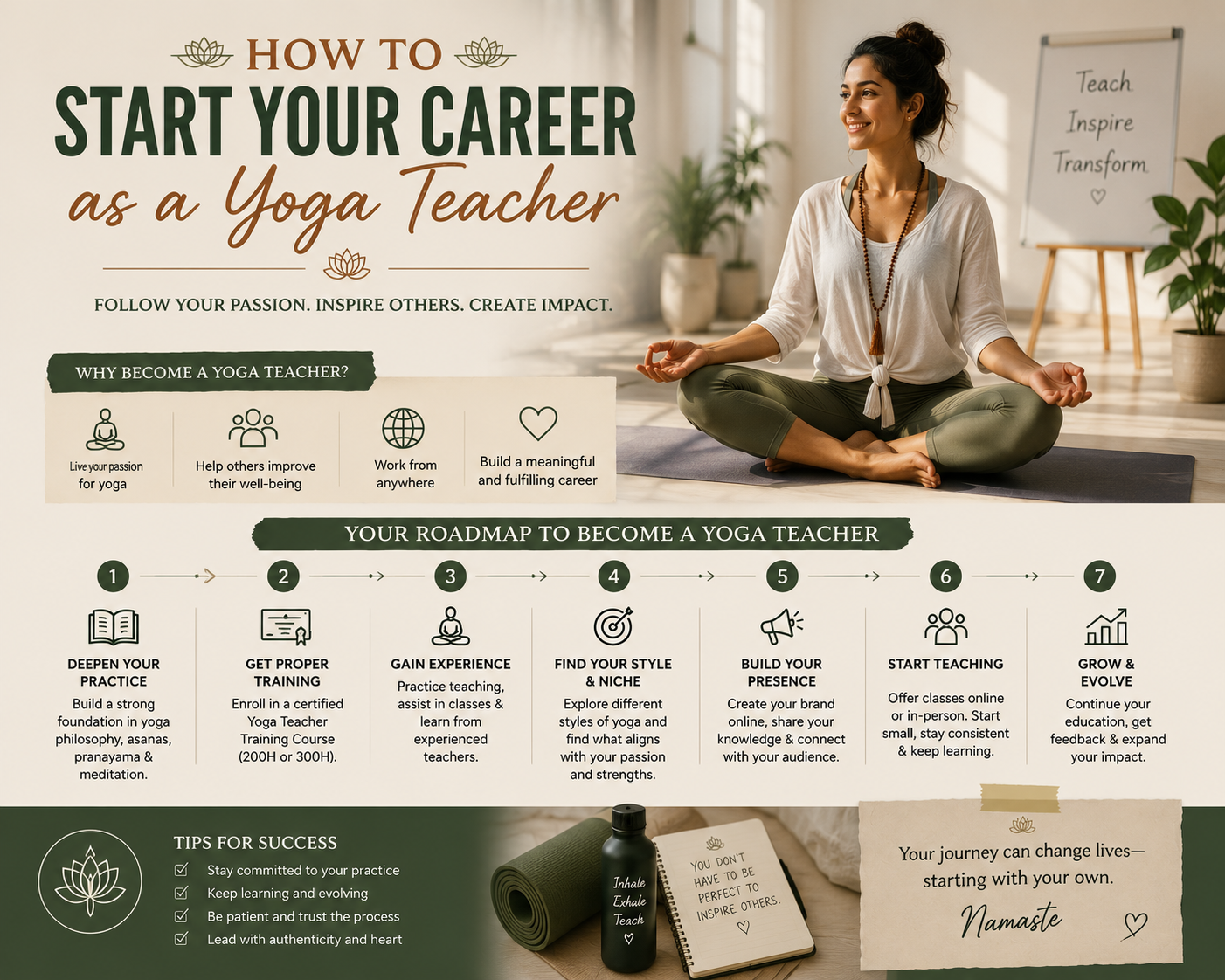
Holding a freshly printed certificate is exciting, but it doesn’t come with a roadmap for what to actually do next. For many new teachers, this gap between “being certified” and “having a career” is where momentum can stall — not because of lack of skill, but because of uncertainty about where and how to begin.
This guide focuses specifically on the practical first steps of launching a yoga teaching career: how to find your first opportunities, build the foundation for sustainable work, and navigate the early months without burning out or losing motivation.
Start Before You’re “Ready”
One of the most common patterns among new teachers is waiting for a feeling of readiness that may never fully arrive. There’s always more to learn — more anatomy, more philosophy, more sequencing knowledge, more confidence in cueing. While continued learning is genuinely valuable, waiting for it to feel “complete” before starting to teach often means never starting at all.
The most effective approach is to begin teaching in low-stakes environments while continuing to learn. Teaching itself is one of the most effective learning tools available — concepts that felt abstract during training often click into place once you’re actually guiding others through them. Your first classes won’t be your best classes, and that’s not just acceptable, it’s expected.
Your First Teaching Opportunities
Friends, Family, and Community
The lowest-pressure starting point is often the people already in your life. Offering free classes to friends, family members, or community groups (local community centers, places of worship, workplace groups) provides a space to practice teaching without the added pressure of being evaluated by strangers or worrying about payment.
This stage isn’t just about practice — it’s also where many teachers begin building their first informal “client base.” People who experience your teaching firsthand, even in a casual setting, often become your first paying students, refer others, or provide valuable feedback that shapes your teaching style.
Substitute Teaching
Reaching out to local studios about substitute teaching opportunities is one of the most practical ways to gain real teaching experience. Studios regularly need substitutes when regular teachers are unavailable, and this provides exposure to teaching established classes with existing students — a different experience from teaching friends, since you’re stepping into someone else’s class dynamic and meeting students’ expectations.
Substitute teaching also serves as a kind of informal audition. Studio owners and managers notice reliable, skilled substitutes, and this is often how new teachers eventually secure regular class slots.
Donation-Based or Community Classes
Many community spaces — parks, libraries, senior centers, workplaces — welcome donation-based or free yoga classes, particularly from newly certified teachers looking to build experience. These settings often attract a different demographic than studio classes — sometimes complete beginners, older adults, or people who might never set foot in a traditional studio — which broadens your teaching experience in valuable ways.
Building Your Professional Foundation
Create a Simple Online Presence
You don’t need an elaborate website or professional photoshoot to start, but having some online presence — even just a simple Instagram account or a basic webpage with your bio, certification, and contact information — makes it easier for potential students or employers to find and learn about you.
This presence doesn’t need to be polished from day one. Many successful teachers started with simple posts about their practice, their teaching journey, and basic information about classes they were offering. Authenticity often resonates more with potential students than overly polished marketing, especially early on.
Get Insured
Before teaching publicly, even in informal settings, securing liability insurance is an important step that’s easy to overlook. As covered in discussions about Benefits of Yoga Alliance Certification, many insurance providers require RYT certification as a prerequisite, making this another reason why proper certification matters from a practical standpoint, not just a credentialing one.
Develop a Simple Class Template
Rather than trying to create entirely unique sequences for every class from scratch (which is both exhausting and often unnecessary, especially early on), developing a few reliable class templates — structures you can adapt based on the group, time available, and any specific requests — provides a foundation that reduces pre-class anxiety and allows you to focus more on teaching presence rather than constantly worrying about “what’s next” in your sequence.
Navigating Your First Few Months
Expect an Adjustment Period
Teaching is a skill that develops with repetition, much like the physical practice itself. Common challenges in the early months include forgetting cues mid-sequence, feeling awkward giving hands-on adjustments, struggling with timing (classes running short or long), and general nervousness, especially with unfamiliar students.
These challenges are universal among new teachers and tend to resolve naturally with experience. What helps most is reflecting after each class — what worked, what didn’t, what you’d adjust — without excessive self-criticism. Growth happens through this kind of consistent, gentle reflection rather than through trying to be perfect immediately.
Find Mentorship
Many teacher training programs maintain alumni communities or offer mentorship opportunities for recent graduates. Connecting with more experienced teachers — whether formally through mentorship programs or informally through community connections — provides a resource for questions, encouragement, and perspective during the early period when everything feels new.
For those who trained through programs connected to established traditions, staying connected to the broader teaching community can also provide ongoing access to deeper philosophical study, which often becomes increasingly meaningful as teaching experience grows. Exploring foundational texts and teachings, such as those discussed in Vashistha Rishi and Yoga Vashistha Teachings, can continue to inform and deepen your teaching long after formal training ends.
Consider Teaching Online Early
Even if your primary goal is in-person teaching, building some online presence from the start — even simple recorded classes or short practice videos — can serve multiple purposes: it builds a portfolio of your teaching, helps potential students or employers understand your style before meeting you, and creates flexibility for income that doesn’t depend entirely on in-person opportunities.
For those interested in this direction, understanding the basics of how online teaching works — platforms, technical requirements, and how to adapt in-person teaching skills for a virtual format — is worth exploring early, even if you don’t plan to pursue it as a primary focus initially.
Building Toward Specialization
While it’s generally advisable to gain general teaching experience before specializing, having an awareness of what specializations interest you can help guide your continued education choices even in the early months. If you find yourself consistently drawn to certain populations or styles during your initial teaching experiences — perhaps you notice you’re particularly engaged when teaching slower, more meditative classes, or you feel most energized leading dynamic, breath-centered practices — this can offer clues about where to focus future learning.
For example, teachers who find themselves drawn to more contemplative approaches might explore deepening their understanding of practices like Yoga Nidra in Rishikesh, while those energized by more dynamic movement might look toward further training in styles like Ashtanga Yoga in Rishikesh India or Vinyasa Yoga in Rishikesh India.
Managing Finances in the Early Stage
It’s important to have realistic financial expectations when starting out. Most new teachers don’t generate substantial income immediately, and many continue other work — full-time jobs, part-time work, or freelance income from other sources — while building their teaching practice gradually.
This isn’t a failure or a sign that things aren’t working — it’s simply how most sustainable teaching careers begin. Treating early teaching opportunities as investments in experience and reputation, rather than primarily as income sources, can help manage expectations and reduce pressure during this period.
The Mindset Shift: From Student to Teacher
Perhaps the most significant — and least discussed — part of starting a yoga teaching career is the internal shift required. As a student, your focus was on your own practice, your own progress, your own experience on the mat. As a teacher, your attention shifts outward: toward your students’ safety, their experience, their needs, and creating a space that serves them.
This shift doesn’t happen overnight, and many new teachers describe a period of feeling caught between these two orientations — still very focused on their own practice while learning to redirect attention toward others. This is a normal part of the transition, and over time, many teachers describe finding a new kind of practice in teaching itself — one that’s different from, but complementary to, their personal practice.
Frequently Asked Questions
How soon after certification should I start teaching?
As soon as you feel comfortable enough to begin in low-stakes settings — often within weeks of completing training. Starting sooner rather than later helps maintain momentum and allows learning to continue through real teaching experience rather than just continued study.
What if my first classes don’t go well?
This is extremely common and doesn’t reflect your overall potential as a teacher. Early classes are learning experiences, and most teachers look back on their first attempts with a mix of fondness and amusement once they have more experience. What matters is reflection and continued effort, not immediate perfection.
Should I focus on one style or teach broadly at first?
Most new teachers benefit from teaching broadly at first, which helps you discover what you connect with most while also making you more employable for studios needing teachers who can cover various class types.
How important is networking in building a teaching career?
Very important, though “networking” doesn’t need to feel transactional. Building genuine relationships with other teachers, studio owners, and your training community often leads naturally to opportunities — substitute requests, referrals, collaboration on workshops or retreats.
What if I want to eventually lead retreats or trainings myself?
This is a longer-term goal that typically requires significant teaching experience first, along with often pursuing advanced certifications like a 500 Hours YTTC Rishikesh India. Building toward this involves gradually accumulating both teaching experience and, often, a following of students who trust your guidance.
Is it normal to feel discouraged in the first few months?
Yes, this is common, particularly if growth feels slower than expected. Many teachers describe the first few months as the most uncertain period, with things often becoming clearer and more sustainable after that initial adjustment phase. Staying connected to your “why” — the reason you pursued teaching in the first place — can help during these periods.
Final Thoughts
Starting a yoga teaching career is less about having a perfect plan and more about taking consistent, imperfect action — teaching where you can, learning from each experience, and gradually building both skill and opportunity over time. The early months are rarely glamorous, but they form the foundation for everything that follows, and most experienced teachers look back on this period as an essential, if sometimes uncomfortable, part of becoming the teacher they are today.
