
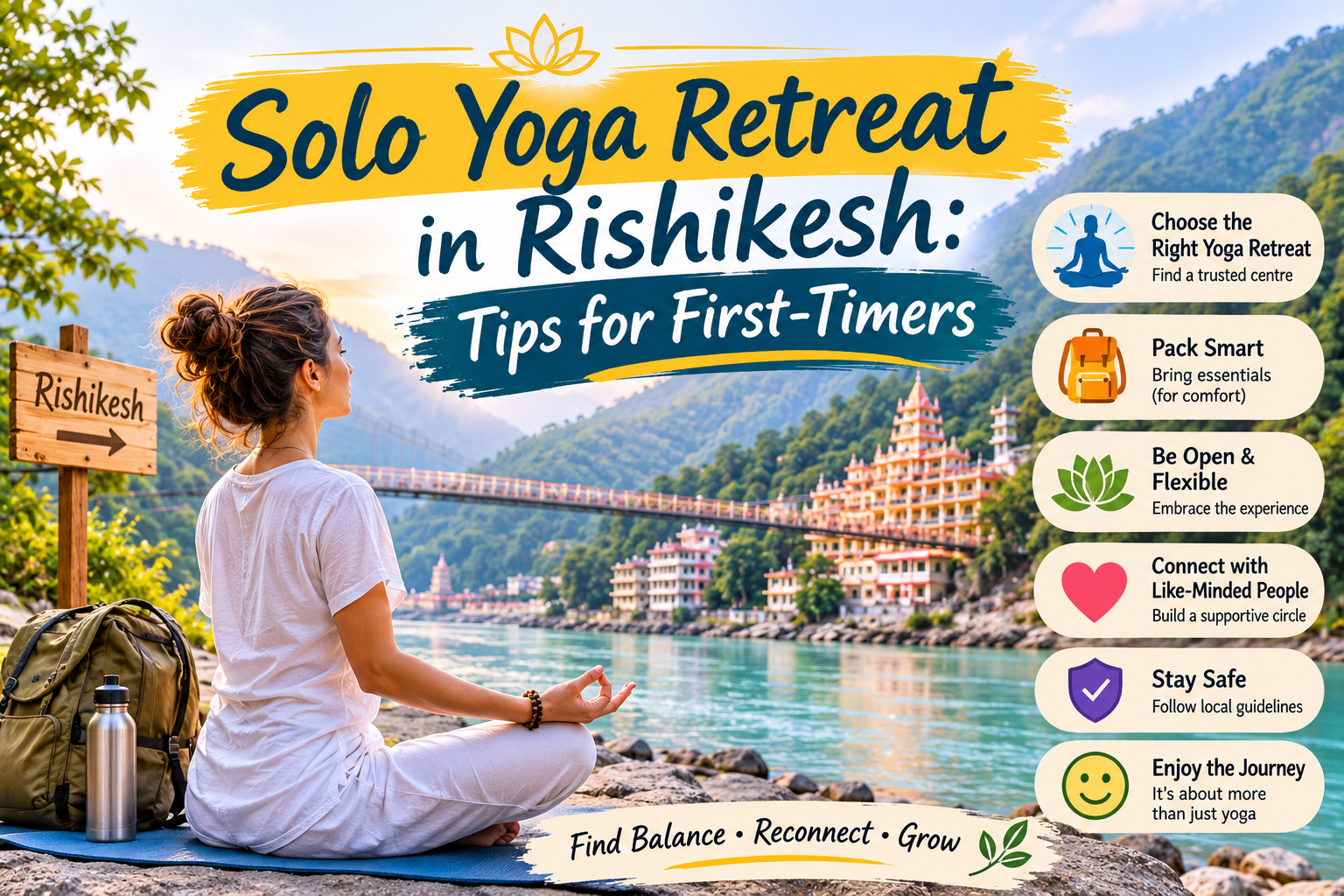
Travelling alone to a yoga retreat is one of the most rewarding, and most nerve-racking, decisions a first-timer can make. You may wonder whether you will feel lonely, whether you are “flexible enough,” whether it is safe, or whether a week in India will actually change anything.
The short answer: solo retreats are very common in Rishikesh, and most first-timers say that going alone was exactly what made the experience meaningful. Without anyone to perform for or look after, you get honest time with your own thoughts. This guide covers how to choose a retreat, prepare, stay safe, and make the most of your time, based on what yoga schools and experienced travellers consistently recommend.
Why Rishikesh Works So Well for Solo Travellers
Rishikesh sits where the Ganga leaves the Himalayan foothills, and for decades it has drawn students, seekers, and teachers from around the world. That history matters for solo travellers: the town is used to visitors who arrive alone, the community is international, and many ashrams and schools run structured daily programmes that naturally connect you with others.
The setting itself also helps. Early mornings by the river, forested hills, and a culture where yoga and meditation are part of daily life make it easier to slow down. If you want a broader introduction to the place, our guide on what makes Rishikesh the Yoga Capital of the World explains its history and significance.
Tip 1: Decide What You Actually Want
Before comparing schools, get clear on your goal. Retreats vary widely, and the wrong match is the most common first-timer mistake. Ask yourself:
- Do I want rest and stress relief, or physical challenge?
- Am I curious about philosophy and meditation, or mainly asana?
- Do I want a short break (3 to 7 days) or a deeper immersion (2 to 4 weeks)?
- Might I later want to teach?
If your main goal is relaxation and reflection, a Yoga Retreat in Rishikesh is usually the right starting point. If you suspect you might want to teach someday, you may prefer to explore Yoga Teacher Training in Rishikesh instead, which is more structured and academic.
Tip 2: Choose a Reputable School or Retreat Centre
Quality varies. When researching the Best Yoga School in Rishikesh for your needs, look for transparent, verifiable details rather than marketing language:
- Teacher credentials and experience, including lineage and years of teaching.
- A clear daily schedule and syllabus.
- Small group sizes, which improve safety and personal attention.
- Honest descriptions of accommodation, food, and what is included.
- Recent, independent reviews on multiple platforms.
- Clear communication before you book, including answers to health or injury questions.
Be cautious of unrealistic promises, such as “guaranteed enlightenment” or “cure for anxiety.” Yoga offers genuine benefits, but credible schools describe them realistically.
Tip 3: Understand the Style of Yoga Being Taught
“Yoga” is not one thing, and the style shapes your experience. Common styles in Rishikesh include:
- Hatha, a slower, foundational approach that suits most beginners.
- Vinyasa Yoga in Rishikesh India, which links movement and breath in a flowing sequence.
- Iyengar Yoga in Rishikesh India, which emphasises precise alignment, often with props, and suits people who like detail or are managing physical limitations.
- Restorative and relaxation practices, such as Yoga Nidra in Rishikesh, a guided deep-rest practice that many first-timers find surprisingly effective for winding down.
If you are new to yoga, choose a gentle, beginner-friendly programme rather than an advanced or highly physical one. You can always build intensity later.
Tip 4: Prepare Your Body Before You Arrive
You do not need to be flexible, but arriving with a little baseline mobility makes the first few days far more comfortable. For two to four weeks before travelling:
- Practise 15 to 20 minutes of gentle stretching or beginner yoga daily.
- Walk regularly to build general stamina.
- Try sitting cross-legged or on a cushion for a few minutes to see how your hips and back respond.
- Reduce caffeine and late nights if you can, since early mornings are standard in retreats.
If you have injuries, chronic conditions, high blood pressure, or are pregnant, speak to a healthcare professional beforehand and inform your teachers on day one. Yoga is generally gentle, but individual conditions matter.
Tip 5: Pack Light and Smart
Overpacking is a classic first-timer error. You mostly need comfortable clothing, a few modest layers (many sites expect covered shoulders and knees), a reusable water bottle, a basic first-aid kit, and any personal medication. Mornings and evenings can be cool in the hills, even when days are warm.
For a detailed list, see this packing checklist for yoga teacher training in Rishikesh; most of it applies equally to a solo retreat.
Tip 6: Prepare for the Food and Daily Rhythm
Most Rishikesh retreats serve simple, freshly cooked vegetarian meals, and alcohol and non-vegetarian food are generally avoided in and around the holy town. For many first-timers, this is a pleasant reset; for others, it takes a few days to adjust.
Typical days include early practice, meals at regular times, classes or workshops, rest, and an evening session. Understanding the lifestyle in advance reduces surprises, and our guide to food and lifestyle during yoga teacher training in Rishikesh explains what to expect.
If you have dietary restrictions or allergies, tell the centre before you arrive, not on the first day.
Tip 7: Set Realistic Expectations
A retreat is not a magic switch. Many people expect instant calm and then feel disappointed when the first days bring tiredness, restlessness, or even emotional ups and downs. This is common. Sitting quietly without distractions can bring up thoughts you have been avoiding.
Give yourself a few days to adjust. Most first-timers notice better sleep, steadier energy, and a calmer mind as the week progresses. For a deeper understanding of the emotional side of practice, read about Yoga for Mental Health in Rishikesh India. To be clear: yoga complements, but does not replace, professional mental healthcare. If you live with anxiety, depression, or trauma, consider talking to your doctor or therapist before travelling.
Tip 8: Stay Safe as a Solo Traveller
Rishikesh is generally considered welcoming and popular with solo travellers, including women, but standard precautions still apply:
- Share your itinerary with family or a friend and keep in touch regularly.
- Arrange airport or station pickup through your retreat centre where possible.
- Use trusted, registered transport and avoid unfamiliar offers late at night.
- Keep valuables secure and carry digital and paper copies of your passport and insurance.
- Be careful near the river. Do not swim in the Ganga outside supervised areas; currents can be strong.
- Take out travel insurance that covers health and activities.
- Drink bottled or filtered water and eat at clean, busy places.
Also read things to know before doing yoga teacher training in India for practical advice on travel logistics, etiquette, and health that is useful for any first trip.
Tip 9: Respect Local Culture
Rishikesh is a spiritual town as well as a travel destination. Showing respect improves your experience and the community’s:
- Dress modestly outside your accommodation.
- Remove shoes before entering temples and ashrams.
- Ask before photographing people or rituals.
- Avoid public displays of affection and loud behaviour near sacred sites.
- Treat the river and surroundings with care by avoiding single-use plastic.
Tip 10: Be Open to Connection, Without Pressure
One of the quiet advantages of a solo retreat is that community forms naturally. Shared meals, group classes, and rest-day walks make it easy to meet people. At the same time, you are allowed to be alone. Some of the best moments of a retreat happen in silence: sitting by the river, journaling, or simply doing nothing.
Balance is the point. Join a group dinner one night, take a solo walk the next, and listen to what you need rather than what you think you should do.
Tip 11: Explore the Philosophy, Not Just the Postures
Many first-timers arrive thinking yoga is exercise and leave surprised by its wider scope. Classes often include philosophy, breathwork, and meditation, which turn a retreat from a workout into a reflective experience. Traditional teachings such as Jnana & Karma Yoga in Rishikesh explore knowledge, self-inquiry, and selfless action, ideas that can reshape how you think about work, ambition, and relationships.
Equally important are the values of yoga in life such as non-harming, truthfulness, and contentment. You do not need to adopt a belief system. Think of them as practical principles to test in daily life.
Tip 12: Plan Your Return Before You Leave
The risk after any retreat is the “re-entry” effect: the calm fades within days of returning to normal routines. Make a small, realistic plan:
- Commit to 15 to 20 minutes of daily practice rather than an hour you cannot sustain.
- Keep one or two habits you enjoyed, such as an early bedtime or morning breathing.
- Schedule your next step, whether that is a local class or a longer programme.
Many first-timers discover they want to go deeper. If you are curious about teaching, the Yoga Instructor Certification Guide in India and the roadmap on how to get yoga certified in Rishikesh India explain the stages from beginner to professional. You can also look at options within Yoga TTC India to compare formats and durations.
A Simple Sample Day at a Beginner Retreat
Every centre is different, but a typical day might look like this:
- 6:00 a.m.: Cleansing practices and breathwork
- 7:00 a.m.: Gentle asana class
- 9:00 a.m.: Breakfast
- 11:00 a.m.: Philosophy or meditation workshop
- 1:00 p.m.: Lunch and rest
- 4:00 p.m.: Second yoga session
- 6:30 p.m.: Dinner
- 8:00 p.m.: Evening meditation or kirtan, then early sleep
Frequently Asked Questions
Do I need yoga experience for a solo retreat? No. Many retreats welcome complete beginners. Choose one that states it is beginner-friendly.
How long should my first retreat be? A week is a good starting point. It is long enough to settle in without feeling overwhelming.
Is Rishikesh safe for solo women? Many women travel there alone and report positive experiences, but sensible precautions and a reputable accommodation are essential.
What is the best time to visit? Autumn and spring are typically the most comfortable. Summers can be hot, and the monsoon can disrupt travel and outdoor activities.
Will I feel lonely? Some people do at first, but group classes and shared meals make connection easy, and solitude is part of the benefit.
Final Thoughts
A solo yoga retreat in Rishikesh is less about perfect poses and more about creating space: space to rest, to reflect, and to reconnect with what matters to you. Choose a reputable programme, prepare sensibly, stay open-minded, and give yourself time to adjust. Most first-timers leave with something they did not expect, whether that is better sleep, a calmer mind, or simply the confidence that they can do something new on their own.