 Skip to content
Complete Yoga Teacher Training
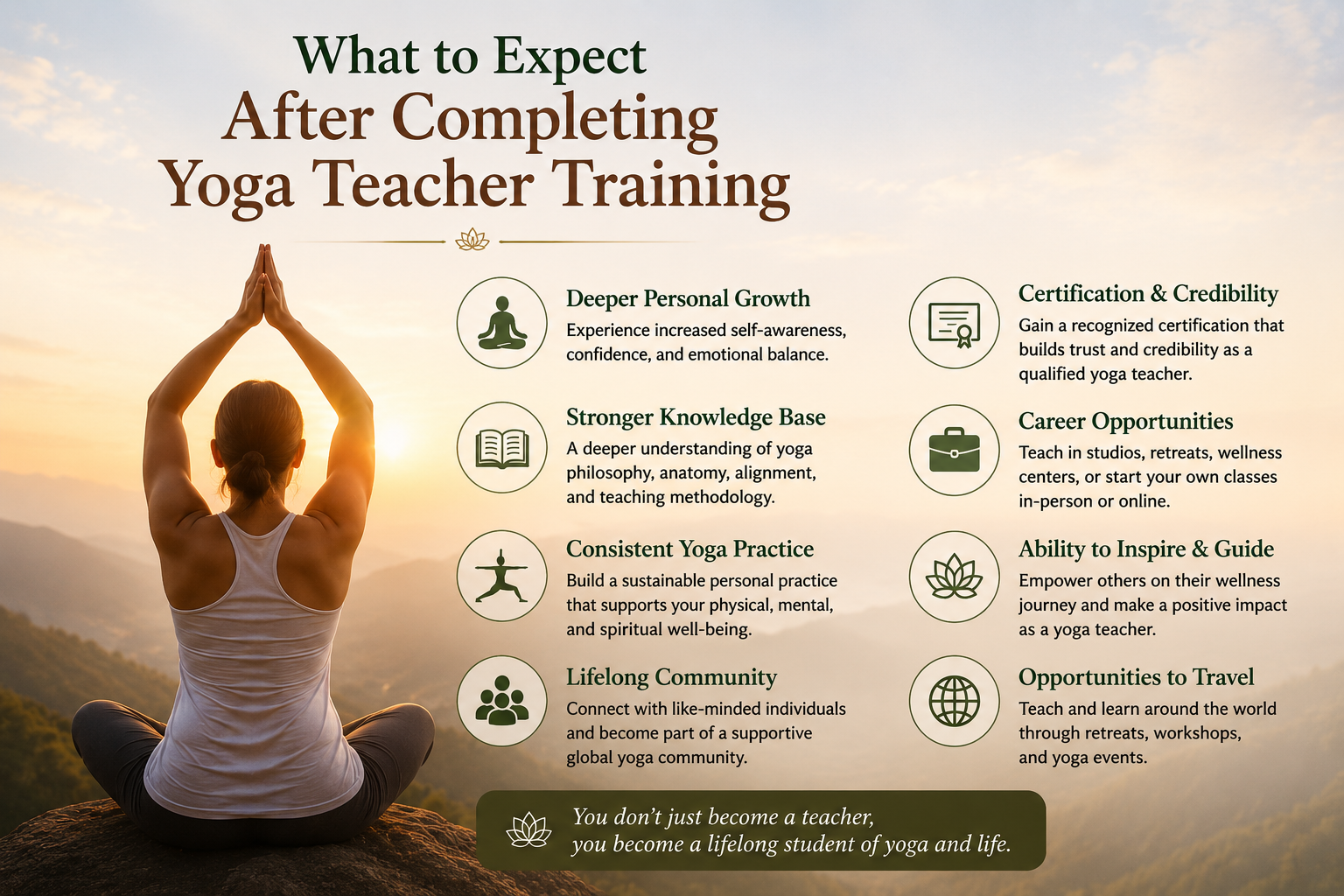
Finishing a yoga teacher training program is one of those milestones that feels both like an ending and a beginning. For weeks, your days have revolved around early morning practice, philosophy lessons, anatomy study, and the slow unraveling of old habits. Then, suddenly, the structure disappears, and you are left holding a certificate, a mat, and a head full of new questions. What happens next?
This is one of the most common concerns among graduates of any Yoga Teacher Training in Rishikesh, and for good reason. The transition from “student” to “teacher” — or even just from “trainee” to “person living differently” — is rarely as smooth as people imagine. Understanding what’s ahead can make that shift far less overwhelming.
The Emotional Aftermath: Joy, Grief, and Everything in Between
Most people expect to feel proud and accomplished after graduation, and they do. But many are surprised by an unexpected wave of sadness or even grief in the days that follow. This happens because intensive training programs create a tight, supportive community in a short period of time. You’ve shared meals, struggled through difficult poses together, meditated in silence side by side, and perhaps cried during an emotional release in a yin class. Saying goodbye to that container can feel like a small heartbreak.
It helps to know this is completely normal. Teacher trainees who complete programs at ashrams nestled along the Ganges often describe this same bittersweet feeling — a mix of gratitude for the experience and uncertainty about how to carry it forward. Give yourself permission to feel this. Journaling about your experience, staying in touch with your cohort, and slowly reintegrating into daily life (rather than jumping straight back into a hectic schedule) can ease the transition considerably.
Your Practice Will Feel Different — And That’s Okay
During training, your practice was likely intense: two or three sessions a day, deep philosophical study, and constant feedback from teachers. Once you’re home, that structure disappears, and many graduates panic when their practice suddenly feels smaller or less disciplined.
This is a normal recalibration period. Your body and mind absorbed an enormous amount during training, and now they need time to integrate it. Rather than trying to replicate the ashram schedule at home (which is rarely realistic with work, family, and other responsibilities), focus on consistency over intensity. A 20-minute practice every morning will serve you better long-term than an ambitious 90-minute routine you abandon after a week.
If you trained in a specific style — whether Vinyasa Yoga in Rishikesh India or something more meditative — try to keep at least a thread of that style alive in your home practice. It keeps the learning fresh and gives you something concrete to build on as you start teaching.
The Confidence Gap: “Am I Really Qualified to Teach?”
Almost every new graduate experiences this. You’ve just spent weeks immersed in anatomy, alignment cues, sequencing principles, and teaching methodology — yet the moment you imagine standing in front of a real class, your mind goes blank. This is sometimes called the “imposter phase,” and it is one of the most universal experiences among new teachers.
The truth is that competence comes from practice, not certification. Your certificate confirms that you have the foundational knowledge to begin teaching responsibly — it does not mean you’ll feel like an expert on day one. Few teachers do. The confidence gap closes gradually, class by class, as you accumulate real teaching hours and start to trust your own voice.
One practical step many graduates find helpful is to start small: offer free classes to friends, family, or community groups before seeking paid work. This lower-stakes environment allows you to refine your cueing, build a teaching rhythm, and become comfortable holding space for a group — all without the pressure of a paying client base.
Reverse Culture Shock (If You Trained Abroad)
If your training took place in India, particularly in a spiritually charged environment, returning home can bring its own kind of culture shock — in reverse. After weeks of waking up to temple bells, eating simple sattvic meals, and being surrounded by people on similar spiritual paths, returning to a fast-paced, consumer-driven environment can feel jarring.
Many graduates describe feeling disoriented by the noise, the choices, and the pace of daily life back home. Friends and family may not understand the shift you’ve gone through, and conversations about your experience can sometimes feel hollow or surface-level compared to what you actually lived through.
This is where staying connected to your training community becomes invaluable. Many programs, particularly those at established ashrams and the Best Yoga School in Rishikesh, maintain alumni groups where graduates can continue discussing philosophy, practice, and the challenges of integration. These communities often become a lifeline during the months after training, helping you stay anchored to what you learned even as daily life pulls you in different directions.
Practical Next Steps: Building Your Teaching Path
Once the initial emotional adjustment settles, most graduates start thinking practically: how do I actually start teaching? This is where the real work begins, and it helps to break it down into manageable steps rather than feeling pressure to have everything figured out immediately.
Register with a recognized certifying body. If your training was accredited, registering with an organization adds credibility to your résumé and opens doors with studios that require verified certification.
Build a simple professional presence. This doesn’t need to be elaborate — a basic website, an Instagram account showcasing your practice, or even a simple flyer for local community boards can be enough to start.
Look for substitute teaching opportunities. Studios are often looking for substitutes, and this is one of the easiest ways to get real teaching experience without committing to a full class schedule.
Consider teaching online. With the rise of virtual classes, many new teachers find that online platforms offer a low-pressure way to build experience, gather feedback, and develop a following before transitioning to in-person teaching.
Continue your education. A 200-hour certification is just the beginning. Many graduates eventually pursue advanced trainings, workshops in specialized styles like Iyengar Yoga in Rishikesh India or Kundalini Yoga in Rishikesh India, or specialty certifications such as an Ayurvedic Massage Course in Rishikesh India to diversify their offerings.
Common Questions Graduates Ask
How long does it take to feel “ready” to teach?
There’s no universal timeline, but most teachers report feeling significantly more confident after their first 20–30 hours of actual teaching experience. The key is to start small and build gradually rather than waiting for a feeling of complete readiness, which may never fully arrive.
What if I don’t want to teach right away?
That’s completely fine. Many people complete teacher training purely for personal growth, and that is a valid and valuable outcome on its own. If you read Becoming a Certified Yoga Teacher: A Journey That Changes Everything, you’ll notice that the transformation itself — not just the teaching credential — is often described as the most valuable outcome of training.
Should I specialize immediately?
Not necessarily. Many new teachers benefit from teaching general classes first to discover what styles and populations they connect with most. Specialization can come later, once you have a clearer sense of your strengths and interests.
How do I maintain the spiritual depth I felt during training?
This is one of the hardest aspects of integration. Many graduates find that maintaining a daily meditation or pranayama practice — even just 10 minutes — helps preserve the inner stillness they cultivated. Revisiting your training notes, the texts you studied, or even articles like A Timeless Path to Self-Realization can help reconnect you to that depth when daily life feels overwhelming.
Is it normal to feel like I’ve forgotten everything I learned?
Yes, completely. Knowledge absorbed intensively often needs time to “settle.” Many graduates find that concepts they struggled with during training suddenly click months later, once they’ve had time to apply them practically.
Looking Ahead
The period after teacher training is less about having answers and more about staying curious, patient, and connected to your “why.” Whether you go on to teach full-time, weave yoga into an existing career, or simply deepen your personal practice, the foundation you built during training continues to support you long after the certificate is framed and the cohort has scattered across the world.
If you’re still deciding where to begin this journey, exploring programs like a Yoga TTC India experience can offer the structured, immersive foundation that makes this entire post-training journey not just possible, but genuinely transformative. And if you’re curious what daily life during such a program actually looks like before you commit, the breakdown in Daily Routine During Yoga Teacher Training in Rishikesh offers a realistic glimpse into what to expect.
Wherever you are in this journey — fresh off the mat or months into integration — trust that the path unfolds at its own pace, and that’s exactly as it should be.
