 Skip to content
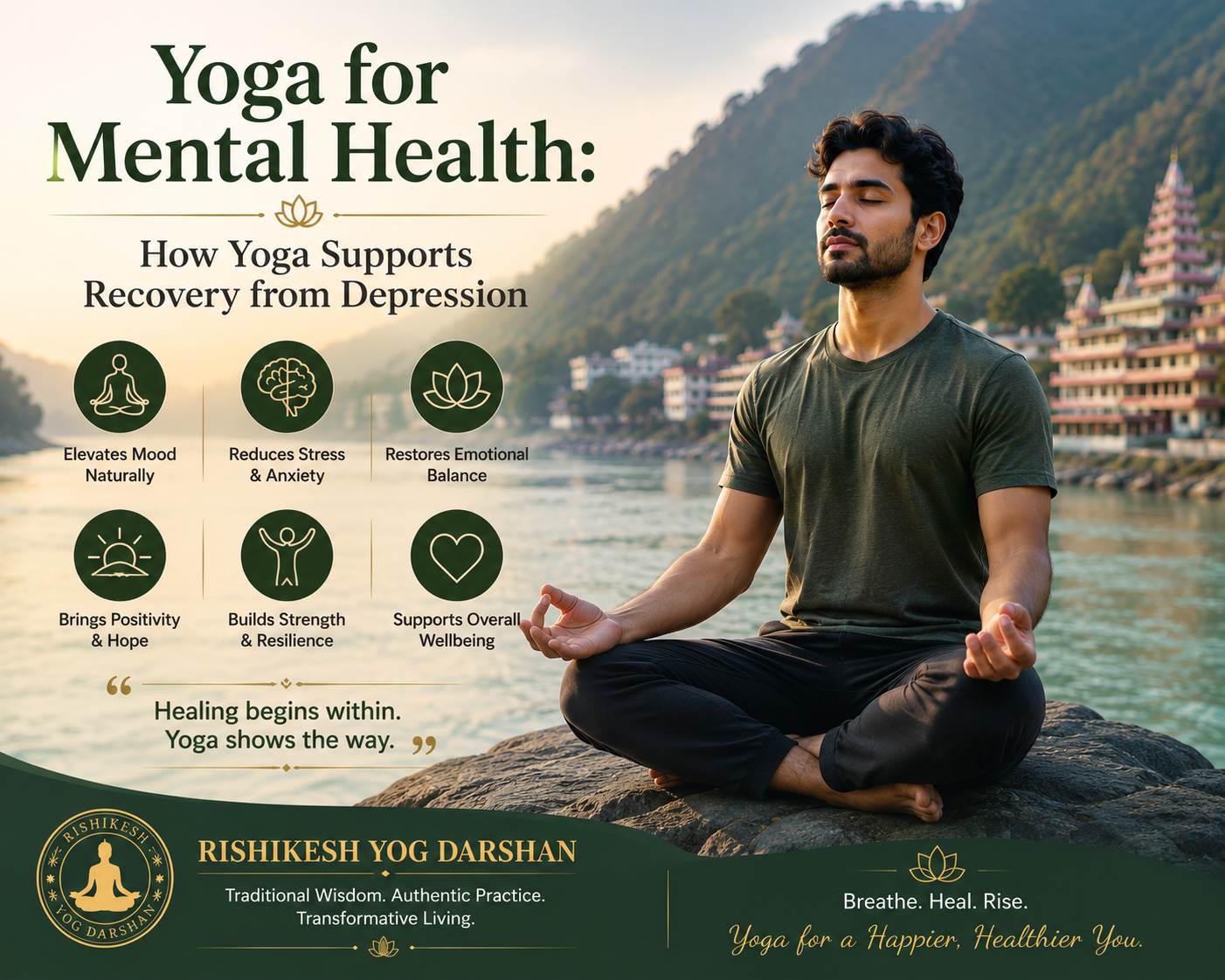
Important Note: This article is written for informational and educational purposes only. It is not a substitute for professional medical or psychological advice, diagnosis, or treatment. Depression is a serious medical condition. If you or someone you know is experiencing symptoms of depression, please consult a qualified healthcare professional. Yoga may serve as a valuable complementary support — it is not a replacement for clinical care.
Depression affects more than 280 million people worldwide, according to the World Health Organization — making it one of the most prevalent and debilitating mental health conditions of our time. It disrupts sleep, appetite, motivation, concentration, relationships, and the fundamental capacity to experience meaning or pleasure in daily life. For many people, it is also one of the least understood and most stigmatized forms of human suffering.
Conventional treatment — typically a combination of psychotherapy, medication, and lifestyle support — remains the clinical standard and the appropriate first-line response for diagnosed depression. But within that framework of care, a growing body of evidence suggests that yoga offers meaningful complementary support: reducing symptom severity, stabilizing mood, regulating the nervous system, and providing practitioners with tools for self-regulation that extend well beyond the practice mat.
This article examines what the research shows about yoga’s role in depression support, which specific practices are most relevant, how yoga works at a physiological and psychological level, and how those interested in deepening their understanding of Yoga for Mental Health in Rishikesh India can explore this knowledge more formally. It is written for those living with depression, for family members and caregivers, and for yoga teachers who want to serve students experiencing mental health challenges more effectively.
1. Understanding Depression: What Is Actually Happening
Depression is not simply sadness, low energy, or a difficult period of life. It is a complex neurobiological condition involving dysregulation of neurotransmitter systems — particularly serotonin, dopamine, and norepinephrine — alongside structural and functional changes in brain regions governing emotion, motivation, memory, and executive function.
Common symptoms include persistent low mood, loss of interest in previously enjoyable activities (anhedonia), fatigue, sleep disturbance (insomnia or hypersomnia), appetite changes, difficulty concentrating, feelings of worthlessness or excessive guilt, psychomotor slowing or agitation, and in severe cases, thoughts of death or suicide.
Depression also has a strong physiological dimension. People experiencing depression typically show elevated cortisol levels (the primary stress hormone), dysregulation of the hypothalamic-pituitary-adrenal (HPA) axis, increased inflammatory markers, and disruption of the autonomic nervous system — with a characteristic shift toward sympathetic (fight-or-flight) dominance and suppression of parasympathetic (rest-and-restore) function.
This physiological profile is significant because it is precisely the dimension most directly addressed by yoga — and particularly by pranayama, meditation, and restorative practice. Yoga does not simply improve mood by making people feel better in the moment. It acts on the underlying physiological systems that depression dysregulates.
2. What the Research Shows: Yoga and Depression
The evidence base supporting yoga as a complementary intervention for depression has grown substantially over the past two decades. While the research is still maturing — and no single study should be treated as definitive — the pattern of findings is consistent and meaningful.
Meta-analyses of randomized controlled trials have found that yoga interventions produce statistically significant reductions in depression symptom severity compared to control conditions, with effect sizes comparable to those seen with antidepressant medication in mild to moderate depression. These improvements have been observed across diverse populations including adults, older adults, pregnant women, cancer survivors, veterans with PTSD-comorbid depression, and adolescents.
The mechanisms proposed to explain these effects include:
- Increased GABA (gamma-aminobutyric acid) activity — yoga practice has been associated with elevated GABA levels in brain regions linked to anxiety and mood regulation, potentially explaining its anxiolytic and antidepressant effects
- HPA axis regulation — sustained yoga practice appears to normalize cortisol rhythms and reduce HPA axis hyperreactivity, addressing a core physiological feature of depression
- Autonomic nervous system rebalancing — pranayama and restorative practices activate the parasympathetic nervous system, counteracting the sympathetic overdrive characteristic of depression and chronic stress
- Neuroplasticity — evidence suggests yoga may support neuroplastic changes in prefrontal cortex function, improving emotional regulation, cognitive flexibility, and executive function
- Inflammatory modulation — yoga practice has been associated with reduced levels of pro-inflammatory cytokines, addressing the inflammatory dimension of depression that is increasingly recognized in research literature
None of these findings mean that yoga replaces clinical treatment. They mean that yoga is a scientifically plausible and evidentially supported complementary tool — one that addresses the physiological substrates of depression rather than simply providing a temporary mood lift.
3. Specific Yoga Practices Most Relevant to Depression Support
Not all yoga practices have equal relevance for depression support. Some styles and techniques are better matched to the physiological and psychological features of depression than others. Understanding these distinctions allows both practitioners and teachers to make informed, individualized choices.
Pranayama: Breath Regulation as Nervous System Medicine
Pranayama — the systematic regulation of breath — is perhaps the single most evidence-supported yoga tool for depression. The connection between breath and autonomic nervous system state is direct and bidirectional: changing the breath changes the physiological state, and changing the physiological state changes mood, cognition, and emotional experience.
Practices particularly relevant to depression support include slow, extended exhalation breathing (which directly activates the parasympathetic nervous system), Nadi Shodhana (alternate nostril breathing, which balances the autonomic nervous system and reduces cortisol), Bhramari (humming bee breath, which stimulates the vagus nerve and increases parasympathetic tone), and Ujjayi pranayama (ocean breath, used in asana practice to maintain present-moment focus and nervous system stability).
Yoga Nidra: Conscious Rest and Deep Restoration
Yoga Nidra — the practice of systematic guided relaxation in a state between wakefulness and sleep — has attracted particular research interest for its effects on stress, anxiety, and depression. By moving awareness systematically through the body while maintaining conscious presence, Yoga Nidra appears to allow the nervous system to release accumulated tension and restore regulatory balance without the effort that conventional meditation practice requires. Yoga Nidra in Rishikesh explores this practice in depth — including its classical foundations and contemporary therapeutic applications.
Restorative and Iyengar Yoga: Supported Presence
For people in active depressive episodes — when motivation is low, physical energy is depleted, and the nervous system is dysregulated — vigorous dynamic practice may be counterproductive or simply inaccessible. Restorative yoga, which uses props to support the body in passive postures held for extended periods, and Iyengar Yoga in Rishikesh India with its emphasis on precise alignment and supported postures, both offer accessible, nervous-system-calming approaches that meet practitioners where they are rather than demanding performance they cannot currently provide.
Kundalini Yoga: Energy, Mantra, and Kriyas
Several Kundalini Yoga kriyas (specific sequences combining movement, breath, bandha, and mantra) have been studied specifically for their effects on depression. The practice’s combination of rhythmic movement, breath of fire (Kapalabhati-style breathing), mantra vibration, and meditative focus appears to produce rapid shifts in neurological state that some researchers have described as producing effects analogous to electroconvulsive therapy — without the risks. Kundalini Yoga in Rishikesh India provides an introduction to this tradition and its specific applications.
Ashtanga and Vinyasa: Movement as Antidepressant
For practitioners who retain the physical energy and motivation to engage in more dynamic practice, Ashtanga Yoga in Rishikesh India and Vinyasa Yoga in Rishikesh India offer the mood-elevating benefits of rhythmic, aerobic-like physical activity combined with mindful breath awareness and present-moment focus. The well-established antidepressant effects of aerobic exercise are enhanced in these styles by the meditative and breath-regulatory dimensions that distinguish yoga from conventional exercise.
4. The Philosophical Dimension: Yoga’s Understanding of Mind
Beyond the physiological mechanisms, yoga offers a philosophical framework for understanding mental suffering that many people find both clarifying and genuinely healing — not as a replacement for clinical understanding, but as a complementary lens that addresses dimensions of depression that biomedical models do not fully capture.
Yoga philosophy understands the fluctuations of the mind — including depressive states — as modifications of consciousness (vrittis) that can be observed, understood, and gradually stilled through sustained practice. The Yoga Sutras of Patanjali describe klesha (afflictions of the mind) — including avidya (ignorance of one’s true nature), asmita (over-identification with the ego), and dvesa (aversion) — that map meaningfully onto the cognitive patterns characteristic of depression: negative self-concept, hopelessness, and withdrawal from engagement with life. Understanding these teachings is central to the tradition explored through Jnana & Karma Yoga in Rishikesh — the yoga of wisdom and selfless action, which offers a path through suffering by shifting identification from the limited ego-self to a deeper, more stable awareness.
The Values of Yoga in Life India — particularly santosha (contentment), ahimsa (non-violence toward oneself as well as others), and svadhyaya (honest self-study) — provide ethical and attitudinal practices that are deeply relevant to depression recovery. The cultivation of self-compassion implicit in ahimsa, and the quality of honest, non-judgmental self-observation that svadhyaya cultivates, both address core psychological features of depression that clinical treatment alone may not reach.
5. A Practical Approach: What a Supportive Yoga Practice Looks Like
For individuals using yoga as a complementary support for depression, the most important principle is consistency over intensity. A gentle, regular practice — even fifteen to thirty minutes daily — is more therapeutically meaningful than occasional intensive sessions. The neurobiological benefits of yoga — HPA axis regulation, autonomic nervous system rebalancing, GABA elevation — are cumulative and depend on regularity.
A supportive daily practice structure for depression might include:
| Time of Day | Practice | Duration & Purpose |
| Morning | Nadi Shodhana pranayama + gentle Surya Namaskar | 15–20 min; sets neurological tone for the day |
| Midday | 5-minute Bhramari or box breathing | 5 min; cortisol regulation at peak stress period |
| Afternoon | Restorative postures or gentle Iyengar-style holds | 20–30 min; nervous system restoration |
| Evening | Yoga Nidra or guided body scan meditation | 20–30 min; sleep quality and overnight restoration |
This structure is flexible and should be adjusted to individual capacity, which may vary significantly day to day in depression. On low-energy days, five minutes of slow, conscious breathing is a complete and meaningful practice. On better days, more dynamic practice may be accessible and beneficial. The key is not to abandon the practice on difficult days — and not to demand performance that the current state cannot provide.
6. What Yoga Teachers Should Know About Supporting Students with Depression
Yoga teachers increasingly encounter students managing depression — whether disclosed or not. Understanding how to teach safely, sensitively, and effectively in this context is an essential dimension of contemporary professional competence.
Key principles for teachers include:
- Trauma-informed language and cueing — avoiding commands that feel demanding or shaming; offering choice and modification rather than instruction and correction
- Awareness of contraindicated practices — some breathing techniques (particularly intensive Kapalabhati in isolation) may not be appropriate for students in acute depressive episodes; knowing when to modify is essential
- Recognizing the limits of yoga’s scope — knowing when a student’s needs exceed what yoga teaching can address, and how to make appropriate referrals to mental health professionals
- Creating safety in community — the interpersonal dimension of yoga class is itself therapeutic; how teachers hold space and build community significantly affects outcomes for students managing mental health challenges
Teachers who want to develop formal competence in yoga’s therapeutic applications for mental health will find that quality Yoga Teacher Training in Rishikesh programs address these dimensions systematically. The 200 Hours YTTC Rishikesh India provides foundational competence, while the 300 Hours YTTC Rishikesh India and 500 Hours YTTC Rishikesh India develop the depth of philosophical, anatomical, and therapeutic understanding that teaching in mental health contexts requires.
7. Rishikesh as a Destination for Mental Health and Yoga Study
For practitioners whose relationship with yoga has been shaped by its mental health dimensions — or for teachers who want to develop their capacity to serve students experiencing mental health challenges — Rishikesh offers an educational environment that combines clinical relevance with the depth of the tradition from which yoga’s therapeutic applications originate. The Best Yoga School in Rishikesh integrates mental health awareness and therapeutic yoga applications into its curricula at every level — from foundational teacher training through to advanced specialized study.
For practitioners not yet ready to commit to formal teacher training, a Yoga Retreat in Rishikesh offers a meaningful immersive experience — combining daily practice, pranayama, meditation, and the restorative effect of the city’s natural environment — that many practitioners describe as one of the most significant contributions to their mental wellbeing they have made. The environment of Rishikesh — the Himalayan air, the Ganga, the natural rhythms of a city without heavy urbanization — is itself therapeutic in ways that are difficult to articulate but consistently reported.
The complementary relationship between yoga and Ayurveda is also relevant to mental health support. The Ayurvedic Massage Course in Rishikesh India provides yoga teachers with access to Ayurvedic bodywork traditions — including Abhyanga (warm oil massage) — that have their own evidence base for nervous system regulation and mood support, and that integrate naturally with yoga-based mental health support programs.
Frequently Asked Questions
Q1. Can yoga replace antidepressant medication or psychotherapy?
No. Yoga is not a replacement for clinical treatment of depression. Antidepressant medication and evidence-based psychotherapy (particularly cognitive behavioral therapy and interpersonal therapy) remain the first-line clinical interventions for diagnosed depression, supported by the strongest evidence base. Yoga may serve as a meaningful complementary support alongside these treatments — potentially enhancing their effects and providing self-regulation tools that extend therapeutic benefits between clinical sessions. Any changes to medication or treatment plans should always be made in consultation with a qualified healthcare provider.
Q2. Which yoga style is best for depression?
There is no single ‘best’ style for depression — the most appropriate approach depends on the individual’s current energy levels, physical capacity, and stage of recovery. For low-energy or acute depressive states, restorative yoga and Yoga Nidra are typically most accessible and most directly therapeutic. For practitioners with more available energy, dynamic styles like Vinyasa or Ashtanga offer the additional benefits of physical movement. Pranayama — particularly Nadi Shodhana, Bhramari, and slow extended-exhalation breathing — is beneficial across all states and capacity levels.
Q3. How frequently should someone practice yoga for depression support?
Research suggests that regular practice — even at modest durations — produces greater benefits than infrequent intensive sessions. Daily practice of fifteen to thirty minutes, emphasizing pranayama and restorative or gentle asana, is a reasonable evidence-informed starting point. Consistency matters more than duration or intensity, particularly in the early stages of establishing a practice when motivation may be challenging.
Q4. Are there yoga practices that should be avoided during depression?
A small number of practices warrant caution in depression contexts. Intensive Kapalabhati (skull-shining breath) practiced in isolation may be over-stimulating for some individuals in acute depressive episodes. Very challenging or physically demanding practices may compound fatigue and feelings of inadequacy if the practitioner cannot meet the demands of the session. Inversions practiced by beginners without adequate support may create anxiety rather than the intended calm. Teachers working with students experiencing depression should prefer trauma-informed, choice-based cuing and moderate-intensity practice over intensive challenge.
Q5. Can yoga help prevent relapse in people who have recovered from depression?
Preliminary evidence suggests yes. The self-regulation skills developed through regular yoga practice — particularly the ability to recognize and modulate autonomic nervous system states through breath — may provide a meaningful buffer against depressive relapse triggers. The mindful awareness cultivated through yoga practice allows practitioners to notice early warning signs of mood deterioration and respond with appropriate self-care before a full episode develops. This relapse-prevention dimension is one of yoga’s most clinically valuable contributions in the mental health context.
Q6. How do I find a yoga teacher qualified to work with mental health concerns?
Look for teachers with training in trauma-informed yoga, therapeutic yoga, or specific mental health applications — ideally from programs that covered these topics in depth rather than as brief additions to a standard curriculum. Teachers trained through comprehensive programs at reputable institutions in Rishikesh will typically have stronger foundations in yoga’s therapeutic applications than those trained through short online certifications. The Yoga Instructor Certification Guide in India and How to Get Yoga Certified in Rishikesh India provide useful frameworks for evaluating teacher credentials and training depth.
Final Thoughts
Depression is one of the most painful and most common forms of human suffering. It diminishes life, isolates people from relationships, and — in its most severe forms — puts life at risk. It deserves the full resources of clinical medicine, psychology, and evidence-informed complementary care.
Yoga’s contribution to that full picture is genuine, meaningful, and increasingly well-supported by research. Not as a cure. Not as an alternative to medical care. But as a practice that addresses the physiological reality of depression — the dysregulated nervous system, the elevated cortisol, the autonomic imbalance — and that provides practitioners with concrete, reliable tools for self-regulation, self-compassion, and the gradual recovery of a relationship with their own bodies and minds.
For those drawn to explore yoga’s mental health applications more deeply — as practitioners, as teachers, or as healthcare professionals seeking to understand what this tradition offers — Rishikesh provides the most complete educational context available. The tradition of Yoga for Mental Health in Rishikesh India as taught through the schools and lineages of this city is not a modern therapeutic adaptation. It is the original tradition, applied with modern understanding to one of the most pressing health challenges of our time.
And for those who are personally navigating depression: please seek qualified professional support. Yoga can be a meaningful companion on that journey — and if and when you are ready, the practices, the philosophy, and the community that Rishikesh offers may be among the most valuable resources you find. A Timeless Path to Self-Realization offers a grounding perspective on what yoga ultimately is — and why, for those willing to engage it fully, it remains one of humanity’s most complete maps of the territory of mind.
May every person who is suffering find the support, care, and path that leads them home to themselves.
