 Skip to content
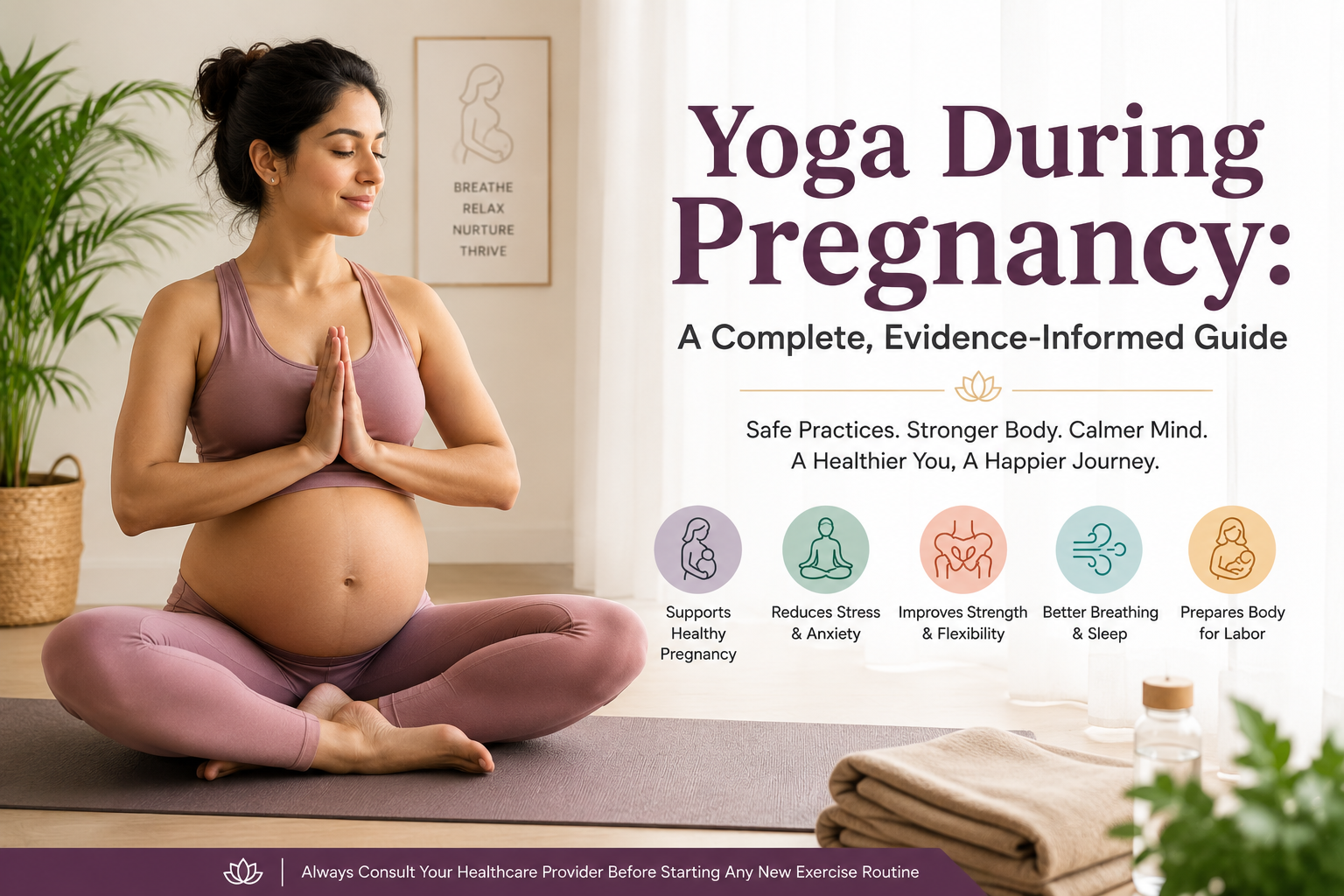
An informational, trimester-by-trimester guide to how yoga supports the body and mind through pregnancy — covering safe postures, breath work, pelvic floor awareness, and when to seek qualified guidance.
Pregnancy is one of the most physically and emotionally dynamic periods in a woman’s life, and it is also one of the times when yoga’s core strengths — gentle movement, breath awareness, and nervous system regulation — become especially valuable. Unlike a general fitness routine, prenatal yoga is not simply a scaled-down version of a regular practice. It is a distinct approach shaped by the specific needs of each trimester, the changing centre of gravity, and the physiological shifts taking place in ligaments, joints, and the cardiovascular system.
This guide walks through how yoga can be adapted safely across pregnancy, from the first trimester through to labour preparation, with an emphasis on practical, evidence-informed guidance rather than sweeping claims. Yoga is not a substitute for prenatal medical care, but when practised appropriately, it is one of the more thoroughly researched complementary approaches available for supporting a woman’s body and mind through this transition.
1. Why Pregnancy Changes How You Practice Yoga
Pregnancy hormones, particularly relaxin, increase the laxity of ligaments and joints throughout the body, which changes how much a pose should be pushed and how stability is maintained. At the same time, the growing uterus gradually shifts the centre of gravity, alters breathing mechanics as the diaphragm has less room to move, and increases the workload on the cardiovascular system. None of this means yoga becomes unsafe during pregnancy — in most uncomplicated pregnancies, it remains an appropriate and often beneficial practice — but it does mean that postures, sequencing, and intensity need to be reconsidered stage by stage rather than assumed to carry over from a pre-pregnancy routine.
2. Benefits of Prenatal Yoga Backed by Research
Several benefits of prenatal yoga are consistently reported across research and clinical guidance: improved flexibility and comfort as the body changes shape, reduced lower back and pelvic girdle pain, better sleep quality, and a measurable reduction in stress and anxiety symptoms during pregnancy. Breath-focused practice in particular appears to support the kind of calm, steady breathing patterns that are useful during labour itself. As with most complementary practices, the size of the benefit varies between individuals, and prenatal yoga works best as one part of a broader, medically supervised approach to pregnancy care rather than as a standalone solution.
3. Yoga in the First Trimester
The first trimester is a period of significant internal change even though outward physical changes may be minimal, and fatigue, nausea, and heightened sensitivity to heat are common. Gentle, grounding practice is generally favoured over vigorous or heat-building sequences during this window, and many teachers recommend avoiding deep twists, strong core-compressing postures, and prolonged inversions during these early weeks, partly out of caution and partly because energy levels often do not support intensity in any case. Slow, breath-led movement and rest whenever needed tend to serve this stage better than pushing through fatigue.
4. Yoga in the Second Trimester
Many women find the second trimester the most comfortable window for a more active practice, as early fatigue and nausea often ease while the physical bulk of the third trimester has not yet arrived. This is typically when standing postures, gentle hip-opening work, and supported balance poses become particularly useful, since they build strength and stability that pay off later in pregnancy. From this point onward, lying flat on the back for extended periods is generally avoided, as the weight of the growing uterus can compress major blood vessels; propped, side-lying, or seated alternatives are used instead.
5. Yoga in the Third Trimester
As the pregnancy progresses and the abdomen grows further, balance becomes more challenging and comfort during many postures decreases. Practice in the third trimester generally shifts toward supported, wall- or prop-assisted postures, wider stances for stability, and more time devoted to breath work and gentle hip and pelvic mobility rather than strength-building sequences. Restorative postures, supported squatting where comfortable, and breathing practice that mimics the rhythm useful during labour all become more central during these final weeks.
6. Poses and Practices to Avoid During Pregnancy
A number of practices are generally modified or avoided throughout pregnancy, and especially as it progresses:
- Deep or closed twists that compress the abdomen, as opposed to gentle, open twisting from the shoulders.
- Prolonged inversions and any pose carrying a meaningful risk of falling, given changing balance.
- Lying flat on the back for extended periods after the first trimester.
- Hot or heated yoga styles, due to increased sensitivity to overheating during pregnancy.
- Deep backbends and intense core-compressing postures such as strong abdominal work.
Because individual pregnancies vary — particularly where there are pre-existing conditions, multiples, or specific complications — these general guidelines should always be discussed with a prenatal instructor and confirmed with a treating doctor or midwife rather than applied uniformly.
7. Breath Work for Labour Preparation
Pranayama, or breath-regulation practice, is one of the most consistently useful tools carried from a general yoga practice into pregnancy and labour preparation. Slow, steady breathing activates the parasympathetic nervous system, which can help manage the stress response that often intensifies pain perception during contractions. Pranayama for Stress Relief explores these techniques in more depth, and many of the same principles — slow exhalation, steady rhythm, and a soft, unforced breath — translate directly into labour breathing patterns that many birth educators teach in dedicated childbirth classes.
8. Pelvic Floor and Core Awareness During Pregnancy
The pelvic floor carries substantial additional load throughout pregnancy, and building awareness of this muscle group early, rather than waiting until after delivery, is widely recommended. Gentle pelvic floor engagement and release work, combined with breath awareness, supports both comfort during pregnancy and physical readiness for delivery and postpartum recovery. As with postpartum practice, this area benefits from qualified guidance, since both excessive tension and complete disengagement of the pelvic floor can create problems, and the right balance is not always intuitive without instruction.
9. Emotional Wellbeing During Pregnancy
Pregnancy brings a wide emotional range — anticipation, anxiety about labour and parenting, and hormonal fluctuation can all be present at once, sometimes within the same day. Yoga for Emotional Balance looks at how consistent practice supports the nervous system pathways involved in mood regulation, and the same principle applies during pregnancy: a short daily practice of breath work and gentle movement can offer meaningful emotional steadiness, without replacing professional mental health support where it is needed.
10. Rest and Nervous System Recovery
Fatigue is common throughout pregnancy, and rest-oriented practice deserves as much attention as active postures. Guided relaxation in the style of Yoga Nidra in Rishikesh is particularly well suited to pregnancy, since it supports deep nervous system rest while lying in a supported, propped position that remains comfortable even in later trimesters, offering genuine recovery on days when a full physical practice is not realistic.
11. Building a Safe Weekly Prenatal Routine
A realistic prenatal yoga routine tends to work best when it stays flexible and responsive to how a woman feels on any given day, but a few general principles apply broadly:
- 2–4 sessions per week of 20–40 minutes, with intensity adjusted to trimester and energy levels.
- A short daily pranayama or breathing practice, even on days when a full session is not possible.
- Regular supported rest or Yoga Nidra sessions, particularly as fatigue increases later in pregnancy.
- Ongoing communication with a prenatal-qualified teacher about any new discomfort, complication, or change in energy.
12. Safety Notes and When to See a Doctor
Yoga can be a valuable complementary practice throughout pregnancy, but it should never replace appropriate prenatal medical care. A few guidelines apply broadly:
- Always inform a yoga teacher of the pregnancy stage, and any complications, before joining a class.
- Stop any posture that causes pain, dizziness, shortness of breath, or unusual discomfort, and rest instead.
- Persistent pain, bleeding, reduced foetal movement, or any concerning symptom should be evaluated by a doctor or midwife without delay, regardless of what a yoga routine calls for that day.
- High-risk pregnancies, multiples, or pre-existing health conditions generally call for practice under closer medical and yoga-teacher supervision than a standard prenatal class provides.
13. Learning to Teach or Practice Prenatal Yoga Properly
Because prenatal yoga requires careful, stage-specific knowledge, learning from a teacher trained specifically in this area makes a meaningful difference to both safety and comfort. A structured Yoga Teacher Training in Rishikesh programme typically includes therapeutic and prenatal sequencing as part of a broader curriculum, offering real value even to women who have no interest in teaching professionally but simply want a deeper, safer understanding of how to adapt their own practice across pregnancy and beyond.
Frequently Asked Questions (FAQs)
Q1. Is it safe to start yoga during pregnancy if I have never practised before?
Yes, in most uncomplicated pregnancies, though beginners should join a class specifically designed for prenatal students and inform the teacher of their pregnancy stage and any complications, since general classes are not built around pregnancy-specific modifications.
Q2. Which trimester is generally considered the best time to begin prenatal yoga?
Many women find the second trimester the most comfortable starting point, once early fatigue and nausea have often eased, though gentle practice is generally appropriate from early pregnancy onward with suitable modifications.
Q3. Can yoga help with common pregnancy discomforts like lower back pain?
Yes. Gentle, targeted postures and improved postural awareness are commonly used to ease lower back and pelvic girdle discomfort, though persistent or severe pain should still be discussed with a doctor or physiotherapist.
Q4. Are all yoga poses safe throughout pregnancy?
No. Deep twists, prolonged inversions, extended time lying flat on the back after the first trimester, and hot yoga styles are generally avoided or modified, and a qualified prenatal teacher will adjust a sequence accordingly.
Q5. Can breathing practice really help during labour?
Many birth educators and yoga teachers consider steady, slow breathing a genuinely useful tool for managing the stress response during contractions, and practising these patterns regularly during pregnancy tends to make them easier to access when labour begins.
Q6. Is it necessary to stop yoga entirely in the third trimester?
Not usually. Practice typically continues but shifts toward supported, prop-assisted postures, gentler mobility work, and more breath-focused sessions rather than stopping altogether, unless a doctor advises otherwise for a specific pregnancy.
Q7. How much prenatal yoga is needed to see meaningful benefit?
Two to four sessions per week, combined with a short daily breathing practice, is generally enough to support comfort, sleep, and stress levels through pregnancy, though even occasional practice offers some benefit compared to none.
Final Thoughts
Pregnancy asks a woman’s body and mind to adapt continuously over nine months, and yoga’s particular value here lies in how readily it adapts alongside her. The same underlying toolkit — breath, gentle movement, and nervous system regulation — can be reshaped week by week to meet the needs of the first trimester, the second, and the third, right through to labour itself.
Approached with appropriate modification, qualified guidance, and ongoing medical supervision, yoga offers one of the more sustainable, adaptable complementary practices available for supporting a woman through pregnancy — never replacing prenatal care, but working alongside it.
