 Skip to content
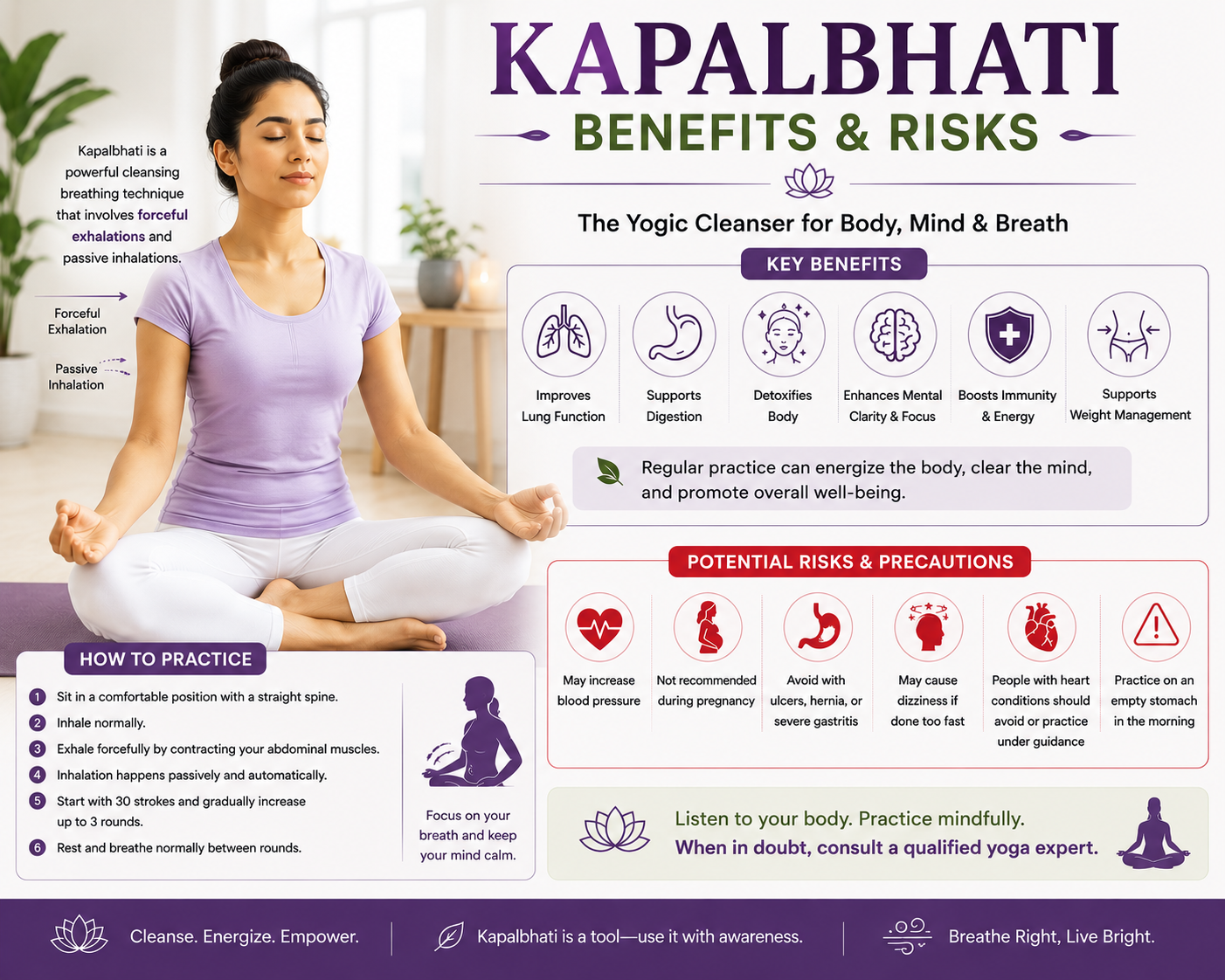
Among the many pranayama techniques taught within traditional yoga, few generate as much curiosity, and as much confusion, as Kapalbhati. Often described as a “cleansing breath” or “skull-shining breath,” it involves short, forceful exhalations paired with passive, effortless inhalations, a rhythm that looks deceptively simple but produces a noticeably different internal experience than slower, calming breathwork. For some practitioners, Kapalbhati becomes an energizing part of a daily routine. For others, particularly those with underlying health conditions, it can do more harm than good when approached without proper guidance or technique.
At Rishikesh Yog Darshan, we teach Kapalbhati the way it was traditionally intended, not as a shortcut to a flatter stomach or a trending breathing exercise, but as a genuine physiological practice with documented benefits, real contraindications, and a technique that matters more than most people assume. This blog looks closely at what Kapalbhati actually does to the body, what current understanding says about its benefits, who should approach it with caution, and how to build it into a sustainable, well-informed practice.
What Is Kapalbhati Pranayama?
Kapalbhati translates loosely to “skull shining breath,” drawn from kapal (skull) and bhati (shining or illuminating). Traditional yogic texts describe the practice as one that clears and energizes the mind, producing a sense of mental lightness and alertness that practitioners often describe as clarity behind the eyes. Rather than being classified purely as a calming pranayama, Kapalbhati belongs to the shatkarmas, a set of traditional cleansing techniques intended to purify the body’s internal systems before deeper breathwork or meditation is introduced.
Unlike most breathing techniques, where inhalation and exhalation receive roughly equal attention, Kapalbhati reverses that emphasis. The exhalation is short, sharp, and generated by a forceful contraction of the lower abdominal muscles that pushes air out through the nose, while inhalation happens passively as the diaphragm simply relaxes and air is drawn back in without conscious effort. This active-exhalation, passive-inhalation pattern is what separates Kapalbhati from slower diaphragmatic breathing and is also why it produces such a distinct physical sensation, one of internal heat, abdominal engagement, and heightened alertness rather than deep relaxation.
Because of this pumping abdominal action, Kapalbhati is sometimes grouped alongside other traditional techniques believed to stimulate digestive fire, though its effects are understood to reach well beyond digestion alone, touching the respiratory, nervous, and circulatory systems in ways that modern practitioners are still exploring.
The Documented Benefits of Kapalbhati
Kapalbhati’s reputation as a powerful practice isn’t without basis. When practiced correctly and consistently, several benefits are commonly associated with regular use:
- Strengthens the diaphragm and core muscles – The repeated, forceful contractions used to expel air engage the abdominal wall and diaphragm directly, functioning almost like a respiratory strength exercise over time.
- Improves lung capacity and respiratory efficiency – Regular practice is associated with more efficient use of lung volume and better control over the breath, benefits that extend into other areas of physical activity.
- Supports digestion and abdominal circulation – The rhythmic pumping motion is believed to stimulate blood flow to the abdominal organs, which traditional practitioners associate with improved digestive function.
- May enhance mental clarity and alertness – Unlike restorative breathwork, Kapalbhati has an energizing, almost stimulating quality, which many practitioners use deliberately in the morning rather than before sleep.
- Assists lymphatic and circulatory stimulation – The rapid abdominal movement is thought to support lymphatic flow in a manner similar to other movement-based practices, contributing to the body’s natural detoxification processes.
- Traditionally associated with clearing nasal passages – The forceful exhalation through the nose is often described as helping clear mild nasal congestion, though this effect is anecdotal rather than clinically established.
Kapalbhati and the Cardiovascular System
Because Kapalbhati directly engages the breath and, by extension, the autonomic nervous system, its effects on heart rate and circulation are worth understanding before beginning a regular practice. In healthy individuals, the practice can feel invigorating, briefly raising heart rate and internal body heat in a way that mirrors mild physical exertion. This is different from the calming, parasympathetic-dominant effect produced by slower breathing techniques, and it’s part of why Kapalbhati is generally practiced earlier in a session rather than as a wind-down technique.
For anyone specifically interested in how controlled breathing interacts with cardiovascular function more broadly, this guide on Breathing Exercises for Heart Health explains how different breath patterns influence the heart and circulatory system, offering useful context for understanding why techniques like Kapalbhati are not appropriate for everyone.
Who Should Approach Kapalbhati With Caution
This is the part of Kapalbhati that often gets left out of casual wellness content, but it matters just as much as the benefits. Because the technique relies on forceful abdominal contraction and rapid changes in internal pressure, it isn’t a neutral practice suited to every body or every condition. Following Google’s emphasis on trustworthy, experience-based health guidance, it’s worth being direct about who should avoid or significantly modify this practice:
- Pregnant individuals – The forceful abdominal engagement involved in Kapalbhati places pressure on the abdominal cavity that is not appropriate during pregnancy and should be avoided entirely.
- People with hernias or recent abdominal surgery – The repeated intra-abdominal pressure changes can aggravate existing hernias or interfere with post-surgical healing.
- Individuals with high or unstable blood pressure – Because the practice can temporarily elevate heart rate and internal pressure, those managing hypertension should seek guidance before attempting it. This overview of Yoga for High Blood Pressure outlines gentler, more appropriate breathing approaches for anyone managing cardiovascular concerns.
- Those with cardiac conditions – Anyone with a diagnosed heart condition should only practice Kapalbhati under direct guidance from a qualified teacher and with medical clearance.
- People with glaucoma or retinal conditions – The increase in internal pressure associated with forceful exhalation can affect intraocular pressure and should be avoided by those with eye conditions.
- Individuals prone to vertigo, epilepsy, or panic-related symptoms – The rapid breathing rhythm can occasionally trigger lightheadedness or heightened anxiety in sensitive individuals, and should be approached slowly, if at all.
None of this is meant to discourage the practice outright, only to underscore that Kapalbhati is a genuinely active technique, not a passive relaxation exercise, and it deserves the same care and screening any physically demanding practice would.
Kapalbhati for Weight Management: Separating Fact From Marketing
Kapalbhati is frequently marketed online as a fast route to a flatter stomach, largely because the visible abdominal engagement during practice resembles a core workout. The reality is more nuanced. While the technique does engage and gradually strengthen the abdominal muscles, and may support digestion and metabolic activity indirectly, it isn’t a substitute for the broader combination of movement, nutrition, and consistency that genuine, sustainable weight management requires.
For anyone specifically looking to understand how yoga fits into a realistic, sustainable approach to weight and body composition, this guide on Yoga for Weight Loss offers a more complete picture of how asana, breathwork, and lifestyle habits work together, rather than relying on any single technique to do the work alone.
How to Practice Kapalbhati Safely
Technique matters considerably more with Kapalbhati than with most other pranayama practices, since the benefits and the risks are both tied directly to how correctly it’s performed.
- Start seated with a tall, comfortable spine. A stable, upright posture allows the diaphragm and abdominal muscles to move freely without restriction.
- Begin with short rounds. Ten to twenty rounds to start is sufficient; building duration gradually is far safer than attempting long sessions too soon.
- Focus on the exhalation, not the inhalation. The exhale should be sharp and deliberate, while the inhale is allowed to happen passively and without force.
- Never force the breath if lightheadedness occurs. Mild dizziness is a signal to stop and return to normal breathing, not to push through.
- Practice on an empty stomach. Ideally in the morning, several hours after eating, since abdominal engagement on a full stomach can cause discomfort.
- Learn from a qualified teacher initially. Especially for anyone with an existing health condition, proper guidance significantly reduces risk while preserving the benefits.
Why Learn This From Rishikesh Yog Darshan
Rishikesh has long served as a center for authentic yogic knowledge, and techniques like Kapalbhati are a clear example of why context and proper instruction matter so much. Taught without care, it can be genuinely risky. Taught correctly, with attention to individual health history and technique, it becomes a powerful and traditional practice with real, well-understood benefits.
Our approach to Yoga Teacher Training in Rishikesh goes beyond memorizing sequences of poses and pranayama, incorporating a genuine understanding of contraindications, physiology, and the traditional context that surrounds practices like Kapalbhati. Students leave with both a grounded understanding of yogic philosophy and a practical, safety-conscious approach to teaching that respects how powerful, and how individualized, these techniques really are.
Frequently Asked Questions
1. Is Kapalbhati safe to practice every day?
For most healthy individuals, a short, well-practiced Kapalbhati routine can be done daily, though it’s generally recommended to build up gradually and to listen closely to how the body responds rather than following a fixed schedule regardless of how the practice feels.
2. What’s the difference between Kapalbhati and normal deep breathing?
Normal deep breathing emphasizes slow, full inhalations and exhalations to calm the nervous system, while Kapalbhati relies on short, forceful exhalations and passive inhalations, producing an energizing rather than a relaxing effect.
3. Can beginners practice Kapalbhati without a teacher?
Beginners can learn the basic rhythm on their own, but proper form matters enough, especially regarding contraindications, that initial guidance from a qualified teacher is strongly recommended before practicing independently.
4. Does Kapalbhati help with digestion?
The rhythmic abdominal movement is traditionally associated with stimulating digestive function and circulation to the abdominal organs, though it should be practiced on an empty stomach and isn’t a substitute for other digestive support such as diet.
5. Why do some people feel dizzy during Kapalbhati?
Rapid breathing changes the balance of oxygen and carbon dioxide in the body more quickly than the system may be used to, which can cause temporary lightheadedness, particularly for beginners practicing too quickly or for too long.
6. Can Kapalbhati replace medical treatment for a health condition?
No. Kapalbhati can be a valuable supportive practice, but it should never replace medical treatment, diagnosis, or guidance, particularly for cardiovascular, respiratory, or abdominal conditions.
7. How long before someone notices the benefits of Kapalbhati?
Some effects, such as increased alertness, may be noticeable almost immediately, while deeper benefits related to lung capacity, digestion, and core strength typically develop over weeks of consistent, correctly performed practice.
Final Thoughts
Kapalbhati is a genuinely powerful technique, and that power is exactly why it deserves respect rather than casual experimentation. Its benefits, from strengthened respiratory muscles to improved alertness and digestive stimulation, are real and well-supported by both traditional knowledge and practitioner experience. At the same time, its risks are just as real for the individuals who should approach it with caution or avoid it altogether.
Practiced correctly, with attention to individual health, proper technique, and gradual progression, Kapalbhati can be a meaningful addition to a well-rounded yoga practice. Practiced carelessly, it can do more harm than the quick wellness-trend framing it often receives online would suggest. As with most yogic practices, the value lies not in intensity, but in understanding exactly what you’re doing and why.
