 Skip to content
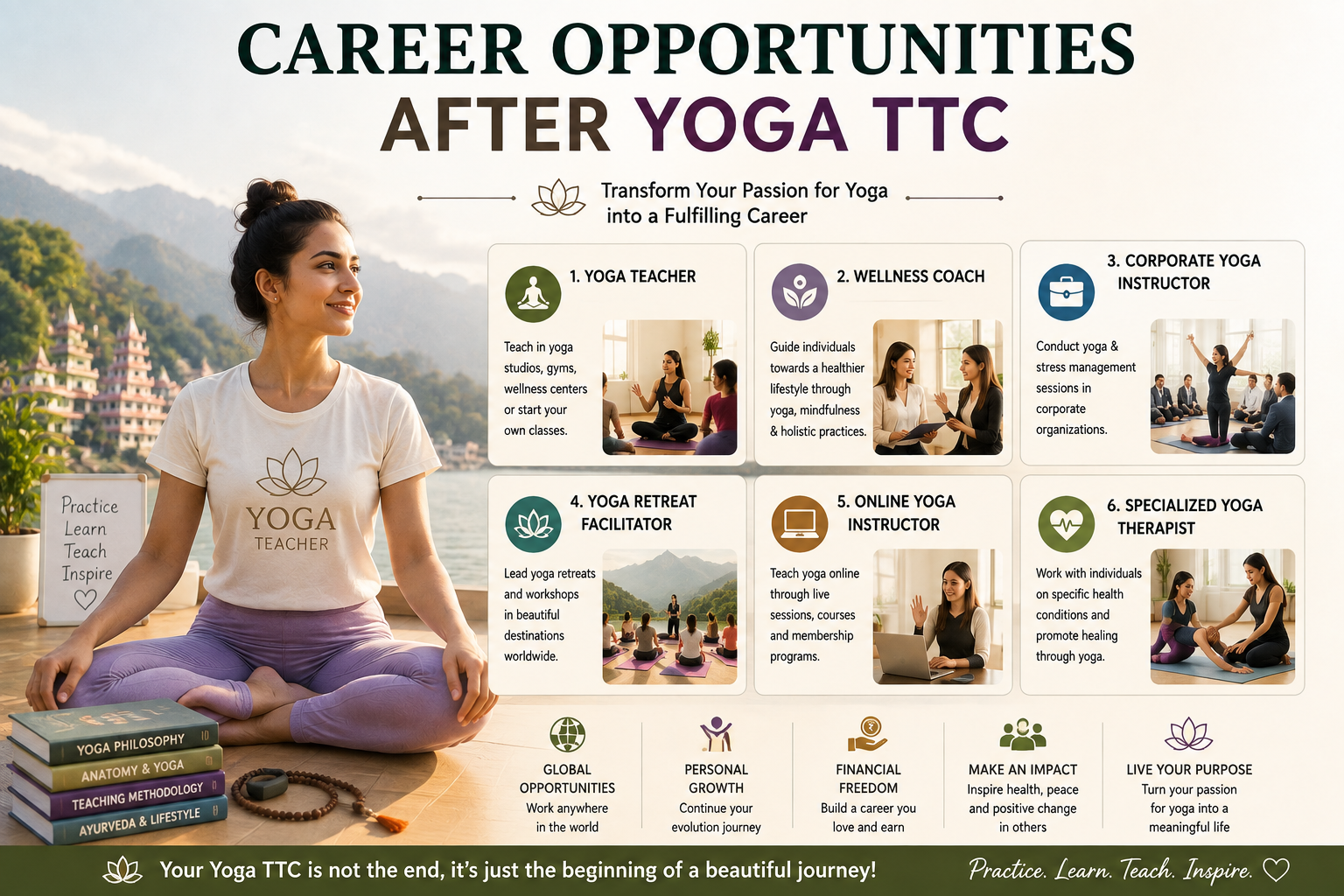
An informational guide to what a yoga teacher training certificate genuinely opens up — covering the realistic range of teaching, wellness, and business paths available afterward, and where popular claims about guaranteed income or instant career success go further than reality supports.
Completing a Yoga Teacher Training Course is often marketed as a guaranteed gateway to a thriving new career, complete with promises of full class schedules, international retreats, and a steady income within months. The more accurate picture is more layered: a certification opens doors, but what happens next depends heavily on the specialization chosen, the effort put into building a teaching practice, and how the certificate is positioned within a broader skill set. A completed programme, such as a well-structured Yoga Teacher Training in Rishikesh, provides a genuine foundation of technical knowledge, teaching methodology, and credibility, but it is the graduate’s own initiative that ultimately determines how far that foundation goes.
This guide walks through the realistic range of career paths available after a YTTC, where a certificate genuinely strengthens a resume, and where ambition and consistent effort matter more than the certificate itself. It also looks at how different certification levels affect opportunities, and how graduates can position themselves within an increasingly crowded wellness industry.
1. What a Yoga TTC Actually Prepares You For
A structured teacher training programme prepares graduates in three core areas: technical understanding of postures and alignment, the ability to sequence and cue a class safely, and a working knowledge of yoga philosophy and anatomy. What it does not automatically provide is a client base, marketing experience, or business skills, all typically built after certification. Recognising this distinction early helps graduates set realistic expectations rather than assuming the certificate alone generates teaching opportunities.
2. Why Career Claims After YTTC Are Often Overstated
It is common to see promotional content suggesting that completing a YTTC guarantees a full teaching schedule, a six-figure income, or instant recognition as an expert. These claims are not well supported by how the wellness industry actually works, since building a sustainable teaching career typically involves months or years of consistent class-building, networking, and skill development beyond the initial certification. The fairer summary is that a YTTC provides the qualification required to teach, while the career outcomes that follow depend on ongoing effort, specialization, and how well a graduate adapts to the specific market they are entering.
3. How Certification Level Changes What You Can Offer
Not all certifications open the same doors, and training hours completed have a real effect on teaching scope. A 200 Hours YTTC Rishikesh India is generally the entry-level qualification recognised internationally, sufficient for teaching foundational group classes. A 300 Hours YTTC Rishikesh India builds on this with deeper anatomy and more advanced sequencing, often expected by studios seeking experienced instructors. A 500 Hours YTTC Rishikesh India combines both levels and is frequently required for senior roles or mentoring newer instructors. Choosing the right level matters more than assuming higher hours alone guarantee better prospects.
4. Teaching in Studios, Gyms, and Wellness Centres
The most common starting point for new graduates is teaching group classes in studios, gyms, or community centres, where demand for certified instructors is steady even if competition is high in saturated markets. This path offers real-world experience managing groups, adapting sequences for mixed-ability classes, and building confidence through repeated practice. It rarely offers high income immediately, and most new teachers combine studio classes with other income streams while building a reputation.
5. Building an Online Teaching Practice
Online teaching has become a genuine and growing career path, allowing graduates to reach students well beyond their local area through live virtual classes, recorded content, or subscription platforms. This route demands a different skill set than in-person teaching, including comfort with basic video production and cueing postures clearly without being able to physically adjust a student. It suits graduates comfortable with self-promotion and willing to treat teaching as an ongoing content and community-building effort, not simply a class to show up to.
6. Leading Retreats and Workshops
Once a teacher has built some experience and a small following, leading or assisting at a retreat becomes a realistic next step, particularly for those drawn to a more immersive teaching format. A well-run Yoga Retreat in Rishikesh illustrates the kind of structured, multi-day format many graduates eventually aim to lead themselves, combining daily practice with philosophy, community, and a slower pace than a typical studio class. Assisting at an established retreat first is generally a more realistic entry point than attempting to organise one independently without prior experience.
7. Specializing in Therapeutic and Mental Health-Focused Yoga
Specialization is one of the more reliable ways graduates differentiate themselves in a crowded market. Teachers who pursue further training in areas connecting movement with psychological wellbeing, such as the principles explored in Yoga for Mental Health in Rishikesh India, often find demand from students seeking stress or anxiety-focused classes, a niche general group classes do not always address. This kind of work requires study beyond a foundational YTTC and a clear understanding of where yoga supports wellbeing and where it is not a substitute for clinical care.
8. Exploring Specific Yoga Styles as a Niche
Beyond general Hatha or Vinyasa teaching, many graduates build a career around a specific style suited to their strengths. This might include the structured approach of Ashtanga Yoga in Rishikesh India, the alignment precision of Iyengar Yoga in Rishikesh India, or the introspective approach of Jnana & Karma Yoga in Rishikesh. Genuine depth in one style, rather than a shallow overview of many, tends to build a more distinct professional identity.
9. Progressing Into Advanced or Specialized Training
For graduates who want to keep building their qualifications, moving into an Advanced Yoga Practices in Rishikesh India programme is a common next step once foundational teaching experience has been gained. Advanced training typically deepens technical skill and may open doors to mentoring roles, assisting at teacher trainings, or teaching more experienced students who are looking for a level of guidance a beginner-focused class cannot offer.
10. Combining Yoga with Ayurveda and Broader Wellness Work
Many graduates find that combining yoga teaching with a complementary skill increases income stability and credibility. Training such as an Ayurvedic Massage Course in Rishikesh India allows a teacher to offer a broader wellness service, appealing to retreat centres and resorts that prefer staff supporting guests across multiple modalities. This cross-training is not essential, but it does expand the range of settings where a graduate can find consistent work.
11. Understanding Kundalini and Other Specialized Traditions
Some graduates are drawn toward specific spiritual or energetic traditions, such as the practices covered in Kundalini Yoga in Rishikesh India. These traditions require dedicated study beyond a general YTTC and tend to attract a specific student base, making them a meaningful niche for a teacher who genuinely resonates with the tradition rather than one adopted purely for marketing appeal.
12. Working Internationally Versus Building a Local Practice
Graduates often assume international teaching is the most lucrative path, but reality varies considerably by location, visa requirements, and local demand. Building a strong local reputation first, through consistent studio classes or workshops, often creates a more stable foundation than travelling immediately, since local relationships and repeat students tend to generate more reliable income than short-term international gigs.
13. Realistic Income and Timeline Expectations
Income after a YTTC varies enormously by location, teaching format, and how actively a graduate markets themselves, and no single figure applies universally. Most new teachers supplement early studio or online income with other work while building a client base, and a genuinely stable teaching income tends to develop gradually over one to three years rather than immediately after certification. Understanding this timeline helps graduates avoid the discouragement of expecting an instant, fully booked schedule.
14. Common Mistakes New Teachers Make
A few patterns tend to slow down an otherwise capable new teacher’s career progression.
- Assuming the certificate alone will generate consistent teaching opportunities without active marketing or networking.
- Underpricing classes significantly in an attempt to attract students, which can undervalue the training completed.
- Avoiding specialization out of a wish to appeal to everyone, which often makes it harder to stand out in a crowded market.
- Neglecting continuing education, which limits the ability to teach more advanced students over time.
- Comparing early progress to established teachers with years of experience, rather than tracking realistic personal growth.
15. Choosing the Right School and Programme
The reputation of the training programme has a meaningful, if not absolute, effect on career prospects, since some employers and retreat centres do consider where a certificate was earned. Researching a school properly, including accreditation, faculty experience, and graduate outcomes, matters more than choosing based on price alone. A recognised Best Yoga School in Rishikesh or an established Yoga TTC India programme with a track record of graduate support tends to offer a stronger starting point, though the graduate’s own effort afterward still plays the larger role in long-term outcomes.
16. Building Toward Full Certification as an Instructor
Understanding the complete process, including the practical steps beyond the training itself, helps set realistic expectations. Resources such as an Yoga Instructor Certification Guide in India or a structured How to Get Yoga Certified in Rishikesh India roadmap can clarify how certification, registration, and ongoing development fit together for someone building a long-term career rather than a one-off qualification.
17. Preparing Before You Commit to a Programme
Choosing the right training also means understanding what the experience actually involves before committing time and money to it. A guide covering Things to Know Before Doing Yoga Teacher Training in India can help prospective students set realistic expectations about the intensity, structure, and lifestyle of a residential training, which in turn supports a smoother transition into teaching afterward.
Trust, Accreditation, and Realistic Expectations
A yoga teaching career, like most skill-based professions, rewards consistent effort and genuine competence more than the certificate alone. Prospective students should verify that any programme they choose is properly accredited, taught by experienced faculty, and transparent about what graduates can realistically expect afterward. Career claims that promise guaranteed income, instant international bookings, or overnight success are worth treating with the same scepticism applied to any other unverified professional promise.
Frequently Asked Questions (FAQs)
Q1. Can I start teaching yoga immediately after finishing a 200-hour YTTC?
Yes, a 200-hour certification is generally sufficient to begin teaching foundational group classes, though most new teachers continue refining their skills through practice and continued learning rather than treating the certificate as a finished endpoint.
Q2. Is a 300-hour or 500-hour certification necessary to earn a good income?
Not strictly necessary, but additional training often expands the type of classes a teacher can offer and can support access to more advanced or specialized teaching roles over time.
Q3. How long does it typically take to build a stable teaching income?
There is no fixed timeline, but most teachers find that a consistent, reliable income develops gradually, often over one to three years of active teaching, networking, and skill-building rather than immediately after certification.
Q4. Is online teaching a realistic full-time career on its own?
It can be, though it typically requires as much effort in content creation, marketing, and community-building as it does in the teaching itself, and most successful online teachers built an audience gradually rather than overnight.
Q5. Does specializing limit the number of students I can teach?
Not necessarily. Specializing often helps a teacher stand out in a crowded market and can attract a dedicated student base, even though it may mean teaching a narrower style rather than a broad general class.
Q6. Do retreat centres and studios really check where a certificate was earned?
Many do consider the reputation of the training programme, particularly for more senior roles, though a graduate’s teaching quality and experience generally matter more over time than the name of the school alone.
Q7. What is the most realistic way to think about a career after YTTC?
The most accurate framing is that a YTTC provides the qualification and foundational skill required to teach, while the career that follows is built gradually through consistent teaching, specialization, and active effort, rather than guaranteed automatically by the certificate itself.
Final Thoughts
A Yoga Teacher Training Course is not a guaranteed career so much as a genuine, credible starting point, and the most honest, evidence-aligned view of what follows is a gradual one: building teaching experience, developing a specialization, and growing a reputation over time rather than expecting an instant, fully booked schedule. This is a more realistic picture than some marketing suggests, but it is also a far more sustainable one for anyone genuinely committed to teaching.
