 Skip to content
Note: This guide offers general, informational content on common mistakes people make when practicing pranayama and other breathing exercises. It is not medical advice and is not a substitute for guidance from a qualified teacher or healthcare professional. Anyone with a respiratory, cardiovascular, or neurological condition, or who is pregnant, should consult a doctor before beginning breathing practices, particularly more advanced or retention-based techniques.
Breathing exercises look deceptively simple from the outside. There is no equipment, no complicated sequence of movements, and no visible strain the way there might be in a demanding asana practice. This apparent simplicity is exactly why so many beginners approach pranayama casually, without much guidance, and end up practicing in ways that reduce the benefits or, in some cases, leave them feeling worse rather than better.
In reality, breathing exercises are a precise practice with a long tradition behind them, and small errors in technique, pacing, or context can meaningfully change the effect a practice has on the body and mind. Because breathing is something everyone already does automatically, it is easy to underestimate how different a deliberate, structured breathing practice actually is from ordinary breathing.
This guide walks through the most common mistakes beginners and even experienced practitioners make with breathing exercises, why these mistakes matter, and how to build a more effective, sustainable practice.
1. Skipping Proper Instruction and Learning From Fragments Online
One of the most widespread mistakes is piecing together a breathing practice from short videos or articles without ever receiving structured instruction from a qualified teacher. Pranayama techniques were traditionally taught progressively, with foundational breath awareness established before moving into more advanced techniques involving breath retention or rapid, forceful breathing patterns.
Learning fragments out of context, without understanding the sequencing or the safety considerations behind them, increases the risk of practicing techniques incorrectly or attempting advanced methods before the body and nervous system are ready for them. Working with a qualified teacher, even briefly, or pursuing structured study such as a Yoga Instructor Certification Guide in India, provides a far more reliable foundation than self-taught fragments assembled from scattered online sources.
2. Forcing the Breath Instead of Allowing It to Settle
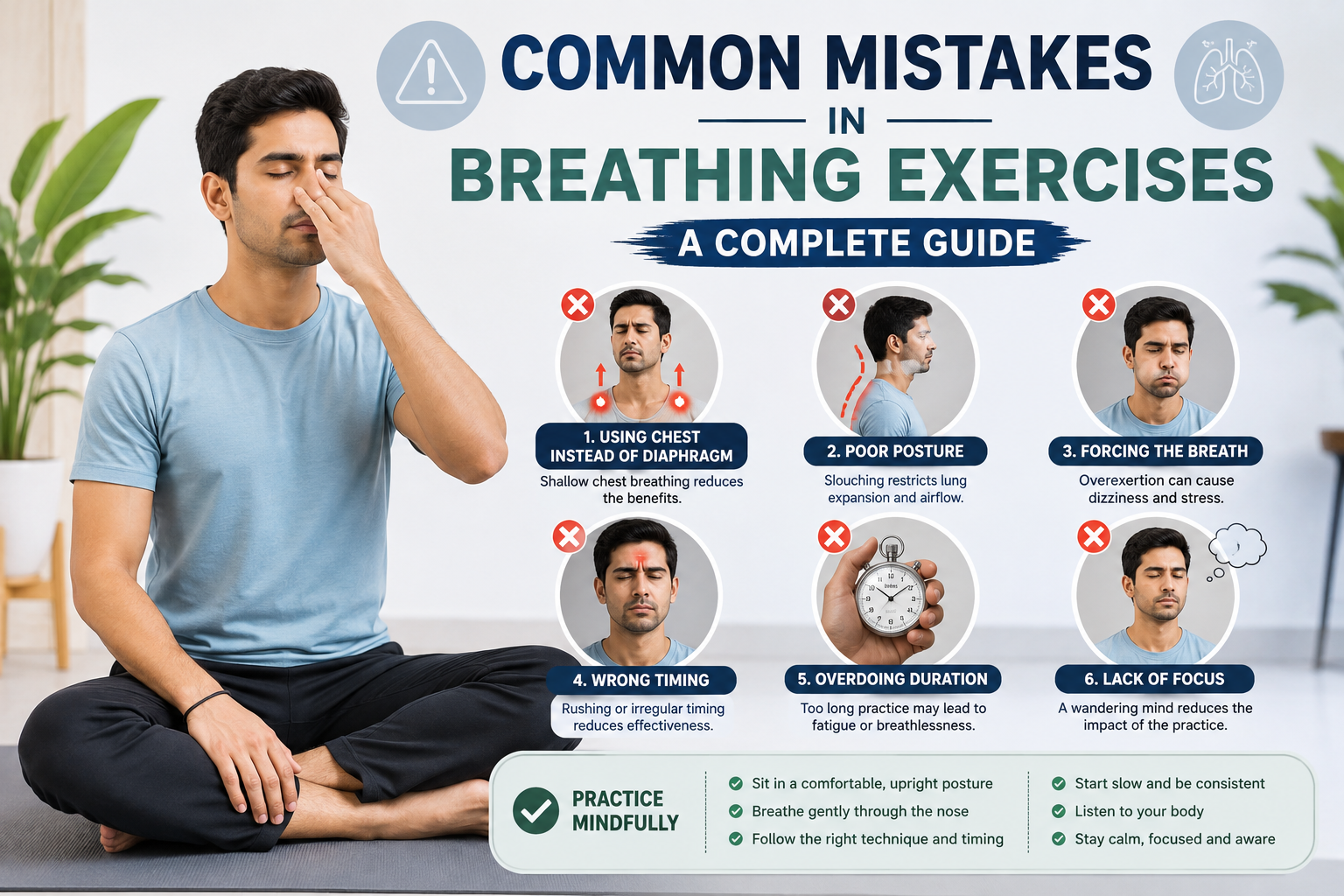
Many beginners approach breathing exercises with the same effort-based mindset they bring to a physical workout, forcing deep or dramatic breaths in an attempt to feel an immediate effect. This tension-based approach tends to work against the intended purpose of most pranayama techniques, which generally aim to calm and regulate the nervous system rather than strain it.
A more effective approach usually involves allowing the breath to lengthen and settle naturally over the course of a practice, rather than forcing depth or intensity from the very first breath. Beginners often find that breath capacity and control improve gradually with consistent practice, rather than through effortful straining in any single session.
3. Ignoring Posture During Practice
Slouched or collapsed posture significantly restricts the diaphragm and rib cage, undermining the mechanical basis of an effective breathing practice regardless of how correctly the breathing pattern itself is performed. Many beginners focus entirely on the breathing technique while paying little attention to how their spine and shoulders are positioned during practice.
Sitting with a tall, relaxed spine, whether cross-legged on the floor or upright in a chair, allows the lungs and diaphram considerably more room to function properly. This is a foundational principle taught early in most structured pranayama instruction, since poor posture can quietly undermine even a technically correct breathing pattern.
4. Practicing Advanced Techniques Too Soon
Breath retention practices and rapid, forceful breathing techniques carry more physiological intensity than basic diaphragmatic breathing, and attempting them before building a foundation of steady, comfortable breath awareness is a common and potentially risky mistake. Some advanced techniques can cause lightheadedness, anxiety, or discomfort if approached without adequate preparation or appropriate guidance.
A gradual progression, starting with basic awareness and diaphragmatic breathing before introducing more advanced retention or rapid techniques, tends to build a safer and more sustainable practice over time. This is particularly relevant for practices associated with more intense energetic effects, such as Kundalini Yoga in Rishikesh India, where breathing techniques are often paired with movement and chanting in ways that benefit significantly from experienced guidance rather than self-directed experimentation.
5. Practicing on a Full Stomach or in an Uncomfortable Environment
Practicing breathing exercises immediately after a large meal can cause physical discomfort, since a full stomach restricts the diaphragm’s range of motion in much the same way poor posture does. Many traditional teachings recommend leaving a few hours between eating and a dedicated pranayama session for this reason.
Environment matters as well. Practicing in a stuffy, poorly ventilated room, or in a space filled with distractions and noise, tends to undermine the calming intent of most breathing exercises. A quiet, well-ventilated space, even if simple, generally supports a noticeably more effective practice than a rushed session squeezed into a chaotic environment.
6. Holding Unnecessary Tension in the Face, Jaw, or Shoulders
It is common for beginners to unconsciously clench the jaw, furrow the brow, or hunch the shoulders while concentrating on a breathing pattern, particularly when a technique feels unfamiliar or slightly challenging. This unconscious tension works directly against the relaxation response that most pranayama techniques are designed to support.
Periodically scanning the body for unnecessary tension during practice, and consciously softening the face, jaw, and shoulders, can meaningfully improve the overall effect of a session. This kind of body awareness tends to develop with consistent practice and is often specifically cued in a well-taught class, which is one of the advantages of learning within a structured group setting rather than practicing entirely alone.
7. Using Breathing Exercises Only During Acute Stress, Not Consistently
Many people only reach for breathing exercises during moments of acute stress or anxiety, treating pranayama purely as an emergency tool rather than a regular practice. While breathing techniques can absolutely help in the moment, their deeper, longer-term benefits for nervous system regulation tend to develop through consistent, regular practice rather than occasional use during crisis.
Building a short daily practice, even five to ten minutes, tends to produce more meaningful long-term changes in stress resilience and emotional regulation than relying on breathing exercises solely as a reactive tool. For readers specifically interested in this connection, our guide on Yoga for Mental Health in Rishikesh India explores how consistent practice, including breathwork, supports mental wellbeing over time rather than only in isolated moments of acute stress.
8. Ignoring Warning Signs and Pushing Through Discomfort
Some beginners interpret dizziness, tingling, or lightheadedness during breathing exercises as a normal part of the process to push through, when these sensations are often a signal to slow down, return to normal breathing, or stop the practice altogether. This is particularly relevant with retention-based or rapid breathing techniques, which can occasionally produce these effects if practiced too intensely or for too long, especially by beginners.
Learning to distinguish between the mild, expected sensations of an unfamiliar practice and genuine warning signs is an important skill that develops with time and, ideally, guidance from an experienced teacher who can help contextualize what a student is experiencing.
9. Common Mistakes at a Glance
- Learning techniques from fragmented online sources without structured guidance or proper sequencing.
- Forcing depth and intensity into the breath rather than allowing it to lengthen naturally over time.
- Neglecting posture, which undermines the mechanical basis of effective breathing.
- Jumping into advanced retention or rapid breathing techniques before building a steady foundation.
- Practicing on a full stomach or in a distracting, poorly ventilated environment.
- Treating breathing exercises purely as a reactive tool rather than a consistent daily practice.
10. A Simple Framework for Practicing Breathing Exercises Correctly
Rather than trying to fix every mistake at once, it helps to build a more effective practice through a few clear priorities.
- Start with basic breath awareness and diaphragmatic breathing before progressing to more advanced techniques.
- Pay attention to posture and physical comfort as a foundation for every practice session, not an afterthought.
- Practice consistently in short daily sessions rather than only reaching for breathing exercises during moments of acute stress.
- Seek qualified instruction, whether through a local class, a structured course, or a more immersive setting like a Yoga Retreat in Rishikesh, particularly before attempting more advanced or intense techniques.
Frequently Asked Questions (FAQs)
Q1. Is it normal to feel lightheaded during breathing exercises? Mild lightheadedness can occasionally occur with unfamiliar techniques, but persistent or intense dizziness is generally a sign to slow down or stop, and repeated episodes are worth discussing with a qualified teacher or doctor.
Q2. How long should a beginner practice breathing exercises each day? Many teachers recommend starting with just five to ten minutes of consistent daily practice, gradually increasing duration as comfort and familiarity with the techniques grow.
Q3. Can breathing exercises be harmful if done incorrectly? Basic diaphragmatic breathing is generally very low risk, but more advanced techniques involving breath retention or rapid, forceful patterns carry more risk if practiced incorrectly or without adequate preparation, which is why structured guidance matters.
Q4. Should breathing exercises be practiced before or after meals? Most traditional guidance recommends practicing on a relatively empty stomach, generally leaving a few hours after a substantial meal before a dedicated session.
Q5. Is it necessary to learn pranayama from a teacher rather than online resources? While basic techniques can be introduced through reputable resources, structured instruction from a qualified teacher provides important context around sequencing, safety, and individual adjustment that fragmented online content often lacks.
Q6. Why does posture matter so much in breathing exercises? Posture directly affects how much room the diaphragm and rib cage have to expand, meaning even a technically correct breathing pattern can be undermined by a collapsed or slouched position.
Q7. Can breathing exercises replace medical treatment for anxiety or respiratory conditions? No, breathing exercises can be a valuable complementary practice, but they are not a substitute for medical treatment, and anyone with a diagnosed condition should continue working with their healthcare provider alongside any breathing practice.
Q8. What is the biggest mistake beginners make with pranayama? Rushing into advanced techniques without building a foundation of steady breath awareness is among the most common and potentially problematic mistakes, since it increases both physical discomfort and the risk of an unpleasant or overwhelming experience.
Final Thoughts
Breathing exercises offer some of the most accessible and evidence-supported tools available for supporting nervous system regulation and mental clarity, but their apparent simplicity can be misleading. Small mistakes in posture, pacing, technique selection, and consistency can significantly change how effective and how safe a practice actually is, particularly for beginners still building familiarity with the fundamentals.
Approaching breathing exercises with the same patience and gradual progression applied to any other skill, rather than assuming intuition alone is sufficient, tends to produce a far more rewarding and sustainable practice over time. Seeking qualified guidance, whether informally or through structured training such as a Yoga Teacher Training in Rishikesh, remains one of the most reliable ways to avoid these common pitfalls and build a genuinely effective practice.
This guide is intended for general educational purposes only. If you have a respiratory, cardiovascular, or neurological condition, or are pregnant, please consult a qualified healthcare professional before beginning any breathing practice, particularly advanced or retention-based techniques.
