
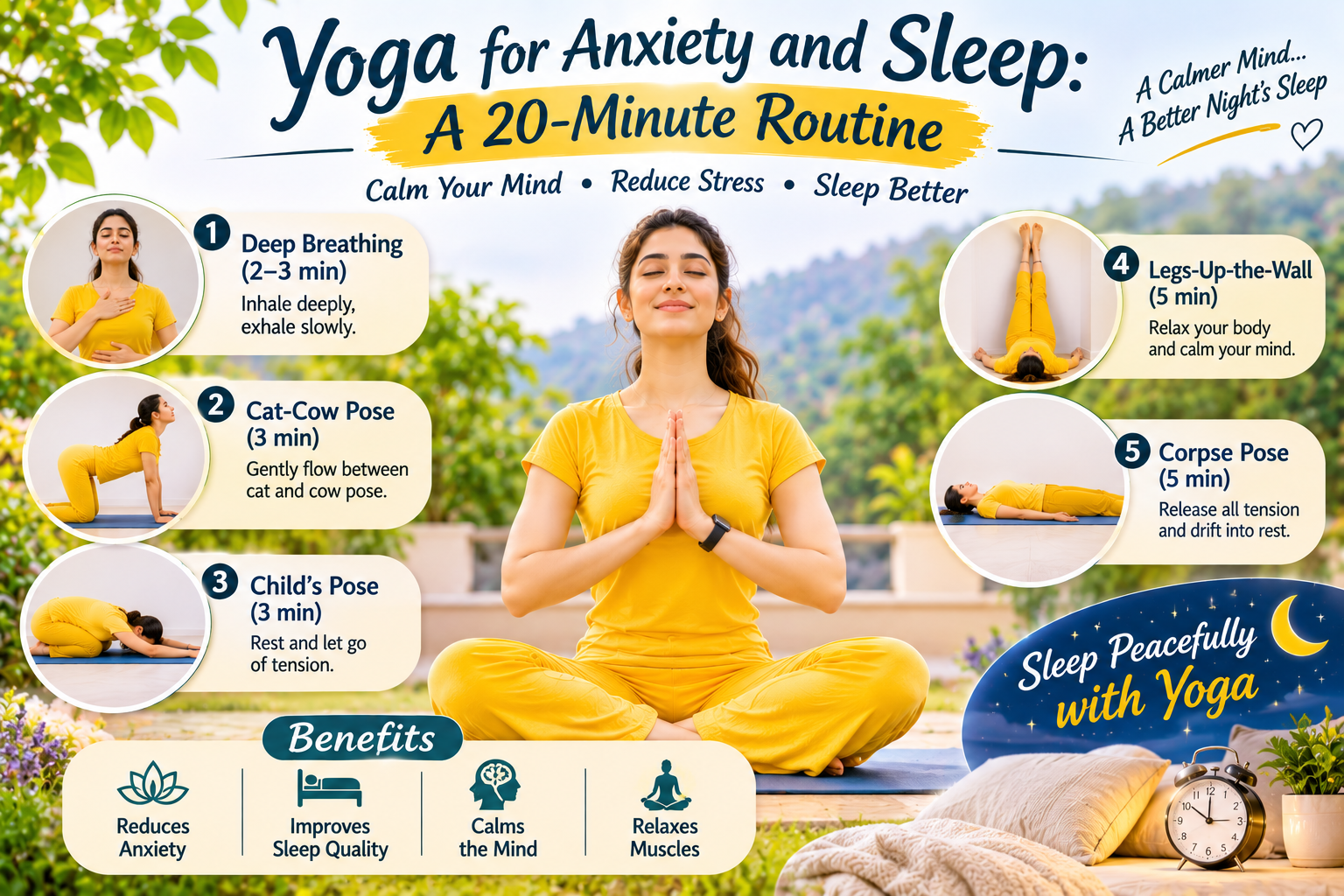
It is 11 p.m. Your body is tired, but your mind is running through tomorrow’s to-do list, replaying a conversation from this morning, or simply refusing to switch off. If that sounds familiar, you are far from alone. Anxious thoughts and poor sleep often feed each other: worry makes it harder to fall asleep, and a poor night makes the next day’s stress harder to handle.
Gentle yoga will not solve every sleep problem, but it offers a simple, drug-free way to help your body and mind shift out of “alert” mode. This guide explains how yoga may help, then walks you through a calming 20-minute routine you can do at home with no experience, plus tips for making it a habit.
How Yoga May Help With Anxiety and Sleep
Anxiety is not only a mental experience. It shows up in the body as a clenched jaw, raised shoulders, a tight chest, and shallow breathing. Evening yoga works with these physical patterns rather than against them.
Research on yoga and mindfulness-based practices suggests they may help reduce perceived stress and support better sleep quality for some people, although studies vary in quality, and results differ from person to person. The likely mechanisms are straightforward:
- Slow, steady breathing can encourage a calmer physiological state.
- Gentle stretching releases tension that builds up during the day.
- Focused attention gives the mind a simple anchor instead of circular thoughts.
- A predictable routine signals to the body that it is time to wind down.
Yoga is a complement to, not a replacement for, professional care. If your anxiety is persistent or severe, or if you have long-term trouble sleeping, please speak with a doctor or mental health professional.
Before You Begin: Setting Up for a Calm Practice
A few small choices make the routine more effective.
- Choose the right time. Aim to finish at least 30 to 60 minutes before bed so the body has time to settle.
- Dim the lights. Soft, low lighting helps your system recognise it is evening.
- Put your phone on silent and place it out of reach.
- Wear comfortable, loose clothing.
- Have a mat or blanket, a cushion, and a wall or sofa nearby.
- Keep the room comfortably warm. Cold muscles tense up.
- Avoid practising right after a heavy meal.
Move slowly throughout. This is not a workout. If any pose causes pain, ease out of it, and skip any pose that does not suit your body.
The 20-Minute Routine at a Glance
| Time | Practice | Purpose |
|---|---|---|
| 0 to 2 min | Settling breath | Arrive and slow down |
| 2 to 4 min | Neck and shoulder release | Ease upper-body tension |
| 4 to 6 min | Cat-Cow | Gentle spinal movement |
| 6 to 8 min | Child’s Pose | Calm and soften the back |
| 8 to 11 min | Supine Twist (both sides) | Release the spine and hips |
| 11 to 15 min | Legs Up the Wall | Rest and reset |
| 15 to 17 min | Extended-exhale breathing | Quiet the nervous system |
| 17 to 20 min | Savasana | Deep relaxation |
Step 1: Settling Breath (2 Minutes)
Sit comfortably on a cushion or chair, or lie on your back. Close your eyes or lower your gaze. Place one hand on your belly and notice it rise and fall.
Do not try to change your breathing yet. Simply observe it for a minute, then begin breathing slowly through your nose. If your mind wanders, that is normal. Each time you notice, gently return to the breath.
Why it helps: Pausing to notice your breath creates a clear transition between the busy day and your practice.
Step 2: Neck and Shoulder Release (2 Minutes)
Sit tall. Inhale and lift your shoulders toward your ears, then exhale and let them drop. Repeat three or four times.
Next, slowly tilt your right ear toward your right shoulder and pause for a few breaths. Return to centre and repeat on the left. Finish with a few gentle shoulder rolls backward.
Why it helps: Many people hold stress in the neck and shoulders, especially after desk work or screen time. Releasing this area can make the rest of the routine feel easier.
Step 3: Cat-Cow (2 Minutes)
Come onto your hands and knees, with wrists under shoulders and knees under hips. Inhale, gently lower the belly and lift the chest. Exhale, round the spine and tuck the chin.
Move slowly, matching each movement to a breath. Do about eight to ten rounds, keeping the movement small and comfortable.
Why it helps: The rhythm of movement and breath is soothing, and it warms up the spine before deeper stretches.
Step 4: Child’s Pose (2 Minutes)
From hands and knees, sit your hips back toward your heels and fold forward, resting your forehead on the mat or a cushion. Arms can rest alongside your body or stretch forward.
If your hips are tight, place a cushion between your calves and thighs or under your torso. Breathe into your back and let the weight of your body soften.
Why it helps: Folding forward feels grounding and protective, which many people find calming.
Step 5: Supine Twist (3 Minutes)
Lie on your back and hug your knees to your chest. Extend your arms out to the sides in a “T” shape. Slowly lower both knees to the right, keeping your shoulders on the floor, and turn your head gently to the left if comfortable. Stay for about 90 seconds, then switch sides.
Place a cushion under your knees if they do not reach the floor.
Why it helps: A gentle twist releases tension through the back and hips, and it feels like a natural “wringing out” of the day.
Step 6: Legs Up the Wall (4 Minutes)
Sit sideways next to a wall, then swing your legs up as you lie back, so your legs rest against it and your hips are close to the wall. Rest your arms by your sides, palms up if comfortable. If this is uncomfortable for your hamstrings, move your hips a little farther from the wall or rest your calves on a chair or sofa.
Stay for about four minutes, breathing naturally.
Why it helps: This restful inversion is popular in evening routines because it requires almost no effort and many people find it deeply relaxing. Avoid it, or check with a doctor first, if you have glaucoma, uncontrolled high blood pressure, or certain other conditions, and skip it if you feel any discomfort.
Step 7: Extended-Exhale Breathing (2 Minutes)
Remain on your back or sit comfortably. Inhale slowly through your nose for a count of four. Exhale gently through your nose for a count of six. Continue for about two minutes.
Keep the breath smooth and effortless. If counting to six feels strained, shorten both counts, for example inhale for three and exhale for five.
Why it helps: Making the exhale longer than the inhale is a common technique for encouraging relaxation. Avoid breath holds or forceful breathing in the evening, especially as a beginner.
Step 8: Savasana (3 Minutes)
Lie flat on your back, legs slightly apart, arms resting by your sides, palms facing up. Cover yourself with a blanket. Let your breathing return to its natural rhythm and consciously relax your face, jaw, hands, and belly.
If thoughts arise, let them pass without engaging. After three minutes (or longer, if you wish), roll to your side, rest for a moment, and then sit up slowly.
Why it helps: Deep relaxation allows the body to absorb the practice and shifts you into a restful state before sleep.
Tips to Make the Routine Work Better
- Practise consistently. Four to six nights a week usually helps more than an occasional long session.
- Keep it gentle. If you feel more alert afterwards, reduce movement and focus more on breathing and rest.
- Pair it with good sleep habits. Keep a regular bedtime, limit caffeine late in the day, and avoid screens close to sleep.
- Create a cue. A cup of herbal tea or a dim lamp can signal that your evening ritual is starting.
- Track how you feel. A brief note on sleep quality and mood can reveal what helps.
When to Seek Professional Support
Yoga can be a supportive habit, but it is not a treatment for clinical conditions. Please consult a healthcare professional if:
- You regularly cannot fall asleep or wake frequently for several weeks.
- Anxiety interferes with work, relationships, or daily life.
- You experience panic attacks, persistent low mood, or thoughts of self-harm.
- You have heart, blood pressure, or eye conditions and are unsure which poses are safe.
- You are pregnant and unsure which poses suit your stage.
If you are ever in crisis, contact local emergency services or a crisis helpline right away.
Going Deeper: Holistic and Immersive Options
Some people find that a short evening routine sparks an interest in a broader lifestyle approach that combines movement, nutrition, rest, and traditional wellness systems. If that appeals to you, it may be worth reading about Ayurveda and yoga retreats in India, which explains how these practices can be combined in a structured setting.
Others are drawn to the birthplace of modern yoga study. If you are curious about the town’s history and reputation, you can learn why Rishikesh is called the yoga capital of the world. For anyone planning a visit, there is also a guide to top attractions in Rishikesh for yoga students and spiritual seekers. And if your interest grows into formal study, this overview of what to expect from a 200 hour yoga teacher training in Rishikesh is a helpful place to start.
Frequently Asked Questions
Can yoga really help with anxiety? Many people find gentle yoga and slow breathing helpful for feeling calmer, and research suggests potential benefits, though it is not a substitute for professional treatment.
How long before bed should I practise? Ideally 30 to 60 minutes before bed, so you have time to settle.
Do I need to be flexible? No. Every pose in this routine can be modified with cushions, blankets, or by reducing the range of movement.
What if my mind will not stop racing? That is common, especially at first. Return gently to your breath each time you notice, and consider keeping a notebook nearby to write down worries before you begin.
Can I do this routine in the morning? Yes, though it is designed to be calming. If you want more energy, add a few standing poses.
How soon will I notice a difference? Some people feel calmer after one session, while changes in sleep quality often take a few weeks of regular practice.
Final Thoughts
You do not need an hour, a studio, or special equipment to give your nervous system a chance to settle. Twenty quiet minutes, repeated regularly, can become a dependable signal that the day is ending and rest is allowed. Start gently, stay consistent, be kind to yourself on restless nights, and seek professional support whenever your anxiety or sleep difficulties feel bigger than a routine can handle.