
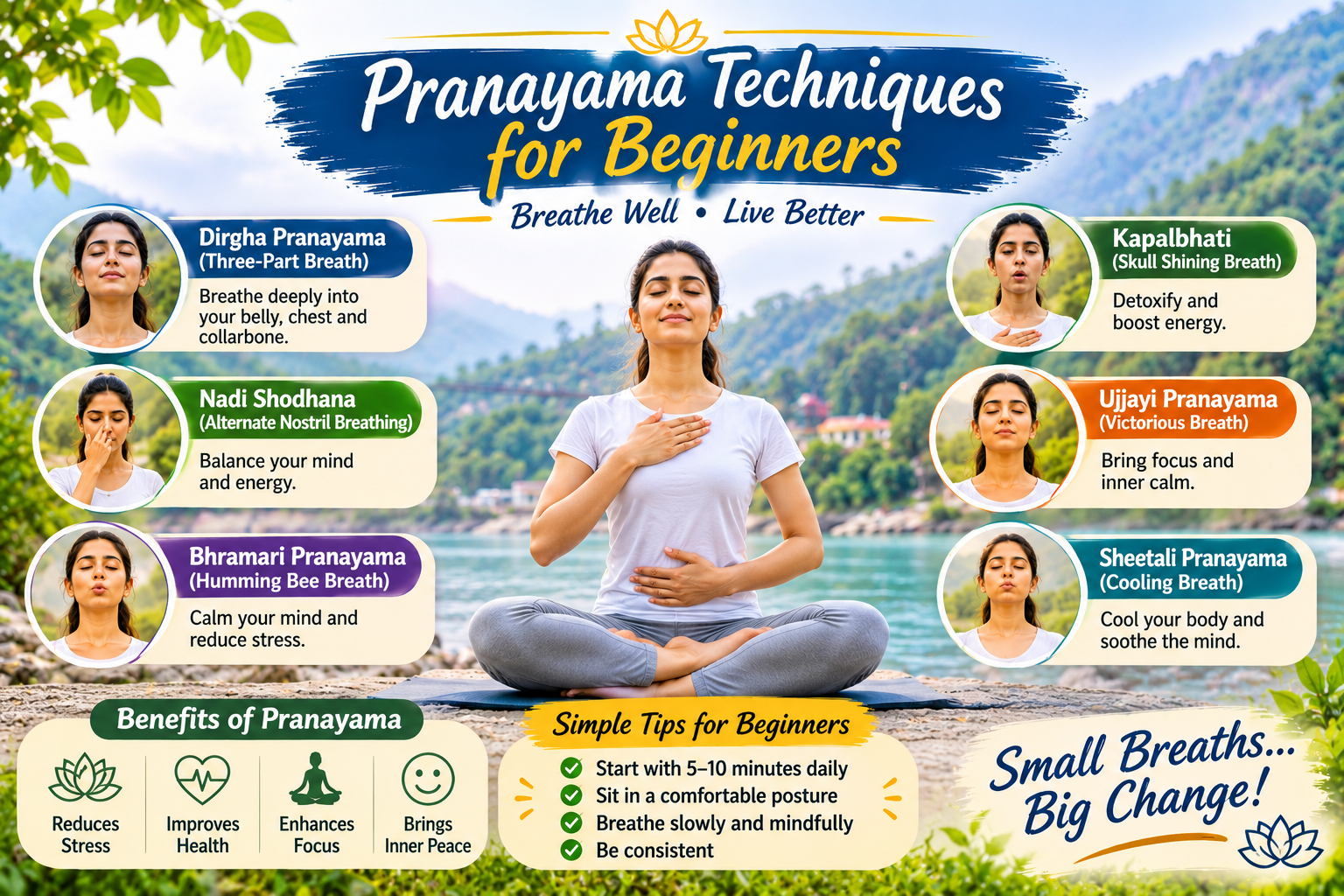
You breathe around twenty thousand times a day without thinking about it. Pranayama, the yogic art of breath awareness and regulation, invites you to pay attention to that process and gently shape it. Done with care, it can become one of the simplest and most portable tools in your wellbeing toolkit: no equipment, no special clothing, and often just a few minutes.
This guide explains what pranayama is, how to prepare, and six beginner-friendly techniques with clear instructions. It also covers the benefits people commonly report, who should be cautious, and how to build a sustainable daily routine.
What Is Pranayama?
The word pranayama comes from Sanskrit: “prana” is often translated as life force or vital energy, and “ayama” means extension or regulation. In practice, pranayama is a set of breathing exercises that vary the length, rhythm, and pattern of inhalation, exhalation, and sometimes breath retention.
In classical yoga texts, pranayama is one of the limbs of yoga, positioned between physical postures and the deeper stages of meditation. In modern practice, it is widely taught as a bridge: it steadies the body and calms the mind so that sitting still becomes easier.
Why Practise Pranayama? Common Benefits
Scientific research on breathing practices is still developing, and results vary between individuals and techniques. Still, studies and clinical experience suggest that slow, controlled breathing may help many people with:
- Stress reduction and relaxation. Slower breathing is associated with a calmer physiological state.
- Improved focus. Directing attention to the breath is a simple concentration exercise.
- Better sleep routines. Gentle evening practices can help the body wind down.
- Greater body awareness. You learn to notice tension, posture, and shallow breathing habits.
- Support for a balanced lifestyle. Breathwork often complements movement, nutrition, and rest.
Pranayama is not a replacement for medical care, and effects differ from person to person. If you want to explore how breathwork can support daily stress, our guide on pranayama for stress relief goes deeper into calming techniques.
Before You Begin: Preparation and Safety
Choose the right time. Early morning or evening works well. Practise on an empty or light stomach, ideally two to three hours after a meal.
Find a quiet, ventilated space. A calm environment makes it easier to focus.
Sit comfortably. Sit cross-legged on a cushion, on a chair with feet flat on the floor, or against a wall. Keep your spine tall but relaxed.
Breathe through the nose unless the technique specifies otherwise.
Start gently. Never strain, force, or hold your breath to the point of discomfort. Stop if you feel dizzy, lightheaded, or anxious, and return to natural breathing.
Consult a professional if needed. Please speak with a qualified healthcare provider before practising if you are pregnant, or have high blood pressure, heart or lung conditions, epilepsy, panic disorder, or are recovering from surgery. Avoid advanced techniques, especially forceful ones or long breath retentions, unless taught by an experienced teacher.
6 Pranayama Techniques for Beginners
1. Natural Breath Awareness
What it is: The simplest starting point. You do not change your breathing; you observe it.
How to practise:
- Sit comfortably and close your eyes, or soften your gaze.
- Notice the breath entering and leaving at the nostrils or in the belly.
- If your mind wanders, gently return to the sensation of breathing.
- Continue for 3 to 5 minutes.
Why it helps: It builds attention and teaches you how you breathe before trying to change it.
2. Diaphragmatic (Belly) Breathing
What it is: A deep, relaxed breath that uses the diaphragm rather than only the upper chest.
How to practise:
- Lie on your back with knees bent, or sit upright.
- Place one hand on your chest and the other on your belly.
- Inhale slowly through the nose, letting your belly rise while your chest stays relatively still.
- Exhale gently, feeling the belly soften.
- Repeat for 5 minutes.
Why it helps: Many people breathe shallowly into the chest, especially under stress. Belly breathing encourages a fuller, calmer pattern.
3. Equal Breathing (Sama Vritti)
What it is: A balanced technique in which the inhale and exhale have the same length.
How to practise:
- Sit tall and relax your shoulders.
- Inhale through the nose for a count of four.
- Exhale through the nose for a count of four.
- Continue for 3 to 5 minutes. If four feels easy, try five or six, but never strain.
Why it helps: The steady rhythm gives the mind something simple to follow, which many find soothing and grounding.
4. Alternate Nostril Breathing (Nadi Shodhana)
What it is: A classic technique that alternates breathing between the left and right nostril.
How to practise:
- Sit comfortably. Rest your left hand on your knee.
- Use your right thumb to close the right nostril and inhale slowly through the left.
- Close the left nostril with your ring finger, release the right, and exhale through the right.
- Inhale through the right, close it, release the left, and exhale through the left.
- That is one round. Practise 5 to 10 rounds without holding the breath.
Why it helps: It encourages slow, even breathing and focused attention, and many people find it balancing before meditation.
Note: Beginners should avoid breath retention until a teacher guides them. If one nostril is blocked, simply breathe naturally until it clears.
5. Victorious Breath (Ujjayi)
What it is: A gentle breath with a soft, ocean-like sound created by lightly narrowing the throat.
How to practise:
- Inhale and exhale through the nose.
- Slightly constrict the back of the throat, as if fogging a mirror, but with the mouth closed.
- Keep the breath smooth, slow, and quiet, like soft ocean waves.
- Practise for 3 to 5 minutes.
Why it helps: The audible quality gives you feedback, making it easier to keep a steady rhythm. It is commonly used in flowing styles of yoga.
Note: Keep the effect subtle. If your throat feels tight, reduce the effort.
6. Humming Bee Breath (Bhramari)
What it is: A soothing exercise that uses a gentle humming sound on the exhale.
How to practise:
- Sit comfortably with the spine upright.
- Inhale deeply through the nose.
- Exhale slowly while making a steady, low humming sound with lips closed.
- Feel the vibration in your face and head.
- Repeat 5 to 7 times.
Why it helps: The vibration and extended exhale often feel calming, which is why it is popular before sleep or in stressful moments.
A Simple 10-Minute Beginner Routine
| Time | Practice |
|---|---|
| 0 to 2 min | Natural breath awareness |
| 2 to 5 min | Diaphragmatic breathing |
| 5 to 8 min | Equal breathing or alternate nostril breathing |
| 8 to 10 min | Humming bee breath, then silent sitting |
Practise daily if possible, or at least four to five days a week. Short, regular sessions are more useful than occasional long ones.
A Note on Fast, Forceful Techniques
Techniques such as Kapalabhati (rapid, forceful exhalations) and Bhastrika (bellows breath) are popular but stimulating and are not generally recommended for complete beginners. They require correct technique and are unsuitable for some people, including those with high blood pressure, heart conditions, hernias, epilepsy, or pregnancy. If you are interested, learn them in person from an experienced teacher first.
Pranayama and Lifestyle Goals
Many people ask whether breathwork can help with specific health goals. Pranayama can be a supportive part of a healthy routine, but it works best alongside movement, nutrition, and medical guidance rather than on its own. For instance, if your focus is on body composition, our guide on yoga for weight loss explains how an overall yoga routine fits in. If you are managing blood sugar or related concerns, yoga for diabetes management and yoga for metabolic syndrome offer more detailed context. Always coordinate with your doctor, especially if you take medication or have a diagnosed condition.
Common Beginner Mistakes
- Forcing the breath. Gentle and smooth is better than deep and strained.
- Holding the breath too soon. Retention techniques need guidance.
- Practising when unwell or exhausted. Rest instead, or return to natural breathing.
- Hunching. A collapsed posture limits breath. Sit tall, but relaxed.
- Expecting instant results. Benefits usually build gradually.
- Practising on a full stomach. This can feel uncomfortable.
- Ignoring signals. Dizziness, tingling, or anxiety are signs to stop.
Tips for Building a Habit
- Anchor it to an existing habit, such as after brushing your teeth or before bed.
- Start small: three to five minutes is plenty.
- Keep a simple log of how you feel before and after.
- Use a timer so you do not need to watch the clock.
- Learn from a qualified teacher when possible. In-person feedback on posture and technique is valuable.
- Be patient and consistent. The practice rewards regularity.
Frequently Asked Questions
How long should a beginner practise pranayama? Five to ten minutes a day is a sensible start.
Can I practise pranayama without doing yoga postures? Yes. Breathing practices can be done independently, though many people combine them with gentle movement.
When is the best time of day? Morning is traditional, but any calm time works. Gentle techniques suit the evening.
Is pranayama safe for everyone? Gentle techniques are generally low-risk, but some people should seek medical advice first, including those with heart, lung, or blood pressure conditions, or who are pregnant.
Will pranayama cure anxiety or other conditions? No. It may help you feel calmer and more aware, but it should complement, not replace, professional treatment.
What if I feel dizzy? Stop, return to natural breathing, and rest. If dizziness persists, seek medical advice.
Final Thoughts
Pranayama begins with a simple idea: your breath is always with you, and it responds to your attention. Start with awareness, move to slow, even breathing, and add techniques gradually. Keep sessions short, avoid strain, and let the practice settle into your day without pressure. Over time, those quiet minutes can become a reliable anchor in a busy life.