
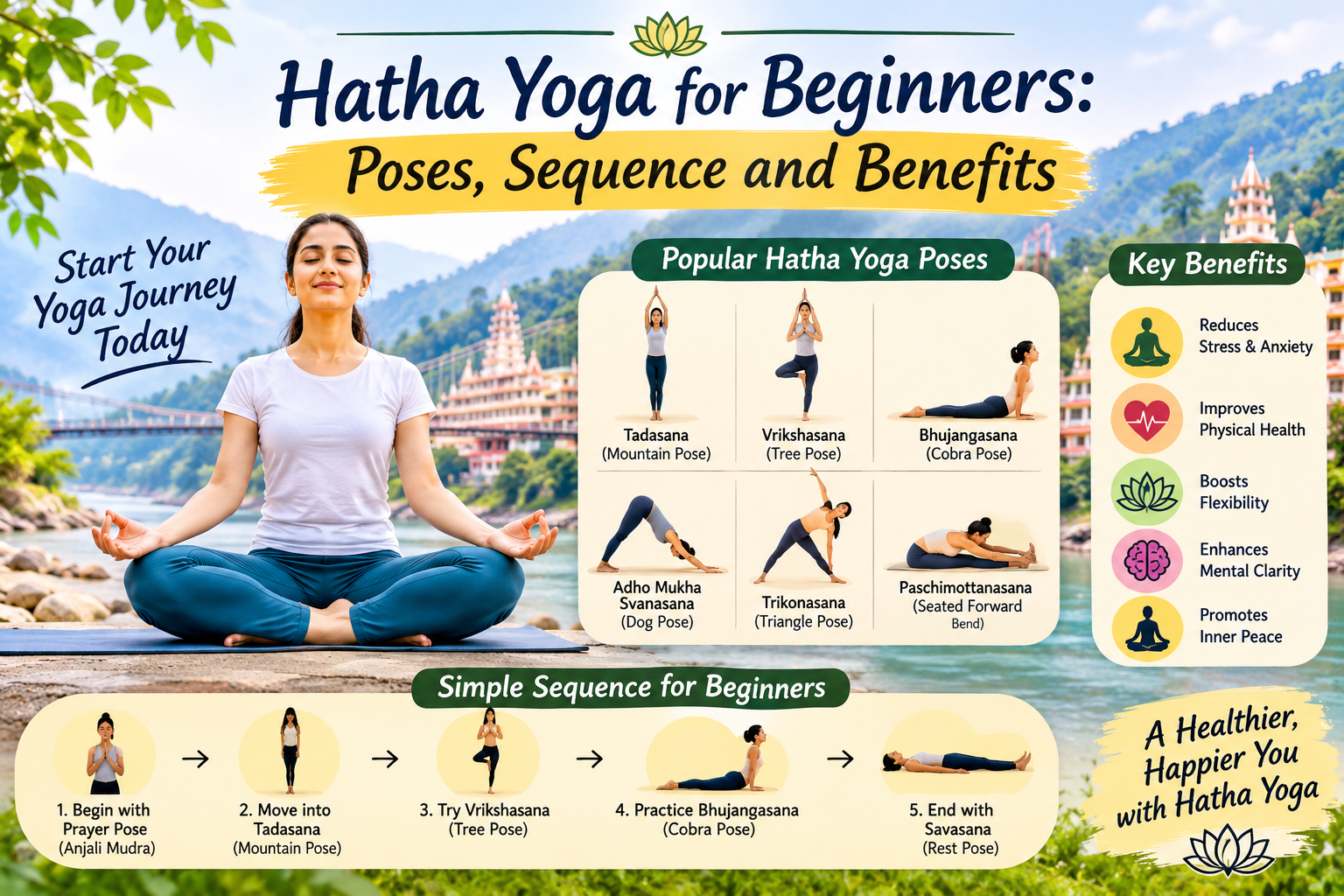
If you have ever wanted to try yoga but felt unsure where to begin, Hatha yoga is one of the most approachable starting points. It is slow, steady, and focused on fundamentals: how to stand, breathe, and hold a posture without strain. You do not need to be flexible, strong, or experienced. You only need a little space, comfortable clothing, and patience with yourself.
This guide explains what Hatha yoga is, introduces ten beginner-friendly poses, offers a simple 30-minute sequence, and outlines the benefits you can realistically expect. It also includes safety advice so you can build a practice that supports your body rather than testing it.
What Is Hatha Yoga?
“Hatha” is a Sanskrit word often associated with the union of two complementary energies, commonly interpreted as “sun” (ha) and “moon” (tha). In modern usage, Hatha yoga refers to a broad family of physical practices that combine postures (asana), breathing techniques (pranayama), and relaxation or meditation.
Compared with faster, flowing styles, Hatha classes are typically:
- Slower paced, with time to settle into each pose.
- Focused on alignment and breath, making them ideal for learning.
- Gentle to moderate in intensity, with options to modify.
- Balanced, often ending with deep relaxation.
Because of this approach, many teachers recommend Hatha as a foundation before exploring more dynamic styles.
Benefits of Hatha Yoga for Beginners
Research on yoga, including systematic reviews, suggests it can support flexibility, balance, and perceived stress levels, and many people find it a helpful complement to other forms of exercise. Results vary from person to person, and yoga is not a cure for medical conditions, but common reported benefits include:
Improved flexibility and mobility. Gentle, sustained stretching gradually increases range of motion, especially in the hips, spine, and shoulders.
Better posture and body awareness. Learning to align your body in poses can help you notice habits such as slouching or shallow breathing.
Strength and stability. Holding poses engages the legs, core, and upper body in a controlled, low-impact way.
Reduced stress and improved relaxation. Slow breathing and mindful movement can calm the nervous system and help many people feel more at ease.
Better sleep for some people. A regular evening practice often helps people wind down, though effects differ.
A sustainable habit. Because Hatha is accessible, it is easier to practise consistently, which matters more than intensity.
Some Wellness Areas People Explore Through Yoga
Many beginners come to yoga with a specific wellbeing goal in mind. While gentle practice is not a substitute for medical care, it is often used alongside professional guidance. For example, readers interested in hormonal wellbeing often explore resources on yoga for hormonal balance, while those managing a specific condition may look at gentle approaches such as yoga for PCOS or yoga for hypothyroidism. Others in midlife may be curious about yoga for menopause. If you have any of these conditions, speak with your doctor before starting, and tell your teacher so they can suggest modifications.
Before You Start: Preparation Tips
- Choose a quiet space with enough room to lie down and stretch your arms.
- Use a non-slip mat. A folded blanket helps with knees and seated poses.
- Practise on an empty or light stomach. Wait two to three hours after a heavy meal.
- Wear comfortable, stretchy clothing.
- Keep props nearby, such as a strap, a cushion, or a couple of books as blocks.
- Warm up gently if you have been sitting for long periods.
- Listen to your body. Mild stretching is normal; sharp pain, dizziness, or numbness is a signal to stop.
10 Beginner-Friendly Hatha Yoga Poses
1. Mountain Pose (Tadasana)
Stand with feet hip-width apart, weight evenly distributed, arms by your sides. Lengthen your spine, relax your shoulders, and breathe steadily. Benefits: Teaches posture and grounding. Tip: Imagine a string lifting the crown of your head.
2. Cat-Cow (Marjaryasana-Bitilasana)
On hands and knees, inhale as you gently arch your back and lift your chest (cow), then exhale as you round your spine (cat). Benefits: Warms and mobilises the spine and links movement with breath. Tip: Move slowly and keep the motion comfortable.
3. Child’s Pose (Balasana)
Kneel, sit back toward your heels, and fold forward with arms extended or resting alongside your body. Benefits: A calming resting pose that gently stretches the back and hips. Tip: Place a cushion under your torso or between your calves if it feels tight.
4. Downward-Facing Dog (Adho Mukha Svanasana)
From hands and knees, lift your hips up and back, forming an inverted “V.” Benefits: Stretches the hamstrings, calves, and shoulders while building upper-body strength. Tip: Keep your knees slightly bent if your hamstrings are tight.
5. Cobra Pose (Bhujangasana)
Lie on your stomach, place your hands beneath your shoulders, and gently lift your chest while keeping your lower ribs on the mat. Benefits: Strengthens the back and opens the chest. Tip: Lift only as far as is comfortable; do not push through your lower back.
6. Triangle Pose (Trikonasana)
Stand with feet wide apart, extend one leg out to the side, hinge at your hip, and reach one hand toward your shin while the other arm extends upward. Benefits: Stretches the legs and side body and builds stability. Tip: Rest your lower hand on a block or your shin instead of the floor.
7. Tree Pose (Vrksasana)
Stand on one leg and place the sole of the other foot on your calf or inner thigh, avoiding the knee. Bring your hands to your chest. Benefits: Develops balance and concentration. Tip: Keep your toes lightly on the floor or stand near a wall for support.
8. Bridge Pose (Setu Bandhasana)
Lie on your back with knees bent and feet flat, then lift your hips while keeping your feet and shoulders grounded. Benefits: Strengthens the legs and glutes and opens the front of the body. Tip: Keep your knees tracking over your ankles and avoid turning your head while lifted.
9. Seated Forward Fold (Paschimottanasana)
Sit with legs extended and fold forward from the hips. Benefits: Stretches the back of the legs and spine. Tip: Bend your knees or sit on a cushion to ease tension.
10. Corpse Pose (Savasana)
Lie on your back, arms relaxed by your sides, and let your breath return to its natural rhythm. Benefits: Allows the body and mind to absorb the practice and fully relax. Tip: Cover yourself with a blanket to stay warm, and stay for at least five minutes.
A Simple 30-Minute Hatha Yoga Sequence for Beginners
Move slowly and breathe through the nose where possible. Hold each pose for 5 to 8 breaths unless noted.
| Time | Practice |
|---|---|
| 0 to 3 min | Sit comfortably and practise slow, natural breathing |
| 3 to 6 min | Cat-Cow (8 to 10 rounds) |
| 6 to 8 min | Child’s Pose |
| 8 to 11 min | Downward-Facing Dog (2 rounds, resting in between) |
| 11 to 14 min | Mountain Pose, then standing forward fold |
| 14 to 18 min | Triangle Pose (both sides) |
| 18 to 21 min | Tree Pose (both sides) |
| 21 to 24 min | Cobra Pose (2 rounds), then Child’s Pose |
| 24 to 26 min | Bridge Pose (2 rounds) |
| 26 to 28 min | Seated Forward Fold |
| 28 to 30 min | Corpse Pose (extend if you have time) |
Practise three to four times a week at first. Consistency matters more than length: even 15 minutes helps if that is what fits your schedule.
Add a Simple Breathing Practice
Pranayama is a core part of Hatha yoga. Beginners can start with:
- Natural breath awareness: Simply observe your breath for two to three minutes.
- Equal breathing (Sama Vritti): Inhale for a count of four, exhale for four, repeating for several minutes.
Avoid forceful or retention-based breathing techniques unless you are guided by an experienced teacher, particularly if you have high blood pressure, heart conditions, or are pregnant.
Common Beginner Mistakes to Avoid
- Pushing too hard. Yoga is not about reaching your toes; it is about learning to respond to your body.
- Holding your breath. If your breathing becomes strained, ease off.
- Comparing yourself to others. Every body has different proportions and limits.
- Skipping relaxation. Savasana is part of the practice, not an optional extra.
- Practising through pain. Discomfort from stretching is different from sharp or joint pain.
- Expecting instant results. Gradual change is normal.
Safety Considerations
Yoga is generally considered low-risk when practised sensibly, but injuries can happen. Consider checking with a healthcare professional first if you:
- Are pregnant or postpartum.
- Have high blood pressure, heart disease, or glaucoma.
- Have recent injuries, back or neck problems, or joint conditions.
- Have osteoporosis or balance difficulties.
- Are managing a chronic condition or taking regular medication.
If you can, take a few classes with a qualified teacher to learn alignment in person. Look for instructors with recognised training and experience working with beginners.
How to Build a Lasting Habit
- Start small. Ten to fifteen minutes beats an ambitious plan you abandon.
- Pick a consistent time, such as after waking or before bed.
- Track how you feel, not only what you can do. Notes on mood, sleep, and energy can show progress.
- Join a class or find a community for accountability.
- Be patient. Many people notice small changes within a few weeks, with deeper changes over months.
Frequently Asked Questions
Do I need to be flexible to start Hatha yoga? No. Flexibility develops with practice, and props and modifications make poses accessible.
How often should a beginner practise? Two to four sessions per week is a sensible starting point.
How long until I see results? Many people notice improved relaxation and body awareness within a few weeks, while changes in strength and flexibility often take longer.
Is Hatha yoga a good workout for weight loss? It can support an active lifestyle, but it is generally gentler than high-intensity exercise. Results depend on overall habits.
Can I practise yoga at home using videos? Yes, but choose beginner-level content from qualified teachers and prioritise safety over depth.
Does yoga replace medical treatment? No. It can complement professional care but should not replace it.
Final Thoughts
Hatha yoga is a patient, accessible way to begin. Learn a handful of foundational poses, practise them slowly, breathe steadily, and give yourself time to adapt. You do not need a perfect posture or a special studio, just a willingness to show up regularly and listen to your body. Over time, those quiet sessions often add up to better ease in your movement, your breath, and your day.