 Skip to content
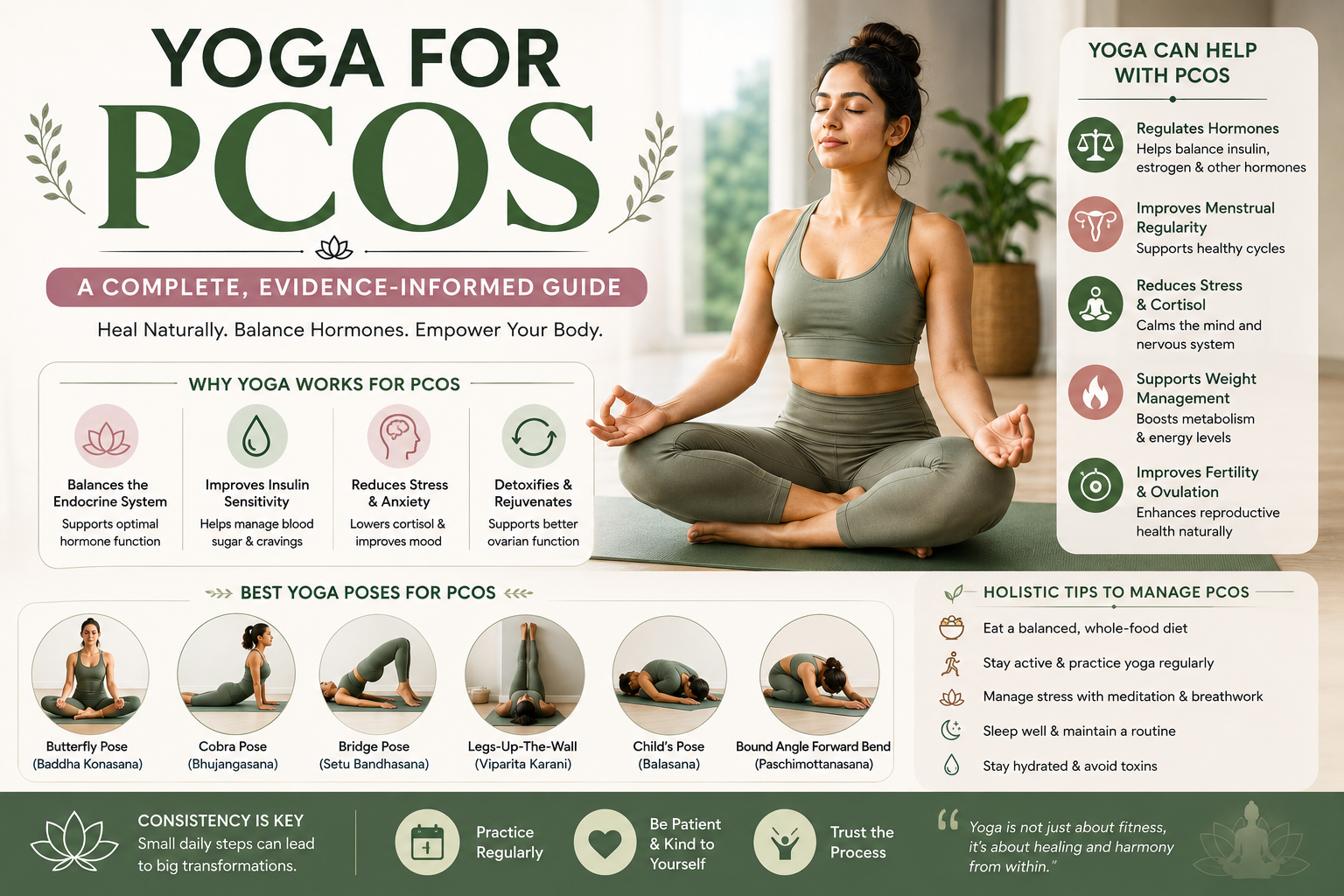
An informational guide to how yoga supports the hormonal, metabolic, and emotional aspects of PCOS — which practices help, how they work, and how to build a safe, sustainable routine alongside medical care.
Polycystic Ovary Syndrome (PCOS) is one of the most common hormonal conditions affecting women of reproductive age, yet it remains widely misunderstood. It is not a single, isolated issue but a cluster of interconnected imbalances involving insulin resistance, elevated androgens, irregular ovulation, and often chronic low-grade stress — all of which reinforce one another in a cycle that can feel difficult to break.
Yoga cannot cure PCOS, and it is not a substitute for medical diagnosis or treatment. But a growing body of clinical research, alongside long-standing traditional practice, points to yoga as a genuinely useful complementary approach — one that addresses several of the underlying mechanisms that make PCOS symptoms worse, rather than just the symptoms themselves. This guide explains how PCOS and the nervous system are connected, which specific practices are most relevant, and how to build a realistic routine around them.
1. Understanding PCOS: More Than a Reproductive Condition
PCOS is frequently described as a reproductive disorder, but it is more accurately understood as a metabolic and endocrine condition with reproductive consequences. The three most common features are irregular or absent ovulation, elevated androgen levels (which can cause acne, excess hair growth, or hair thinning), and polycystic ovaries visible on ultrasound — though not every person with PCOS has all three.
Underneath these symptoms, insulin resistance is present in a large majority of PCOS cases, even in people who are not overweight. Elevated insulin levels push the ovaries to produce more androgens, which disrupts ovulation, which in turn can worsen insulin sensitivity further — a self-reinforcing loop. Chronic stress compounds this cycle: sustained cortisol elevation independently worsens insulin resistance and can further disrupt the hormonal signalling between the brain and ovaries. This is precisely where yoga’s documented effects on stress and metabolic regulation become clinically relevant, rather than simply a wellness add-on.
2. Why Yoga Is Relevant to PCOS Specifically
Yoga does not directly change ovarian function, but it acts on two of the mechanisms that drive PCOS symptoms: the stress response and metabolic regulation. Slow, controlled breathing and sustained physical postures activate the parasympathetic nervous system, which lowers cortisol output over time. Because chronically elevated cortisol worsens insulin resistance, and insulin resistance is central to PCOS, this stress-reduction pathway has real downstream relevance rather than being a general wellness claim.
Separately, certain categories of yoga postures improve circulation to the pelvic and abdominal organs, support digestive function, and engage the core and pelvic floor in ways that some studies and traditional practice both associate with improved menstrual regularity, though individual results vary considerably and yoga should always be viewed as complementary to medical management rather than a replacement for it.
3. Yoga Postures Commonly Used for PCOS
Several categories of asana are traditionally emphasised for PCOS, generally grouped around pelvic circulation, hip mobility, and abdominal engagement:
- Baddha Konasana (Butterfly Pose): improves circulation and flexibility in the hips and pelvis, often considered a foundational pose for reproductive health practices.
- Supta Baddha Konasana (Reclined Butterfly Pose): a gentler, supported variation that combines pelvic opening with relaxation, useful for those newer to practice.
- Bhujangasana (Cobra Pose): gently stimulates the abdominal region and ovaries while also strengthening the lower back.
- Malasana (Garland Pose): a deep squat that opens the hips and improves pelvic floor mobility.
- Setu Bandhasana (Bridge Pose): engages the core and pelvic floor while improving circulation to the reproductive organs.
- Ardha Matsyendrasana (Seated Spinal Twist): supports digestive function and abdominal circulation, which is relevant given how closely digestion and metabolic health are linked in PCOS.
These postures work best as a consistent sequence rather than isolated, occasional practice — the physiological benefits accumulate gradually rather than appearing after a single session.
4. Pranayama and Stress Reduction for PCOS
Because cortisol and insulin resistance are so closely linked in PCOS, breathing practice is arguably as important as the physical postures. Pranayama for Stress Relief covers the underlying mechanism in more depth, but the practices most commonly recommended alongside PCOS management include Nadi Shodhana (alternate nostril breathing) for general nervous system balance, Bhramari (humming bee breath) for rapid stress-response calming, and simple extended-exhale breathing before meals, which some practitioners use to support more stable digestion and blood sugar response.
Even five to ten minutes of consistent daily pranayama practice, separate from a full asana routine, is often enough to produce a noticeable reduction in perceived stress over several weeks, which is a meaningful starting point for anyone who finds a full practice difficult to fit into a busy schedule.
5. Yoga for Insulin Resistance in PCOS
Insulin resistance is present in most PCOS cases and is one of the more modifiable aspects of the condition through lifestyle practices. Yoga for Diabetes Management explores blood-sugar-focused sequences in more detail, and much of that same approach is directly applicable to PCOS. Twisting postures, moderately paced sun salutations, and core-engaging poses all support circulation to the pancreas and abdominal organs, while the broader stress-reduction benefit of a consistent practice helps prevent cortisol-driven insulin resistance from compounding over time.
6. Yoga for the Emotional Impact of PCOS
PCOS carries a significant emotional burden that is often underestimated in purely physical treatment discussions — irregular cycles, visible symptoms like acne or hair changes, and fertility concerns can all contribute to anxiety, low mood, and diminished self-esteem. Yoga for Emotional Balance addresses this side of the condition directly, and it is worth treating as equally important to the physical practices above. Restorative postures, guided relaxation, and mindful movement all support emotional regulation in ways that complement, rather than substitute for, professional mental health support when needed.
7. Building a Realistic Weekly Routine
As with most hormonal and metabolic conditions, consistency over months matters far more than intensity in any single session. A realistic starting routine might include:
- 3–4 sessions per week of 30–45 minutes combining the pelvic, hip, and core-focused postures outlined above.
- A daily 5–10 minute pranayama practice, ideally at a consistent time such as morning or before meals.
- One restorative or Yoga Nidra style session per week focused specifically on stress reduction and emotional regulation.
- Gradual progression: beginning with gentler variations of poses like Supta Baddha Konasana before moving to more active versions as flexibility and comfort improve.
8. Safety Notes and When to See a Doctor
Yoga is a supportive, complementary practice for PCOS, not a diagnostic or treatment tool on its own. A few guidelines are worth keeping in mind:
- PCOS diagnosis and monitoring should always involve a qualified physician, typically including blood tests and ultrasound; yoga should be layered alongside this care, not used in place of it.
- Some inverted or intense abdominal postures may need modification during menstruation or for those with related conditions like endometriosis; a knowledgeable teacher can advise on appropriate adjustments.
- If PCOS is accompanied by significant weight changes, mood symptoms, or fertility concerns, these should be discussed directly with a healthcare provider alongside any lifestyle changes.
- Beginners are encouraged to learn pelvic and core-focused postures from an experienced teacher initially, to ensure correct alignment and avoid unnecessary strain.
9. Where to Learn These Practices Properly
Because PCOS-focused practice benefits significantly from correct sequencing and individualised guidance, learning under a qualified teacher makes a meaningful difference compared to following generic videos alone. A structured Yoga Teacher Training in Rishikesh programme typically covers therapeutic sequencing, pranayama, and restorative practice in depth, which is valuable even for those with no interest in teaching professionally and who simply want a safer, more thorough understanding of how to apply yoga to their own PCOS management.
10. Combining Yoga With Supporting Lifestyle Habits
Yoga tends to work best as part of a broader, consistent lifestyle pattern rather than an isolated practice, particularly for a condition as metabolically interconnected as PCOS. A few complementary habits are worth layering in alongside a regular practice:
- Regular meal timing with balanced macronutrients: helps stabilise blood sugar and reduce the insulin spikes that worsen androgen production.
- Consistent sleep timing: supports the same cortisol and metabolic regulation that yoga’s stress-reduction practices are working toward.
- Moderate, regular movement beyond yoga, such as walking: further supports insulin sensitivity without adding excessive physical stress.
- Limiting excess caffeine and highly processed foods: both can independently elevate cortisol or blood sugar variability, partially offsetting the benefits of a consistent practice.
None of these changes need to happen simultaneously. Most practitioners find it more sustainable to introduce one or two adjustments at a time alongside a new yoga routine, allowing habits to build gradually rather than attempting a complete overhaul all at once.
Frequently Asked Questions (FAQs)
Q1. Can yoga cure PCOS?
No. Yoga cannot cure PCOS, which is a hormonal and metabolic condition requiring medical diagnosis and, often, ongoing management. Yoga can meaningfully support stress reduction, insulin sensitivity, and emotional wellbeing as a complementary practice alongside medical care.
Q2. How long does it take to notice benefits from yoga for PCOS?
Stress-related benefits such as improved mood and sleep are often noticeable within a few weeks of consistent practice, while changes related to menstrual regularity or metabolic markers typically take several months of sustained practice to become apparent.
Q3. Which yoga poses are best avoided during a PCOS-related heavy or irregular period?
Intense inversions and deep abdominal compression poses are generally modified or avoided during heavy menstrual flow. Gentler variations, such as reclined or supported postures, are usually more appropriate during this time.
Q4. Is yoga alone enough to manage insulin resistance in PCOS?
Yoga can meaningfully support insulin sensitivity through stress reduction and improved circulation, but it works best combined with balanced nutrition, regular movement, and medical monitoring rather than as a standalone approach.
Q5. Can yoga help with PCOS-related weight management?
Yoga can support weight management indirectly by reducing stress-driven eating patterns and improving insulin sensitivity, though it is generally most effective when combined with broader dietary and activity changes rather than relied on in isolation.
Q6. Is it safe to start yoga for PCOS without prior experience?
Yes, in most cases, though beginners are encouraged to start with gentler variations of postures and ideally learn from a qualified teacher initially, particularly for pelvic and core-focused poses, to ensure correct form and avoid strain.
Q7. How often should someone with PCOS practise yoga for meaningful results?
Three to four sessions per week, combined with a short daily breathing practice, is generally considered a sustainable and effective starting point for most people managing PCOS symptoms.
Final Thoughts
PCOS is a condition shaped by the interaction of hormones, metabolism, and the nervous system, which is exactly why yoga has a genuine, evidence-supported role to play alongside medical care. Rather than targeting a single symptom, a consistent yoga practice works on the underlying stress and insulin pathways that influence the condition as a whole.
Approached patiently, with realistic expectations and appropriate medical guidance, yoga offers a sustainable, low-risk way to support the body through PCOS — not as a replacement for treatment, but as a genuinely useful part of it.
