 Skip to content
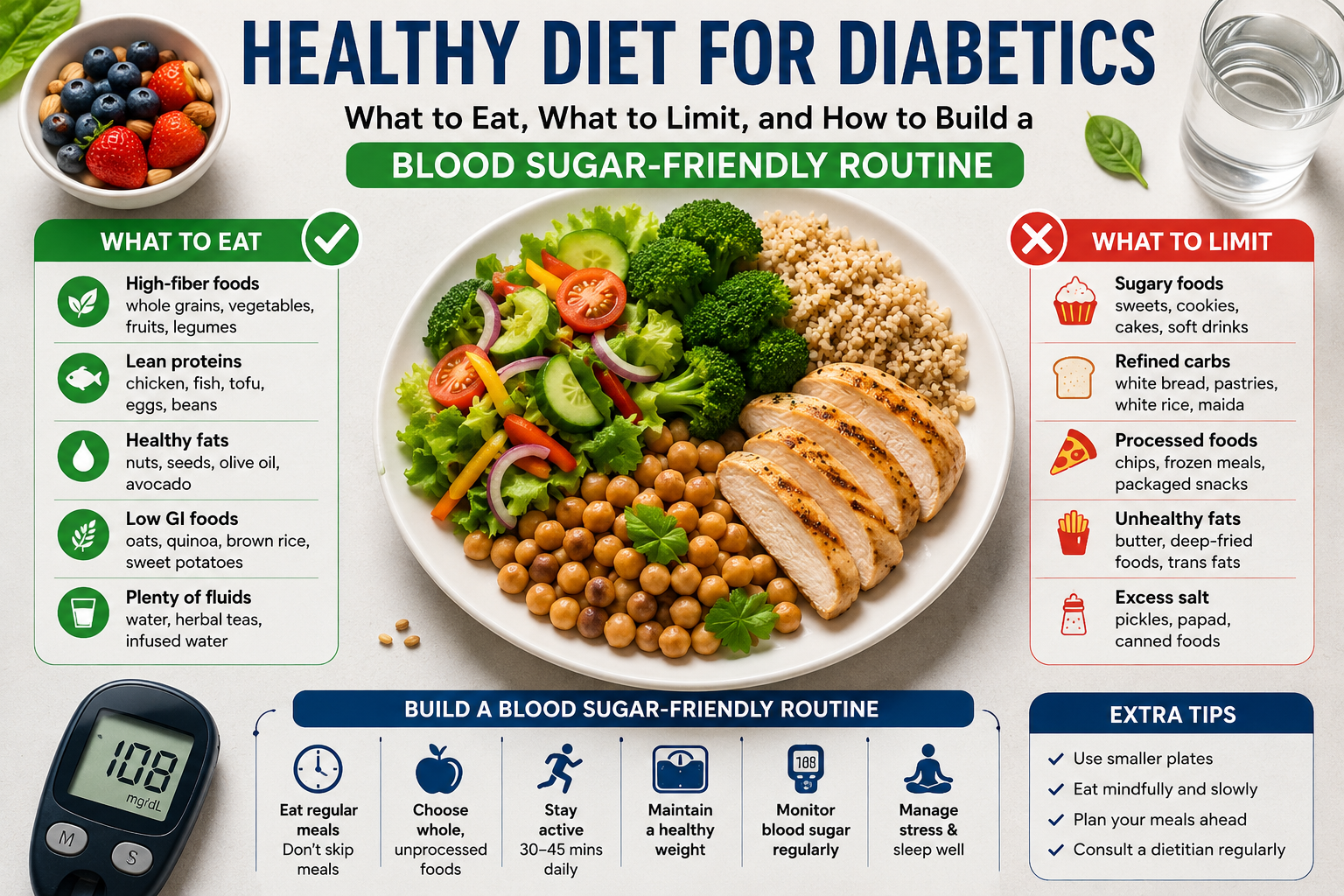
Diabetes management is often reduced to a single number on a glucose meter, but the daily choices that move that number are far more layered than most people realize. Diet sits at the center of blood sugar control, working alongside medication, activity, sleep, and stress regulation rather than replacing any of them. For people newly diagnosed or managing diabetes long-term, understanding which foods support stable glucose levels, and which patterns quietly undermine it, can make the difference between a routine that feels sustainable and one that feels like constant firefighting.
This article breaks down what a genuinely healthy diet for diabetics looks like: the food groups that matter most, the eating patterns worth building, and the habits worth approaching with caution. For readers who want to address the condition through a broader, mind-body lens alongside nutrition, a Yoga TTC India program often incorporates the kind of stress-regulation and lifestyle education that complements dietary change particularly well.
Why Diet Plays Such a Central Role in Diabetes
Blood glucose levels respond directly to the type, quantity, and timing of food eaten, which is why diet carries more day-to-day influence over diabetes than almost any other single factor. Carbohydrates are broken down into glucose during digestion, and the speed at which this happens determines how sharply blood sugar rises after a meal. Foods that digest quickly tend to produce sudden spikes, while foods that digest slowly release glucose more gradually, giving insulin, whether produced naturally or administered, more time to do its job effectively.
Over time, repeated blood sugar spikes place strain on the blood vessels, nerves, kidneys, and eyes, which is why consistent, moderate glucose control matters more than occasional strict discipline followed by long stretches of poor habits. A diet built around steady, predictable eating patterns tends to produce far better long-term outcomes than one built around restriction and reward cycles.
What the Research Says About Diet and Blood Sugar Control
Large-scale nutrition studies consistently point to a few dietary patterns that support meaningful improvements in glycemic control, including diets rich in whole grains, legumes, vegetables, and healthy fats, alongside diets that limit refined carbohydrates and added sugars. Mediterranean-style and plant-forward eating patterns in particular have been associated with improved insulin sensitivity, better long-term blood sugar averages, and reduced cardiovascular risk, which frequently accompanies diabetes as an overlapping concern.
It is worth being clear that no single food or diet plan works identically for everyone, since individual glucose responses vary based on genetics, activity level, medication, and existing insulin sensitivity. The strongest evidence supports personalized, consistent eating patterns built around whole foods rather than any single trending diet, and readers managing diabetes should treat general dietary guidance as a starting framework to refine with a doctor or registered dietitian rather than a fixed prescription.
The Best Foods for a Diabetic-Friendly Diet
A diabetic-friendly plate favors foods that release glucose gradually, provide steady energy, and support overall metabolic health, rather than foods chosen purely for being labeled low-sugar or diet-friendly.
Low-Glycemic, Fiber-Rich Carbohydrates
Whole grains such as oats, quinoa, and barley, along with legumes like lentils and chickpeas, digest slowly and produce a much gentler rise in blood sugar than refined grains or sugary snacks. These foods also tend to be naturally rich in fiber, which further slows glucose absorption and supports digestive and cardiovascular health at the same time.
Non-Starchy Vegetables
Leafy greens, broccoli, peppers, and other non-starchy vegetables provide volume, nutrients, and fiber without meaningfully raising blood glucose, making them one of the few food groups that can be eaten generously without close portion tracking. Building meals around a large base of vegetables, with smaller portions of carbohydrates and protein layered on top, is a simple structural habit that tends to produce steadier post-meal glucose readings.
Lean Proteins and Healthy Fats
Protein and fat slow the rate at which carbohydrates are digested when eaten together, which is part of why balanced meals tend to produce smaller glucose spikes than carbohydrate-heavy meals eaten alone. Fish, poultry, eggs, tofu, and legumes offer protein without excessive saturated fat, while sources such as olive oil, nuts, seeds, and avocado provide the kind of unsaturated fat associated with improved insulin sensitivity and better cardiovascular markers.
Understanding Glycemic Index and Glycemic Load
The glycemic index, or GI, ranks how quickly a carbohydrate-containing food raises blood sugar compared with pure glucose, and it offers a useful, if imperfect, lens for planning meals. Foods with a low GI, such as legumes, most vegetables, and steel-cut oats, tend to produce a slower, more manageable rise in blood glucose, while high-GI foods like white bread, white rice, and many packaged snacks tend to spike it quickly.
Glycemic load builds on this by factoring in portion size, since even a low-GI food can raise blood sugar significantly if eaten in a large enough quantity. This is why portion awareness remains important even when choosing foods considered diabetes-friendly, and why pairing carbohydrates with protein, fat, or fiber, rather than eating them in isolation, tends to soften their overall glycemic impact.
Foods and Habits to Approach with Caution
Certain foods and eating patterns place sudden or repeated strain on blood sugar regulation, and people managing diabetes generally benefit from limiting or restructuring these rather than eliminating them entirely, since sustainable habits tend to outperform strict, all-or-nothing rules.
- Refined carbohydrates such as white bread, white rice, and pastries, which digest quickly and produce sharp glucose spikes.
- Sugar-sweetened beverages, including soda and fruit juice, which deliver a concentrated dose of fast-absorbing sugar with little fiber to slow it down.
- Highly processed snack foods, which often combine refined carbohydrates with unhealthy fats and minimal nutritional value.
- Large, infrequent meals, which tend to produce more dramatic glucose swings than smaller, more evenly spaced meals throughout the day.
- Excessive alcohol intake, which can interfere with blood sugar regulation and, in some cases, mask the symptoms of dangerously low glucose.
As with most chronic condition management, the goal is a sustainable overall pattern rather than perfection at every meal, and occasional deviations matter far less than the consistency of the broader routine.
The Stress-Blood Sugar Connection
Diet does not operate in isolation from the nervous system, and chronic stress is increasingly recognized as a factor that can meaningfully worsen blood sugar control. Elevated stress hormones such as cortisol can raise blood glucose independently of food intake, and prolonged stress often disrupts sleep and appetite regulation in ways that make consistent eating harder to maintain.
Addressing this connection directly, rather than focusing on food choices alone, is part of why many diabetes education programs now include a stress-management component. Pranayama for Stress Relief outlines breathing techniques that can help regulate the nervous system response to stress, which may support more stable glucose patterns when combined with consistent dietary habits.
Building a Balanced Diabetic Meal Plan
Consistency and structure tend to matter more than any single food choice, and a simple daily framework can make dietary changes far easier to sustain long-term. A general structure to build from might include:
- Breakfast: a source of protein and fiber, such as eggs with vegetables or oats topped with nuts and seeds, to avoid a rapid morning glucose spike.
- Lunch: a balanced plate built around non-starchy vegetables, a moderate portion of whole-grain or legume-based carbohydrate, and a lean protein source.
- Afternoon: a small, protein-containing snack if needed, rather than skipping meals for long stretches, which can lead to overeating later in the day.
- Dinner: a lighter, earlier meal where possible, following a similar structure of vegetables, moderate carbohydrates, and protein.
- Throughout the day: consistent meal timing and adequate hydration, both of which support more predictable glucose patterns.
This kind of steady, well-paced daily rhythm mirrors the broader lifestyle principles taught in many wellness-focused training environments, and readers interested in a deeper look at the yoga side of this equation may find Yoga for Diabetes Management a useful companion resource, since several yoga-based practices have been studied for their effect on insulin sensitivity alongside dietary change.
Diet and Overlapping Metabolic Risk Factors
Diabetes frequently coexists with other metabolic concerns, particularly high blood pressure, elevated cholesterol, and excess weight around the midsection, all of which share overlapping dietary drivers. A diet built to support blood sugar control, rich in fiber, healthy fats, and whole foods while limiting refined carbohydrates and sodium, tends to improve several of these markers simultaneously rather than requiring an entirely separate approach for each condition.
This overlap is part of why healthcare providers increasingly treat diabetes as one piece of a broader metabolic picture rather than an isolated condition, and why dietary changes made for blood sugar control so often produce noticeable improvements in energy, weight, and cardiovascular markers as a secondary benefit.
Safety Guidelines for Managing Diabetes Through Diet
Anyone managing diabetes, whether type 1, type 2, or a prediabetic condition, should work with a doctor or registered dietitian before making significant dietary changes, particularly if insulin or other glucose-lowering medication is involved, since altered carbohydrate intake can affect medication dosing needs.
Frequent low blood sugar episodes, unexplained weight changes, persistent fatigue, or blood sugar readings that remain outside a healthy range despite dietary effort should always be discussed with a healthcare provider rather than managed through diet adjustments alone.
Frequently Asked Questions (FAQs)
1. What is the single most important dietary change for diabetes management?
There is no single change that works for everyone, but reducing refined carbohydrates and added sugar while increasing fiber intake tends to produce the most consistent improvement in blood sugar stability across most people.
2. Can diabetics eat fruit?
Whole fruit, eaten in moderate portions and ideally paired with protein or fat, is generally well tolerated, since the fiber in whole fruit slows sugar absorption. Fruit juice, by contrast, lacks this fiber and tends to raise blood sugar much more quickly.
3. Is intermittent fasting safe for people with diabetes?
It can be appropriate for some people, but it carries real risks around low blood sugar, particularly for anyone on insulin or certain medications, and should only be attempted under medical supervision.
4. How does stress affect blood sugar even without eating?
Stress hormones can raise blood glucose independently of food intake, which is why nervous-system regulation is increasingly treated as a meaningful part of diabetes management alongside diet and medication.
5. Note for Readers
This article is intended for general informational purposes only and does not constitute medical advice. Diabetes is a serious medical condition, and readers should consult a qualified physician or registered dietitian before making changes to diet, medication, or exercise routines.
Final Thoughts: Building a Diet That Supports, Rather Than Fights, Your Body
A healthy diet for diabetics is less about strict rules and more about building a consistent, sustainable pattern that keeps blood sugar steady across the whole day, not just at any single meal. Whole foods, balanced plates, regular timing, and attention to the stress side of the equation all work together in ways that no single food or supplement can replicate on its own. For readers wanting to build these habits in a fully supported environment, alongside the kind of breathwork and lifestyle structure that reinforces steady blood sugar management, spending time at a dedicated Yoga Retreat in Rishikesh offers space to reset daily habits around food, movement, and rest under expert guidance.
