
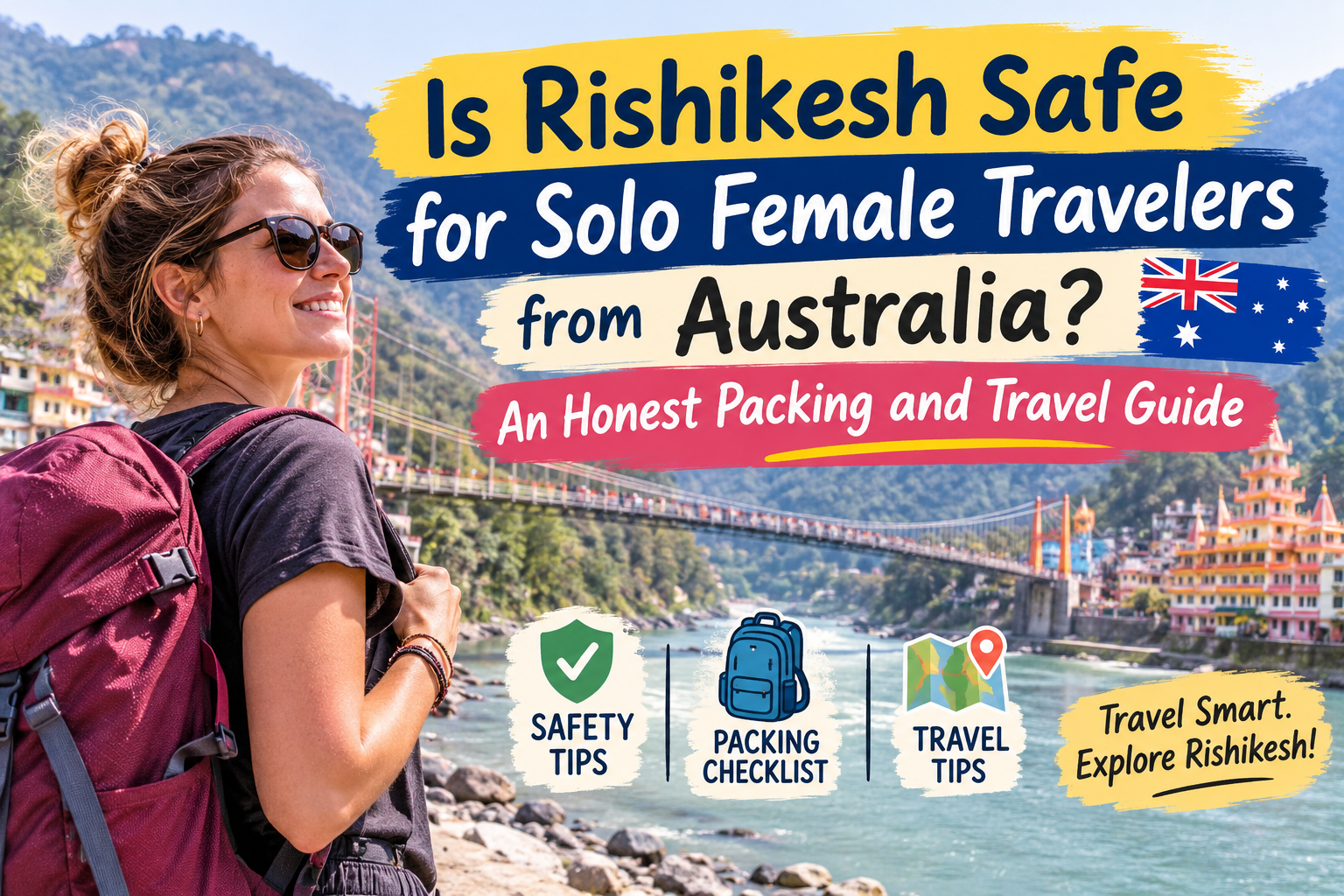
An informational guide for Australian women considering a solo trip to Rishikesh, covering safety realities, getting there, where to stay, daily routines, food, health, a practical packing list, and warning signs to avoid.
Many Australian women dream of studying yoga in Rishikesh, but the first question is rarely about postures. It is: will I be safe travelling there alone? The honest answer is neither a blanket yes nor a blanket no. Rishikesh is a small, spiritually focused town used to international visitors, and many women travel there alone each year. It is also in India, where official advice for women is to take extra care.
This guide explains the realistic risks, how to reduce them, what to pack, and how to choose a programme, so you can decide with accurate information rather than fear or hype. Conditions and rules change, so always confirm current details with official sources before you travel.
1. So, Is Rishikesh Safe? The Honest Answer
Australia’s Smartraveller advice for India asks women to take particular care throughout the country and to stay cautious even when travelling in a group. Other governments give similar guidance, usually recommending that women avoid travelling alone at night, especially on public transport and in unlit areas. Read the latest Smartraveller page before booking, and subscribe to updates.
Rishikesh is often described as calmer than India’s big cities, partly because of its religious character and the steady flow of yoga students. Understanding what makes Rishikesh the yoga capital of the world helps explain why many ashrams and schools are used to hosting solo women. Even so, most problems women report are petty rather than violent: staring, unwanted comments, touts, overcharging, and occasional scams. Preparation and judgement go a long way.
2. The Real Risks to Plan For
Unwanted attention: expect staring and comments, especially around busy bridges and markets. Ignoring them and walking on confidently is usually the simplest response.
Night travel: lanes can be dim and quiet after dark. Avoid walking alone late, particularly near the river or outside the main areas.
Transport: use pre-booked or well-reviewed rides, confirm the price before you get in, and avoid sharing vehicles alone at night.
Scams and touts: be wary of strangers who offer unusually cheap tours, “free” blessings that lead to donation demands, or accommodation changes.
Nature and health: the Ganga has strong currents, and swimming or rafting should only be done with licensed operators and safety gear. Stray dogs and monkeys can also be a nuisance, so keep food out of sight.
3. Getting There from Melbourne or Sydney
Most Australians fly into Delhi, then continue to Rishikesh by road, train, or a domestic flight to Dehradun’s airport. Choose daylight arrivals wherever possible, and pre-book your first night and your transfer through your school or hotel so you are not negotiating alone after a long flight.
Check current visa rules, passport validity, and vaccination advice with official sources and a travel doctor well before departure. Buy comprehensive travel insurance that covers medical care, evacuation, and yoga or adventure activities. Save digital copies of your passport, visa, and insurance, and leave your itinerary with someone at home.
4. Choosing a Safe and Reputable School
Your school is your base, so its reputation matters. Look for published teacher profiles, clear fees, transparent terms, secure accommodation, and recent independent reviews. A good school will also answer safety questions openly and arrange arrival pick-ups.
If you want a short stay, a yoga retreat in Rishikesh is a lower-commitment way to test the town. For longer study, compare the best yoga school in Rishikesh candidates and read the yoga instructor certification guide so you understand what each level involves.
Course lengths include 100 hours, 200 hours, 300 hours, and 500 hours, and the roadmap on how to get yoga certified in Rishikesh India shows how they connect. If you are deciding on yoga teacher training in Rishikesh, also read the guide on things to know before doing yoga teacher training in India, and look at what a yoga TTC India programme includes in terms of accommodation and supervision.
5. Daily Routine and Getting Around Safely
School life itself adds a layer of safety. Fixed class times, shared meals, and a community of other students mean you are rarely alone for long. A breakdown of the daily routine during yoga teacher training in Rishikesh shows how early starts and full days leave little unstructured evening time, which many solo travellers find reassuring.
For errands, walk in daylight, keep to main roads, and let someone at your school know where you are going. Buy a local SIM or eSIM so you can use maps and ride apps, and keep your phone charged. Trust your instincts: if a situation feels wrong, leave, and do not worry about being polite.
6. Sightseeing and Spiritual Places
Temples, ghats, and the evening Ganga aarti are highlights, and they are usually busy and well attended. Go in a group from your school when possible, particularly for early morning or evening visits. This overview of spiritual places to visit in Rishikesh during yoga TTC can help you plan, and remove shoes and cover shoulders and knees where required. Keep valuables close in crowds and on the suspension bridges, where phones are easily dropped or grabbed.
7. Food, Water, and Staying Well
Rishikesh is a vegetarian town, and meals at most schools are simple, fresh, and sattvic. If your stomach is not used to Indian spices or the water, ease in gradually. Drink bottled or properly filtered water, avoid ice and raw salads from unknown places, and wash your hands often. The guide to food and lifestyle during yoga teacher training in Rishikesh explains what to expect day to day.
Pack basic medicines such as oral rehydration salts, anti-diarrhoea tablets, and any prescriptions in original packaging, and ask your doctor about travel health before you leave. Serious or persistent symptoms need professional medical care rather than home remedies.
8. A Practical Packing List for Women
Packing light but well makes the trip easier and safer. The full checklist on what to pack for yoga teacher training in Rishikesh goes into more detail. The essentials are listed below.
Clothing: loose, modest cotton tops and trousers or long skirts, plus a scarf or shawl. Add warm layers for cool mornings, especially in winter.
Yoga items: a lightweight mat or towel, comfortable activewear, and a water bottle with a filter.
Documents: passport, visa, insurance, and printed and digital copies stored separately.
Health kit: sunscreen, insect repellent, a basic first-aid kit, hand sanitiser, and any personal or menstrual products you prefer.
Tech and safety: a power adapter, a power bank, a door stopper or small lock, and a copy of emergency numbers.
Money: a small amount of cash, a card that works overseas, and a notice to your bank about your travel dates.
9. Dress and Cultural Respect
Dressing modestly is less about rules and more about reducing unwanted attention and showing respect in a religious town. Covering shoulders and legs is widely recommended by travel advisers. Be mindful about touching or photographing people, and note that alcohol and non-vegetarian food are restricted in many areas. Small gestures of respect, such as greeting people politely and accepting local customs, usually make interactions smoother.
10. Looking After Your Mental and Physical Wellbeing
Travelling alone, adjusting to a new routine, and practising intensively can be emotionally demanding. Homesickness, tiredness, and strong feelings are common. Practices such as rest-based sessions, breathing, and yoga nidra in Rishikesh can support relaxation, and reading about yoga for mental health in Rishikesh India can help you set realistic expectations. They are supportive tools, not treatments, and they do not replace professional care.
If you take medication or have a mental health history, speak to your doctor before leaving and tell your school. Keep in touch with family and friends, and build rest days into your schedule.
11. What You May Learn While You Are There
Classes vary by school, and knowing the styles helps you choose confidently. You might encounter Vinyasa yoga in Rishikesh India, Ashtanga yoga in Rishikesh India, Iyengar yoga in Rishikesh India, or Kundalini yoga in Rishikesh India. Experienced students may explore advanced yoga practices in Rishikesh India, and philosophy lovers may enjoy Jnana and Karma yoga in Rishikesh and the values of yoga in life India. Some schools also offer an Ayurvedic massage course in Rishikesh India; confirm the teachers’ qualifications first. For a broader overview of options, see this guide to yoga teacher training in Rishikesh India.
12. Emergency Preparedness
Before you go, save the local emergency number (112), the women’s helpline (181), your school’s contact, your insurer’s 24-hour line, and the Australian High Commission in New Delhi. Confirm these numbers before travel, since they can change. Tell your school about allergies and medical conditions, and know the nearest hospital. Register your trip with Smartraveller so you can receive updates.
13. A Simple Safety Checklist
Have you read the latest Smartraveller advice and registered your trip?
Is your first night and airport or station transfer pre-booked?
Do you have insurance that covers medical care and evacuation?
Has your school been verified through independent reviews and direct questions?
Do you have copies of documents, emergency numbers, and a local SIM plan?
Have you told family or friends your itinerary and how to reach you?
14. Red Flags to Watch For
A school that avoids questions about teachers, fees, or accommodation.
Pressure to pay quickly, or unclear cancellation and refund terms.
Unlicensed river activities or operators without safety equipment.
People who insist on accompanying you, or who ask for personal details early.
Anyone promising to cure illness or guarantee spiritual transformation.
15. Who Should Be Cautious
Intensive yoga and long travel are not suitable for everyone without preparation. Anyone who is pregnant, has a heart condition, high blood pressure, recent surgery, or a long-term illness should consult a doctor before booking. People with a history of trauma, anxiety, depression, or an eating disorder should talk with a qualified professional first. If you do not feel comfortable travelling alone, consider joining a group programme or travelling with a friend for the first trip.
Frequently Asked Questions (FAQs)
Q1. Is Rishikesh safe for solo female travellers?
Many women travel there safely, but official advice for India urges extra caution. Choose a reputable school, avoid night travel alone, and use sensible precautions.
Q2. Is it safe to walk around Rishikesh at night?
It is generally better to avoid walking alone late, especially in dim or quiet areas. Stay in groups or use trusted transport.
Q3. What should I wear in Rishikesh?
Loose, modest clothing that covers shoulders and knees is advisable, plus a scarf for temples and cooler weather.
Q4. Is the water safe to drink?
Stick to sealed bottled water or properly filtered water, and avoid ice from unknown sources.
Q5. Should I book my first night in advance?
Yes. Pre-booking your first night and your transfer reduces stress and risk after a long journey.
Q6. Can I join a yoga programme if I am a beginner?
Many retreats welcome beginners, while teacher trainings often prefer some experience. Check entry requirements with the school.
Q7. What if I feel unsafe or unwell?
Move to a safe public place, contact your school or emergency services, and call your insurer. Seek medical help early for anything serious.
Final Thoughts
Rishikesh can be a rewarding place for Australian women to study and rest, but safety depends on preparation, judgement, and the choices you make about where you stay and how you move. Official advice recommends extra care, and that is best treated as a reason to plan well rather than a reason to stay home.
Choose a transparent school, pack sensibly, keep people informed, and trust your instincts. Verify current travel advice and health requirements, and seek professional guidance wherever your wellbeing calls for it.