 Skip to content
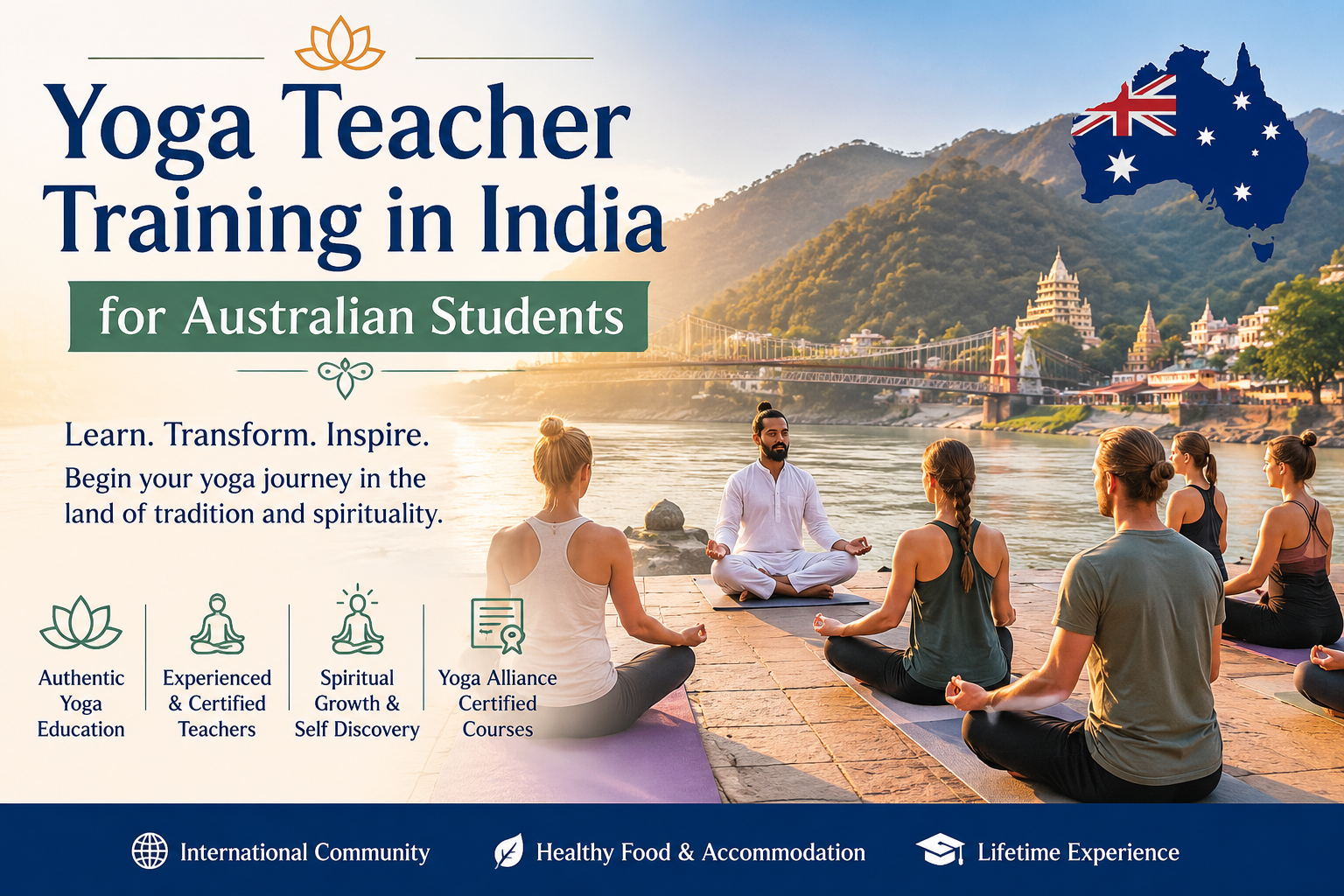
An informational guide to how yoga teacher training in India actually works, what Australian students need to know about certification, cost, and structure, and how to decide whether it is the right path.
For Australian students weighing up where to complete a yoga teacher training course, India, and Rishikesh in particular, consistently comes up as one of the leading options. But choosing to train there involves more than picking a destination; it means understanding certification levels, accreditation, realistic costs, and what daily training actually looks like, none of which is always clearly explained before booking.
This guide walks through the practical side of yoga teacher training in India specifically for Australian students, covering how courses are structured, what to check before enrolling, and how to weigh the decision against other options.
It is written for Australians at any stage of considering this path, whether just beginning to research options or close to booking a specific course, and aims to answer the practical questions that often get glossed over in more general or promotional material. Because a teacher training course represents a genuine investment of time, money, and effort, it is worth going in with a clear picture of what to expect rather than relying purely on enthusiasm or a single glowing recommendation from a friend.
1. Why India Remains the Top Destination for Yoga Teacher Training
India is where yoga as a structured practice originated, and this history continues to shape why so many international students, including a steady stream of Australians, choose to train there rather than closer to home. Beyond tradition, India also offers a genuine concentration of experienced teachers and established schools, particularly around Yoga Teacher Training in Rishikesh, which has become one of the most recognised hubs for this kind of training anywhere in the world.
This concentration of expertise also means Australian students have considerably more choice than they might in a smaller regional market, whether that means selecting a specific style of yoga, a particular class size, or a school with a teaching philosophy that closely matches their own goals.
2. Understanding the Different Levels of Certification
Yoga teacher training is generally organised into recognised hour-based tiers, and understanding these before booking helps avoid confusion later. The most common levels include:
- 100-hour courses, often used as an introductory or supplementary credential rather than a standalone teaching qualification.
- 200-hour courses, the standard foundational certification most new teachers pursue first.
- 300-hour courses, an advanced credential typically completed after gaining some teaching experience.
- 500-hour courses, usually earned by combining a 200-hour and 300-hour certification, representing a more comprehensive qualification.
Most Australian students begin with a 200-hour course, since this is the level most widely recognised by studios and the level required to register with most major yoga governing bodies.
3. What to Look for in a Yoga School
Not every school offering training in India is accredited to the same standard, so it is worth checking a few specific details before enrolling. These include whether the school is registered with an internationally recognised yoga governing body, how many years the school has been operating, whether lead teachers hold advanced certification themselves, and whether past graduates, including other Australians, have left genuine, verifiable reviews. A school’s marketing materials alone are rarely enough to judge quality by.
It is also reasonable to email a shortlisted school directly with specific questions, such as typical class sizes, the ratio of lead teachers to students, and how much individual feedback students can expect during practice. Schools confident in the quality of their training are generally happy to answer these questions clearly and promptly.
4. What Australian Students Can Expect to Study
A well-structured curriculum covers considerably more than physical postures. Most reputable 200-hour courses include asana practice and alignment, foundational anatomy and physiology, yoga philosophy and history, teaching methodology, and an introduction to meditation and pranayama. Programs grounded in classical teachings, such as those exploring Jnana & Karma Yoga in Rishikesh, also introduce students to the philosophical branches of yoga beyond the physical practice, giving graduates a fuller understanding to draw on once teaching.
5. The Application and Enrolment Process
Enrolling in a course from Australia typically involves submitting an application with some background on current practice experience, followed by a deposit to secure a place once accepted. Most reputable schools ask a handful of questions about physical readiness and any existing injuries before confirming enrolment, since certain course intensities are not suitable for every student. It is worth applying at least a few months ahead of a preferred start date, particularly for the more popular autumn and spring intakes.
6. Cost of Training in India vs Australia
One of the more practical reasons Australians choose India for training is cost. A 200-hour course in India, inclusive of accommodation and meals, is often considerably less expensive than an equivalent course run domestically in Australia, even once flights are factored in. That said, total cost varies significantly between schools, and it is worth comparing what is actually included, since some quote a bare course fee while others bundle in accommodation, meals, and even airport transfers.
Beyond the course fee itself, Australian students should budget separately for international flights, an Indian tourist e-visa, travel insurance, and some spending money for personal items or optional excursions. Building a realistic total budget before comparing schools makes it much easier to judge which option genuinely offers the best value, rather than comparing course fees alone.
7. Daily Life During Training
Most courses follow a demanding but fairly consistent daily rhythm: early morning meditation or pranayama, a structured asana class, philosophy or anatomy lectures, a teaching practice session, and a second practice or workshop in the evening. Meals are typically vegetarian and provided as part of the course, and free time is generally limited during the week, with more flexibility built into weekends or designated rest days.
8. Eligibility and Prerequisites
Most 200-hour courses do not require extensive prior experience, though schools generally expect applicants to have a reasonably consistent personal practice, often six months to a year, before beginning. Some schools request a short video or written statement describing current practice as part of the application. Physical readiness matters more than flexibility specifically, since much of the course involves sustained daily practice rather than advanced postures.
9. Certification and Career Pathways After Graduating
Once certified, graduates can generally register with an internationally recognised governing body, which is often a prerequisite for teaching at established studios back in Australia. Understanding this pathway clearly before enrolling avoids the common issue of completing a course only to discover it does not meet a preferred studio’s requirements. Yoga Instructor Certification Guide in India walks through this registration process in more detail, including what documentation is typically required and how certification hours are logged.
Career paths after certification vary widely, from teaching regular studio classes and private sessions to running workshops, corporate wellness sessions, or eventually opening an independent studio. Many graduates start by assisting more experienced teachers or covering casual classes while building confidence, gradually taking on a fuller teaching schedule as they gain experience.
10. Common Challenges Australian Students Face
Some of the more common difficulties Australian students report are not related to the training itself but to adjusting to a different pace of life, unfamiliar food, and limited access to the usual comforts of home for several weeks. Jet lag and the long flight itself can also make the first few days more tiring than expected. Most of these challenges ease within the first week as students settle into the daily rhythm of the course.
11. Support Systems for International Students
Reputable schools generally provide considerable support for international students, including airport pickup, orientation on arrival, and staff familiar with common questions from first-time visitors to India. Many Australian graduates also stay loosely connected through informal networks after returning home, which can be a useful, low-pressure way for prospective students to ask direct questions before committing to a specific school.
12. Comparing India to Other Popular Training Destinations
Bali and Thailand are the two destinations most often compared with India by Australian students, largely due to shorter flight times and lower overall costs for a short trip. However, neither offers the same depth of traditional teaching lineage or concentration of experienced teachers found in India, particularly in a well-established hub for Yoga TTC India. Students prioritising convenience may lean toward South-East Asia, while those prioritising depth of training tend to choose India despite the longer journey.
13. Making the Decision: Is Training in India Right for You
Training in India tends to suit students who want a genuinely immersive, tradition-rooted experience and who are comfortable with a demanding daily schedule in an unfamiliar setting. It may be less suited to those seeking a short, low-commitment trip or who are not yet ready for an extended period away from familiar comforts. Being honest about which category best describes a given student is one of the more useful steps before booking.
14. Practical Next Steps for Australian Students
For those ready to move forward, the most useful next steps are shortlisting two or three accredited schools, confirming exactly what each course fee includes, checking specific start dates against work or personal commitments, and beginning the visa application process well ahead of the intended travel date. Taking these steps methodically tends to lead to a smoother, more confident booking process than choosing a school based on price or marketing alone.
Frequently Asked Questions (FAQs)
Q1. What is the minimum certification level needed to teach yoga professionally?
Most studios require at least a 200-hour certification from a recognised school, though requirements can vary between individual employers.
Q2. How long does a standard yoga teacher training course take in India?
Most 200-hour courses run for around three to four weeks of full-time, structured training.
Q3. Do Australian students need prior yoga experience to enrol?
Extensive experience is not usually required, but most schools expect a reasonably consistent personal practice, often around six months to a year, before applying.
Q4. Is training in India cheaper than training in Australia?
Generally yes, even after accounting for flights, since course fees in India often include accommodation and meals at a lower overall cost than equivalent domestic training.
Q5. Will certification from India be recognised by Australian yoga studios?
Certification from a school registered with an internationally recognised governing body is generally recognised, though it is worth confirming a specific school’s accreditation before enrolling.
Q6. How physically demanding is a typical training course?
Courses are generally demanding, involving two practice sessions most days alongside lectures, so a baseline level of fitness and stamina is more important than advanced flexibility.
Q7. How far in advance should Australian students book their course?
Booking at least three to four months ahead is generally advisable, particularly for popular intakes, to allow time for visa processing and better flight availability.
Final Thoughts
Yoga teacher training in India offers Australian students a depth of tradition and teaching experience that is difficult to match elsewhere, provided the decision is made with a clear understanding of certification levels, costs, and what daily training actually involves. Approached with realistic expectations and a bit of upfront research, it remains one of the more rewarding paths available for those serious about teaching yoga.
