 Skip to content
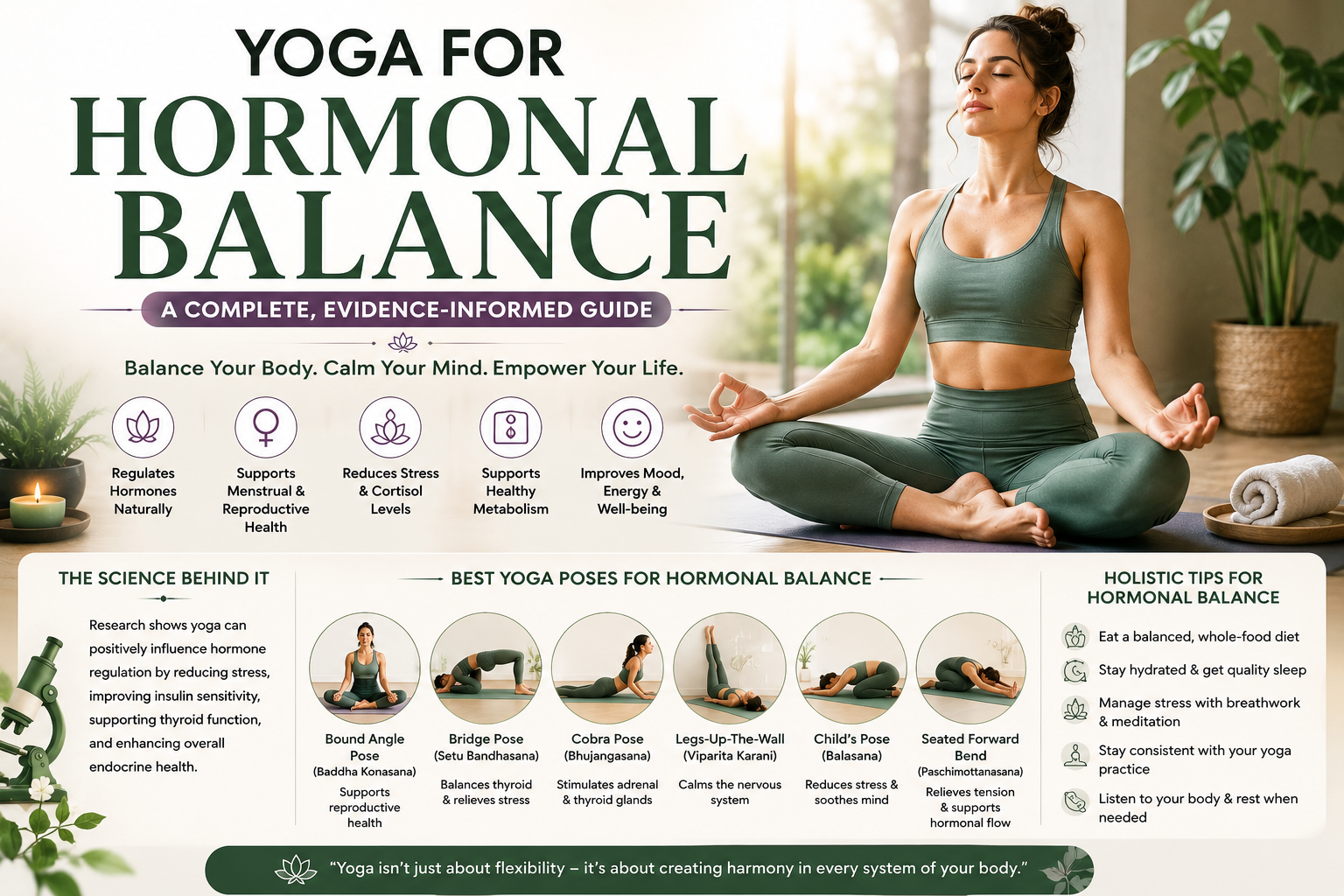
An informational guide to how yoga supports the endocrine system, which practices help specific hormonal imbalances, and how to build a sustainable, safe routine — written for readers exploring yoga as a complementary approach to hormonal health.
Hormones govern far more of daily life than most people realise — energy levels, mood, sleep, appetite, metabolism, and reproductive health are all coordinated by a small set of glands communicating through the bloodstream. When that communication is disrupted, by chronic stress, poor sleep, irregular routines, or underlying medical conditions, the effects tend to show up everywhere at once: fatigue, weight changes, irritability, irregular cycles, or difficulty concentrating.
Yoga will not replace medical treatment for a diagnosed hormonal disorder, but a growing body of research and centuries of traditional practice both point to the same conclusion: the nervous system and endocrine system are deeply connected, and practices that calm the nervous system can meaningfully support hormonal regulation over time. This guide explains that connection, breaks down which yoga practices help which imbalances, and offers a realistic routine for building the habit.
1. Understanding the Link Between Yoga and Hormones
The endocrine system is a network of glands — the hypothalamus, pituitary, thyroid, adrenals, pancreas, and reproductive glands — that release hormones directly into the bloodstream. These glands do not operate independently; they are coordinated primarily through the hypothalamic-pituitary axis, which also happens to be extremely sensitive to stress signals from the nervous system.
This is the core mechanism behind yoga’s effect on hormonal balance. Chronic stress keeps the body’s sympathetic nervous system (the “fight or flight” response) activated for extended periods, which elevates cortisol, the primary stress hormone. Sustained high cortisol has a cascading effect: it can suppress thyroid function, disrupt insulin sensitivity, interfere with reproductive hormone cycles, and throw off the natural rhythm of melatonin and sleep. Yoga’s breathing techniques, physical postures, and relaxation practices activate the parasympathetic nervous system instead, which lowers cortisol output and gives the rest of the endocrine system room to recalibrate.
2. Yoga for Thyroid Health
The thyroid gland regulates metabolism, energy, and body temperature, and imbalances (hypothyroidism or hyperthyroidism) are among the most common hormonal issues, particularly in women. Certain yoga postures are traditionally associated with stimulating blood flow to the thyroid region in the neck and gently compressing or stretching the gland:
- Sarvangasana (Shoulder Stand): brings gentle compression to the throat area; should be practised cautiously and avoided by those with neck injuries or high blood pressure without guidance.
- Matsyasana (Fish Pose): opens the throat and chest, often practised as a counterpose after shoulder stand.
- Ustrasana (Camel Pose): stretches the front of the neck and throat while also opening the chest, which supports easier breathing.
- Halasana (Plow Pose): similar throat compression benefits to shoulder stand, best learned under experienced guidance initially.
These postures are a complementary practice, not a substitute for thyroid medication or monitoring. Anyone with a diagnosed thyroid condition should coordinate any new physical practice with their treating physician.
3. Yoga for Stress Hormones and Cortisol Regulation
Because cortisol sits upstream of so many other hormonal processes, managing it is often the most impactful starting point. Slow, diaphragmatic breathing practices are particularly effective here — Pranayama for Stress Relief explores this connection in more depth, but the core practices worth starting with are Nadi Shodhana (alternate nostril breathing), Bhramari (humming bee breath), and simple extended-exhale breathing, all of which directly signal the parasympathetic nervous system to downshift out of a stress response.
Restorative postures held for several minutes at a time — supported forward folds, legs-up-the-wall pose, and reclined bound angle pose — work the same way through stillness rather than movement, allowing the body’s stress response to settle without requiring active exertion.
4. Yoga for Reproductive and Menstrual Hormone Balance
Reproductive hormones (oestrogen, progesterone, and testosterone) are especially sensitive to chronic stress and irregular routines, which is why menstrual irregularities and conditions like PCOS are so often linked to lifestyle factors alongside underlying physiology. Several categories of practice are commonly used to support this area:
- Hip-opening postures (Baddha Konasana, Supta Baddha Konasana, Malasana): improve circulation to the pelvic region and release physical tension often held in the hips.
- Twisting postures (Ardha Matsyendrasana): support digestive and detoxification processes that indirectly influence hormone metabolism.
- Inversions and mild backbends: used cautiously and typically avoided during menstruation, but supportive for circulation and pelvic blood flow at other points in the cycle.
- Consistent practice timing: some traditions emphasise practising at a similar time each day to support the body’s natural circadian and hormonal rhythms.
5. Yoga for Insulin Sensitivity and Metabolic Hormones
Insulin, produced by the pancreas, is one of the hormones most directly affected by stress, sleep, and physical activity levels — which makes it particularly responsive to a consistent yoga practice. For readers managing blood sugar concerns specifically, Yoga for Diabetes Management covers targeted sequences in more detail. More broadly, twisting postures, core-engaging poses, and moderately paced sun salutations all support pancreatic function and circulation to the abdominal organs, while the stress-reduction benefits of the practice as a whole help prevent cortisol-driven insulin resistance.
6. Yoga Nidra and Sleep-Linked Hormones
Melatonin and growth hormone are both released primarily during deep sleep, and poor sleep quality is one of the fastest ways to destabilise the entire hormonal system, including cortisol, thyroid hormones, and appetite-regulating hormones like leptin and ghrelin.
Yoga Nidra, a guided practice of conscious relaxation performed lying down, is specifically designed to bring the body into a state between wakefulness and sleep, where the nervous system can deeply rest even during a short session. Regular practice of Yoga Nidra in Rishikesh style guided relaxation has been used traditionally to improve overall sleep quality, which in turn supports the natural rhythm of melatonin release and downstream hormonal regulation.
7. Building a Realistic Weekly Routine
Consistency matters more than intensity when it comes to hormonal balance, since the endocrine system responds to sustained patterns rather than occasional effort. A realistic starting routine might look like this:
- 3–4 sessions per week of 30–45 minutes combining postures relevant to your specific concern (thyroid, reproductive, or metabolic).
- A short daily pranayama practice of 5–10 minutes, ideally at a consistent time, such as first thing in the morning.
- One or two Yoga Nidra or deep relaxation sessions per week, particularly on higher-stress days.
- Avoiding intense inversions or vigorous practice during acute stress flares, menstruation, or as advised by a healthcare provider for a specific condition.
8. Safety Notes and When to See a Doctor
Yoga is a supportive, complementary practice, not a diagnostic or treatment tool for hormonal disorders. A few important guidelines apply:
- Persistent symptoms such as significant weight change, missed periods, extreme fatigue, or mood changes should always be evaluated by a physician, regardless of yoga practice.
- Certain postures (particularly inversions) are contraindicated during pregnancy, menstruation for some practitioners, or with specific conditions like glaucoma or uncontrolled high blood pressure — always check with a qualified teacher.
- Yoga can complement but should never replace prescribed hormonal medication or ongoing medical monitoring.
- If you are new to practices like shoulder stand or plow pose, learning them from an experienced teacher reduces the risk of neck strain significantly.
9. Where to Learn These Practices Properly
Because several of the postures and breathing techniques discussed here benefit from correct alignment and sequencing, learning them under qualified guidance — rather than from video alone — makes a meaningful difference in both safety and results. Structured, in-depth training such as a Yoga Teacher Training in Rishikesh programme covers therapeutic sequencing, pranayama, and restorative practices in detail, which is valuable even for practitioners who have no interest in teaching professionally and simply want a deeper, safer understanding of how to apply yoga to their own hormonal health.
10. Combining Yoga With Supporting Lifestyle Habits
Yoga works best as part of a broader pattern rather than an isolated fix, since the endocrine system responds to overall lifestyle rhythm as much as to any single practice. A few complementary habits tend to reinforce the benefits described above:
- Consistent sleep and wake times: circadian rhythm strongly influences cortisol and melatonin cycles, and irregular sleep timing can undermine even a strong yoga practice.
- Balanced, whole-food meals at regular intervals: blood sugar swings from skipped meals or highly processed food place additional strain on insulin regulation, compounding the very imbalance a metabolic-focused yoga practice is trying to address.
- Limiting stimulants like excess caffeine, particularly later in the day: stimulants can elevate cortisol independently of psychological stress, partially offsetting the calming effect of a pranayama practice.
- Time outdoors and natural light exposure: morning sunlight exposure helps anchor circadian rhythm, which supports the same melatonin and cortisol patterns that Yoga Nidra and restorative practice are working to regulate.
- Reducing screen time before bed: blue light exposure late at night can delay melatonin release, undercutting sleep quality even after an otherwise well-timed practice.
None of these habits need to be adopted all at once. Most practitioners find it more sustainable to layer one or two lifestyle adjustments alongside a new yoga routine, rather than overhauling everything simultaneously — consistency over months matters far more than intensity in any single week.
Frequently Asked Questions (FAQs)
Q1. Can yoga actually balance hormones, or is that just a marketing claim?
Yoga does not directly alter hormone levels the way medication does, but it reliably reduces stress-hormone activity and supports the nervous system pathways that regulate the endocrine system, which can meaningfully support overall hormonal balance over consistent practice.
Q2. How long does it take to notice hormonal benefits from yoga?
Most practitioners notice stress-related benefits like better sleep and calmer mood within a few weeks, while changes tied to cycles, metabolism, or thyroid function typically take several months of consistent practice to become noticeable.
Q3. Is yoga safe during menstruation?
Many gentle and restorative postures are safe and often helpful during menstruation, but inversions such as shoulder stand and headstand are traditionally avoided during this time. Listening to your body and adjusting intensity is generally recommended.
Q4. Can yoga help with PCOS specifically?
Yoga is commonly used as a complementary practice for PCOS, particularly through stress reduction, hip-opening postures, and metabolic-support sequences, but it should be combined with medical guidance rather than used as a standalone treatment.
Q5. Which is more important for hormonal balance: yoga postures or breathing practices?
Both play complementary roles. Breathing practices tend to have a faster, more direct effect on the stress response and cortisol levels, while postures support circulation and physical function around specific glands, so a combined approach is generally most effective.
Q6. Can men benefit from yoga for hormonal balance too?
Yes. Hormonal regulation through stress reduction, thyroid-supportive postures, and improved sleep quality benefits testosterone, cortisol, and metabolic hormone balance in men just as it does reproductive and thyroid hormones in women.
Q7. Do I need to practise every day to see results?
Daily practice is not strictly necessary. Three to four consistent sessions per week, combined with a short daily breathing practice, is generally enough to support meaningful hormonal benefits over time.
Final Thoughts
Hormonal balance is rarely about a single fix — it reflects the cumulative pattern of sleep, stress, movement, and routine over weeks and months. Yoga’s particular strength lies in addressing the nervous system pathways that influence nearly every hormonal process in the body, making it one of the more sustainable complementary practices available for long-term hormonal health.
Approached consistently, and alongside appropriate medical care where needed, yoga offers a practical, low-risk way to support the body’s own regulatory systems rather than working against them.
