 Skip to content
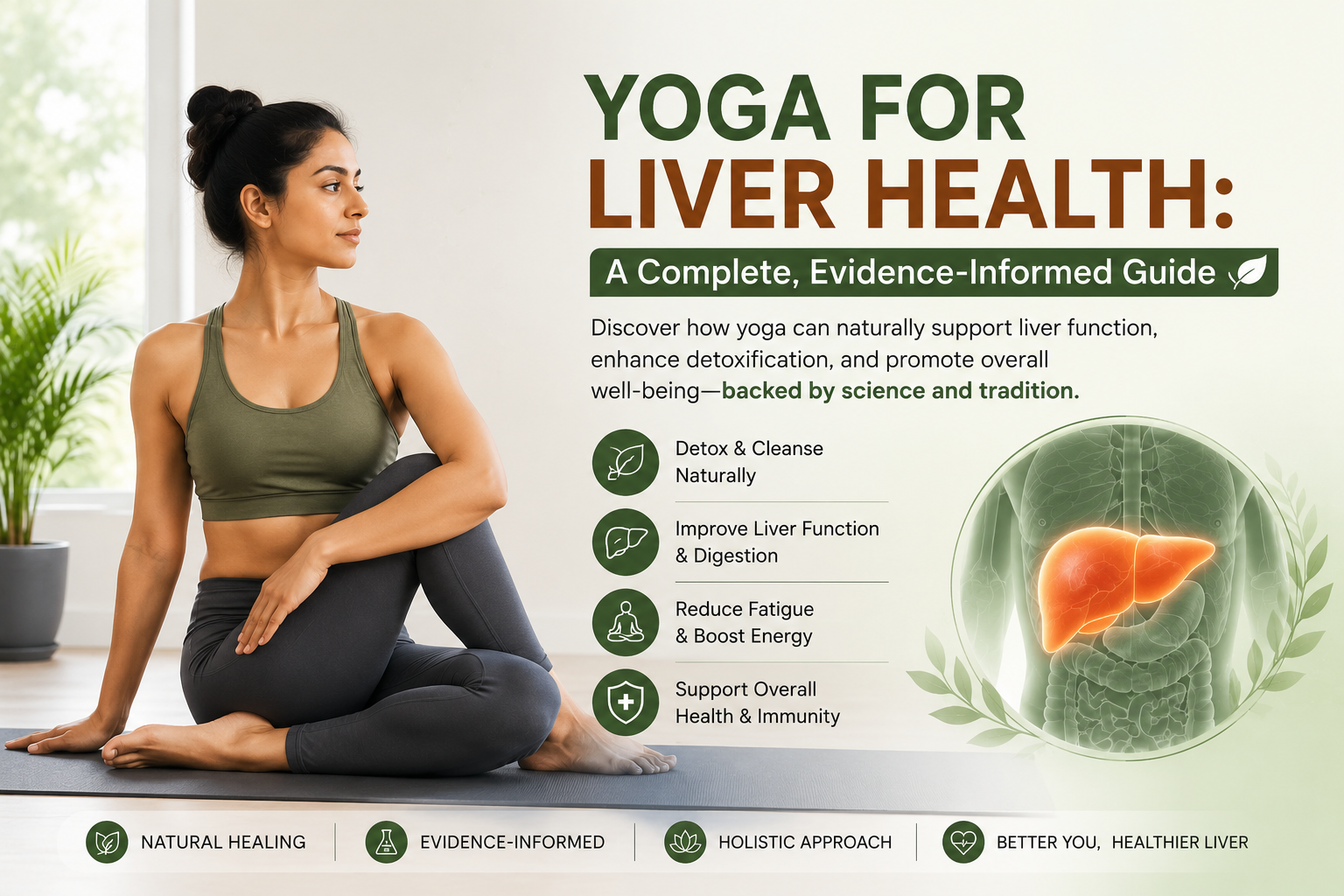
An informational guide to how yoga supports liver health — covering the liver’s role in metabolism and detoxification, useful postures and breathing techniques, and how yoga fits alongside diet and medical care for a healthy liver.
The liver is one of the body’s most metabolically active organs, involved in processing nutrients, filtering the blood, regulating blood sugar and cholesterol, and breaking down substances the body no longer needs. Because of this central metabolic role, liver health is closely tied to broader lifestyle factors — diet, alcohol intake, body weight, and physical activity chief among them — and it is within this broader lifestyle picture that yoga’s relevance becomes clear, working through improved circulation, gentle abdominal stimulation, and stress regulation rather than any direct, isolated effect on liver tissue.
This guide walks through how yoga can support liver health as part of a wider lifestyle approach, which postures and breathing techniques are most commonly associated with this goal, and where the limits of a self-directed practice lie. Yoga is not a substitute for medical care of diagnosed liver conditions, but it is one of the more thoroughly researched and long-practised complementary approaches available for supporting the body’s metabolic and digestive systems, of which the liver is a central part.
1. Understanding the Liver’s Role in the Body
The liver performs several hundred distinct functions, but a few are especially relevant to lifestyle-based support: metabolising fats, carbohydrates, and proteins from food; producing bile to aid fat digestion; filtering toxins and metabolic byproducts from the blood; and regulating blood sugar by storing and releasing glucose as needed. Because the liver sits at the intersection of digestion and metabolism, factors that support one of these systems, such as consistent movement and a calm nervous system, often support the liver indirectly as well.
2. How Lifestyle Factors Influence Liver Health
Non-alcoholic fatty liver disease, now often referred to as metabolic dysfunction-associated steatotic liver disease, has become one of the most common liver conditions worldwide, and its development is closely linked to excess body weight, insulin resistance, and sedentary lifestyles rather than alcohol consumption alone. This shift in understanding is part of why lifestyle interventions, including regular physical activity such as yoga, are increasingly discussed alongside dietary changes as part of a comprehensive approach to liver health, particularly for conditions driven by metabolic rather than toxic causes.
3. Twisting Postures and Liver Circulation
Twisting postures such as Ardha Matsyendrasana and gentle standing twists are frequently included in liver-focused yoga sequences, since the compression and release created on the right side of the abdomen during a twist is traditionally associated with stimulating blood flow to and around the liver. While there is limited direct clinical research isolating this specific mechanism, the broader principle of twisting postures supporting abdominal circulation is well established, and these postures are generally considered a safe, gentle addition to a liver-supportive routine when practised without force.
4. Forward Folds and Gentle Abdominal Compression
Seated and standing forward folds create mild compression across the abdominal region, including the area around the liver, and are often paired with twists in sequences aimed at supporting digestive and metabolic organs together. As with twisting postures, the emphasis should remain on a gentle, breath-guided range of motion rather than forcing depth, particularly for anyone managing a diagnosed liver condition or recovering from illness.
5. Bhujangasana and Postures That Engage the Abdominal Region
Bhujangasana, or Cobra Pose, along with other gentle backbends, engages and stretches the abdominal region in a way that some traditions associate with stimulating the liver and surrounding organs. These postures also support core strength and spinal mobility more broadly, making them a useful addition to a well-rounded practice rather than a targeted, isolated liver intervention, and should be practised within a comfortable range, especially for beginners.
6. Pranayama, Stress, and Liver Function
Chronic stress influences liver function indirectly but meaningfully, since prolonged activation of the stress response is associated with increased fat storage in the liver and disrupted blood sugar regulation, both of which affect liver health over time. Pranayama for Stress Relief explores techniques that shift the nervous system toward a calmer, parasympathetic state, and this same shift supports the metabolic conditions in which the liver functions best, making breath work a genuinely relevant tool for liver-conscious lifestyle habits.
7. Restorative Practice and Liver Recovery
Deep, restorative rest plays an underappreciated role in metabolic health generally, and the liver is no exception, since many of its regulatory processes are influenced by sleep quality and overall nervous system balance. Guided relaxation in the style of Yoga Nidra in Rishikesh supports the kind of deep parasympathetic rest that complements the liver’s own overnight metabolic activity, offering a genuinely useful addition to a liver-conscious routine, particularly for those whose sleep is disrupted by stress or an irregular schedule.
8. Liver Health and Blood Sugar Regulation
Because the liver plays a central role in storing and releasing glucose, its health is closely intertwined with blood sugar regulation and insulin sensitivity. Yoga for Diabetes Management discusses how yoga’s documented effect on stress hormones and insulin sensitivity supports healthy blood sugar balance, and this same mechanism is directly relevant to liver health, since improved insulin sensitivity reduces the metabolic strain that contributes to fatty liver changes over time.
9. Weight Management and the Liver
Given how closely fatty liver conditions are tied to excess body weight and metabolic syndrome, any consistent physical activity that supports healthy weight management, including a regular yoga practice combined with other forms of movement, indirectly supports liver health as well. Yoga is not typically the most calorie-intensive form of exercise, but its role in supporting consistency, reducing stress-driven eating patterns, and building a sustainable relationship with movement can meaningfully contribute to the broader weight management picture relevant to liver health.
10. What Yoga Cannot Do for the Liver
It is important to be clear about the limits of what yoga can offer here: no posture or breathing technique has been shown to directly “detoxify” the liver or reverse structural liver damage, and claims to this effect should be treated with scepticism regardless of the source. The liver’s own biological processes already handle detoxification highly effectively when supported by a healthy diet, adequate hydration, moderate or no alcohol intake, and appropriate medical care; yoga’s role is best understood as supporting the broader metabolic and lifestyle context in which the liver operates, not as a direct treatment for liver disease.
11. Building a Realistic Liver-Health Routine
A yoga routine aimed at supporting liver health as part of a broader lifestyle approach tends to work best when it is consistent and realistic. A few general principles apply broadly:
- A short daily sequence combining gentle twists, forward folds, and Cobra Pose, practised without force through the abdominal region.
- 5–10 minutes of daily pranayama, to support the stress regulation that indirectly benefits metabolic and liver function.
- Regular restorative practice or Yoga Nidra to support sleep quality, which plays a meaningful role in overnight metabolic regulation.
- A balanced diet, moderate or no alcohol intake, and regular movement throughout the day, since yoga works best as a complement to these fundamentals rather than a substitute for them.
12. Safety Notes and When to See a Doctor
Yoga can be a genuinely useful complementary practice for supporting liver health, but it should never delay appropriate medical evaluation or treatment. A few guidelines apply broadly:
- Persistent fatigue, unexplained abdominal discomfort, jaundice, or any other symptom potentially related to liver function should be evaluated by a doctor promptly rather than addressed through yoga alone.
- Deep twists and abdominal-compressing postures should be approached cautiously, or modified, for anyone with a diagnosed liver condition, and guidance should be sought from both a doctor and a qualified yoga teacher.
- No yoga practice, cleanse, or breathing technique should be relied upon as a treatment for diagnosed liver disease, which requires appropriate medical management.
- Routine blood tests and medical monitoring remain the most reliable way to track liver health, and should not be replaced by subjective wellness practices, however beneficial those practices may be for overall wellbeing.
13. Learning These Practices Properly
Because liver-conscious yoga sequencing sits at the intersection of digestive, metabolic, and stress-related practice, learning from a qualified teacher who understands these connections makes a meaningful difference to both safety and effectiveness. A structured Yoga Teacher Training in Rishikesh programme typically covers therapeutic sequencing, pranayama, and the physiological basis of these practices in depth, offering value even to those with no interest in teaching professionally, who simply want a safer, more informed understanding of how to apply yoga to their own metabolic and liver health.
Frequently Asked Questions (FAQs)
Q1. Can yoga really improve liver health?
Yoga supports liver health indirectly, through improved circulation, stress reduction, better sleep, and support for healthy weight and blood sugar regulation, all of which influence the metabolic environment in which the liver functions, though it does not directly treat liver disease.
Q2. Which yoga poses are considered best for the liver?
Gentle twists, forward folds, and Cobra Pose are the postures most commonly included in liver-focused sequences, since each is traditionally associated with stimulating abdominal circulation, though none has strong direct clinical evidence isolating a liver-specific effect.
Q3. Can yoga help with non-alcoholic fatty liver disease?
Regular physical activity, including yoga, can support the weight management and improved insulin sensitivity that are central to managing this increasingly common condition, though it should be used alongside dietary changes and medical guidance rather than as a standalone treatment.
Q4. Does yoga detoxify the liver?
No single yoga practice detoxifies the liver in a literal sense; the liver’s own biological processes handle detoxification effectively when supported by a healthy diet and lifestyle, and claims that specific poses or breathing techniques directly “cleanse” the liver are not well supported by evidence.
Q5. Is it safe to practise twisting poses if I have a diagnosed liver condition?
This depends on the specific condition and its severity, so anyone with a diagnosed liver condition should discuss any new physical practice, including yoga, with their doctor and ideally work with a teacher experienced in therapeutic modifications.
Q6. How does stress affect the liver?
Chronic stress is associated with increased fat storage in the liver and disrupted blood sugar regulation, both of which can contribute to liver strain over time, which is part of why stress-reducing practices such as pranayama and restorative yoga are relevant to liver-conscious lifestyle habits.
Q7. Should yoga replace medical monitoring or treatment for liver disease?
No. Yoga is best used as a complementary lifestyle practice alongside routine medical monitoring and any prescribed treatment, particularly for diagnosed liver conditions, which require appropriate medical management rather than lifestyle changes alone.
Final Thoughts
Liver health is shaped by a wide set of interconnected lifestyle factors, and yoga’s relevance here comes not from any single dramatic mechanism but from its broad, well-supported influence on circulation, stress, sleep, and metabolic regulation. A consistent, gentle practice offers a genuinely useful complement to the diet and activity choices that matter most for the liver.
Approached realistically, alongside sound dietary habits and appropriate medical care, yoga offers one of the more sustainable, accessible complementary practices available for supporting the liver as part of a broader, balanced approach to metabolic health.
