 Skip to content
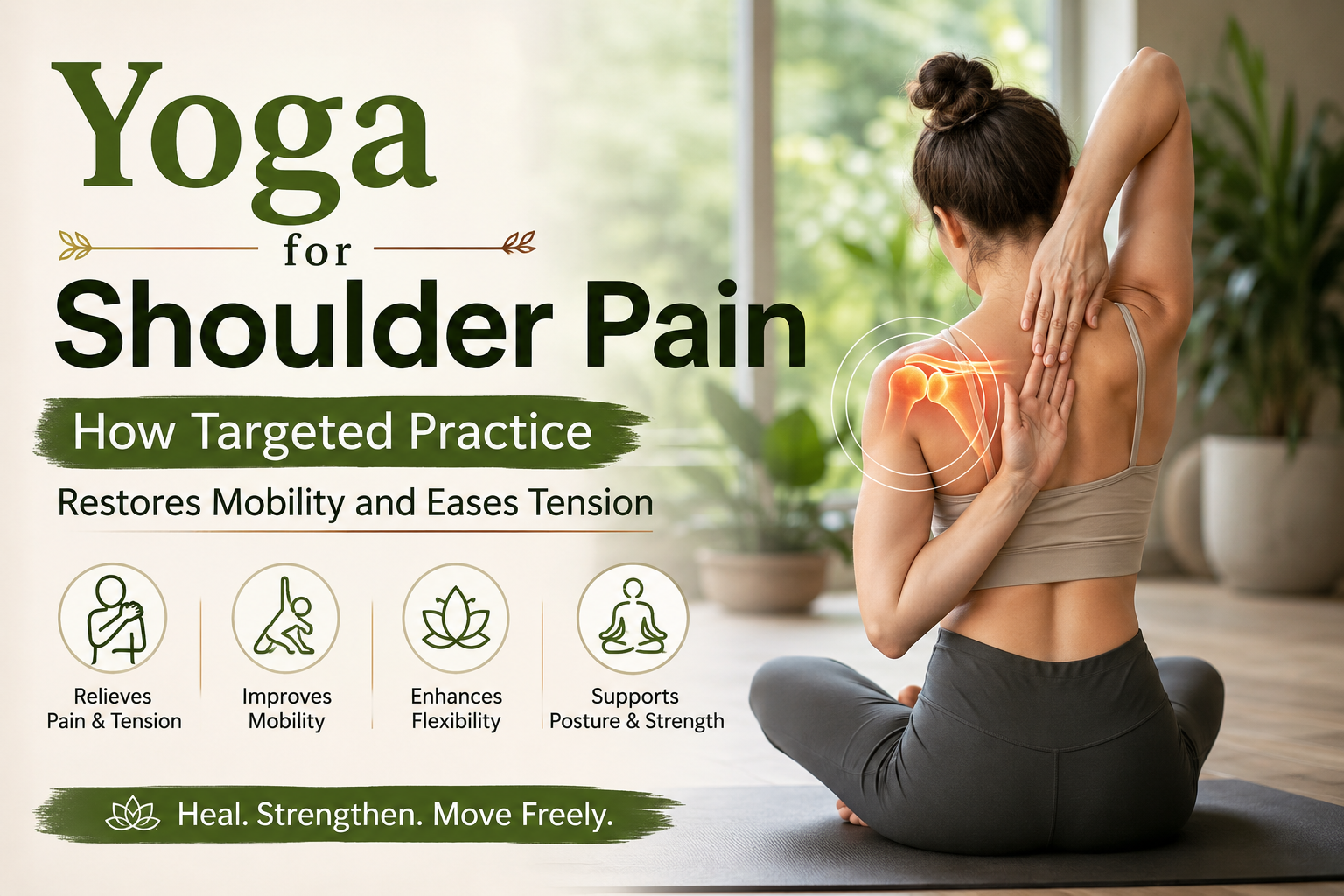
The shoulder is the most mobile joint in the human body, which is precisely why it is also one of the most vulnerable to pain, stiffness, and repetitive strain. Unlike the hip, which is stabilized by a deep bony socket, the shoulder relies almost entirely on surrounding muscles, tendons, and connective tissue to keep it in place, and this trade-off between mobility and stability is what makes the joint so responsive to targeted movement and breath-based practice. Yoga has become a widely recommended complementary approach for shoulder pain precisely because it addresses both sides of that equation at once, gently restoring range of motion while also strengthening the smaller stabilizing muscles that everyday activity tends to neglect.
This article looks at why shoulder pain develops in the first place, which yoga techniques are genuinely effective for relieving it, and how to build a safe, consistent practice around it. Readers who want to explore these techniques in more depth through structured, guided instruction will find that a Yoga TTC India program typically dedicates meaningful class time to shoulder mobility, alignment, and the safe use of props for anyone working around an existing injury.
Why the Shoulder Is So Prone to Pain and Tension
The shoulder joint, technically the glenohumeral joint, sits inside a shallow socket that allows an exceptional range of motion in exchange for relatively little inherent stability. That stability instead comes from the rotator cuff, a group of four small muscles that hold the head of the upper arm bone snugly in place, along with the surrounding deltoid, trapezius, and rhomboid muscles that control the shoulder blade’s movement against the rib cage.
Modern daily habits place unusual demands on this delicate system. Hours spent hunched over a keyboard or phone gradually round the shoulders forward, shortening the chest muscles while overstretching and weakening the muscles between the shoulder blades. Over time, this imbalance changes how the shoulder blade moves, which can pinch tendons during overhead movement, a pattern often described as impingement. Add in stress, which tends to be held physically as tightness across the upper trapezius and neck, and it becomes clear why shoulder pain is one of the most common complaints among office workers, drivers, and anyone who spends long hours at a desk.
What Yoga Practice Offers for Shoulder Pain
Yoga’s approach to shoulder pain differs meaningfully from a purely mechanical fix. Rather than isolating a single muscle, most shoulder-focused sequences work through a full kinetic chain, involving the upper back, chest, and even the breath itself, since shallow, restricted breathing tends to keep the upper chest and shoulders chronically tense. Slow, controlled movement paired with steady breathing allows the nervous system to release some of the protective guarding that often accompanies chronic shoulder tension, which in turn allows deeper, safer mobility work to actually take hold.
It is worth being clear that yoga functions best as a complement to appropriate medical care rather than a replacement for it, particularly for anyone dealing with a diagnosed injury such as a rotator cuff tear, frozen shoulder, or post-surgical recovery. Its particular strength lies in addressing the everyday postural habits and chronic tension patterns that often sit underneath or alongside a more specific structural issue, an area that physical therapy alone sometimes has less time to fully cover.
The Most Effective Yoga Techniques for Shoulder Pain
Not every shoulder stretch offers the same benefit, and a genuinely effective routine tends to favor slow, controlled movement over any technique that pushes into a sharp or pinching sensation.
Cat-Cow and Thread the Needle
Cat-Cow gently mobilizes the upper back and shoulder blades through flexion and extension, which helps loosen the surrounding muscles before deeper stretching begins. Thread the Needle follows naturally from this position, rotating one arm underneath the body to open the back of the shoulder and the space between the shoulder blades, an area that tends to hold significant tension from forward-rounded posture.
Eagle Arms
Wrapping the arms around each other at the elbows and forearms while lifting the elbows slightly stretches the back of the shoulders and the area between the shoulder blades, directly counteracting the rounded, closed posture that desk work encourages. This position also builds body awareness around the shoulder blade’s position, which carries over into better posture outside of practice.
Cow Face Pose Arms
This pose, which involves reaching one arm overhead and bending it behind the head while the other reaches up the back, is one of the more demanding shoulder stretches and should be approached gradually, using a strap to bridge the gap between the hands rather than forcing a connection. Practiced patiently, it addresses tightness in both the front and back of the shoulder simultaneously.
Supported Restorative Shoulder Openers
For anyone working around pain, sensitivity, or limited range of motion, restorative variations using bolsters, blocks, or rolled blankets allow the shoulder to open passively over several minutes rather than through active effort. This prop-supported, alignment-conscious approach is a hallmark of Iyengar Yoga in Rishikesh India, where precise positioning and supportive props are used specifically to make challenging shapes accessible for students working with pain or injury.
Practices to Approach with Caution
Certain movements place sudden or excessive demand on an already compromised shoulder, and anyone with a diagnosed injury, recent surgery, or significant pain should approach these only with medical or physical therapy clearance.
- Full-weight-bearing poses such as Chaturanga or unsupported arm balances, which place significant load directly through the shoulder joint and rotator cuff.
- Deep, forced binds or straps pulled aggressively to close a gap the shoulder is not yet ready for.
- Any overhead stretch pushed into a sharp, pinching, or radiating sensation, rather than a general stretch.
- Fast, repetitive arm circles or swinging movements, which can aggravate an already inflamed joint.
- Practicing advanced backbends or deep chest openers without adequate warm-up, since a cold shoulder is far more vulnerable to strain.
For anyone managing an existing shoulder condition, the safest approach is to begin with the gentlest mobility work, such as Cat-Cow and supported restorative openers, and to introduce anything more demanding only with a physical therapist’s or qualified teacher’s guidance.
The Stress-Shoulder Connection
Shoulder pain is rarely a purely mechanical issue, and stress plays a larger role in it than many people expect. Chronic stress keeps the upper trapezius and neck muscles in a low-grade state of contraction, often without a person even noticing it happening, and this sustained tension gradually shortens the muscles and restricts normal shoulder blade movement. Shallow, chest-based breathing reinforces this pattern further, since it relies on the same upper shoulder muscles that are already overworked from daily stress.
By consciously slowing the breath and softening the shoulders away from the ears, a person can interrupt this cycle directly, which is part of why breath-centered yoga sequences often produce a noticeable release in shoulder tension even before any dedicated stretching begins. Readers dealing with stress-driven muscular tension more broadly may find it useful to explore how a structured practice supports the nervous system in Yoga for Stress Management, since the same calming mechanisms that ease general stress also tend to soften chronic shoulder holding patterns.
Building a Shoulder-Friendly Yoga Routine
Consistency, practiced gently, tends to produce better results than occasional intense stretching sessions that push too far too soon. A simple structure to build from might include:
- Morning: five minutes of Cat-Cow and gentle shoulder rolls to release overnight stiffness before the day begins.
- Midday: a brief round of Eagle Arms or Thread the Needle during a work break to counter hours of forward-rounded posture.
- Evening: ten minutes of supported restorative shoulder openers to allow the joint to release passively after the day’s activity.
- As needed: slow, deep breathing paired with gentle shoulder circles during moments of acute tension or stress.
This kind of steady, unhurried rhythm mirrors the broader pacing that many students first experience in a fully immersive training environment, where shoulder mobility, alignment, and breath are treated as interconnected daily practice rather than isolated stretches.
Tracking Progress Without Turning It Into Pressure
Shoulder mobility tends to improve gradually and unevenly, with some days feeling noticeably looser than others depending on sleep, stress, and general activity levels. Rather than measuring progress by how deep a stretch feels on any single day, it is more useful to track broader trends over several weeks, such as whether overhead reaching feels easier, whether tension headaches connected to shoulder tightness are becoming less frequent, or whether sleep position feels more comfortable.
A simple, sustainable approach is to note how a session feels, whether looser, calmer, or more mobile, rather than chasing a specific range of motion each day. This keeps the practice restorative rather than turning it into another source of physical pressure, which would work against the very release the techniques are meant to encourage.
Safety Guidelines for People with Shoulder Injuries
Anyone with a diagnosed rotator cuff tear, labral injury, frozen shoulder, or a history of shoulder surgery should consult a physical therapist or orthopedic specialist before beginning or meaningfully changing a shoulder-focused yoga practice.
Sharp pain, a popping or catching sensation, sudden weakness, or pain that worsens after practice rather than easing should always be treated as a signal to stop and seek professional guidance rather than a sensation to push through.
Frequently Asked Questions (FAQs)
1. Can yoga really help with shoulder pain?
For pain rooted in postural habits, muscular imbalance, or chronic tension, gentle and consistent yoga practice is widely reported to improve mobility and reduce discomfort over time. Yoga functions best as a complement to appropriate medical or physical therapy care rather than a replacement for it, especially for diagnosed structural injuries.
2. How long does it take to see benefits from yoga for shoulder pain?
Some relief, such as a looser feeling across the upper back, can be noticed within a single session, but more lasting improvements in mobility and pain generally require consistent practice sustained over several weeks.
3. What are the best yoga poses for a frozen shoulder?
Gentle, passive, prop-supported stretches such as restorative shoulder openers and slow variations of Cat-Cow tend to be more appropriate for frozen shoulder than active, deep stretches, since the joint typically needs patient, incremental mobility work rather than force.
4. Is yoga safe for a rotator cuff injury?
Gentle mobility and breath-based work can often be safe and even beneficial, but any pose that loads the shoulder joint directly, such as arm balances or full-weight poses, should be avoided until a physical therapist confirms the joint is ready for that level of demand.
5. Note for Readers
This article is intended for general informational purposes only and does not constitute medical advice. Shoulder injuries vary widely in severity and cause, and readers should consult a qualified physical therapist, orthopedic specialist, or healthcare professional before making changes to their activity or exercise routine, particularly before starting any new yoga practice.
Final Thoughts: A Looser, Stronger Shoulder Starts with Consistent Practice
Of all the joints that respond well to patient, consistent movement, the shoulder may be one of the most rewarding, since even a few minutes of mindful mobility work each day can noticeably ease the tightness that builds up from modern desk-bound life. Yoga’s combination of gentle stretching, targeted strengthening, and breath-based tension release addresses shoulder pain from several angles at once, offering a genuinely useful complement to standard care. For those wanting to build this practice more deeply, under expert guidance, spending time at a dedicated Yoga Retreat in Rishikesh offers a fully supported environment built around alignment, recovery, and the kind of patient, sustained practice that lasting shoulder mobility depends on.
