 Skip to content
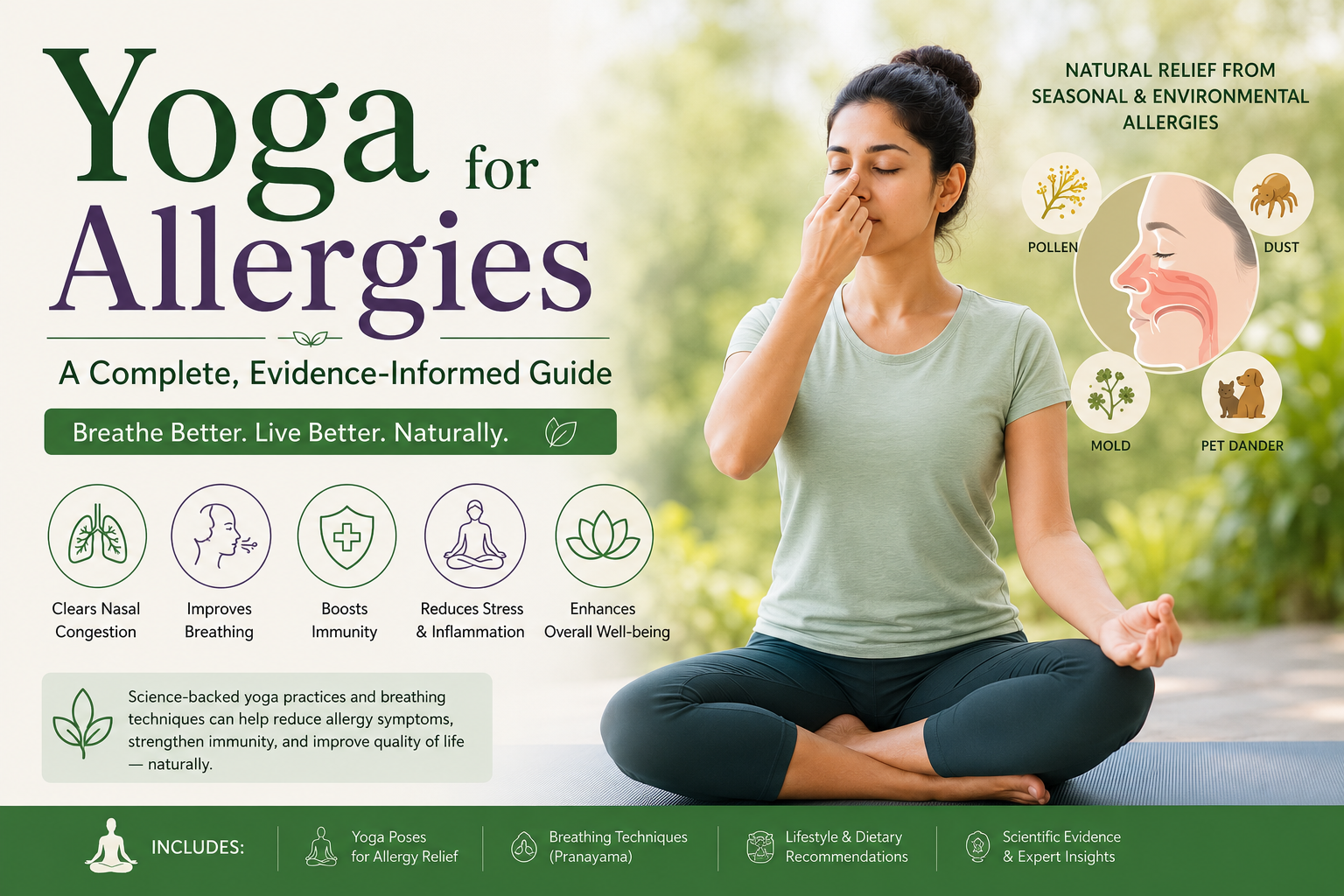
An informational guide to what yoga can and cannot do for allergy symptoms — covering how allergic reactions actually work, where breath-focused and restorative practice genuinely helps, and where popular claims about yoga “curing” allergies outpace the evidence.
Seasonal sneezing, congestion, and itchy eyes send many people searching for natural relief, and yoga is frequently marketed as part of that search, sometimes with claims that a breathing technique or sequence can eliminate allergies altogether. The more accurate picture is more modest: allergies are an immune response to substances the body mistakenly treats as threats, and no yoga practice changes this underlying mechanism. What yoga can genuinely offer is support for nasal breathing, sinus comfort, and the stress response that often makes allergy symptoms feel worse, a real and useful role, even if it falls short of a cure.
This guide walks through how allergic reactions actually work, where yoga has an evidence-aligned role in supporting people who live with them, and where popular claims about yoga curing allergies go further than the science supports. Yoga is not a substitute for medical care, and anyone with significant or persistent allergy symptoms should treat it as a complement to, not a replacement for, appropriate diagnosis and treatment.
1. What Is Actually Happening in the Body During an Allergic Reaction
An allergic reaction occurs when the immune system identifies a normally harmless substance, such as pollen, dust, or pet dander, as a threat and releases histamine and other chemicals, producing sneezing, congestion, itchy or watery eyes, and sometimes skin reactions or breathing difficulty. This is an immune process, not a toxin buildup, and is generally managed through reducing trigger exposure alongside antihistamines or other medication as needed. Understanding this clarifies what yoga can realistically do: support comfort and breathing capacity around allergy symptoms, rather than change the underlying immune response that produces them.
2. Why Claims That Yoga “Cures” Allergies Go Too Far
It is easy to find wellness content suggesting a specific pose, breathing pattern, or yoga-based cleanse can eliminate allergies permanently. These claims are not well supported, and allergies involve a genuine immune mechanism a physical practice does not alter. The more accurate picture is that yoga can be a helpful complementary practice for managing the discomfort and stress associated with allergy symptoms, offering modest, real benefits without replacing appropriate medical management of the underlying immune response.
3. What the Research Actually Shows
Research specifically examining yoga and allergic conditions such as allergic rhinitis is more limited than for some other health topics, but a number of small studies and reviews suggest modest benefits, including improved perceived nasal symptoms and quality of life among people who practised regular yoga or breath work alongside standard allergy management. Findings are not entirely consistent, and most studies are small. The fair summary: yoga appears to be a reasonably safe complementary practice with some evidence of benefit for comfort and quality of life, not a proven treatment for the underlying allergic response.
4. Breath Work and Nasal Airway Comfort
Among the ways yoga might plausibly support someone with allergies, breath work has one of the more direct connections, since nasal congestion during an allergic reaction is quite literally a breathing issue. Slow, controlled nasal breathing can support awareness of airflow and encourage a calmer, less effortful breathing pattern even when the nasal passages are partially congested, and some people find gentle breath work helps them feel less overwhelmed by acute symptoms. Breath work does not reduce histamine release or shrink swollen nasal tissue, though, which is why decongestants or antihistamines remain the more direct tool for significant congestion.
A gradual, well-structured approach to breath training, of the kind explored in Pranayama for Stress Relief, is generally a sensible starting point for anyone hoping to use breath work to support allergy-related discomfort, since it builds calm, controlled breathing patterns rather than anything forceful or provoking.
5. Postures Often Discussed for Sinus and Nasal Comfort
Certain yoga postures are frequently mentioned in relation to sinus comfort, generally because they involve a gentle change in head position or chest opening that some people find subjectively soothing during congestion. Mild forward folds and supported inversions are sometimes suggested to encourage sinus drainage, while gentle chest-opening postures may support fuller, easier breathing when the nose is partially blocked. Evidence for any specific posture directly relieving allergy symptoms is limited, and these are best understood as a comfort measure some people find helpful, not a treatment that resolves the underlying congestion.
6. Stress, the Immune System, and Allergy Symptoms
Stress does not cause allergies, but there is a documented relationship between chronic stress and how allergy symptoms are experienced, since stress hormones can influence immune signalling and heighten the perceived severity of symptoms such as congestion, itching, and fatigue. This is one of the more genuinely evidence-aligned connections between yoga and allergy management: not that yoga changes the immune response directly, but that its well-established stress-reduction effects may help soften how intensely allergy symptoms are experienced and support better sleep during flare-ups, when symptoms often feel worse.
This connection between breath, stress, and overall wellbeing is explored further in Yoga for Mental Health in Rishikesh India, which looks at how yoga-based practices support the nervous system in ways that indirectly benefit physical comfort as well as mental wellbeing.
7. Nasal Cleansing Practices and Genuine Cautions
Jala neti, or saline nasal rinsing using a neti pot, is a traditional yogic practice sometimes recommended alongside breath work for allergy-related congestion, and it does have some supportive evidence, since rinsing the nasal passages with saline can help clear allergens and mucus. This practice requires care: only distilled, sterile, or properly boiled and cooled water should be used, never tap water directly, since improperly prepared rinses carry a rare but serious infection risk. Anyone new to nasal rinsing should learn the correct technique from a reliable source and stop if it causes discomfort or irritation.
8. Practices and Situations to Approach With Caution
Not every yoga practice is equally well suited to someone dealing with active allergy symptoms. Vigorous, fast-paced practice outdoors during high pollen periods can increase exposure to airborne triggers precisely when the body is already reacting, so practising indoors or at lower-pollen times of day is often more comfortable. Forceful or rapid breathing techniques can feel provoking when the airways are already irritated or congested, and anyone with a known dust or mould sensitivity should be mindful of studio cleanliness, mats, and props. As with any new practice, starting gently and observing how the body responds is safer than an intense first session during an active flare-up.
9. Building a Safe, Realistic Routine
A yoga routine that genuinely supports allergy management looks gentle and consistent, working alongside standard allergy care rather than replacing it.
- Practise indoors, especially during high-pollen periods, and keep windows closed if outdoor allergens are a known trigger.
- Start with slow nasal breathing and gentle postures, avoiding vigorous or forceful techniques during active flare-ups.
- Keep prescribed antihistamines or other allergy medication accessible, and use them as directed rather than relying on breath work alone.
- If trying nasal rinsing, use only sterile, distilled, or properly boiled and cooled water, and learn the correct technique first.
- Wash mats and props regularly if dust or mould sensitivity is a known trigger.
10. Traditional Ayurvedic Perspectives on Allergies
Traditional Ayurvedic approaches to seasonal sensitivity often include dietary adjustment, herbal support, and bodywork practices aimed at supporting overall balance rather than targeting a single symptom, and while these traditional frameworks use different language than modern immunology, some of the underlying practices, such as steam inhalation and gentle massage, align reasonably well with the evidence-based, comfort-focused view described throughout this guide.
An Ayurvedic Massage Course in Rishikesh India typically introduces these traditional bodywork techniques, offering a grounded look at how they are understood to support circulation and general wellbeing, in a manner consistent with a realistic, complementary view of allergy support rather than dramatic modern marketing claims.
11. Red Flags in Yoga-for-Allergies Claims
A few common red flags tend to signal claims about yoga and allergies that outpace the evidence.
- Suggestions that a specific pose or breathing technique can eliminate allergies permanently.
- Encouragement to stop antihistamines or other prescribed allergy medication in favour of a yoga programme.
- Nasal cleansing instructions that skip the requirement for sterile or properly prepared water.
- Vague claims that yoga “detoxifies” the immune system without any explanation of the mechanism involved.
12. Learning These Practices Properly
Because separating genuine, evidence-aligned comfort measures from overstated wellness marketing requires a solid understanding of both yoga and basic immunology, learning from a properly trained teacher makes a meaningful difference. A structured Yoga Teacher Training in Rishikesh programme typically covers the physiological basis of breath work and traditional practices such as nasal cleansing alongside broader yogic philosophy, offering a grounded understanding of what these practices can genuinely offer people managing allergy symptoms.
13. Safety Notes and When to See a Doctor
Yoga can be a genuinely useful complementary practice for supporting comfort during allergy symptoms, but it should never replace appropriate medical diagnosis or treatment, particularly for symptoms that are severe or affect breathing.
- Persistent, severe, or worsening allergy symptoms should be evaluated by a doctor, who can identify specific triggers and appropriate treatment.
- Any sudden difficulty breathing, swelling of the face or throat, or signs of a severe allergic reaction require immediate emergency care, not a yoga practice.
- Diagnosed asthma alongside allergies should continue to be managed medically, since allergy flare-ups can also affect airway sensitivity.
- Anyone considering nasal rinsing for the first time should learn proper technique and water preparation from a reliable source.
Frequently Asked Questions (FAQs)
Q1. Can yoga cure allergies?
No. Allergies involve a genuine immune system response to specific triggers, and no yoga practice changes this underlying mechanism. Yoga can support comfort, breathing, and stress levels around allergy symptoms, but it does not replace diagnosis or appropriate medical treatment.
Q2. Can breathing exercises relieve nasal congestion from allergies?
Gentle breath work can support a calmer, less effortful breathing pattern and may offer some subjective relief, but it does not reduce the histamine release or tissue swelling that causes congestion, so it works best alongside, not instead of, appropriate allergy medication.
Q3. Is nasal rinsing with a neti pot safe for allergies?
It can be a helpful complementary practice when done correctly, but only sterile, distilled, or properly boiled and cooled water should be used, never tap water directly, due to a rare but serious infection risk associated with improperly prepared rinses.
Q4. Should I do yoga outdoors during allergy season?
Practising indoors during high-pollen periods is generally more comfortable and reduces exposure to airborne triggers at a time when the body is already reacting to them; outdoor practice may be more comfortable at lower-pollen times of day.
Q5. Can stress make my allergies worse, and can yoga help?
Stress does not cause allergies, but it can heighten how intensely symptoms are experienced. Yoga’s well-documented stress-reduction effects may help soften this experience and support better sleep during flare-ups, even though they do not change the underlying immune response.
Q6. Can yoga replace my antihistamine or allergy medication?
No. Antihistamines and other allergy medications work directly on the immune and histamine response in ways yoga does not replicate, so yoga should always be treated as a complement to, not a substitute for, appropriate medical treatment.
Q7. What is the most evidence-based way to think about yoga’s role in allergy management?
The most accurate framing is that yoga, particularly gentle breath work and stress reduction, can support comfort and quality of life for some people managing allergy symptoms, working alongside, not instead of, appropriate medical care.
Final Thoughts
Allergies are a genuine immune response, and the most honest, evidence-aligned view of yoga’s role is a supportive one: helping with breath comfort, sinus ease, and the stress that often makes symptoms feel worse, rather than changing the underlying immune mechanism that produces them. This is a more modest picture than some wellness marketing suggests, but it is also a safer and more realistic one.
Approached gradually, alongside appropriate medical guidance where needed, yoga can offer many people managing allergies a genuinely useful, low-risk way to support their comfort and overall wellbeing during flare-ups and beyond.
