 Skip to content
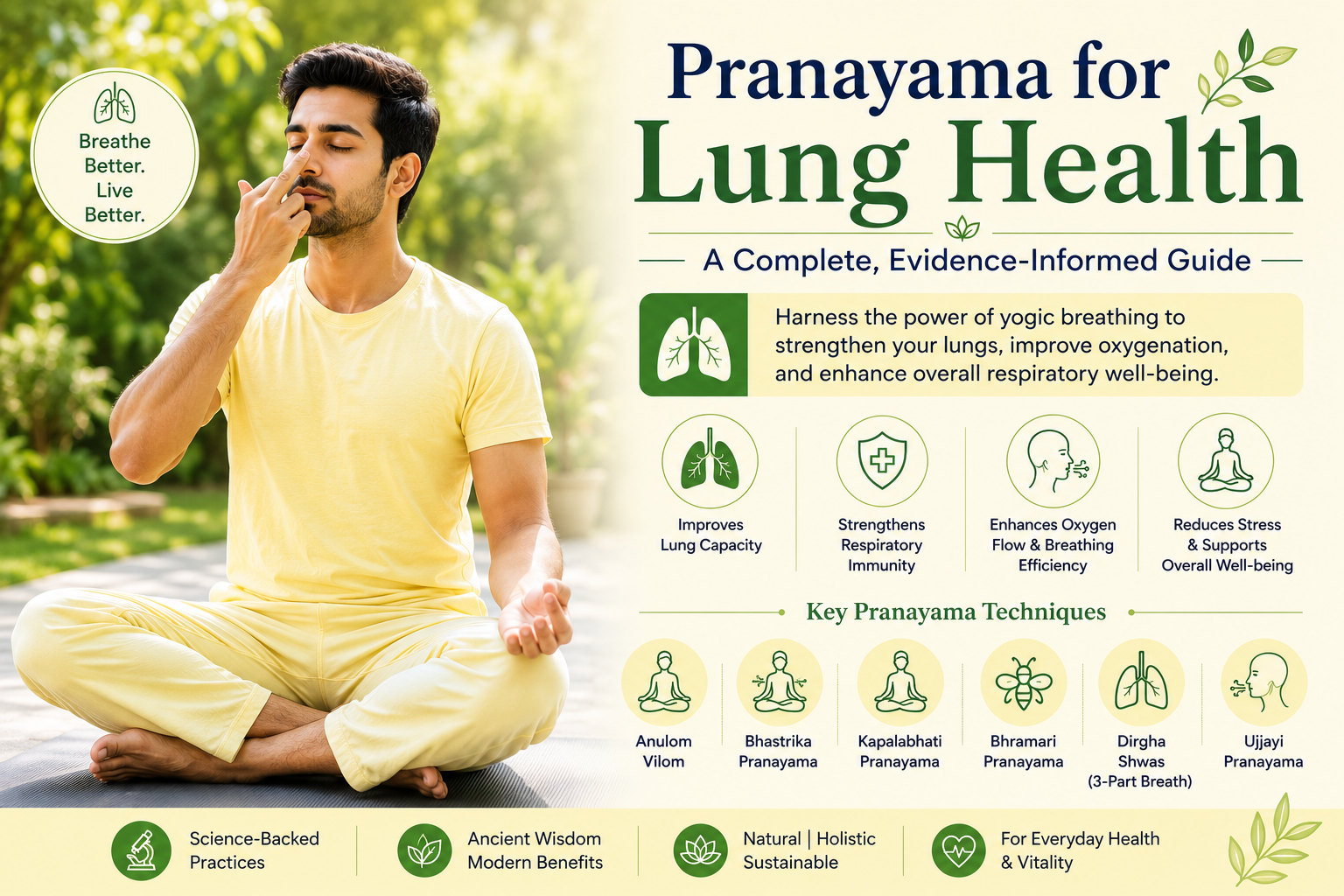
An informational guide to what pranayama can and cannot do for the lungs — covering how breathing actually works, where controlled breath practice genuinely supports respiratory health, and where popular claims about pranayama “healing” the lungs outpace the evidence.
Pranayama, the yogic practice of consciously regulating the breath, is often marketed as a powerful tool for lung health, sometimes with claims that specific techniques can reverse lung damage or replace medical treatment for respiratory conditions. The more accurate picture is more modest and more useful: the lungs are remarkably efficient organs on their own, and pranayama’s genuine value lies in training how well a person uses the breathing capacity they already have, supporting respiratory muscle strength, breath awareness, and nervous system regulation, rather than repairing lung tissue or curing disease.
This guide walks through how the lungs actually function, where pranayama has an evidence-aligned role in supporting respiratory health, and where popular claims go further than the science supports. Pranayama is not a substitute for medical care, and anyone with a diagnosed lung or respiratory condition should treat it as a complement to, not a replacement for, prescribed treatment.
1. How the Lungs Actually Work
The lungs bring oxygen into the bloodstream and remove carbon dioxide with every breath, a process driven largely by the diaphragm, the dome-shaped muscle beneath the lungs that contracts and flattens to draw air in. Many people breathe shallowly, using the chest and shoulders rather than the diaphragm, which is less efficient and can contribute to a sense of breathlessness or tension over time. Lung capacity itself is largely determined by factors such as age, body size, and underlying health, and no breathing technique meaningfully increases the physical size of the lungs; what pranayama can influence is how efficiently the existing capacity is used.
2. What Pranayama Is, and What It Isn’t
Pranayama refers to a family of traditional yogic breathing techniques ranging from slow, calming practices to more vigorous, activating ones, each with a different physiological effect. It is not a medical treatment, and it does not reverse structural lung damage from conditions such as chronic obstructive pulmonary disease or scarring from past illness. Where pranayama has a genuine, evidence-aligned role is in training breathing mechanics, supporting respiratory muscle endurance, and calming the nervous system in ways that can make breathing feel easier and more controlled, particularly for people whose breathing has become shallow or anxious rather than efficient.
3. What the Research Actually Shows
A growing body of research has examined pranayama and other breath-training practices across a range of populations, including people with chronic respiratory conditions, and the overall picture is cautiously positive but modest. Several studies report improvements in measures of respiratory muscle strength and perceived breathlessness among people who practised regular breath training, and some note modest gains in specific lung-function tests. As with much yoga research, study quality varies, sample sizes are often small, and results are not always consistent across trials. The fair summary is that pranayama appears to be a reasonably safe practice with some evidence of benefit for respiratory efficiency and comfort, not a proven treatment for underlying lung disease.
4. Diaphragmatic Breathing: The Foundation of Efficient Respiration
Diaphragmatic breathing, sometimes called belly breathing, is widely considered the foundational pranayama practice for lung health, since it retrains the body to use the diaphragm fully rather than relying on shallow chest breathing. Practised by consciously allowing the belly to expand on the inhale and soften on the exhale, this pattern encourages fuller use of the lower lungs, where gas exchange is most efficient, and tends to reduce the sense of effort involved in breathing. It is generally considered the safest starting point for anyone new to pranayama, including people with respiratory conditions, since it involves no forceful or rapid breathing.
5. Common Pranayama Techniques Used for Lung Health
Beyond diaphragmatic breathing, a handful of pranayama techniques are commonly discussed for respiratory support, each with a different intensity and effect. Ujjayi, a slow breath with a gentle constriction at the back of the throat, is often used to slow and lengthen the breath while maintaining focus. Extended exhalation practices, in which the out-breath is gradually lengthened beyond the in-breath, are frequently taught for their calming effect on the nervous system. More vigorous techniques exist as well, but these carry more caution and are discussed separately below, since they are not appropriate starting points for everyone.
A structured, progressive introduction to these techniques, of the kind offered through Pranayama for Stress Relief, tends to work well for beginners, since it builds from calming, low-intensity practices before introducing anything more demanding.
6. Alternate Nostril Breathing and Balanced Respiration
Nadi Shodhana, or alternate nostril breathing, is one of the more widely practised pranayama techniques and is generally considered gentle and well suited to most practitioners, including beginners. The technique involves breathing slowly through one nostril at a time using the fingers to alternate sides, and it is often described as balancing and calming rather than physically demanding. While claims that it balances the two hemispheres of the brain go beyond what current evidence supports, the slow, controlled nature of the practice does appear to support a calming nervous system response, which can indirectly support easier, less effortful breathing.
7. Vigorous Techniques: Benefits and Genuine Cautions
More vigorous pranayama techniques, involving rapid or forceful breathing, are sometimes marketed as detoxifying or dramatically lung-clearing practices, and it is worth being precise about what the evidence actually supports here. These techniques can increase alertness and are practised by many experienced yogis, but they also increase respiratory demand quickly and are generally not appropriate for people with asthma, chronic obstructive pulmonary disease, high blood pressure, or other cardiovascular or respiratory conditions, nor for pregnant women or complete beginners. Anyone interested in these more advanced techniques should learn them from a qualified teacher and disclose any relevant health history first.
8. Pranayama, the Nervous System, and Breathing Patterns Under Stress
Chronic stress and anxiety commonly produce shallow, rapid chest breathing, a pattern that can become habitual over time and contribute to a persistent sense of breathlessness even in the absence of any underlying lung disease. This is one of the more genuinely evidence-aligned connections between pranayama and lung health: slow, controlled breath work has a well-documented calming effect on the nervous system, and retraining a slower, fuller breathing pattern can help interrupt the shallow-breathing habits that stress and anxiety tend to produce, supporting a more relaxed and efficient relationship with breathing over time.
This overlap between breath, stress, and mental wellbeing is explored further in Yoga for Mental Health in Rishikesh India, which looks at how breath-based practices support psychological, as well as physical, aspects of respiratory wellbeing.
9. Building a Safe, Realistic Pranayama Routine
A pranayama practice that genuinely supports lung health looks gradual and consistent rather than intense or dramatic, and a few general principles apply broadly to building one safely.
- Start with diaphragmatic breathing and slow, gentle techniques before progressing to anything more vigorous.
- Practise in a comfortable, well-ventilated space, seated upright, without forcing the breath or straining.
- Progress gradually, and stop if a technique produces dizziness, breathlessness, or discomfort.
- Disclose any respiratory, cardiovascular, or other relevant condition to a teacher before trying vigorous techniques.
- Treat consistency over weeks and months as more valuable than any single intensive session.
10. Who Should Be Cautious With Pranayama
While gentle pranayama is appropriate for most people, certain groups should approach the practice, and particularly its more vigorous forms, with extra caution. People with diagnosed asthma or chronic obstructive pulmonary disease should stick to gentle techniques and consult a doctor before trying anything more demanding, since forceful breathing can provoke symptoms in sensitive airways. Pregnant women, people with high or low blood pressure, recent surgery, or hernias are generally advised to avoid forceful or breath-holding techniques, and anyone feeling lightheaded, dizzy, or unwell during practice should stop immediately and return to normal breathing.
11. Red Flags in Pranayama and Lung-Health Claims
A few common red flags tend to signal claims about pranayama and lung health that outpace the evidence.
- Suggestions that a breathing technique can reverse structural lung damage or cure a diagnosed lung disease.
- Encouragement to stop or reduce prescribed respiratory medication in favour of a breathing programme.
- Vigorous breathing techniques marketed to complete beginners or people with known health conditions without caution.
- Vague claims of “detoxifying” the lungs without any explanation of the underlying mechanism.
12. Learning Pranayama Properly
Because pranayama ranges from very gentle to genuinely demanding, and because certain techniques need to be adapted or avoided depending on a person’s health history, learning from a properly trained teacher makes a real difference to both safety and benefit. A structured Yoga Teacher Training in Rishikesh programme typically covers the physiological basis of pranayama alongside traditional teaching methods, offering a grounded understanding of which techniques suit which situations, for aspiring teachers and curious practitioners alike.
13. Safety Notes and When to See a Doctor
Pranayama can be a genuinely useful complementary practice for supporting respiratory efficiency and comfort, but it should never replace appropriate medical diagnosis or treatment for a lung or respiratory condition.
- Diagnosed lung or cardiovascular conditions should continue to be managed by a doctor, with pranayama used as a complement, not a replacement.
- Persistent breathlessness, chest pain, or a new or worsening cough should be evaluated by a doctor rather than addressed through breath work alone.
- Dizziness, lightheadedness, or significant discomfort during practice is a signal to stop immediately and return to normal breathing.
- Vigorous techniques should be avoided during pregnancy, after recent surgery, or with high blood pressure, without direct medical guidance.
Frequently Asked Questions (FAQs)
Q1. Can pranayama increase lung capacity?
Not in the sense of physically enlarging the lungs, which is largely fixed by factors such as age and body size. What pranayama can genuinely improve is how efficiently existing lung capacity is used, through better diaphragm engagement and respiratory muscle strength.
Q2. Is pranayama safe for people with asthma or COPD?
Gentle techniques such as diaphragmatic breathing are generally considered appropriate, but vigorous or forceful practices deserve caution and should only be attempted with a doctor’s guidance and an experienced teacher aware of the diagnosis.
Q3. Can pranayama replace my inhaler or other respiratory medication?
No. Pranayama supports breathing mechanics and comfort, but it does not treat the underlying inflammation or airway changes that respiratory medications are designed to address, so it should always be used alongside, not instead of, prescribed treatment.
Q4. What is the best pranayama technique to start with?
Diaphragmatic breathing is generally considered the safest and most useful starting point for almost everyone, since it involves no forceful or rapid breathing and builds the foundation that more advanced techniques rely on.
Q5. Can pranayama help with breathlessness caused by anxiety rather than lung disease?
Yes, this is one of the better-supported benefits. Slow, controlled breathing has a genuine calming effect on the nervous system and can help retrain the shallow, rapid breathing patterns that anxiety often produces.
Q6. Are vigorous breathing techniques like rapid forceful breathing good for the lungs?
They can be part of an experienced practitioner’s routine, but they increase respiratory demand quickly and are not appropriate for beginners or people with asthma, COPD, cardiovascular conditions, or during pregnancy, without direct guidance.
Q7. What is the most evidence-based way to think about pranayama’s role in lung health?
The most accurate framing is that pranayama trains how efficiently a person uses their existing breathing capacity and supports nervous system regulation, rather than repairing lung tissue or curing respiratory disease, working alongside, not instead of, medical care.
Final Thoughts
The lungs are capable, well-designed organs, and the most honest view of pranayama’s role is a supportive one: training efficient, calm breathing rather than repairing or curing underlying lung conditions. This is a more modest picture than some wellness marketing suggests, but it is also a safer and more realistic one.
Approached gradually and consistently, alongside appropriate medical care where needed, pranayama offers a genuinely useful, low-risk way to support respiratory comfort and efficiency over the long term.
