 Skip to content
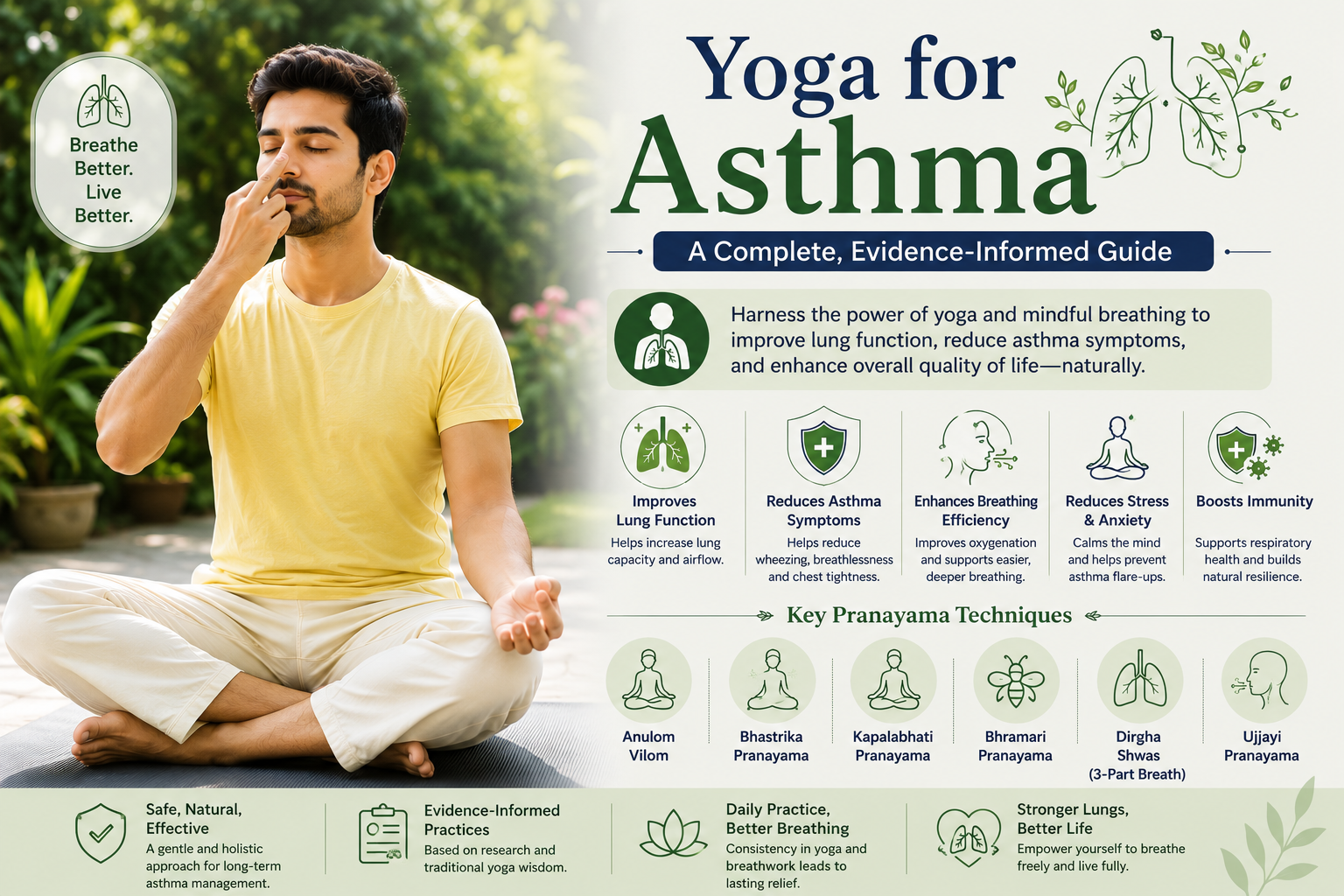
An informational guide to what yoga can and cannot do for people living with asthma — covering how the airways actually work, where breath-focused practice genuinely helps, and where popular claims about yoga “curing” asthma outpace the evidence.
Asthma is a chronic condition affecting the airways, and it also attracts a great deal of wellness marketing, from claims that a breathing technique can “reverse” asthma to suggestions that yoga alone can replace prescribed medication. The reality is more measured: asthma requires diagnosis and management by a healthcare provider, and while research suggests yoga, particularly breath-focused practice, can be a genuinely useful complementary tool for many people with asthma, it is not a cure and does not remove the underlying airway sensitivity that defines the condition.
This guide walks through how asthma actually affects the airways, where yoga has an evidence-aligned role in supporting people who live with it, and where popular claims about yoga curing asthma go further than the science supports. Yoga is not a substitute for medical care, and anyone with asthma should treat it as a complement to, not a replacement for, an existing treatment plan.
1. What Is Actually Happening in the Airways During Asthma
Asthma is a chronic inflammatory condition of the airways in which the bronchial tubes become sensitive to particular triggers, narrowing and producing extra mucus in response. This narrowing causes wheezing, breathlessness, chest tightness, and coughing, and can range from mild to severe. Because the underlying issue is inflammation and hyper-reactivity, management typically involves reducing trigger exposure alongside medication that controls inflammation and opens the airways. Understanding this clarifies what any complementary practice, yoga included, can realistically do: support respiratory function and reduce contributing factors such as stress, rather than reverse the inflammatory process itself.
2. Why Claims That Yoga “Cures” Asthma Go Too Far
A quick search for yoga and asthma turns up no shortage of claims that a pose or breathing sequence can eliminate asthma altogether, sometimes framed as an alternative to inhalers. These claims are not well supported, and treating them as literally true carries real risk, since under-treated asthma can lead to serious, even life-threatening, flare-ups. The more accurate picture is that yoga can be a helpful complementary practice for people with well-managed asthma, offering modest improvements in quality of life and perceived breathlessness, without replacing the medical management that keeps airways safe.
3. What the Research Actually Shows
Clinical studies and systematic reviews on yoga as a complementary intervention for asthma paint a cautiously positive but modest picture. Several trials report improvements in quality-of-life scores and perceived symptom control among participants who added structured yoga to existing treatment, though results are inconsistent and many trials are small. Reviewers consistently flag variable study quality and note yoga has not been shown to reduce reliance on rescue medication enough to justify substituting it for prescribed treatment. The honest summary: a reasonably safe complementary practice with some evidence of benefit for quality of life, not a proven treatment for the condition itself.
4. Breath Work and the Genuine Connection to Respiratory Function
Among all the ways yoga might plausibly support someone with asthma, breath work has the most direct connection, since it uses the same respiratory muscles and pathways that asthma affects. Slow, controlled breathing can help train more efficient diaphragm use, and some people report feeling calmer and more in control during mild breathlessness. But breath training does not change airway inflammation or reverse the narrowing that defines a flare-up, which is why prescribed rescue medication remains essential during an actual attack.
Practices that focus on slow nasal breathing and gentle breath extension, of the kind explored in Pranayama for Stress Relief, are generally considered the most relevant category of yoga practice for people with well-managed asthma, since they emphasise control and awareness over forceful or rapid breathing patterns that can sometimes feel provoking to sensitive airways.
5. Which Pranayama Techniques Are Generally Discussed for Asthma
A handful of breathing techniques are commonly discussed in relation to respiratory conditions, though research isolating each one for asthma specifically is limited, and any new breath practice should be introduced gradually under an experienced teacher aware of the diagnosis. Slow diaphragmatic breathing, expanding the belly and lower ribs rather than the chest, is often introduced first, since it encourages efficient diaphragm use without strain. Gentle alternate nostril breathing is sometimes used for its calming effect, and extended, unforced exhalation is often emphasised. Vigorous or forceful techniques involving rapid exhalations are approached with more caution, since they can feel provoking rather than supportive, and should only be attempted with direct teacher guidance.
6. Postures That May Support Breathing Capacity
Beyond breath work, certain postures are often discussed in relation to respiratory support, mainly because they gently open the chest and encourage postural awareness, making full breathing physically easier. Gentle backbends and chest-opening postures, practised without strain, may support better alignment, while seated, supported postures that let the shoulders relax away from the ears can reduce shallow, tense breathing. Evidence for any specific posture directly improving asthma is limited, and these are best understood as supportive rather than corrective, complementing rather than replacing medical management.
A slower-paced, alignment-focused approach such as Iyengar Yoga in Rishikesh is often mentioned in this context, since its use of props and gradual postural building tends to suit people who need to avoid sudden exertion or breath-holding.
7. Practices and Situations to Approach With Caution
Not every style of yoga suits someone managing asthma, and a few cautions are worth naming. Fast-paced, highly aerobic practice, especially in a heated room, can increase breathing demand quickly, and cold or dry air combined with exertion is a known trigger for some, so vigorous formats deserve extra caution and a conversation with a doctor beforehand. Breath-holding and very forceful techniques are generally not recommended for unstable asthma, since they can strain sensitive airways. Strong backbends without adequate warm-up can also feel provoking, and a gradual, well-supervised introduction is safer than an intense first session.
8. Stress, the Nervous System, and Asthma Symptoms
Stress and anxiety do not cause asthma, but they are well documented as factors that can worsen perceived symptoms and contribute to more frequent flare-ups, partly through stress hormones’ effect on breathing and partly through the anxiety breathlessness itself can provoke, creating a cycle hard to interrupt without some calming practice. This is one of the more evidence-aligned connections between yoga and asthma: not that yoga treats inflammation directly, but that its stress-reduction effects can help interrupt that anxiety-breathlessness cycle, supporting a calmer relationship with the condition.
9. Building a Safe, Realistic Practice
A yoga practice that genuinely supports someone with asthma looks gradual and gentle, closely coordinated with existing medical care rather than intense or dramatic.
- Start with slow, calm breath work and gentle postures, progressing gradually rather than jumping into an intense class.
- Keep rescue medication accessible during practice; never treat breathing techniques as a substitute for it during a flare-up.
- Inform any teacher of an asthma diagnosis and known triggers, including cold air, strong scents, or provoking poses.
- Avoid hot, humid, or heavily scented spaces if these are personal triggers, and be cautious with breath-holding techniques.
- Track how practices feel over time, and stop to rest, using rescue medication if needed, if breathlessness increases.
10. Red Flags in “Yoga Cures Asthma” Claims
Anyone encountering yoga-related asthma content should watch for a few common red flags that signal claims outpacing the evidence.
- Any suggestion that a technique or pose can replace prescribed inhalers or medication.
- Claims of a complete “cure” or permanent reversal of asthma through yoga alone.
- Encouragement to stop or reduce medication without medical guidance.
- Vigorous breathing programmes marketed as a fix for asthma with no caution about individual risk.
11. Working With a Qualified, Informed Teacher
Because asthma varies from person to person, and certain breathing techniques and postures genuinely need adapting for sensitive airways, learning from a teacher who understands both the practice and basic respiratory physiology makes a real difference to safety and outcomes. A teacher with an evidence-aligned view will introduce breath work gradually, ask about triggers and medication, and adapt a sequence accordingly, rather than offering one standard programme to every student regardless of history.
12. Safety Notes and When to See a Doctor
Yoga can be a genuinely useful complementary practice for many people managing asthma, but should never replace appropriate medical diagnosis, treatment, or emergency care.
- Asthma should be diagnosed and managed by a doctor, with a clear treatment and rescue plan before starting any new practice.
- Carry rescue medication during practice; breathing difficulty that doesn’t settle with rest and medication is a medical emergency.
- Report new or worsening symptoms, or increased rescue medication use, to a doctor rather than managing them solely through yoga.
- Anyone with severe or recently diagnosed asthma should consult a doctor before starting breath-focused or demanding practice.
13. Learning These Practices Properly
Distinguishing genuine benefits from overstated wellness marketing requires real understanding of both yoga and basic respiratory physiology, so learning from a properly trained teacher makes a meaningful difference, especially for anyone working with asthma. A structured Yoga Teacher Training in Rishikesh programme typically covers the physiological basis of breath work alongside traditional pranayama teaching, giving students a grounded understanding of what yoga can genuinely offer people managing respiratory conditions, and where its limits lie.
Frequently Asked Questions (FAQs)
Q1. Can yoga cure asthma?
No. Asthma involves airway inflammation and sensitivity, and there is no evidence that yoga reverses this process. Research suggests yoga can support quality of life and a sense of symptom control as a complementary practice, but it does not replace diagnosis or prescribed treatment.
Q2. Is pranayama safe for people with asthma?
Slow, gentle breathing practices are generally appropriate for people with well-managed asthma and are best introduced gradually with an experienced teacher. Forceful or rapid techniques deserve more caution, since they can feel provoking to sensitive airways; check with a doctor before starting a new breath practice.
Q3. Can yoga replace my inhaler?
No. Rescue and controller medications manage airway inflammation and open the airways in ways no yoga practice replicates, and yoga should always be treated as a complement to, not a substitute for, prescribed treatment.
Q4. Which yoga styles are best suited to someone with asthma?
Slower, alignment-focused styles that build gradually tend to suit people better than fast-paced, aerobic, or heated formats, especially if asthma is triggered by exertion or heat. The right pace varies by individual and is best discussed with a doctor and an experienced teacher.
Q5. Can stress make my asthma worse, and can yoga help?
Stress does not cause asthma, but it can worsen how symptoms are experienced and, for some people, contribute to more frequent flare-ups. Yoga’s well-documented stress-reduction effects can genuinely help here, supporting a calmer relationship with breathlessness, even though they do not treat the underlying inflammation directly.
Q6. What should I do if I feel breathless during a yoga class?
Stop, rest, and use rescue medication as prescribed if symptoms do not settle quickly. Breathlessness that persists despite rest and rescue medication is a medical emergency and requires immediate care, not a modified pose or breathing technique.
Q7. What is the most evidence-based way to think about yoga’s role in asthma management?
The most accurate framing is that yoga, particularly gentle breath work and stress reduction, can be a useful complementary tool supporting quality of life and a sense of control for some people with well-managed asthma, working alongside, not instead of, medical treatment.
Final Thoughts
Asthma is a manageable but genuinely medical condition, and the most honest view of yoga’s role is a supportive one: helping with breath awareness, gentle postural support, and stress reduction, rather than reversing the airway inflammation that defines the condition. This is a more modest picture than some wellness marketing suggests, but a safer and more realistic one.
Approached gradually, in close coordination with a doctor’s guidance and existing treatment plan, yoga can offer many people with asthma a genuinely useful, low-risk way to support their respiratory wellbeing and quality of life over the long term.
