 Skip to content
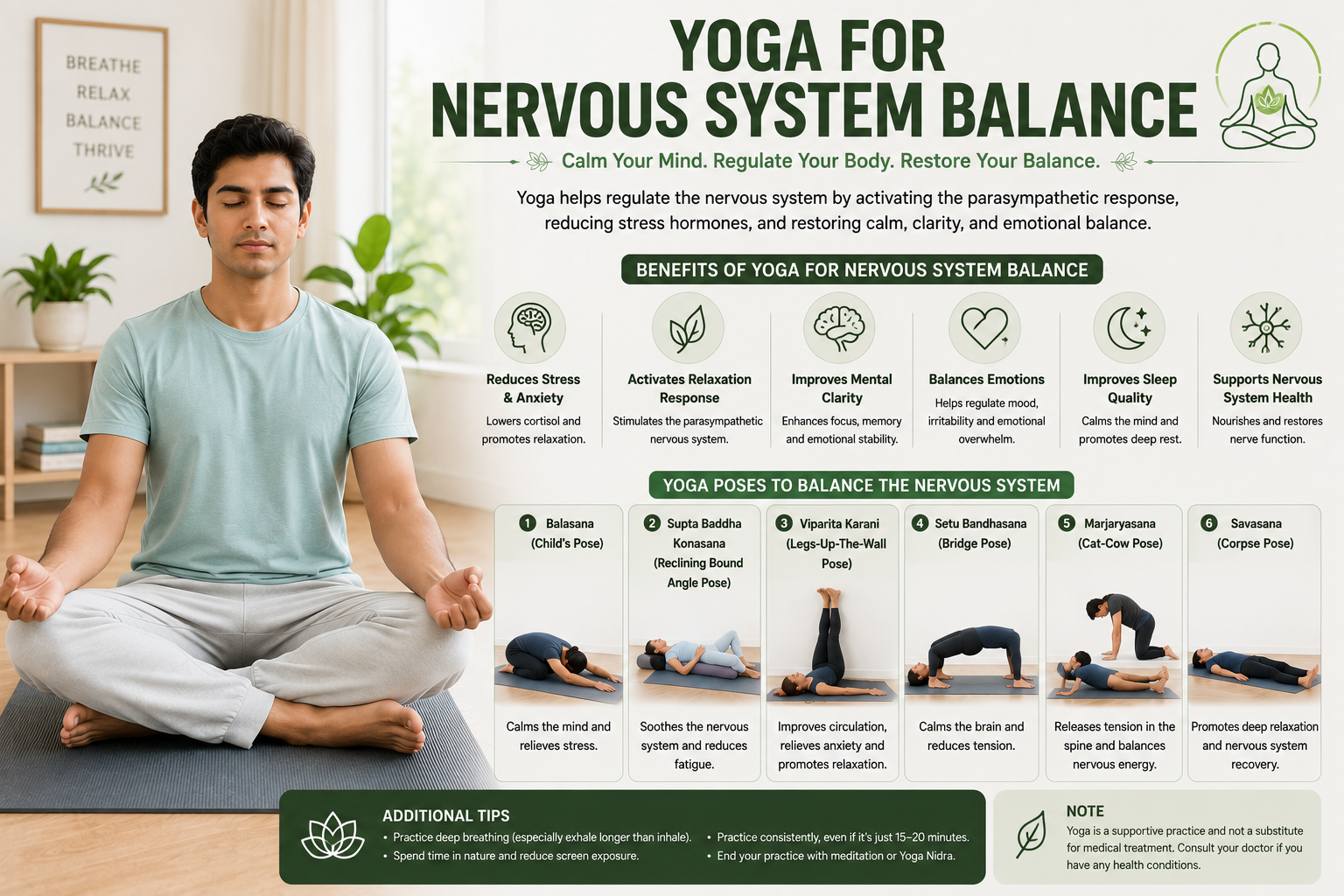
An informational guide to what yoga can and cannot do for the nervous system — covering how the autonomic nervous system actually regulates the body, where breath, movement, and meditation-focused practices genuinely help, and where popular claims about yoga “rebalancing” or “resetting” the nervous system outpace the evidence.
Feeling wired but exhausted, unable to settle even at rest, or stuck in a constant state of low-grade alertness sends many people looking for ways to “balance the nervous system,” and yoga is often marketed as the answer, sometimes with claims that a specific sequence can permanently reset or rewire the body’s stress response. The more accurate picture is more modest: the nervous system is a complex, self-regulating network, and while yoga has some genuinely well-documented effects on it, no single practice permanently fixes or resets it in one session, and lasting change generally requires consistent practice over time.
What yoga can genuinely offer is support for shifting the balance between the body’s alert and calming systems in the moment, along with cumulative benefits from regular practice on stress reactivity and recovery, a real and useful role that falls well short of the more dramatic “reset” language often used to market it. This guide walks through how the autonomic nervous system actually works, where yoga has an evidence-aligned role in supporting it, and where popular claims go further than the science supports. Yoga is not a substitute for medical care, and anyone with a diagnosed nervous system, cardiovascular, or mental health condition should treat it as a complement to, not a replacement for, appropriate treatment.
1. What the Autonomic Nervous System Actually Does
The autonomic nervous system regulates involuntary bodily functions, including heart rate, digestion, and breathing rate, largely through two complementary branches. The sympathetic branch is associated with alertness and the body’s stress response, increasing heart rate and preparing the body for action, while the parasympathetic branch is associated with rest, digestion, and recovery, generally slowing heart rate and supporting a calmer physiological state. Healthy functioning does not mean one branch is simply “better” than the other; it means the body can shift between them appropriately depending on the situation, activating alertness when needed and returning to a calmer baseline afterward. Many people describe feeling “dysregulated” when this shifting capacity feels impaired, staying in a heightened alert state even when there is no immediate demand for it, or struggling to feel calm even during rest. Understanding this mechanism clarifies what yoga can realistically do: support the body’s capacity to shift between these states appropriately, not replace or override the nervous system’s underlying regulatory processes.
2. Why Claims That Yoga “Resets” the Nervous System Go Too Far
It is easy to find wellness content suggesting a single breathing technique or sequence can permanently reset or rebalance the nervous system in one session. These claims are not well supported. The nervous system’s regulatory patterns develop over years and are shaped by genetics, life experience, and ongoing habits, and while a single practice session can genuinely shift the body toward a calmer state temporarily, lasting change in baseline regulation generally requires consistent practice over weeks and months, not a single dramatic technique. The more accurate picture is that yoga can be a genuinely helpful complementary practice for supporting nervous system flexibility over time, offering modest, real benefits without replacing appropriate care for anyone with a diagnosed nervous system or mental health condition.
3. What the Research Actually Shows
Research on yoga and autonomic nervous system function is reasonably well developed, with numerous studies measuring heart rate variability, a common marker of the balance between sympathetic and parasympathetic activity, showing that regular yoga and slow breathing practice is associated with improved heart rate variability and markers of parasympathetic activation for many practitioners. This research generally reflects a pattern of cumulative benefit with consistent practice rather than a one-time reset, and effects are typically measured over weeks of regular practice. Evidence for yoga treating diagnosed autonomic disorders or serious dysautonomia is much more limited, and such conditions require appropriate medical evaluation rather than a yoga-only approach. The fair summary: yoga has genuine, evidence-aligned potential to support autonomic flexibility and parasympathetic activation with consistent practice, while broader claims about instantly resetting or curing nervous system dysfunction outpace what has actually been studied.
4. Breathing Practices and Vagal Tone
Slow, extended exhalation is one of the more directly evidence-aligned ways to influence the autonomic nervous system, since it is associated with activation of the vagus nerve, a key pathway of the parasympathetic system, and improved heart rate variability with consistent practice. This is part of why breath-focused practice is often the starting point for nervous system-focused yoga, rather than movement or posture work alone.
A gradual, structured approach to this kind of practice, of the sort covered in Pranayama for Stress Relief, offers a sensible starting point for building the kind of slow, controlled breathing most directly linked to parasympathetic activation.
5. Movement, Posture, and Nervous System Regulation
Gentle, mindful movement can support nervous system regulation by combining physical activity with focused attention, which some research suggests supports stress reactivity over time better than either element alone. Restorative postures, particularly those involving supported forward folds or reclined positions, are often associated with a calming, parasympathetic-leaning effect, while more dynamic, energising sequences tend to engage the sympathetic system more, which is not inherently negative but is worth choosing intentionally depending on what the practice is meant to support.
6. Meditation, Attention, and the Nervous System
Sustained meditation practice is associated with improved emotional regulation and stress reactivity over time, which reflects, at least in part, a nervous system that shifts more flexibly between alert and calm states rather than getting stuck in either. This is one of the more genuinely evidence-aligned aspects of yoga’s relationship with the nervous system: not an instant reset, but a gradual retraining of the body’s regulatory flexibility with consistent practice.
This relationship between rest, the nervous system, and physical wellbeing is discussed further in Yoga Nidra in Rishikesh, which explores how deep restorative practice supports the kind of rest the body’s regulatory systems depend on.
7. The Nervous System and Cardiovascular Health
Because the autonomic nervous system directly regulates heart rate and blood pressure, its functioning is closely tied to cardiovascular health, and this is an area where yoga’s nervous-system effects have some of the more concrete, measurable implications.
This connection is explored further in Breathing Exercises for Heart Health, which looks specifically at how controlled breathing relates to cardiovascular regulation.
For people managing elevated blood pressure specifically, Yoga for High Blood Pressure looks in more depth at yoga’s evidence-aligned role alongside medical treatment for hypertension.
8. Practices and Situations to Approach With Caution
Not every practice suits every nervous system state. Vigorous, forceful breathing techniques and intense, activating sequences may not be appropriate for someone already in a highly anxious or hyperaroused state, since further stimulation can sometimes intensify rather than ease that state, and gentler, slower practices are often more appropriate in these moments. Anyone with a diagnosed autonomic disorder, significant cardiovascular condition, or serious mental health condition should work with a clinician alongside any yoga practice rather than relying on yoga alone. Persistent symptoms such as an unusually rapid or irregular heartbeat, fainting, or severe, unexplained dysregulation of bodily functions should be evaluated by a doctor rather than addressed through yoga.
9. Building a Safe, Realistic Practice
A yoga practice that genuinely supports nervous system balance looks consistent and varied, matched to the body’s current state rather than following one fixed formula.
- Use slow, extended-exhale breathing as a foundational practice for supporting parasympathetic activation.
- Choose restorative, calming practices when already feeling activated or anxious, and reserve more vigorous practice for other times.
- Practise consistently over weeks rather than expecting a single session to produce lasting change.
- Learn how to match practice to nervous system state from a qualified teacher, ideally trained through a structured Yoga Teacher Training in Rishikesh programme.
- Seek medical evaluation for persistent, unexplained symptoms of dysregulation rather than relying on yoga alone.
10. Traditional Yogic Perspectives on the Nervous System
Traditional yogic philosophy has long described the relationship between breath, the mind, and the body’s energetic state, using concepts such as prana and the nadis to describe what modern physiology would later characterise through the autonomic nervous system and vagal tone. While these traditions use different language, the underlying emphasis on breath as a lever for shifting bodily and mental states aligns reasonably well with the modern evidence base around breath, heart rate variability, and parasympathetic activation.
Traditions such as Kundalini Yoga in Rishikesh often teach this breath-and-energy framework in depth, alongside guidance on sequencing practice to match different nervous system states.
11. Red Flags in Yoga-for-Nervous-System Claims
A few common red flags tend to signal claims about yoga and the nervous system that outpace the evidence.
- Suggestions that a single session or technique permanently “resets” the nervous system.
- Claims that yoga cures diagnosed autonomic disorders or serious dysautonomia without medical treatment.
- Vigorous, activating techniques recommended for acute anxiety or panic without any caution.
- Vague claims that a practice “clears trapped trauma from the nervous system” without any explanation of the underlying mechanism.
12. Learning These Practices Properly
Because matching practice to nervous system state requires understanding both technique and basic autonomic physiology, learning from a properly trained teacher makes a real difference.
A structured Best Yoga School in Rishikesh typically teaches this kind of nuanced, state-matched sequencing alongside the physiological grounding needed to use breath and movement thoughtfully for nervous system support.
Safety Notes and When to See a Doctor
Yoga and related breath, movement, and meditation-focused practices can genuinely support nervous system flexibility over time, but they should never replace appropriate medical diagnosis or treatment.
- An unusually rapid, irregular, or pounding heartbeat, or fainting, requires prompt medical evaluation.
- A diagnosed autonomic disorder, cardiovascular condition, or serious mental health condition warrants working with a clinician alongside any yoga practice.
- Persistent, severe dysregulation of bodily functions, such as digestion, temperature regulation, or blood pressure, should be evaluated by a doctor rather than managed with yoga alone.
- Anyone in acute crisis or experiencing a panic attack should have access to appropriate support beyond a self-directed yoga practice.
Frequently Asked Questions (FAQs)
Q1. Can yoga permanently reset the nervous system in one session?
No. A single session can shift the body toward a calmer state temporarily, but lasting change in baseline nervous system regulation generally requires consistent practice over weeks and months, not one technique or sequence.
Q2. What is heart rate variability, and why does it matter for yoga?
It is a measure of the variation in time between heartbeats, commonly used as a marker of autonomic balance. Regular yoga and slow breathing practice is associated with improved heart rate variability for many practitioners, reflecting better autonomic flexibility.
Q3. Which yoga practices most directly support the parasympathetic nervous system?
Slow breathing with extended exhalation has the most direct, well-documented link to parasympathetic activation, generally more so than posture work alone.
Q4. Is vigorous yoga bad for the nervous system?
Not inherently. It tends to engage the sympathetic system more, which is not harmful in itself, but it may not be the best choice when someone is already feeling anxious or overstimulated, when gentler practice is often more appropriate.
Q5. Can yoga cure an autonomic nervous system disorder?
No. Diagnosed autonomic disorders require appropriate medical evaluation and treatment, and yoga should be used as a complement alongside medical care rather than a standalone treatment.
Q6. How long does it take to see nervous system benefits from yoga?
Most research showing improved heart rate variability and stress reactivity involves consistent practice over several weeks, rather than immediate, one-time results.
Q7. What is the most evidence-based way to think about yoga’s role in nervous system balance?
The most accurate framing is that yoga, particularly slow breathing and consistent meditation practice, can support the nervous system’s flexibility between alert and calm states over time, working alongside, not instead of, appropriate medical care for any diagnosed condition.
Final Thoughts
The nervous system is a complex, self-regulating network shaped by years of experience, and the most honest, evidence-aligned view of yoga’s role is a supportive one: helping build the body’s capacity to shift flexibly between alertness and calm through consistent practice, rather than instantly resetting or curing nervous system dysfunction. This is a more modest picture than some wellness marketing suggests, but it is also a safer and more realistic one.
