 Skip to content
A designer in Berlin answers messages at midnight. A software engineer in Munich sits through back-to-back video calls. A freelance filmmaker in Hamburg refreshes client feedback on a phone while eating breakfast. Many of these professionals are skilled, motivated, and very tired.
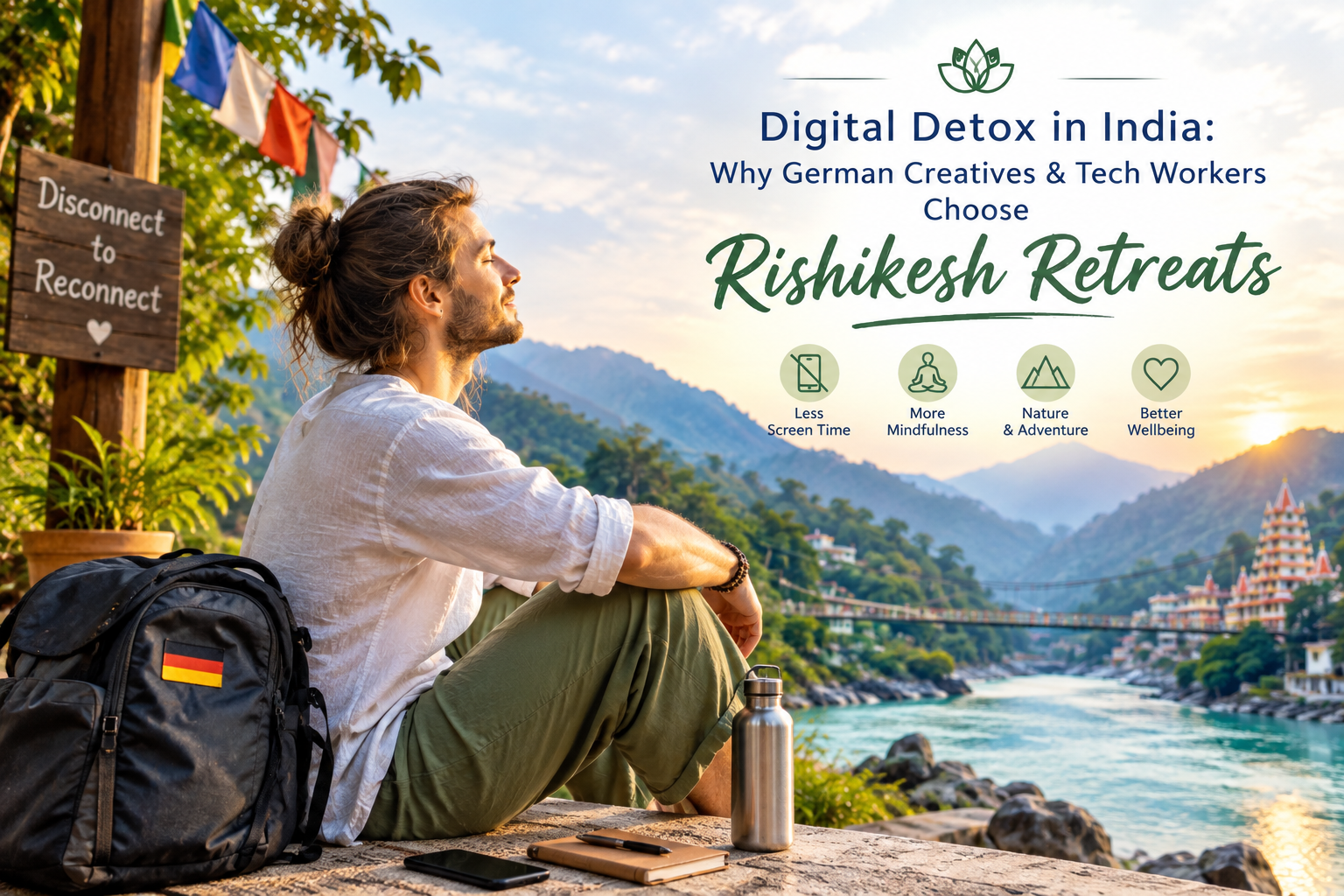
That fatigue is a major reason more German creatives and tech workers are looking beyond weekend city breaks and turning to structured digital detox retreats in India, especially in Rishikesh, the Himalayan foothill town on the Ganga. This guide explains what a digital detox is, why Rishikesh appeals to this audience, what a retreat typically includes, and how to plan one responsibly.
What Is a Digital Detox?
A digital detox is a planned period of reduced or paused use of screens, social media, email, and other connected devices. The aim is not to reject technology permanently. It is to reset your relationship with it, give your attention a chance to recover, and notice how constant connectivity affects your mood, sleep, and focus.
Related ideas you may have come across include screen-time reduction, digital minimalism, mindful technology use, and burnout recovery. A retreat adds structure, community, and guidance to what is otherwise a difficult habit to change alone.
Why the Pressure Is Especially Real for Creatives and Tech Professionals
Creative and technical work often blurs the boundary between work and rest. Laptops, phones, and cloud tools make it possible to work anywhere, which often means working everywhere.
Common patterns include:
- Always-on communication: Slack, email, and messaging apps encourage instant replies.
- Fragmented attention: Switching between tasks makes deep, creative thinking harder.
- Evening screen exposure: Late-night use can interfere with sleep routines.
- Performance culture: Portfolio sites, social platforms, and online visibility create a feeling of continuous evaluation.
Public-health bodies and researchers have raised concerns about the links between heavy screen use, sleep disruption, and stress. The evidence is nuanced and still developing, so a detox is best seen as a supportive reset rather than a guaranteed cure for burnout.
Why Rishikesh? The Pull of the Himalayan Foothills
India offers many wellness destinations, but Rishikesh has a particular reputation. It sits where the Ganga leaves the Himalayas and enters the plains, and it has long been associated with yoga, meditation, and spiritual study. Ashrams such as the Sivananda Ashram (founded in 1936) and others have welcomed international students for decades, and the town hosts the International Yoga Festival each year.
A Landscape That Slows You Down
The setting does much of the work. Mornings begin with river views and mountain air, and the rhythm of the town, from temple bells to evening Ganga aarti, encourages observation rather than scrolling. For people used to city noise and notification pings, this sensory shift can be striking.
An Established Tradition of Inner Work
Rishikesh is not simply a pretty location. Its teaching culture rests on practices such as asana, pranayama, meditation, and self-inquiry, which are designed to turn attention inward. This gives a digital detox a purpose beyond “time off”: you replace constant input with practices that train focus and calm.
Accessibility for European Travelers
Rishikesh is reachable from Dehradun’s Jolly Grant Airport, and Delhi is the usual international gateway. Many retreat centers are used to hosting European guests and can assist with airport transfers, food preferences, and English-language instruction. Always confirm visa requirements, health advice, and travel guidance through official sources before booking.
Why German Professionals Are Drawn to Retreats
It would be inaccurate to claim that every German professional is heading to India, but several motivations come up repeatedly in wellness-travel conversations.
Work-Life Balance as a Core Value
Germany has a strong cultural emphasis on separating work and private life, and many professionals value clear boundaries and structured time off. A retreat with a defined schedule and clear rules about device use fits that preference for order.
Burnout Awareness
Conversations about burnout and mental health have become more open across Europe. For tech workers and freelancers in particular, a retreat can function as a deliberate pause before exhaustion becomes serious.
Curiosity About Traditional Practices
Many Europeans already practice yoga, mindfulness, or meditation at home. Studying in the place where these practices developed offers depth and context that a weekly studio class may not.
The Creative Reset
Writers, designers, musicians, and developers often report that stepping away from screens helps ideas surface. Unstructured time, walking, journaling, and quiet observation are well-known companions to creative thinking.
What a Typical Rishikesh Digital Detox Retreat Includes
Programs vary, so review each one carefully. A well-designed retreat usually includes:
1. A Daily Routine With Minimal Screen Time
Guests are generally asked to limit or surrender phones and laptops during the day, with optional check-in windows for emergencies or family contact. Clear guidelines make it easier to follow through.
2. Morning Yoga and Pranayama
Sessions often begin early with gentle Hatha or Vinyasa postures, followed by breathing practices such as Nadi Shodhana (alternate nostril breathing). These help move the body after long periods of sitting and give the mind a point of focus.
3. Meditation and Silence
Guided meditation, mindful walking, or short periods of silence help participants notice habitual urges to reach for a device. Many people find the first two or three days uncomfortable before the mind begins to settle.
4. Sattvic Meals
Retreats typically serve simple vegetarian food prepared with fresh, seasonal ingredients, often without caffeine-heavy or heavily processed items. Regular meal times help re-establish healthy routines.
5. Nature and Reflection Time
Riverside walks, journaling, sketching, and short Himalayan excursions give creative minds room to wander without a screen.
6. Community and Conversation
Sharing meals and conversation with other travelers builds real-world connection, which can be a welcome contrast to online networking.
Potential Wellness Benefits to Understand Realistically
Participants often describe feeling calmer, sleeping better, and thinking more clearly. These reports are encouraging, but they are individual experiences, not guarantees. Here is how the main areas connect to the retreat environment.
Stress and Nervous System Regulation
Slow breathing, gentle movement, and time in nature are widely associated with relaxation responses. Over time, reducing constant alerts may also lower the sense of being permanently “on call.”
Sleep Quality
Less evening screen time, earlier bedtimes, and physical activity can support more regular sleep. Consistent routines matter as much as the setting.
Hormonal and Metabolic Wellbeing
Chronic stress and irregular sleep are often discussed in relation to hormone health. Many women, for example, explore gentle practices to support their cycles, and resources such as Yoga for PCOS explain how mindful movement can complement medical care. More broadly, Yoga for Hormonal Balance outlines how breath, posture, and routine may support the body’s natural rhythms.
Thyroid Health
Some retreat guests arrive with thyroid conditions and want to know which practices are appropriate. The needs differ, which is why guidance matters. Our resources on Yoga for Hyperthyroidism and Yoga for Hypothyroidism describe gentle approaches for each, but they should always be used alongside your doctor’s advice.
Nutrition and Blood Sugar
Regular meal times and balanced, plant-forward food can support healthier habits, especially for people whose desk-bound routines involve skipped meals and snacking. If you manage blood sugar, our guide to a Healthy Diet for Diabetics offers practical food ideas, and you should tell any retreat center about your condition before arrival.
Important note: A retreat is not a medical treatment. If you have a thyroid disorder, diabetes, a heart condition, a mental-health condition, or are pregnant, consult your doctor before booking and share relevant details with your teachers.
How to Choose a Trustworthy Retreat (E-E-A-T Checklist)
Search engines reward content that shows experience, expertise, authoritativeness, and trustworthiness, and the same four qualities help you evaluate a retreat.
- Experience: How long has the center been operating? Can you find reviews from past international guests on independent platforms?
- Expertise: Are the yoga and meditation teachers formally trained, with clear biographies and years of teaching? Recognized credentials, such as those aligned with Yoga Alliance, can be one indicator.
- Authoritativeness: Is the school connected to a recognized lineage or tradition, and does it describe its teaching approach transparently?
- Trustworthiness: Does it publish clear pricing, cancellation terms, safety policies, and health screening procedures? Does it respect your boundaries around diet, medical needs, and privacy?
Beware of programs that promise to “cure” illness, guarantee dramatic transformations, or pressure you to buy extras.
Practical Planning Tips for German Travelers
- Duration: A minimum of 7 to 10 days is often recommended to feel a genuine shift, though even a long weekend can offer a reset.
- Best season: Spring (roughly February to April) and autumn (roughly September to November) are generally more comfortable. Monsoon season brings heavy rain.
- Health precautions: Check current travel-health guidance from official German or international health authorities, and consider travel insurance.
- Work boundaries: Inform clients and colleagues in advance and set an out-of-office message. Preparation reduces anxiety during the retreat.
- Packing: Bring comfortable, modest clothing, a refillable water bottle, a journal, and a simple alarm clock instead of relying on your phone.
- Responsible travel: Respect local customs, dress modestly near temples and the river, and avoid littering in this ecologically sensitive area.
Bringing the Detox Home
The real test begins after the retreat ends. A few habits can help the benefits last:
- Create phone-free zones, such as the bedroom and the dining table.
- Schedule email and messaging checks at set times instead of reacting constantly.
- Keep a short morning practice, even ten minutes of stretching and breathing.
- Turn off non-essential notifications.
- Plan regular offline time, such as a weekly hike or analog hobby.
Small, repeatable changes tend to last longer than dramatic resolutions.
Final Thoughts
For German creatives and tech workers surrounded by constant digital demands, Rishikesh offers more than scenery. It combines a calming environment, a long tradition of inner practice, and structured routines that make unplugging easier. With realistic expectations, honest health communication, and a carefully chosen retreat, a digital detox in India can become a meaningful reset for both work and wellbeing.
Frequently Asked Questions
1. What is a digital detox retreat?
A digital detox retreat is a structured stay where participants reduce or pause the use of phones, laptops, and social media while following a routine that may include yoga, meditation, healthy meals, and time in nature.
2. Why do German professionals choose Rishikesh for a digital detox?
Many are drawn by the Himalayan setting, the long tradition of yoga and meditation, and the availability of structured programs. Interest is often linked to work-life balance and burnout awareness.
3. How long should a digital detox retreat in Rishikesh be?
Most people find 7 to 14 days works well, allowing time to settle in. Shorter stays can still be refreshing, while longer ones allow deeper practice.
4. Do I need yoga experience to join a retreat?
No. Many retreats welcome beginners and offer different levels. Tell the teachers about any injuries or health conditions so they can adapt your practice.
5. Is a digital detox retreat a substitute for medical or mental-health care?
No. A retreat can support wellbeing, but it does not replace professional care. If you experience persistent stress, anxiety, low mood, or a medical condition, speak with a qualified healthcare provider.
