By the Rishikesh Yog Darshan Team | Reading time: 9 minutes
In Ayurveda, the day is meant to begin with care for the body, not with a rush toward work. One of the oldest of these morning rituals is Abhyanga, a warm oil self-massage practiced in India for thousands of years. At Rishikesh Yog Darshan, where students from around the world come to learn yoga and Ayurvedic living, we introduce abhyanga early because it is simple, affordable and deeply calming.
This guide explains what abhyanga is, what its benefits are, which oil suits Vata, Pitta and Kapha constitutions, and how to practice it safely at home.
What Is Abhyanga?
Abhyanga (Sanskrit: abhi meaning “toward” and anga meaning “limb”) is a full-body massage using warm herbal or plain oil. In Sanskrit texts the word sneha means both “oil” and “love”, which hints at the spirit of the practice: it is a form of self-care that nourishes the body and the nervous system together.
Unlike a spa massage, abhyanga is usually done by yourself, as part of dinacharya, the Ayurvedic daily routine. Long strokes on the limbs, circular motions on the joints and gentle pressure on the abdomen are applied with warm oil, which is then left on the skin for a short time before a warm bath or shower.
Abhyanga in the Ayurvedic Texts
The practice is not a modern wellness trend. Classical works such as the Charaka Samhita and the Ashtanga Hridaya describe daily oil massage as a way to support healthy ageing, restful sleep, strong skin and resilience against fatigue. The Ashtanga Hridaya recommends oiling the body daily, with particular attention to the head, ears and feet.
In Ayurvedic thinking, oil is snigdha (unctuous), guru (heavy) and sthira (stable). These qualities are considered the natural opposite of the dry, light and mobile qualities that accumulate with stress, travel, cold weather and ageing. That is why abhyanga is traditionally seen as grounding.
Key Benefits of Abhyanga
Traditional teachings and modern experience point to several benefits. Research on massage in general is encouraging, though large, high-quality trials on abhyanga specifically are still limited, so it is best seen as a supportive practice rather than a treatment.
1. Calms the nervous system. Slow, rhythmic strokes with warm oil help the body shift out of a stress response. Many practitioners report feeling steadier and less reactive after a session.
2. Supports better sleep. Evening abhyanga, especially on the scalp and feet, is a classical remedy for restlessness and light, broken sleep.
3. Nourishes dry skin. Regular oiling helps the skin hold moisture and feel softer, particularly in dry or cold climates.
4. Eases stiffness in muscles and joints. Warm oil and gentle pressure ease tightness from long hours of sitting or physical work.
5. Encourages circulation. Massage strokes directed toward the heart are traditionally thought to support healthy blood and lymph flow.
6. Builds body awareness. Touching every part of the body with attention is a quiet form of mindfulness. People often notice tension, dryness or tenderness they had ignored.
Abhyanga also fits naturally into a heart-conscious routine. Because stress is a recognised contributor to cardiovascular strain, calming practices matter. If you are exploring this area, our guide to lifestyle changes for a healthy heart explains how daily habits such as movement, food, sleep and stress care work together.
First, Know Your Dosha
Ayurveda describes three doshas, or functional energies, formed from the five elements:
- Vata (air and space): light, dry, cold, quick and changeable.
- Pitta (fire and water): hot, sharp, intense and oily.
- Kapha (earth and water): heavy, cool, slow, stable and moist.
Everyone carries all three, but one or two usually dominate. The guiding principle of abhyanga is simple: use oils whose qualities balance, rather than aggravate, your dominant dosha. A free online quiz can give a rough idea, but for a reliable assessment, consult a qualified Ayurvedic practitioner who can also consider your current imbalances (vikriti), not just your birth constitution (prakriti).
The Right Oil for Your Dosha
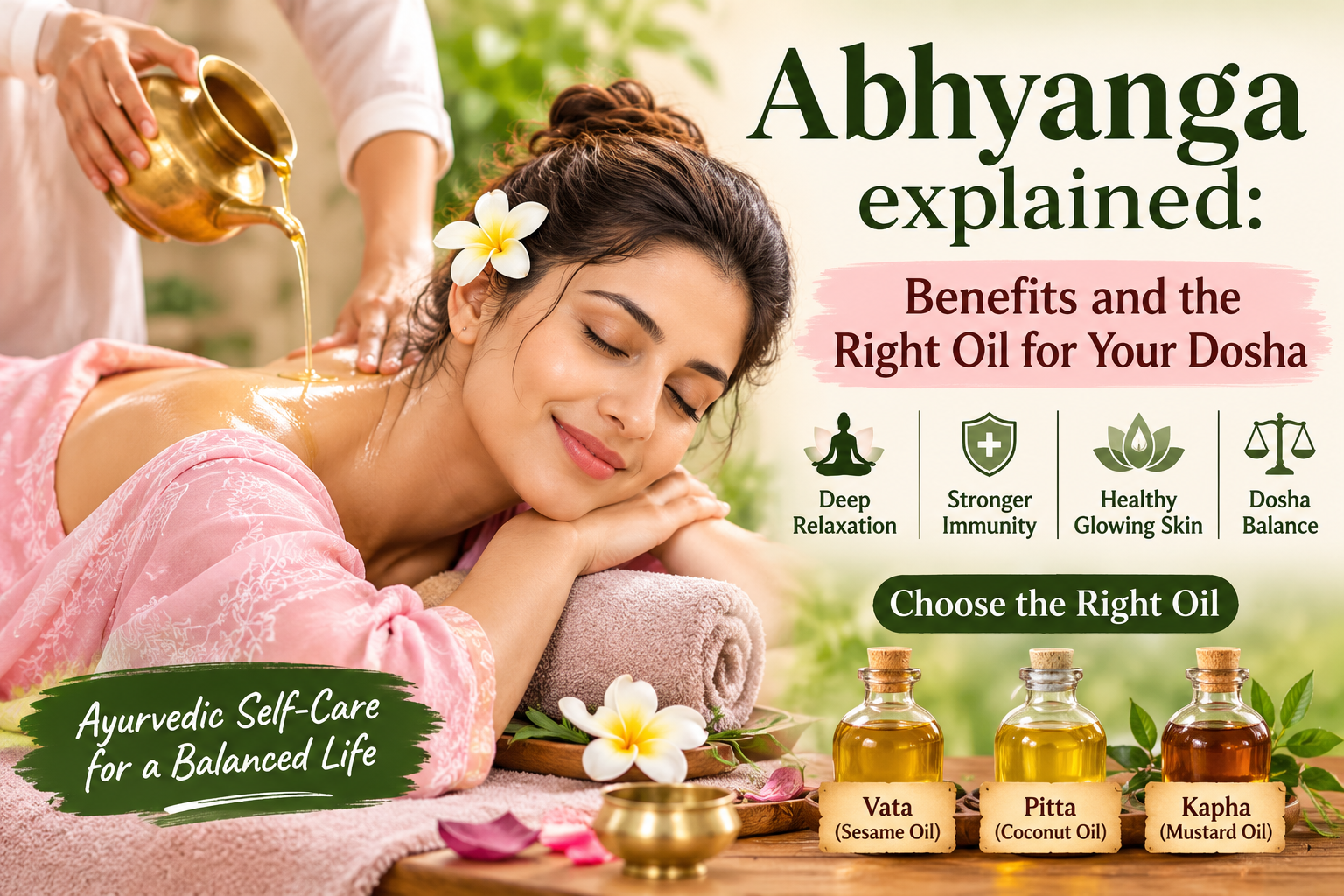
Vata: Warm, Heavy, Grounding Oils
Vata types tend toward dry skin, cold hands and feet, anxiety and irregular sleep. They benefit most from rich, warming oils.
- Best choices: Sesame oil (the classical Vata oil), almond oil, or a medicated oil such as Ashwagandha-Bala oil or Dhanwantharam oil.
- Routine: Daily or at least four to five times a week, with slow, steady strokes and ample oil.
- Seasonal note: Vata increases in autumn and early winter, so warm oiling becomes especially valuable then.
Pitta: Cooling, Soothing Oils
Pitta types run warm and may have sensitive skin, redness, irritability or a tendency toward inflammation. Heating oils can feel too intense.
- Best choices: Coconut oil, sunflower oil, or cooling medicated oils such as Brahmi oil or Chandanadi oil (sandalwood-based).
- Routine: Three to five times a week, using a lighter touch, moderate warmth and a longer cool-down before showering.
- Seasonal note: In peak summer, switch to coconut oil even if sesame suits you the rest of the year.
Kapha: Light, Stimulating Oils
Kapha types tend to have thicker, oilier skin, a slower metabolism and a tendency toward heaviness or congestion. Heavy oils can feel sticky and sluggish.
- Best choices: Mustard oil (where tolerated), a small amount of warm sesame oil, or lightly stimulating blends with ginger, camphor or eucalyptus. Dry powder massage (udvartana) with chickpea flour is another classical Kapha option.
- Routine: Two to three times a week, with brisk strokes and just a thin layer of oil.
- Seasonal note: Kapha increases in late winter and spring, so lighter, more vigorous massage helps then.
Dual Doshas and Sensitive Skin
Many people are a mix, such as Vata-Pitta or Pitta-Kapha. In that case, choose the oil that balances the dosha most out of balance right now, and adjust with the seasons. If your skin is very sensitive, begin with a mild oil such as cold-pressed sunflower or almond oil, and always patch test a small area first.
How to Practice Abhyanga at Home: Step by Step
- Choose a quiet space. A bathroom or warm room with a towel or old sheet on the floor works well, since oil can stain.
- Warm the oil gently. Place the bottle in a bowl of hot water for a few minutes. It should feel pleasantly warm on the wrist, never hot.
- Start with the scalp. Apply a small amount and massage in slow circles. The head is considered an important area for calming the mind.
- Move to the face and ears. Use light upward strokes on the face. A little oil around the outer ears is traditional.
- Massage the limbs. Use long strokes along the arms and legs, and circular motions at the shoulders, elbows, wrists, hips, knees and ankles.
- Treat the torso. Use gentle circles on the chest and abdomen, following the direction of digestion (clockwise on the belly). Use long strokes on the back where you can reach.
- Finish with the feet. Massage the soles firmly. Many people find this the most grounding step.
- Rest for 10 to 15 minutes. Let the oil absorb while you sit quietly or practise slow breathing.
- Bathe with warm water. Use a mild cleanser only where needed. Pat the skin dry.
The whole practice can take 15 to 20 minutes. Even five minutes on the scalp and feet is a worthwhile start.
Best Time, Frequency and Precautions
Time: Morning before bathing is traditional. If you struggle to fall asleep, an evening foot and scalp massage can be calming.
Frequency: Daily if time and your dosha allow, otherwise two to four times a week.
Avoid or delay abhyanga when:
- You have fever, acute infection, or indigestion with a coated tongue.
- You have open wounds, rashes, skin infections or active inflammation in the area.
- You are in the early days of a cold, flu or heavy congestion.
- You are menstruating and feel heavy or unwell (some traditions advise rest).
- You have recently had surgery or have a medical condition such as blood clots, varicose veins or severe heart or kidney disease. In these cases, ask your doctor first.
Also be careful with oil on the floor of the bathroom, as it can be slippery. Wash oil-soaked towels separately, and never leave warmed oil unattended.
Pairing Abhyanga With Yoga and Breathwork
Abhyanga works best as part of a wider routine. Oil massage prepares the body, and yoga and breath practices carry the calming effect further.
If you live with raised blood pressure, gentle, supervised movement can be very supportive alongside medical care. Our article on yoga for high blood pressure outlines poses that are generally considered safe and those that need caution. For a wider look at cardiovascular wellness, see our overview of yoga for heart health.
After your oil rest, a few minutes of slow, even breathing can deepen relaxation. You can learn simple techniques in our guide to breathing exercises for heart health, which explains how controlled breath influences the cardiovascular system.
A practical weekly pattern many of our students use:
- Morning: Abhyanga (10 to 15 minutes), warm shower, light yoga.
- Midday: A freshly cooked, seasonal meal.
- Evening: Foot massage with warm oil, slow breathing, early bedtime.
Why Trust This Guidance?
The practices in this article are drawn from classical Ayurvedic sources and from years of teaching yoga and Ayurvedic lifestyle at Rishikesh Yog Darshan, in the yoga capital of the world. Ayurveda is a traditional system of medicine, and its guidance here is offered for general wellness. Where scientific evidence is limited, we have said so plainly.
Frequently Asked Questions
Can I do abhyanga every day? Yes, for most healthy adults. Vata and Pitta types often do well with daily practice, while Kapha types may prefer two to three times a week.
Which oil is the safest for beginners? Sesame oil suits many people in cool weather, and coconut oil in hot weather. If unsure, begin with a small patch test and choose a mild, cold-pressed oil.
Should I wash the oil off? Yes. Rest for 10 to 15 minutes, then bathe in warm water so that excess oil does not clog pores or stain clothing.
Is abhyanga safe during pregnancy? Gentle abhyanga is traditionally recommended, but oils, pressure and areas to avoid vary by trimester. Speak with your doctor and an experienced practitioner before starting.
Does abhyanga replace medical treatment? No. It is a supportive self-care practice and should not replace diagnosis or treatment by a qualified healthcare professional.
Conclusion
Abhyanga is a small daily ritual with a large reputation: warm oil, slow strokes and a few quiet minutes. Match the oil to your dosha, start gently and stay consistent, and the practice can become one of the most grounding parts of your day. Combined with mindful movement, steady breathing and healthy daily habits, it offers a simple, time-tested way to care for body and mind.