 Skip to content
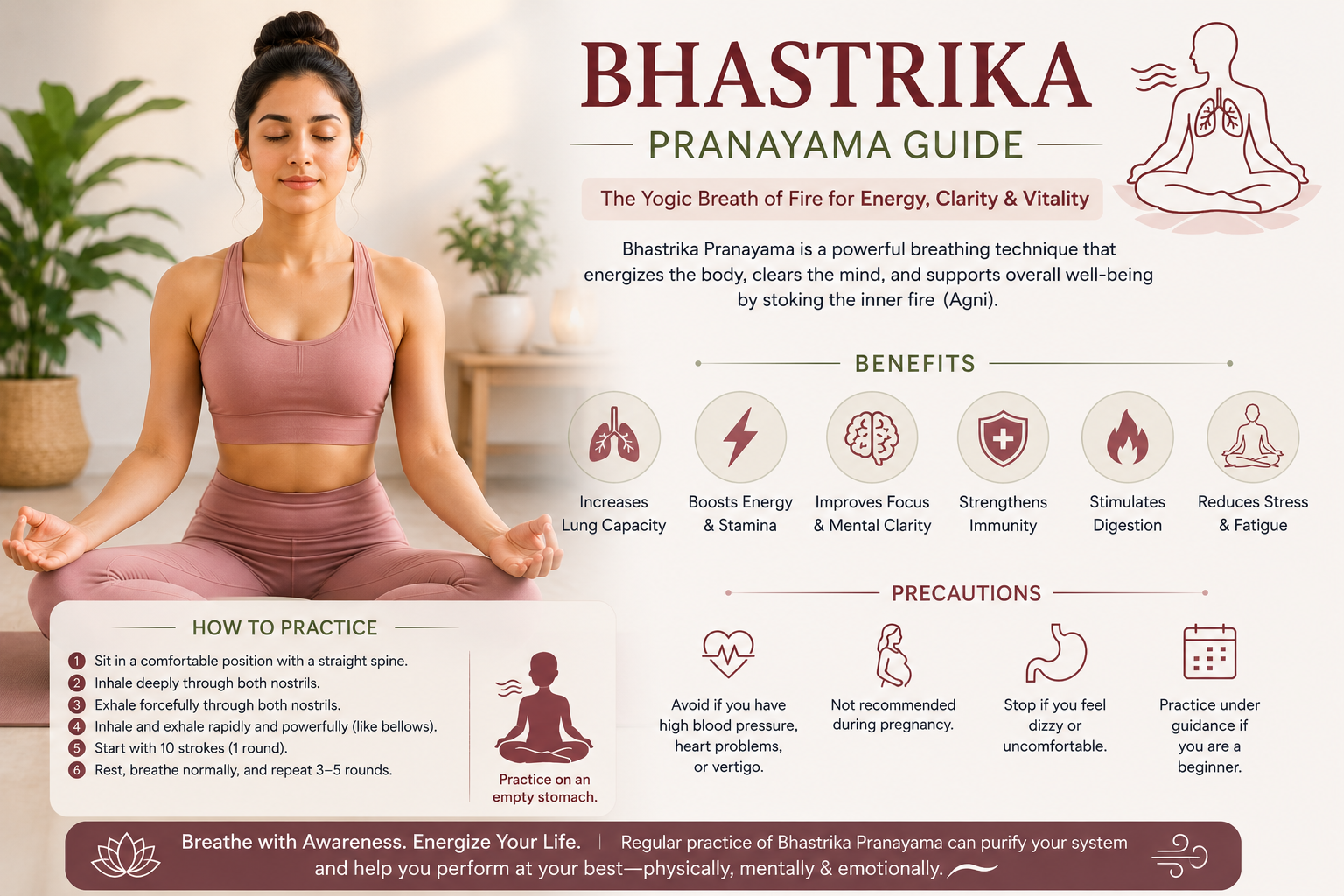
Few pranayama techniques feel as immediately powerful as Bhastrika. Often called the “bellows breath” for the way it mimics the rapid, forceful action of a blacksmith’s bellows, it combines strong, active inhalations with equally strong, active exhalations, a rhythm that generates heat, energy, and a noticeable shift in mental state within just a few rounds. Where many breathing techniques work quietly in the background, Bhastrika announces itself immediately, through sound, sensation, and a surge of alertness that practitioners often describe as unlike anything else in a typical yoga practice.
At Rishikesh Yog Darshan, Bhastrika is taught with the same respect given to any physiologically demanding technique, as a practice capable of real benefit when approached correctly, and real strain when it isn’t. This guide looks closely at what Bhastrika actually is, what it does to the body and nervous system, who should approach it carefully, and how to build it into a practice safely and progressively, rather than treating it as an intense breathing trend to rush into.
What Is Bhastrika Pranayama?
Bhastrika draws its name from the Sanskrit word for “bellows,” the tool used to force air into a fire to make it burn hotter and brighter. The comparison is deliberate. Unlike Kapalbhati, which emphasizes a forceful exhalation followed by a passive inhalation, Bhastrika involves equally forceful, equally active inhalation and exhalation, both driven by deliberate expansion and contraction of the diaphragm and chest. Air is drawn in fully and expelled fully, in a continuous, rhythmic cycle that can feel closer to controlled hyperventilation than to gentle breathwork.
This is what makes Bhastrika both effective and demanding. The rapid exchange of air increases oxygen intake and carbon dioxide elimination at a faster rate than normal breathing, which is part of why the technique produces such a distinct internal sensation, warmth, tingling, alertness, and in some cases lightheadedness if practiced too aggressively or for too long without proper buildup.
Traditionally, Bhastrika is considered one of the more advanced pranayama techniques, generally introduced only after a practitioner has developed comfort with slower, calmer breathing patterns. That sequencing matters, since the nervous system benefits from being conditioned gradually rather than being introduced to an intense technique before it’s ready. In many traditional lineages, teachers deliberately withhold Bhastrika until a student has spent weeks or months working with steadier breath control, not out of secrecy, but because the technique’s benefits depend heavily on a foundation the body has already built.
It’s also worth noting that Bhastrika’s effects extend beyond the physical sensation of heat and alertness. The rapid diaphragmatic movement engages the core and lower back stabilizing muscles more actively than most people expect, which is part of why proper posture is emphasized so consistently by experienced teachers. A collapsed or slouched position doesn’t just reduce the effectiveness of the practice, it also increases the likelihood of strain, particularly around the ribs and lower back, over repeated sessions.
The Benefits of Bhastrika Pranayama
When practiced correctly and with appropriate progression, Bhastrika offers a distinct set of benefits that set it apart from calmer pranayama practices:
- Increases oxygen intake and energy – The rapid, full breathing cycle rapidly increases oxygen exchange, which practitioners often experience as a quick, noticeable boost in alertness and energy.
- Strengthens the respiratory muscles – Because both inhalation and exhalation require active effort, Bhastrika works the diaphragm and intercostal muscles more thoroughly than passive breathing techniques.
- Generates internal heat – Traditional yogic thought describes Bhastrika as a heating practice, one that raises internal warmth, which is part of why it’s typically practiced earlier in a session rather than before rest or sleep.
- Supports mental clarity and focus – The rapid oxygen exchange is associated with heightened alertness, and many practitioners use short rounds of Bhastrika before meditation or study to sharpen focus.
- May support circulatory and cardiovascular function – Controlled, rhythmic breathing has a well-documented relationship with cardiovascular health, and this overview of Yoga for Heart Health explains more broadly how breath-focused yoga practices interact with the heart and circulatory system.
- Traditionally associated with clearing respiratory passages – The forceful movement of air is believed to help clear the nasal passages and upper respiratory tract, though this benefit is anecdotal rather than clinically confirmed.
Bhastrika and the Cardiovascular System
Because Bhastrika directly and rapidly changes breathing rate, its relationship with the cardiovascular system deserves particular attention. In a healthy practitioner, this can feel invigorating, briefly raising heart rate in a way that resembles mild physical exertion, followed by a noticeable settling once the rounds are complete. This isn’t inherently harmful for most people, but it does mean Bhastrika belongs in the category of active, stimulating techniques rather than gentle, restorative ones.
For a deeper understanding of how controlled breathing patterns interact with cardiovascular function more broadly, this guide on Breathing Exercises for Heart Health explains how different breath rhythms affect the heart, useful context for understanding why intense techniques like Bhastrika require a more cautious approach for certain individuals.
Who Should Approach Bhastrika With Caution
Bhastrika is one of the more physiologically demanding pranayama techniques, and its intensity means it isn’t suitable for everyone in the same way slower breathing practices are. In keeping with responsible, experience-based health guidance, it’s worth being clear about who should modify or avoid the practice:
- Individuals with high or unstable blood pressure – The rapid increase in heart rate and internal pressure associated with Bhastrika can be counterproductive for those managing hypertension. This guide on Yoga for High Blood Pressure outlines gentler, more appropriate breathing approaches for anyone managing cardiovascular concerns.
- Those with cardiac conditions – Anyone with a diagnosed heart condition should only attempt Bhastrika under direct supervision from a qualified teacher, and only with medical clearance.
- Pregnant individuals – The forceful abdominal and diaphragmatic engagement involved is not appropriate during pregnancy and should be avoided entirely.
- People prone to panic, anxiety, or hyperventilation-related symptoms – The rapid breathing rhythm can occasionally intensify these sensations rather than relieve them, and should be approached slowly, under guidance, if at all.
- Individuals with respiratory conditions such as asthma – The forceful nature of the practice may aggravate certain respiratory conditions and should be discussed with a healthcare provider first.
- People with vertigo, epilepsy, or a history of fainting – Rapid changes in oxygen and carbon dioxide levels can trigger lightheadedness, making this practice inappropriate without close, individualized guidance.
As with any powerful technique, the goal isn’t to avoid Bhastrika altogether, but to approach it with the same seriousness given to any physically demanding practice, gradually, attentively, and with awareness of individual health history. A brief conversation with a healthcare provider before beginning is a reasonable precaution for anyone with an existing condition, rather than an overcautious extra step.
Bhastrika vs Kapalbhati: Understanding the Difference
Bhastrika is often confused with Kapalbhati, and while the two share a family resemblance, forceful breathing, an energizing rather than calming effect, and a heating quality, the mechanics are meaningfully different. Kapalbhati relies on a forceful exhalation paired with a passive inhalation, keeping the effort concentrated in one half of the breath cycle. Bhastrika requires active effort in both directions, making it the more physically demanding of the two and generally the technique introduced later, once a practitioner has built comfort and control with simpler forceful-breathing practices.
How to Practice Bhastrika Pranayama Safely
Because Bhastrika is intense by design, technique and pacing matter considerably more here than with most other breathing practices.
- Sit with a tall, stable spine. A comfortable, upright seated position allows the chest and diaphragm to expand and contract fully without restriction.
- Begin with very short rounds. Ten to fifteen breaths to start is enough; building intensity and duration should happen gradually over weeks, not days.
- Keep both inhalation and exhalation equally forceful. This is what distinguishes Bhastrika from Kapalbhati, and uneven effort reduces both the benefit and the safety of the practice.
- Rest fully between rounds. A minute or more of normal, calm breathing between rounds allows the nervous system to settle before beginning again.
- Stop immediately if dizziness or discomfort occurs. Lightheadedness is a clear signal to pause, not a sign to push through.
- Practice on an empty stomach. Ideally earlier in the day, since the heating, energizing quality of Bhastrika is generally unsuitable before rest or sleep.
- Learn from a qualified teacher before practicing independently. Given its intensity, personalized guidance meaningfully reduces risk while preserving the technique’s genuine benefits.
Why Learn This From Rishikesh Yog Darshan
Rishikesh has long been a center for authentic yogic knowledge, and demanding techniques like Bhastrika are a clear example of why proper instruction matters so much. Taught without care, an intense practice like this can genuinely overwhelm the nervous system. Taught correctly, with attention to pacing, individual health history, and technique, it becomes a powerful, traditional practice with real, well-understood benefits.
Our approach to Yoga Teacher Training in Rishikesh goes beyond teaching sequences of poses and pranayama, incorporating a genuine understanding of physiology, contraindications, and the traditional context that surrounds advanced techniques like Bhastrika. Students leave with a grounded understanding of yogic philosophy alongside a practical, safety-conscious approach to teaching that respects how powerful, and how individualized, these breathing practices really are.
Frequently Asked Questions
1. How is Bhastrika different from normal deep breathing?
Normal deep breathing is typically slow and calming, while Bhastrika involves rapid, forceful inhalation and exhalation performed with equal effort in both directions, producing an energizing rather than a relaxing effect.
2. Can beginners practice Bhastrika safely?
Beginners can practice Bhastrika, but only with very short rounds, close attention to technique, and ideally initial guidance from a qualified teacher, since the intensity of the practice makes proper form especially important early on.
3. Is Bhastrika better than Kapalbhati?
Neither technique is inherently “better”; they serve different purposes and involve different effort patterns. Bhastrika is generally more intense and is typically introduced after a practitioner has built comfort with gentler forceful-breathing techniques like Kapalbhati.
4. Why does Bhastrika sometimes cause lightheadedness?
The rapid exchange of oxygen and carbon dioxide during Bhastrika can shift the body’s usual breathing balance more quickly than it’s accustomed to, which can cause temporary dizziness, particularly when the practice is rushed or extended too long too soon.
5. Can Bhastrika help with stress and anxiety?
For some practitioners, the alertness Bhastrika produces can feel clarifying, but its stimulating nature means it isn’t universally calming, and individuals prone to anxiety or panic symptoms should approach it cautiously or choose gentler techniques instead.
6. How long should a Bhastrika practice session last?
Most practitioners begin with short rounds of ten to fifteen breaths, resting between rounds, and gradually build duration over weeks rather than attempting long, continuous sessions early in a practice.
7. Is Bhastrika safe for people with high blood pressure or heart conditions?
Bhastrika’s intensity makes it inappropriate for many people managing cardiovascular conditions without direct medical clearance and professional guidance, and gentler breathing techniques are generally recommended instead.
Final Thoughts
Bhastrika is one of the more demanding techniques in the pranayama tradition, and that demand is precisely what makes it valuable when approached correctly. Its benefits, increased alertness, respiratory strength, and a genuine sense of internal heat and energy, are well recognized within traditional practice and increasingly understood through a physiological lens. Its risks, particularly for those managing cardiovascular, respiratory, or anxiety-related conditions, are equally real and worth taking seriously.
Practiced with patience, proper technique, and gradual progression, Bhastrika can become a genuinely energizing addition to a well-rounded yoga practice. Practiced carelessly, its intensity can work against the very sense of balance and wellbeing yoga is meant to cultivate. The value, as with most advanced yogic techniques, lies not in how forcefully it’s performed, but in how thoughtfully.
