 Skip to content
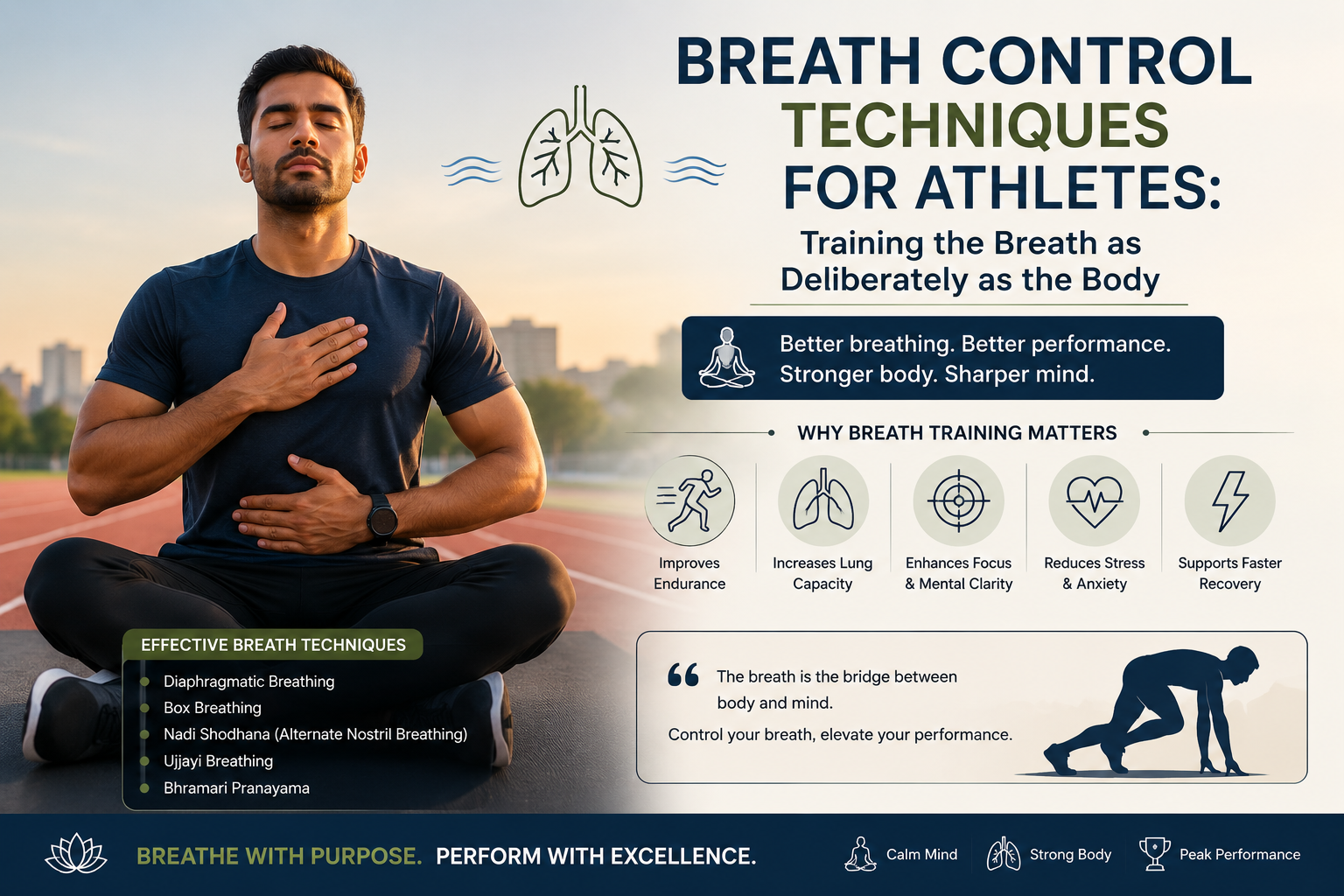
Athletes spend years refining strength, speed, and technique, yet the breath, arguably the most immediate lever available for performance, is often left almost entirely unconsidered. It’s easy to see why. Breathing happens automatically, so it rarely gets the same deliberate attention as a training block or a strength program. But among endurance runners, swimmers, strength athletes, and combat sport competitors alike, a growing body of coaching experience and research points to the same conclusion: how an athlete breathes measurably affects how well they perform, recover, and manage pressure under competition.
At Rishikesh Yog Darshan, breath control isn’t treated as a supplementary wellness practice bolted onto athletic training, it’s approached as a trainable skill in its own right, rooted in centuries of yogic pranayama and increasingly validated by modern sports science. This guide looks at why breath control matters for athletic performance, which techniques are most relevant for athletes specifically, and how to build breathing practice into a training routine without overcomplicating it.
Why Breath Control Matters for Athletic Performance
Breathing directly influences three systems central to athletic performance: oxygen delivery, nervous system regulation, and core stability. Inefficient breathing, shallow, rapid, or overly reliant on the chest rather than the diaphragm, limits how effectively oxygen reaches working muscles and how quickly carbon dioxide and metabolic waste are cleared. Under fatigue or competitive pressure, this inefficiency compounds, often showing up as early fatigue, poor pacing, or a racing heart rate that feels disproportionate to actual physical effort.
Beyond the physiological side, breath is one of the few autonomic processes an athlete can consciously influence in real time. This makes it a uniquely accessible tool for managing the nervous system’s response to competitive stress, something that’s often just as decisive as physical conditioning when the margins between winning and losing are thin.
The Core Breathing Techniques Athletes Use
Not every breathing technique serves the same purpose. Athletes generally draw on a small set of approaches, each suited to a different training or competition context:
- Diaphragmatic breathing – The foundation for nearly every other technique, diaphragmatic breathing trains the body to breathe deeply from the abdomen rather than shallowly from the chest, improving oxygen exchange and reducing unnecessary tension in the shoulders and neck during exertion.
- Box breathing – A structured pattern of equal-count inhalation, hold, exhalation, and hold, widely used by athletes and tactical professionals alike to steady the nervous system before high-pressure moments such as a race start or competition.
- Nasal breathing during low-intensity training – Many endurance coaches now incorporate nasal-only breathing during easy training sessions, since it naturally regulates pace and is associated with improved carbon dioxide tolerance over time.
- Rhythmic breath-to-movement patterns – Common in running and rowing, syncing breath count to stride or stroke rate helps maintain consistent pacing and reduces the risk of side stitches caused by erratic breathing.
- Ujjayi-style controlled breathing – Borrowed directly from yogic pranayama, this slightly constricted, audible breath is increasingly used by athletes during steady-state training to maintain focus and regulate breathing rate under sustained effort.
- Post-exertion recovery breathing – Slow, extended exhalation techniques practiced immediately after intense effort help shift the nervous system out of a stressed state more quickly, supporting faster heart rate recovery between sets or after competition.
Breath Control and Cardiovascular Endurance
Because endurance performance depends so heavily on efficient oxygen delivery, breath training has a particularly direct relationship with cardiovascular capacity. Athletes who train their breathing deliberately often report being able to sustain a given pace at a lower perceived effort, a change that reflects genuine improvements in respiratory efficiency rather than simple mental toughness.
This connection between breath and the cardiovascular system isn’t unique to elite sport. This guide on Breathing Exercises for Heart Health explains how controlled breathing supports the heart and circulatory system more broadly, offering useful context for why athletes across disciplines are increasingly treating breath training as a core part of conditioning rather than an afterthought.
Breath Control for Mental Focus and Competitive Pressure
Performance under pressure often comes down to nervous system regulation as much as physical preparation. A racing breath pattern before competition, rapid, shallow, chest-dominant, is both a symptom of and a contributor to pre-competition anxiety, often narrowing focus and impairing decision-making at precisely the moment an athlete needs clarity.
Structured breathing practices offer a direct way to interrupt that cycle. Slower, controlled breathing signals safety to the nervous system, which can meaningfully shift an athlete’s mental state within a few rounds of practice. For athletes looking to build this skill more deliberately, this resource on Pranayama for Stress Relief outlines specific breathing patterns designed to calm the nervous system quickly, techniques that translate directly to pre-competition routines, high-pressure moments mid-competition, and general stress management across a demanding training schedule.
This matters as much for team-sport athletes managing in-game pressure as it does for individual competitors preparing for a single decisive moment, a penalty kick, a final set, a start line. In both cases, the ability to consciously slow the breath for even thirty seconds can be enough to shift decision-making from a reactive, anxious state back into a focused, deliberate one, a difference that often shows up in the small margins that separate a good performance from a great one.
Building a Breath Training Routine
Breath control doesn’t require a separate hour-long practice bolted onto an already demanding training schedule. It works best woven into existing training in small, consistent doses.
- Start with five minutes of diaphragmatic breathing daily. This builds the foundational pattern nearly every other technique depends on.
- Use nasal breathing during easy training days. This is a low-effort way to build long-term respiratory efficiency without adding a dedicated session.
- Practice box breathing before competition or high-pressure training. A few minutes beforehand can noticeably steady both heart rate and focus.
- Add rhythmic breath-to-movement patterns during steady-state cardio. This builds pacing awareness that transfers directly to race-day performance.
- Use slow exhalation-focused breathing immediately after intense efforts. This supports faster recovery between intervals, sets, or competitive rounds.
- Track how it feels, not just how it looks on paper. Breath training is highly individual, and the techniques that produce the clearest benefit will vary from athlete to athlete.
Common Mistakes Athletes Make With Breath Training
Breath training is simple in principle but easy to get wrong in practice. The most common mistake is treating it as an intensity add-on rather than a skill, athletes sometimes push breathing techniques as hard as they push physical training, which defeats the purpose of practices designed to build control and efficiency rather than exertion. Another frequent error is inconsistency, expecting a handful of sessions before a major competition to produce the same benefit as months of consistent, low-effort practice. As with physical conditioning, breath control adapts gradually, and the athletes who benefit most are the ones who treat it as a genuine, ongoing part of training rather than a pre-competition trick.
Breath Control, Recovery, and Long-Term Training Load
Breath training’s value isn’t limited to the moments of competition or peak exertion. How an athlete breathes during recovery periods, between sessions, on rest days, and during sleep, plays a meaningful role in how well the body adapts to accumulated training load. Shallow, chest-dominant breathing tends to keep the nervous system in a mildly activated state even at rest, which can quietly interfere with the deep recovery that heavy training blocks depend on.
This is part of why many endurance and strength coaches now build brief, structured breathing sessions into rest days rather than treating recovery purely as an absence of training. A short block of slow, extended-exhale breathing after a hard session or before sleep can shift the nervous system out of a stressed state more efficiently than passive rest alone. Athletes managing a heavy competitive schedule, or recovering from a demanding block of training, often find this kind of breath-focused recovery valuable alongside more conventional strategies such as sleep, nutrition, and active recovery days. The broader lifestyle habits that support this kind of recovery, including those outlined in this guide on Lifestyle Changes for a Healthy Heart, tend to reinforce the same nervous system balance that breath training is designed to support.
Why Learn This From Rishikesh Yog Darshan
Rishikesh has long been a center for authentic pranayama knowledge, and the growing interest from athletes and sports scientists in breath control reflects something yogic practitioners have understood for generations, that the breath is a trainable, powerful tool rather than an incidental byproduct of effort.
Our approach to Yoga Teacher Training in Rishikesh combines traditional pranayama knowledge with a practical understanding of how breath training applies to real physical performance, not just meditation or relaxation. Students leave with both a grounded understanding of yogic breathing techniques and the ability to apply them meaningfully to athletic contexts, whether they’re training athletes themselves or building their own performance practice.
Frequently Asked Questions
1. Can breath control actually improve athletic performance?
Yes, though its effect is indirect rather than dramatic. Improved breathing efficiency supports better oxygen delivery, pacing, and nervous system regulation, all of which contribute meaningfully to performance, particularly in endurance and high-pressure competitive settings.
2. Should athletes breathe through the nose or mouth during training?
Both have a place. Nasal breathing is generally favored during low-intensity training for its efficiency benefits, while mouth breathing becomes necessary during high-intensity efforts when oxygen demand exceeds what nasal breathing alone can supply.
3. How long does it take to notice benefits from breath training?
Some effects, like reduced pre-competition anxiety, can appear within a few sessions, while deeper adaptations in respiratory efficiency and endurance typically develop over several weeks of consistent practice.
4. Is box breathing effective for pre-competition nerves?
Yes, box breathing is widely used specifically for this purpose, since its structured, even rhythm helps regulate heart rate and settle the nervous system quickly before high-pressure moments.
5. Can breath training help with side stitches during running?
Rhythmic breath-to-stride patterns are commonly recommended for this reason, since erratic or shallow breathing is often linked to the diaphragmatic cramping that causes side stitches.
6. Do strength athletes benefit from breath control as much as endurance athletes?
Yes, though the application differs. Strength athletes often use controlled breathing for intra-abdominal pressure and bracing during heavy lifts, while endurance athletes focus more on sustained respiratory efficiency and pacing.
7. Is yogic pranayama relevant to modern sports training?
Increasingly, yes. Many of the breathing principles now used in sports science, controlled rhythm, diaphragmatic engagement, nervous system regulation, closely mirror techniques that have existed within pranayama practice for centuries, and many coaches now draw directly from that tradition.
Final Thoughts
Breath control isn’t a replacement for physical training, technical skill, or strength conditioning, but it is a genuinely trainable variable that many athletes leave almost entirely unaddressed. The breath sits at the intersection of physiology and mental state, making it one of the few tools that influences both oxygen delivery and competitive composure at the same time.
For athletes willing to treat breath training with the same consistency given to any other part of preparation, the payoff tends to be quiet but real: steadier pacing, faster recovery, and a nervous system that holds up better when the pressure of competition arrives. It’s not a shortcut, but it is one of the more accessible, underused tools available for genuine performance improvement.
