 Skip to content
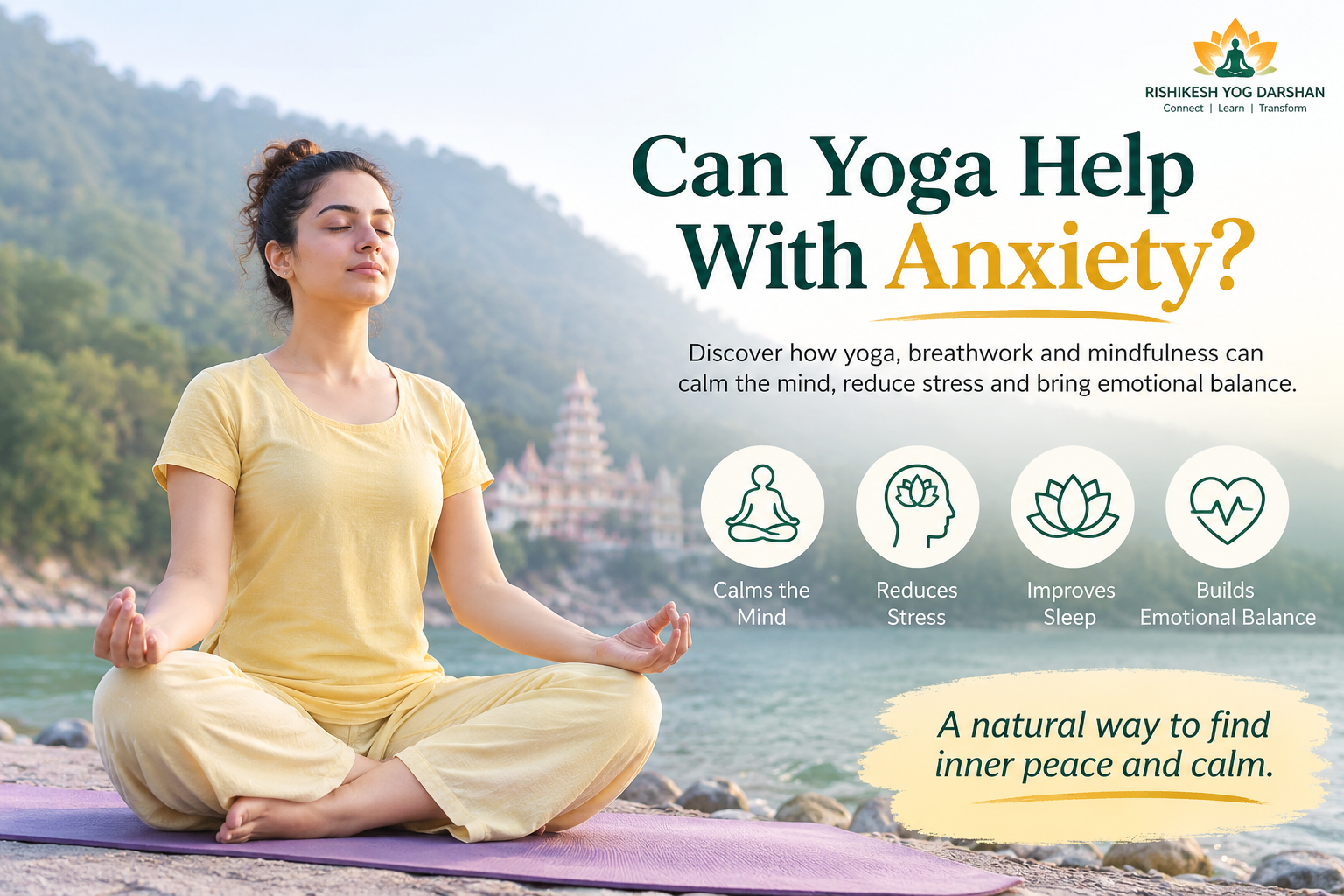
An informational guide to what yoga can genuinely offer for anxiety — covering how anxiety shows up in the body, where the evidence for yoga is strongest, and where popular claims about yoga “curing” anxiety outpace the science.
Yoga is frequently presented as a natural remedy for anxiety, sometimes with the suggestion that a regular practice can replace therapy or medication altogether. The more accurate picture is more modest and, for most people, more useful: yoga can meaningfully support the nervous system regulation that anxiety disrupts, offering real, evidence-backed tools for managing anxious symptoms, without functioning as a stand-alone cure for a diagnosed anxiety disorder. Its genuine value lies in what it reliably does — calming physiological arousal, building body awareness, and interrupting anxious patterns before they escalate.
This guide walks through how anxiety affects the body, what the research actually shows about yoga’s role, and how to build a realistic practice that supports anxiety management without over-promising.
1. What Anxiety Actually Is
Anxiety is a normal human response to perceived threat or uncertainty, involving both psychological features, such as worry and racing thoughts, and physical ones, including a faster heart rate, shallow breathing, and muscle tension. It becomes a clinical concern when it is persistent, disproportionate to the situation, or interferes meaningfully with daily life, at which point it may meet the criteria for a diagnosed anxiety disorder. This distinction matters because yoga’s evidence base is strongest for everyday, situational anxiety and stress, and more limited, though still relevant as a complementary tool, for diagnosed anxiety disorders that typically require professional treatment.
2. How Anxiety Shows Up in the Body
Anxiety is not purely a mental experience; it activates the body’s sympathetic nervous system, the fight-or-flight response, producing a faster heart rate, shallow chest breathing, muscle tension, and a heightened state of alertness. This physical activation can persist even after the triggering thought has passed, which is part of why anxiety can feel like it has a life of its own, separate from whatever originally caused it. Because this response is physical as much as mental, body-based practices like yoga have a genuine, direct route to influencing it, rather than working on anxiety through thought alone.
3. What the Research Actually Shows on Yoga and Anxiety
A substantial body of research has examined yoga’s effect on anxiety, and the overall picture is more consistently positive here than for many other mental health outcomes yoga is associated with. Multiple systematic reviews report moderate reductions in both self-reported anxiety symptoms and physiological markers of stress among regular yoga practitioners, with some studies showing effects comparable to other forms of moderate exercise. As with most yoga research, study quality varies, sample sizes are often modest, and results are not uniform across every style or population studied. The fair summary is that yoga appears to be a genuinely effective complementary tool for anxiety, particularly everyday and situational anxiety, though it is not established as a stand-alone treatment for diagnosed anxiety disorders.
4. Breathwork: The Most Direct Anxiety Tool in Yoga
Breath regulation is one of the most consistently studied and most immediately useful tools yoga offers for anxiety, since breath is one of the few autonomic processes a person can consciously influence. Slow, extended exhalation and diaphragmatic breathing activate the parasympathetic nervous system, which can measurably reduce heart rate and physiological arousal within minutes, making it genuinely useful in the moment anxiety spikes, not only during a formal practice session. This is often the first and most accessible tool taught to people using yoga specifically for anxiety management, since it requires no equipment and can be used almost anywhere.
5. Movement-Based Yoga and Anxious Energy
Anxious energy often has a physical, restless quality, and movement-based styles of yoga appear to offer that energy somewhere constructive to go. Structured, breath-linked sequences combine physical exertion with focused attention in a way that many practitioners describe as helping settle a racing mind more effectively than stillness alone, particularly for people whose anxiety shows up as physical restlessness or an inability to sit quietly. The moderate physical exertion involved also has a mild, well-documented mood-lifting effect similar to other forms of exercise.
6. Restorative Yoga and the Anxious Nervous System
For anxiety driven by chronic overstimulation or a persistently activated nervous system, gentler, restorative styles often serve a different and equally important purpose. Long-held, well-supported postures combined with slow breathing and guided relaxation ask very little physical effort while still engaging the nervous system pathways associated with rest and recovery, which can be particularly useful for anxiety that shows up as exhaustion or a persistent inability to switch off.
7. Meditation, Mindfulness, and Anxious Thought Patterns
Much of anxiety’s persistence comes from repetitive, future-focused worry, and the meditative component of yoga appears to directly address this pattern. Paying sustained, non-judgemental attention to the breath or body sensations, rather than following each anxious thought, appears to reduce rumination and improve the ability to notice an anxious thought without being swept up in it. This attentional skill, often described as present-moment awareness, is one of the more consistently supported mechanisms linking yoga and meditation to reduced anxiety across otherwise varied research.
8. Immersive Practice: Retreats and Deeper Reset
For some people, particularly those dealing with prolonged or heightened anxiety, a short daily practice is a useful maintenance tool, but a more immersive experience can offer a deeper reset that is harder to achieve in fragmented daily sessions. Sustained time away from usual routines and stressors, combined with structured practice, appears to allow the nervous system a more complete opportunity to downregulate than an occasional class typically permits.
A first-hand account of a Spiritual Retreat Experience in India offers a sense of what this kind of immersive reset can involve, including the structure, pacing, and reflective space that a well-designed retreat typically provides.
For anxiety with a strong physical or stress-related component, an Ayurveda and Yoga Retreat in India combines yogic practice with complementary Ayurvedic approaches to rest and recovery, which some practitioners find helpful for addressing anxiety that shows up through the body as much as the mind.
9. Building a Realistic Yoga Practice for Anxiety
A yoga practice that genuinely supports anxiety management tends to be consistent and varied rather than intense or narrowly focused, and a few general principles apply broadly to building one.
- Start with breath-focused techniques, since they offer the fastest, most accessible route to reducing physiological arousal in the moment.
- Combine movement-based and restorative styles depending on whether anxiety shows up as restlessness or exhaustion.
- Practise regularly, even briefly, since consistency over weeks tends to matter more than the length of any single session.
- Pair physical practice with a meditative or mindfulness component, since this appears to address the thought patterns that sustain anxiety.
- Treat yoga as one part of a broader approach to anxiety, alongside sleep, professional support, and other lifestyle factors where relevant.
10. Who Should Be Cautious
While gentle yoga is broadly safe and beneficial for most people managing everyday anxiety, it is not an adequate stand-alone response to a diagnosed anxiety disorder, panic disorder, or anxiety accompanied by significant functional impairment. Anyone experiencing frequent panic attacks, an inability to function at work or in daily life, or anxiety accompanied by depressive symptoms or thoughts of self-harm needs evaluation and support from a qualified mental health professional. Some vigorous or breath-intensive practices can also be overstimulating for certain anxious individuals, so starting gently and adjusting based on how the body responds is generally the safer approach.
11. Red Flags in Yoga and Anxiety Claims
A few common red flags tend to signal claims about yoga and anxiety that outpace the evidence.
- Suggestions that yoga alone can cure a diagnosed anxiety disorder or panic disorder without other support.
- Encouragement to stop or reduce prescribed anxiety medication or therapy in favour of a yoga practice.
- Promises of rapid, dramatic anxiety relief from a single class, workshop, or short retreat.
- Vague claims about yoga eliminating anxiety permanently or “curing” it as though it were a one-time fixable problem rather than something to be managed over time.
12. Learning Yoga Properly for Long-Term Anxiety Support
Because the right pacing, style, and teaching approach genuinely matter for someone using yoga to manage anxiety, learning from a properly trained teacher, in a setting suited to sustained practice, tends to produce better long-term outcomes than an occasional generic class. It is worth understanding why certain places have become associated with this kind of dedicated learning environment in the first place.
An explanation of Why Rishikesh is Called the Yoga Capital of the World offers useful context on the depth of traditional teaching and structured practice available in a place with this kind of long-standing yogic heritage.
For anyone considering more structured, longer-term training as a way of deepening their own practice for anxiety management, a guide to What to Expect from a 200 Hour Yoga Teacher Training in Rishikesh outlines the kind of sustained, immersive learning that can build genuinely useful, lasting skills well beyond what a single class typically offers.
13. Safety Notes and When to See a Professional
Yoga can be a genuinely useful, evidence-supported tool for managing anxiety, but it should never replace appropriate diagnosis or treatment for an anxiety disorder.
- Diagnosed anxiety disorders, panic disorder, or generalised anxiety should continue to be managed by a qualified professional, with yoga used as a complement, not a replacement.
- Frequent panic attacks or anxiety that significantly interferes with daily functioning should be evaluated by a professional rather than addressed through yoga alone.
- If a practice unexpectedly increases anxiety or brings on panic-like symptoms, it is appropriate to stop, seek support, and inform a teacher.
- Thoughts of self-harm should always be addressed with immediate professional support rather than through any self-directed practice.
Frequently Asked Questions (FAQs)
Q1. Can yoga replace anxiety medication?
No. Yoga can meaningfully support anxiety management, but current evidence supports it as a complement to, not a replacement for, prescribed medication or therapy in diagnosed conditions.
Q2. What type of yoga is best for anxiety?
It depends on how anxiety shows up: movement-based styles tend to help with restless, physical anxiety, while restorative and breath-focused styles tend to help with anxiety linked to overstimulation or exhaustion.
Q3. How quickly can yoga reduce anxiety?
Breathing techniques can reduce physiological arousal within minutes, but broader improvements in anxiety symptoms generally build over weeks of consistent practice rather than appearing after a single session.
Q4. Is yoga alone enough for a diagnosed anxiety disorder?
No. Yoga appears to be a useful complementary tool, but diagnosed anxiety disorders generally require professional treatment, with yoga used alongside that care rather than instead of it.
Q5. Why does breathing matter so much for anxiety specifically?
Breath is one of the few autonomic functions a person can consciously control, and slow, regulated breathing directly reduces the physiological arousal that underlies much of the anxious experience.
Q6. Can yoga make anxiety worse?
For some people, certain practices, particularly vigorous or breath-intensive ones, can feel overstimulating, so starting gently and adjusting based on how the body responds is generally the safer approach.
Q7. What is the most evidence-based way to think about yoga’s role in anxiety?
The most accurate framing is that yoga supports nervous system regulation and body awareness in ways that genuinely help manage anxiety, working alongside, not instead of, professional care when it is needed.
Final Thoughts
Anxiety is a normal, if uncomfortable, part of the human stress response, and the most honest view of yoga’s role is a supportive one: calming physiological arousal, building awareness of anxious patterns, and offering practical tools that can be used in the moment, rather than curing anxiety outright. This is a more modest picture than some wellness marketing suggests, but it is also a more sustainable and realistic one.
Approached consistently, and alongside professional support where needed, yoga offers a genuinely useful, low-risk way to support anxiety management over the long term.
