 Skip to content
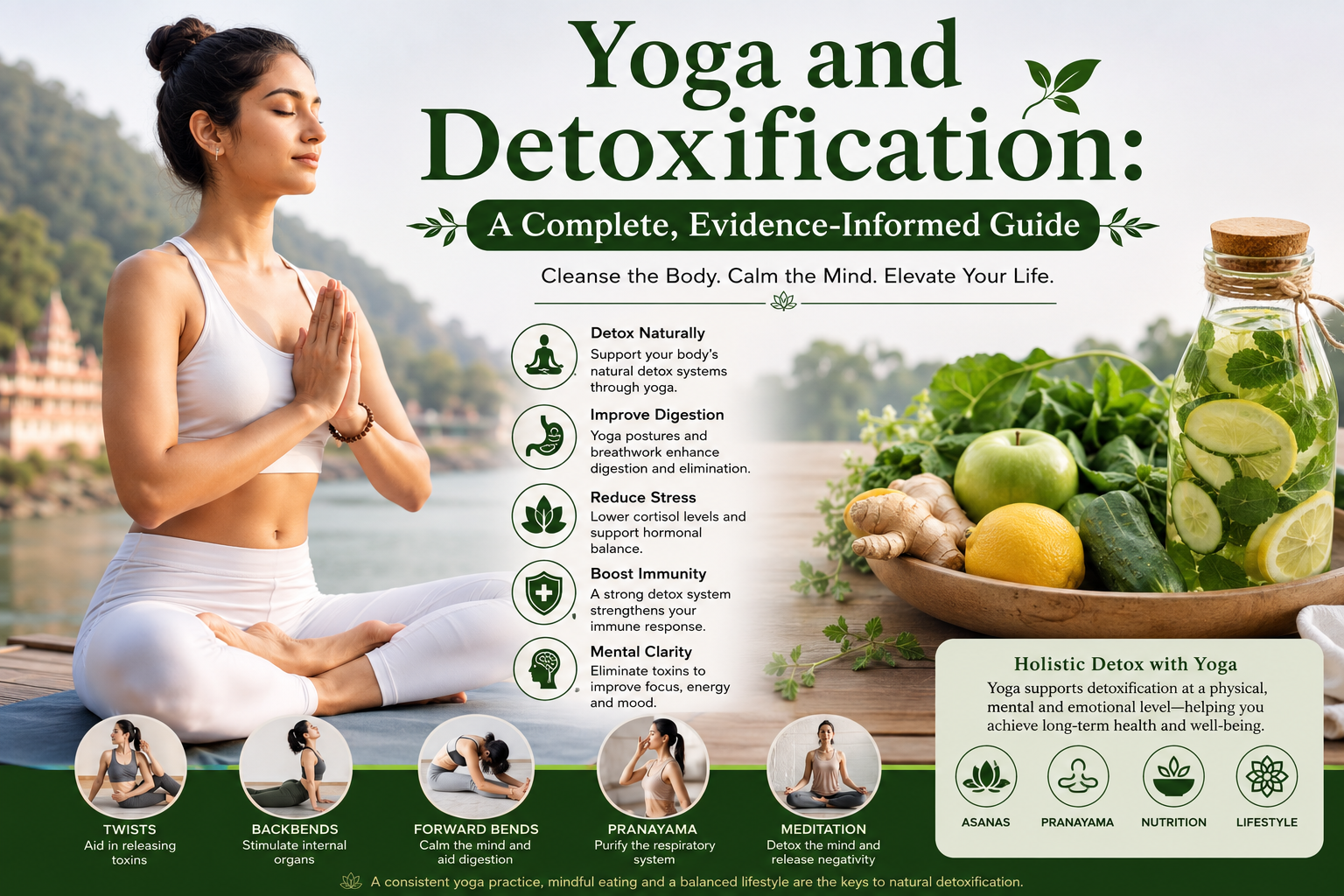
An informational guide to what yoga can and cannot do for the body’s natural detoxification processes — covering how the liver, kidneys, and lymphatic system actually work, where yoga genuinely helps, and where popular “detox” claims outpace the evidence.
“Detox” is one of the most widely used, and widely misunderstood, terms in the wellness world, often attached to juice cleanses, specific yoga sequences, or dramatic claims about flushing toxins from the body in a matter of days. The reality is both less dramatic and, in some ways, more reassuring: the human body already has a highly sophisticated, continuously operating detoxification system, built primarily around the liver, kidneys, lungs, skin, and lymphatic system, and no single practice — yoga included — replaces or dramatically accelerates this built-in process.
This guide walks through how the body’s actual detoxification systems work, where yoga has a genuine, evidence-aligned role to play in supporting them, and where popular claims about yoga “detoxing” the body go further than the science supports. Yoga is not a substitute for medical care, and it does not remove toxins from the body in the way many wellness marketing claims suggest, but it is one of the more thoroughly researched complementary practices available for supporting the systems that already do this work.
1. How the Body Actually Detoxifies Itself
The liver is the body’s primary detoxification organ, filtering the blood and breaking down or neutralising a wide range of substances, from metabolic byproducts to medications and environmental toxins, before they are excreted. The kidneys filter blood continuously to remove waste products and excess substances through urine, the lungs eliminate carbon dioxide and certain volatile compounds with every breath, and the skin and lymphatic system play supporting roles in this larger, coordinated system. These organs work around the clock, and a healthy person’s body is, in a very real sense, detoxifying itself constantly, without needing a special programme to activate the process.
2. Why the Popular Idea of “Toxins” Is Often Vague
Much of the marketing around detox products and programmes relies on the word “toxins” without specifying what substance is actually being referred to, how it is measured, or what evidence exists that a particular product or practice removes it. This vagueness is a useful signal: legitimate medical concerns about toxic exposure, such as heavy metal poisoning or specific chemical exposures, are diagnosed and treated through specific medical protocols, not through general wellness practices, and any product or programme claiming to remove unspecified “toxins” should be approached with a healthy degree of scepticism.
3. What Yoga Genuinely Supports: Circulation and Lymphatic Flow
One area where yoga’s relevance to detoxification pathways is genuinely supported, rather than overstated, is circulation and lymphatic flow. Unlike the circulatory system, which has the heart as a central pump, the lymphatic system relies largely on muscle movement and breathing to move lymph fluid, which carries immune cells and waste products, through the body. Regular movement, including yoga postures that involve gentle inversion, twisting, and muscular engagement, can support this lymphatic flow, which is a legitimate, if modest, mechanism by which physical activity supports the body’s existing detoxification infrastructure.
4. Twisting Postures and the Popular “Wringing Out” Idea
Twisting postures are frequently described in yoga teaching as “wringing out” the internal organs, a vivid metaphor for the idea that compression and release during a twist stimulates circulation to the abdominal organs, including the liver and kidneys. This metaphor captures something real — twisting postures do support abdominal circulation — but it should not be taken literally as evidence that a twist physically squeezes toxins out of an organ. The genuine mechanism is improved blood flow supporting organs that already handle detoxification, not a mechanical wringing-out process.
5. Sweating: A Minor, Often Overstated Detox Pathway
Vigorous yoga practice, particularly in a heated room, produces noticeable sweating, which is sometimes marketed as a significant detoxification benefit. In reality, sweat is composed overwhelmingly of water and electrolytes, and the kidneys and liver handle the vast majority of the body’s detoxification workload; sweating plays only a very minor role in eliminating specific toxic compounds. Sweating during yoga is a normal physiological response to heat and exertion, and while it is not harmful, it should not be relied upon as a primary detoxification strategy, and adequate hydration is important to replace fluids lost this way.
6. Breath Work and Its Genuine Role in Detoxification
Among the body’s detoxification pathways, the lungs offer one of the clearest, most direct connections to yoga practice, since breathing is quite literally how the body eliminates carbon dioxide and certain volatile compounds with every exhalation. Pranayama for Stress Relief explores breath-regulation techniques that support fuller, more efficient breathing, and while pranayama does not accelerate detoxification beyond what normal respiration already accomplishes, supporting healthy lung function and full, unrestricted breathing is a genuine, evidence-aligned benefit rather than an exaggerated claim.
7. Stress, Cortisol, and the Body’s Detoxification Capacity
Chronic stress does have a documented, if indirect, relationship to the body’s detoxification systems, since prolonged elevation of stress hormones such as cortisol can affect liver function, digestion, and immune activity over time. This is where yoga’s well-established stress-reduction effect becomes genuinely relevant to detoxification, not by directly removing toxins, but by supporting the physiological conditions — reduced chronic stress, better sleep, and improved digestive function — in which the liver, kidneys, and immune system are able to do their existing jobs more effectively.
8. Restorative Practice and Whole-Body Recovery
Because sleep and deep rest play a significant, well-documented role in the body’s overnight repair and regulatory processes, restorative practice deserves genuine mention in any evidence-based discussion of detoxification support. Guided relaxation in the style of Yoga Nidra in Rishikesh supports the kind of deep parasympathetic rest that complements the body’s natural overnight metabolic and regulatory activity, offering a genuinely useful, low-risk practice for anyone seeking to support their body’s existing systems rather than search for a shortcut that does not exist.
9. Traditional Ayurvedic Perspectives on Detoxification
Traditional systems such as Ayurveda have long included practices aimed at supporting the body’s natural cleansing processes, often through bodywork, dietary adjustment, and seasonal routine rather than the dramatic short-term cleanses common in modern wellness marketing. An Ayurvedic Massage Course in Rishikesh typically introduces these traditional bodywork techniques, which are often framed as supporting circulation and the body’s own systems, in a manner more consistent with the evidence-aligned view of detoxification described throughout this guide than with modern, dramatic “detox” marketing.
10. Red Flags in Detox Programmes and Products
Anyone considering a yoga-related or wellness “detox” programme should watch for a few common red flags, which often signal claims that outpace the evidence:
- Promises of rapid, dramatic results, such as significant weight loss or a complete internal “cleanse” within a matter of days.
- Vague references to unspecified “toxins” without any explanation of what substance is involved or how it is measured.
- Programmes that involve prolonged fasting, restrictive juice cleanses, or laxative use without medical supervision.
- Claims that a specific yoga posture, breathing technique, or product can remove toxins that the liver and kidneys do not already handle.
11. Building a Realistic, Evidence-Aligned Routine
A yoga routine genuinely supportive of the body’s detoxification systems looks less like a dramatic cleanse and more like sustainable, everyday habits. A few general principles apply broadly:
- A regular practice combining gentle twists, movement, and breath work to support circulation and lymphatic flow.
- Daily pranayama to support full, efficient breathing and stress regulation.
- Regular restorative practice or Yoga Nidra to support the deep rest the body’s regulatory systems depend on.
- Adequate hydration, a balanced diet, and regular movement throughout the day, since these fundamentals do far more for the body’s detoxification capacity than any single yoga sequence or short-term cleanse.
12. Safety Notes and When to See a Doctor
Yoga can be a genuinely useful complementary practice for supporting the systems involved in detoxification, but it should never be used in place of appropriate medical care. A few guidelines apply broadly:
- Concerns about actual toxic exposure, such as heavy metal or chemical exposure, should be evaluated and treated by a doctor through appropriate medical testing and protocols, not through general wellness practices.
- Diagnosed liver, kidney, or metabolic conditions should continue to be managed under a doctor’s care, with yoga used as a complement rather than a replacement.
- Extreme detox programmes involving prolonged fasting or laxative use should be avoided without direct medical supervision, given the risk of dehydration and electrolyte imbalance.
- Persistent fatigue, digestive symptoms, or other concerns someone hopes a “detox” will resolve should be evaluated by a doctor to identify the underlying cause, rather than addressed through an unproven cleanse.
13. Learning These Practices Properly
Because separating genuine, evidence-aligned benefits from overstated wellness marketing requires a solid understanding of both yoga and basic physiology, learning from a qualified teacher who takes this distinction seriously makes a meaningful difference. A structured Yoga Teacher Training in Rishikesh programme typically covers the physiological basis of yoga’s benefits alongside traditional philosophy, offering a grounded, well-rounded understanding of what yoga can genuinely offer, for those with no interest in teaching professionally as much as for aspiring teachers.
Frequently Asked Questions (FAQs)
Q1. Does yoga actually detox the body?
Not in the literal sense often implied by wellness marketing. The liver, kidneys, and other organs already handle detoxification continuously, and yoga supports the circulation, stress regulation, and sleep quality that help these systems function well, rather than removing toxins directly itself.
Q2. Do twisting poses really “wring out” toxins from the organs?
This is a helpful teaching metaphor rather than a literal physiological description. Twists do support abdominal circulation, which is a genuine benefit, but there is no evidence that twisting mechanically squeezes toxins out of specific organs.
Q3. Does sweating during a hot yoga class detoxify the body?
Sweat is composed mostly of water and electrolytes, and plays only a very minor role in eliminating toxic compounds compared to the liver and kidneys, so sweating should not be relied upon as a primary detox strategy, though staying hydrated afterward is important.
Q4. Are juice cleanses or detox teas a good complement to a yoga-based detox routine?
Most juice cleanses and detox teas are not well supported by evidence, and some, particularly those involving laxatives or prolonged fasting, carry genuine risks such as dehydration and electrolyte imbalance, so they are generally not recommended without medical supervision.
Q5. Can yoga help with fatigue or brain fog that I suspect is caused by toxin buildup?
Persistent fatigue or brain fog can have many possible causes, and while yoga can support general wellbeing and stress management, symptoms like these are best evaluated by a doctor to identify the underlying cause rather than attributed to unproven toxin buildup.
Q6. Is there any legitimate connection between yoga and the lymphatic system?
Yes. Unlike blood circulation, lymphatic flow relies significantly on muscle movement and breathing, so regular physical activity, including yoga, can genuinely support lymphatic circulation, which is a real and evidence-aligned benefit.
Q7. What is the most evidence-based way to think about yoga’s role in detoxification?
The most accurate framing is that yoga supports the systems, particularly circulation, stress regulation, and sleep, that allow the liver, kidneys, and lymphatic system to do the detoxification work they already perform continuously, rather than yoga performing detoxification on its own.
Final Thoughts
The body’s detoxification systems are remarkably capable on their own, and the most honest, evidence-aligned view of yoga’s role here is a supportive one: helping circulation, easing chronic stress, and supporting the deep rest these systems depend on, rather than performing some dramatic cleansing function of its own. This is, in many ways, a more reassuring picture than the marketing around quick fixes suggests.
Approached with realistic expectations, alongside a balanced diet, adequate hydration, and medical guidance where needed, yoga offers a genuinely useful, sustainable way to support the body’s own detoxification systems over the long term.
