 Skip to content
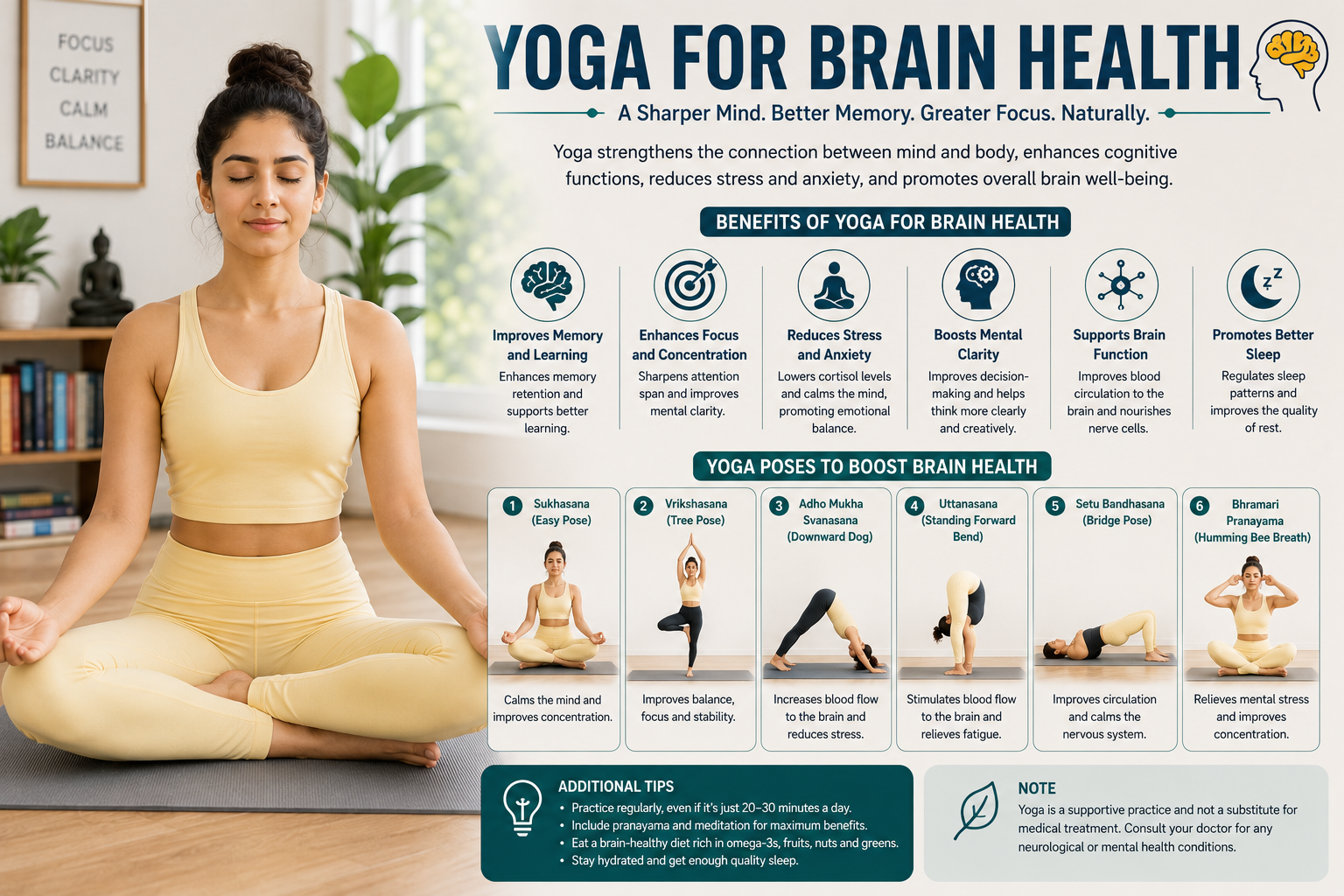
An informational guide to what yoga can and cannot do for brain health — covering how the brain actually changes with age and lifestyle, where movement, breath, and meditation-focused practices genuinely help, and where popular claims about yoga “preventing” dementia or “rewiring” the brain outpace the evidence.
Concerns about memory, focus, and long-term brain health send many people looking for natural ways to protect their cognitive function, and yoga is often part of that search, sometimes marketed with claims that a particular sequence or breathing pattern can prevent dementia or dramatically rewire the brain. The more accurate picture is more modest: brain health depends on a complex mix of genetics, cardiovascular health, sleep, social connection, and lifestyle factors accumulated over decades, and no yoga practice guarantees protection from cognitive decline or reverses an existing neurological condition.
What yoga can genuinely offer is support for several of the modifiable factors known to matter for brain health, including stress, sleep, blood pressure, and physical activity, alongside some direct evidence of modest cognitive benefits from regular practice, a real and useful role that falls well short of the more dramatic claims often made about it. This guide walks through how brain health actually works, where yoga has an evidence-aligned role, and where popular claims go further than research supports. Yoga is not a substitute for medical care, and anyone concerned about memory changes or cognitive decline should treat it as a complement to, not a replacement for, proper medical evaluation.
1. What Actually Shapes Brain Health Over Time
Brain health over the course of a lifetime is shaped by a wide mix of factors, including genetics, cardiovascular health, blood pressure, blood sugar regulation, sleep quality, social engagement, and cumulative exposure to stress, among others. Vascular health matters a great deal, since the brain depends on steady blood flow, and conditions like high blood pressure and diabetes are recognised risk factors for cognitive decline. Chronic, poorly managed stress is associated with changes in stress hormone levels that may affect brain regions involved in memory over time. Understanding this wide, multi-factor picture clarifies what yoga can realistically do: support several of these modifiable factors simultaneously, not act as a single, targeted brain-health intervention on its own.
2. Why Claims That Yoga “Prevents Dementia” or “Rewires the Brain” Go Too Far
It is easy to find wellness content suggesting a specific yoga sequence can prevent dementia, dramatically rewire brain structure, or reverse cognitive decline. These claims are not well supported. Dementia has multiple underlying causes, some of which are not fully preventable through lifestyle changes alone, and while the brain does retain a capacity for change throughout life, known as neuroplasticity, this does not mean any single practice produces dramatic, guaranteed structural change. The more accurate picture is that yoga can be a genuinely helpful complementary practice supporting several modifiable brain-health factors, offering modest, real benefits without replacing appropriate medical care or guaranteeing protection from any specific neurological condition.
3. What the Research Actually Shows
Research on yoga and cognitive function is a growing area, with several small studies suggesting that regular practice, including movement, breath work, and meditation, is associated with modest improvements in attention, working memory, and processing speed in some populations, particularly older adults. A small number of neuroimaging studies have reported changes in certain brain regions associated with attention and emotional regulation following sustained meditation practice, though sample sizes are generally small and results need replication in larger studies. Evidence specifically for yoga preventing dementia or Alzheimer’s disease is far more limited and largely indirect, working through yoga’s established effects on stress, blood pressure, and sleep rather than any documented direct action on disease pathology. The fair summary: yoga has genuine, modest, evidence-aligned potential to support cognitive function and several brain-health risk factors, while broader claims about preventing dementia or dramatically rewiring the brain outpace what has actually been studied.
4. Stress, Cortisol, and the Brain
Chronic stress is associated with sustained elevation of stress hormones such as cortisol, which over long periods may affect brain regions involved in memory and emotional regulation. This is one of the more genuinely evidence-aligned connections between yoga and brain health: not that yoga directly protects brain tissue, but that its well-established stress-reduction effects may help limit the cumulative impact of chronic stress on the brain over time.
A gradual, structured approach to stress-reducing breath work, of the sort covered in Pranayama for Stress Relief, offers a sensible starting point for supporting this aspect of brain health.
5. Sleep, Rest, and Cognitive Function
Sleep plays a central role in memory consolidation and overall brain health, and both insufficient and poor-quality sleep are associated with impaired cognitive performance and, over the long term, increased risk factors for cognitive decline. Restorative yoga practices that support relaxation and easier sleep onset may offer indirect benefit for brain health by addressing this well-established, modifiable factor.
This relationship between deep rest and the nervous system is discussed further in Yoga Nidra in Rishikesh, which explores how deep restorative practice supports the kind of rest the body’s regulatory systems, including the brain, depend on.
6. Movement, Balance, and Brain-Body Connection
Physical activity more broadly is one of the most consistently supported lifestyle factors for brain health, since regular movement supports cardiovascular function, which in turn supports healthy blood flow to the brain. Yoga’s balance-focused postures also engage attention and coordination in ways that may offer modest cognitive engagement alongside physical benefit, particularly relevant for older adults where balance practice also supports fall prevention, itself an important consideration for long-term brain health given the risks associated with head injury.
7. Meditation, Attention, and Mental Clarity
Of all the components of yoga practice, focused meditation and attention-training techniques have some of the more consistent evidence for supporting attention and emotional regulation, which many practitioners experience subjectively as improved mental clarity and focus. This is a genuinely evidence-aligned area, though it should be understood as supporting attention and stress regulation rather than treating any specific cognitive or neurological condition.
Traditional contemplative approaches, such as those explored in Jnana & Karma Yoga in Rishikesh, have long emphasised sustained attention and self-inquiry as central practices, which aligns with the modern evidence base around meditation and attentional control.
The broader relationship between yoga practice and psychological wellbeing is discussed further in Yoga for Mental Health in Rishikesh, which looks at how yoga supports mental wellbeing more generally.
8. Practices and Situations to Approach With Caution
Not every yoga practice suits every situation when brain health or cognitive concerns are involved. Anyone experiencing new, sudden, or rapidly worsening memory problems, confusion, disorientation, or personality changes should be evaluated by a doctor promptly rather than addressing the concern with yoga alone, since these can signal a range of medical conditions requiring diagnosis. Balance-focused postures should be practised with appropriate support and modification for older adults or anyone with a fall risk, and vigorous inverted postures may not be appropriate for people with uncontrolled blood pressure or certain cardiovascular conditions without individual guidance.
9. Building a Safe, Realistic Practice
A yoga practice that genuinely supports brain health looks consistent and varied, targeting several modifiable factors rather than relying on any single technique.
- Practise regular, moderate movement alongside breath work, since cardiovascular health is one of the most consistently supported brain-health factors.
- Include a consistent meditation or focused-attention practice, even briefly, given its evidence for supporting attention and emotional regulation.
- Use restorative practice to support sleep quality, given sleep’s central role in memory consolidation.
- Learn balance and movement practices safely from a qualified teacher, ideally trained through a structured Yoga Teacher Training in Rishikesh programme, particularly for older adults or anyone with a fall risk.
- Treat yoga as one part of a broader brain-health approach that includes cardiovascular care, social connection, and medical follow-up for any new symptoms.
10. Traditional Yogic Perspectives on the Mind
Traditional yogic philosophy has long treated the mind and its capacity for clarity, attention, and self-awareness as central subjects of practice, well before modern neuroscience described the underlying brain mechanisms involved. This traditional framing, which links sustained attention and self-inquiry to overall wellbeing, aligns reasonably well with the modern evidence base around meditation, attention, and stress regulation described throughout this guide.
A structured Best Yoga School in Rishikesh typically teaches this fuller range of contemplative practice alongside the physiological grounding needed to understand what these techniques can genuinely offer for supporting brain health over time.
11. Red Flags in Yoga-for-Brain-Health Claims
A few common red flags tend to signal claims about yoga and brain health that outpace the evidence.
- Suggestions that a specific sequence can prevent or reverse dementia or Alzheimer’s disease.
- Claims that meditation dramatically “rewires” the brain within days or weeks.
- Encouragement to substitute yoga for appropriate medical evaluation of new or worsening memory problems.
- Vague claims that a practice “detoxifies the brain” without any explanation of the underlying mechanism.
12. Learning These Practices Properly
Because separating genuine, evidence-aligned cognitive benefit from overstated wellness marketing requires understanding both technique and the broader, multi-factor picture of brain health, learning from a properly trained teacher makes a real difference.
A structured Yoga TTC India programme typically covers meditation, breath work, and movement alongside broader yogic philosophy, offering a grounded understanding of what these techniques can genuinely offer for supporting brain health.
Safety Notes and When to See a Doctor
Yoga and related movement, breath, and meditation-focused practices can genuinely support several brain-health factors, but they should never replace appropriate medical diagnosis or treatment.
- New, sudden, or rapidly worsening memory problems, confusion, or personality changes require prompt medical evaluation.
- Uncontrolled blood pressure or a diagnosed cardiovascular condition warrants guidance from a clinician before beginning vigorous or inverted yoga practices.
- Older adults or anyone with a fall risk should practise balance postures with appropriate support and modification.
- Family history of dementia or existing risk factors deserve discussion with a doctor about a comprehensive, individualised prevention plan.
Frequently Asked Questions (FAQs)
Q1. Can yoga prevent dementia?
No single practice can guarantee prevention. Dementia has multiple underlying causes, and yoga can support several modifiable risk factors, such as stress, sleep, and blood pressure, but it does not replace medical evaluation or guarantee protection from cognitive decline.
Q2. Does meditation actually change the brain?
Some studies suggest sustained meditation practice is associated with changes in brain regions involved in attention and emotional regulation, though sample sizes are generally small and this should be read as promising rather than dramatic or definitive.
Q3. What is the strongest evidence-based connection between yoga and brain health?
Yoga’s well-documented effects on stress, sleep, and cardiovascular health are the most consistently supported pathways through which it may support brain health over time, rather than any direct action on brain tissue.
Q4. Is yoga safe for older adults concerned about memory?
Generally yes, particularly gentle movement, balance work, and meditation, though anyone with new or worsening memory symptoms should be evaluated by a doctor rather than relying on yoga alone, and balance postures should be modified appropriately for fall risk.
Q5. Can yoga improve focus and attention?
There is reasonably good evidence that regular meditation and attention-focused practice can offer modest improvements in attention and working memory for many people, making this one of the better-supported cognitive benefits of yoga.
Q6. Should yoga replace medical evaluation for memory concerns?
No. New or worsening memory problems should always be evaluated by a doctor, since they can have several possible causes, and yoga should be used alongside, not instead of, appropriate medical care.
Q7. What is the most evidence-based way to think about yoga’s role in brain health?
The most accurate framing is that yoga supports several modifiable brain-health factors, including stress, sleep, cardiovascular health, and attention, working alongside, not instead of, appropriate medical care and a broader healthy lifestyle.
Final Thoughts
Brain health depends on a wide, interconnected set of factors built up over a lifetime, and the most honest, evidence-aligned view of yoga’s role is a supportive one: helping with stress, sleep, cardiovascular health, and attention, rather than preventing dementia or dramatically rewiring the brain on its own. This is a more modest picture than some wellness marketing suggests, but it is also a safer and more realistic one.
Approached consistently, alongside appropriate medical care and a broader healthy lifestyle, yoga can offer many people a genuinely useful, low-risk way to support their brain health over the long term.
