 Skip to content
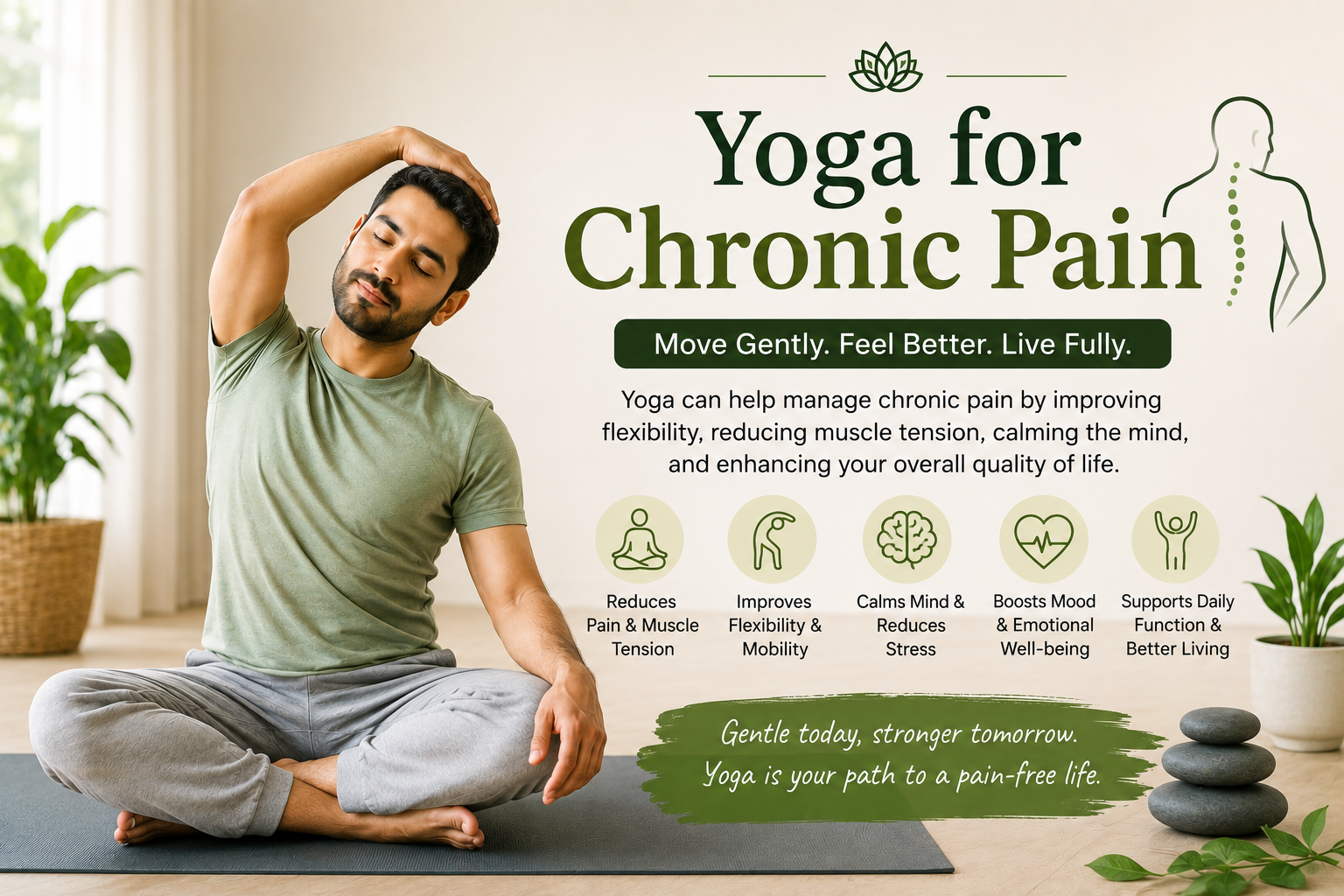
Chronic pain is fundamentally different from the pain of a fresh injury. It persists long after tissue has healed, or sometimes without any clear injury at all, and it often reshapes daily life in ways that go far beyond the physical sensation itself, affecting sleep, mood, and overall quality of life. Conventional medical care remains essential for managing chronic pain, but a growing number of people are also turning to yoga as a sustainable, evidence-supported complement to their existing treatment.
At Rishikesh Yog Darshan, this connection between movement, breath, and pain isn’t a new discovery shaped by modern wellness culture. Traditional yogic practice has always treated the nervous system, breath, and physical body as deeply interconnected, an understanding that current pain research is increasingly validating. This blog looks closely at what research says about yoga and chronic pain, which practices tend to offer the most consistent relief, and how anyone managing persistent pain can build a gentle, sustainable routine that supports the body’s long-term resilience rather than temporary relief alone.
Understanding Chronic Pain and Why It’s Different
Chronic pain is generally defined as pain that persists for three months or longer, often continuing well beyond the expected healing time for an underlying injury or condition. In many cases, chronic pain involves changes in how the nervous system processes pain signals themselves, meaning the pain experience can become somewhat independent of ongoing tissue damage.
This distinction matters because it changes how chronic pain is best approached. Where acute pain typically responds to rest and targeted treatment, chronic pain often requires a broader strategy that addresses the nervous system’s heightened sensitivity, alongside any structural or physical contributors. This is part of why chronic pain management increasingly incorporates practices that calm and retrain the nervous system, rather than focusing solely on the site of pain itself.
Stress and chronic pain are also closely intertwined. Persistent pain naturally elevates stress and anxiety, and in turn, chronic stress can heighten pain sensitivity, creating a cycle that can be difficult to interrupt through physical treatment alone. This is precisely where yoga’s combined approach, addressing both body and nervous system together, becomes particularly relevant.
The Yoga-Pain Connection
Yoga’s relevance to chronic pain management centers largely on the nervous system. Chronic pain is closely associated with a nervous system that remains in a heightened, sensitized state, sometimes described as central sensitization, where the body continues signaling pain even after the original cause has resolved. Yoga’s well-documented effect on calming the nervous system, particularly through breathwork and meditation, can help gradually reduce this heightened sensitivity over time.
Gentle movement also plays a meaningful role. Contrary to the instinct to avoid movement entirely when in pain, appropriate, gradual movement helps maintain mobility, reduce stiffness, and prevent the deconditioning that often worsens chronic pain over time. Yoga’s adaptable, low-impact nature makes it particularly well-suited to this kind of careful, sustainable movement, especially compared to higher-impact forms of exercise that may not be appropriate for everyone managing persistent pain.
Breath awareness adds another dimension entirely. Pain often causes shallow, restricted breathing, which can further heighten the body’s stress response. Yogic breathing practices help interrupt this pattern, supporting a calmer nervous system state that’s less likely to amplify pain signals.
What Research Says About Yoga and Chronic Pain
Interest in yoga’s role in chronic pain management has grown substantially within pain research and integrative medicine over the past two decades. While yoga isn’t a substitute for medical treatment, a growing body of evidence points to measurable benefits associated with regular, appropriately modified practice:
- Reduced pain intensity – Multiple studies on people with chronic low back pain, arthritis, and fibromyalgia report meaningful reductions in perceived pain intensity following consistent yoga practice.
- Improved physical function – Regular, gentle practice is associated with improved mobility and physical function in people managing chronic pain conditions, supporting daily activities that pain might otherwise limit.
- Reduced reliance on pain medication – Some research suggests that consistent yoga practice is associated with reduced use of pain medication over time, though this should always be discussed with a treating physician rather than adjusted independently.
- Lower stress and improved sleep – Since stress and poor sleep both worsen pain sensitivity, yoga’s well-documented effects on both areas indirectly support better pain management overall.
- Improved emotional coping with pain – Regular practice is associated with reduced pain-related anxiety and improved psychological coping, both of which meaningfully affect how pain is experienced day to day.
As with most yoga-related research, consistency and appropriate modification matter far more than intensity, an especially important distinction for anyone managing chronic pain, where pushing too hard can sometimes worsen symptoms rather than help them.
Yoga Practices Best Suited for Chronic Pain
Not every yoga style is appropriate for chronic pain management. Certain approaches tend to be more supportive and sustainable for this population than others:
- Gentle, alignment-focused practice such as Iyengar yoga uses props and precise positioning to support the body without unnecessary strain, making it particularly well-suited for people managing chronic pain. This guide on Iyengar Yoga in Rishikesh explains how the careful use of props and alignment can make practice accessible even with significant physical limitations.
- Restorative practices like Yoga Nidra in Rishikesh support deep relaxation and nervous system regulation, both closely linked to reduced pain sensitivity over time, and this guide explains what a typical practice involves for beginners.
- Pranayama, or breathing techniques, help regulate the nervous system directly, supporting a calmer physiological state that’s less prone to amplifying pain signals.
- Gentle, supported stretching helps maintain mobility and prevent stiffness without pushing the body beyond what it can comfortably manage on a given day.
- Meditation and body-scan practices help build awareness and acceptance of physical sensations, a skill increasingly recognized as valuable in modern chronic pain management approaches.
Yoga, Rehabilitation, and Recovery From Pain-Related Conditions
For some people, chronic pain develops following a significant medical event, such as a stroke, surgery, or serious injury, where recovery involves not just addressing pain itself but rebuilding strength, mobility, and confidence in movement over time. This kind of rehabilitation-focused recovery often benefits from the same gentle, adaptable qualities that make yoga useful for chronic pain more broadly.
Many people navigating this kind of recovery explore Yoga for Stroke Recovery as part of a broader rehabilitation approach, since slow, supported movement can help rebuild both physical capacity and confidence alongside structured medical rehabilitation. This overlap between pain management and rehabilitation highlights how closely these areas of recovery are connected, even when they’re not always discussed together.
Who Benefits Most From a Chronic-Pain-Focused Yoga Practice
While yoga can offer supportive benefits for many people managing chronic pain, certain groups tend to notice the benefits most distinctly:
- People managing chronic back or joint pain, where gentle, consistent movement often supports comfort more effectively than complete rest
- Those recovering from injury, surgery, or a significant medical event, where slow, supported movement complements structured rehabilitation
- Individuals whose pain is closely tied to stress or poor sleep, where nervous system regulation plays a meaningful supporting role
- People experiencing pain-related anxiety or fear of movement, where gentle, guided practice can rebuild confidence in the body
- Anyone whose pain has led to reduced activity and deconditioning, where gradual, appropriate movement helps rebuild strength safely
Building a Gentle Yoga Routine for Chronic Pain
A yoga practice for chronic pain should prioritize consistency, gentleness, and appropriate modification over intensity, with a few deliberately chosen elements:
- Start with breath, not movement. Even five to ten minutes of pranayama daily supports nervous system regulation and can be practiced even on high-pain days.
- Use props generously. Blocks, bolsters, and supports allow poses to be modified so the body isn’t pushed beyond what it can manage on any given day.
- Move slowly and mindfully. Chronic pain responds better to slow, deliberate movement than to fast-paced or high-impact sequences.
- Include restorative sessions regularly. Practices like Yoga Nidra support the deep rest and nervous system regulation central to long-term pain management.
- Track pain patterns over time. Chronic pain fluctuates, so a sustainable practice adapts to daily changes rather than following a fixed, rigid routine regardless of how the body feels.
Why Learn This From Rishikesh Yog Darshan
Rishikesh has long served as a center for authentic yogic knowledge, and understanding how to adapt practice for people managing chronic pain is a core part of how we teach here. Our approach to Yoga Teacher Training in Rishikesh goes beyond generic sequencing, incorporating a genuine understanding of how practice must be modified to remain safe and supportive for people navigating persistent pain and physical limitations.
Every course we teach draws on traditional yogic knowledge developed over generations alongside a willingness to look closely at current pain research and rehabilitation science. Students leave with both a grounded understanding of yoga philosophy and a practical, evidence-informed approach to teaching safely across a wide range of physical conditions, not just for younger, pain-free populations. Whether you’re personally managing chronic pain or considering teacher training with this population in mind, that dual grounding in tradition and evidence shapes everything we teach.
Frequently Asked Questions
1. Can yoga actually help with chronic pain?
Yes, in a supportive capacity. Research associates regular, gentle yoga practice with reduced pain intensity, improved physical function, and better emotional coping, though it should be practiced alongside, not instead of, appropriate medical care.
2. What type of yoga is best for chronic pain?
Gentle, alignment-focused styles such as Iyengar yoga, along with restorative practices and pranayama, tend to be the most supportive and sustainable options for people managing persistent pain.
3. Can yoga make chronic pain worse?
Unmodified or overly intense practice can potentially aggravate symptoms, which is why gentle, supported movement and close attention to the body’s daily signals are especially important rather than following a fixed intensity regardless of pain levels.
4. Is yoga a substitute for pain medication or medical treatment?
No. Yoga can be a valuable supportive practice, but it should complement, not replace, prescribed treatment or medical guidance for any diagnosed chronic pain condition.
5. How does stress affect chronic pain, and can yoga help?
Chronic stress can heighten pain sensitivity, creating a cycle that’s difficult to interrupt through physical treatment alone. Yoga’s well-documented effect on regulating the nervous system may help reduce this heightened sensitivity over time.
6. Can yoga help after surgery or a significant injury?
Yes, when practiced under appropriate guidance. Gentle, supported movement can complement medical rehabilitation, helping rebuild strength, mobility, and confidence gradually and safely.
7. Is it safe to start yoga while still experiencing significant pain?
Gentle, fully supported practices such as restorative yoga or seated breathwork are often appropriate even during high-pain periods, though anyone with a diagnosed condition should check with their healthcare provider before beginning or adjusting a practice.
Final Thoughts
Chronic pain rarely responds to a single fix, and it rarely resolves overnight. It’s shaped by a complex interaction between the body and nervous system, which means sustainable relief tends to come from consistent, layered approaches rather than any one dramatic intervention. Yoga fits naturally into that pattern, offering a gentle, adaptable practice that supports both the body and the nervous system simultaneously.
Whether you’re managing pain from a longstanding condition, recovering from an injury, or simply looking to build a more resilient relationship with your body, yoga offers a genuinely comprehensive, sustainable approach. It’s not about eliminating pain entirely, but about supporting the body’s capacity to manage it, one gentle, consistent session at a time.
