 Skip to content
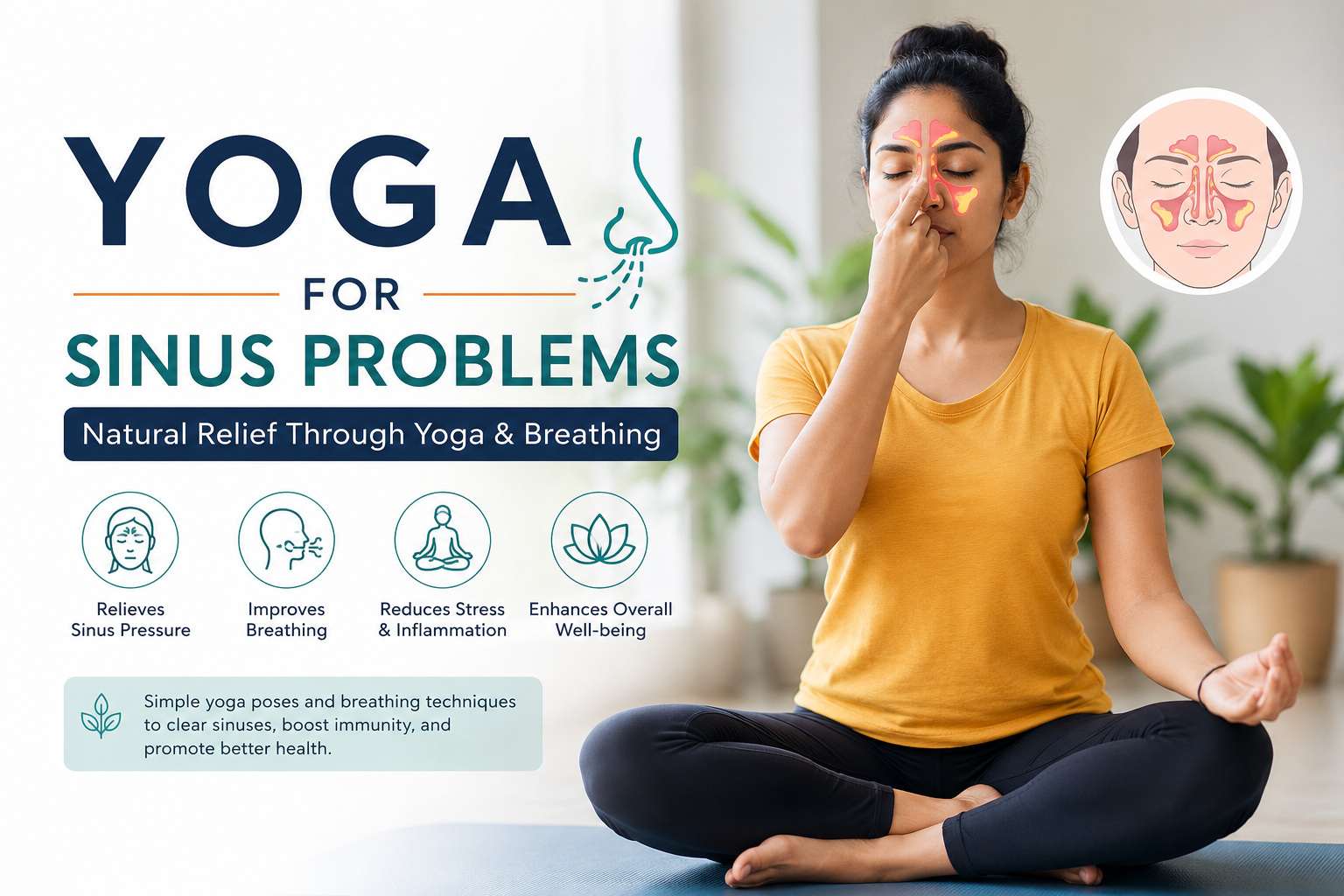
An informational guide to what yoga can and cannot do for sinus congestion and sinusitis — covering how the sinuses actually work, where breath-focused and nasal-care practices genuinely help, and where popular claims about yoga “curing” sinus problems outpace the evidence.
Sinus pressure, congestion, and the dull headache that often comes with it send many people looking for natural relief, and yoga is commonly marketed as part of that search, sometimes with claims that a posture or nasal-cleansing ritual can eliminate sinus problems for good. The more accurate picture is more modest: sinus congestion arises from inflammation and swelling of the tissue lining the sinuses, whether from infection, allergy, or irritation, and no yoga practice removes this inflammation directly. What yoga can genuinely offer is support for nasal breathing, drainage-friendly positioning, and the stress response that often makes discomfort feel worse, a real and useful role that falls well short of a cure.
This guide walks through how the sinuses actually work, where yoga has an evidence-aligned role in supporting people who deal with sinus congestion, and where popular claims about yoga curing sinus problems go further than the science supports. Yoga is not a substitute for medical care, and anyone with persistent or severe sinus symptoms should treat it as a complement to, not a replacement for, appropriate diagnosis and treatment.
1. What Is Actually Happening in the Sinuses During Congestion
The sinuses are air-filled cavities in the skull lined with mucous membranes that normally drain freely into the nasal passages. When these membranes become inflamed, from viral infection, bacterial sinusitis, allergy, or irritants such as smoke, they swell and produce excess mucus, blocking drainage and creating the pressure, congestion, and headache many people associate with sinus problems. Sinusitis persisting beyond several weeks or recurring frequently is generally considered chronic and often benefits from medical evaluation to identify contributing factors such as structural issues, allergies, or infection. Understanding this clarifies what yoga can realistically do: support comfort and drainage around the edges of the problem, not resolve the underlying inflammation.
2. Why Claims That Yoga “Cures” Sinusitis Go Too Far
It is easy to find wellness content suggesting a particular inversion, breathing pattern, or nasal ritual can permanently resolve sinus problems. These claims are not well supported, and sinus inflammation, whether infectious or allergic in origin, involves biological processes a physical practice does not directly reverse. The more accurate picture is that yoga can be a helpful complementary practice for easing discomfort and supporting drainage-friendly positioning during a flare-up, offering modest, real benefits without replacing appropriate medical evaluation and treatment when needed.
3. What the Research Actually Shows
Research specifically examining yoga and sinus conditions is limited, though modest evidence supports two related practices often taught alongside yoga: saline nasal irrigation, which has reasonably strong support for improving symptoms in both acute and chronic sinus conditions, and diaphragmatic or slow breathing, which shows some evidence of supporting respiratory comfort and stress reduction. Evidence for yoga postures themselves directly resolving sinus congestion is much thinner and largely anecdotal. The fair summary: certain yoga-adjacent practices, saline rinsing in particular, have genuine supportive evidence, while broader claims about yoga curing sinusitis outpace what has actually been studied.
4. Breath Work and Its Role in Sinus Comfort
Slow, controlled nasal breathing is one of the more directly relevant yoga practices for sinus discomfort, since it encourages full use of the nasal passages rather than shifting to mouth breathing, which can dry out already irritated tissue. Gentle nasal breathing supports a calmer, less effortful relationship with breathing even when passages are partially congested, and some people find slow, extended exhalation helps ease the sense of pressure. Breath work does not reduce the underlying tissue swelling, so it works best as a comfort measure alongside, rather than instead of, appropriate treatment for the cause of the congestion.
A gradual, structured approach to this kind of breath training, of the sort covered in Pranayama for Stress Relief, offers a sensible starting point, since it builds calm, controlled nasal breathing rather than anything forceful that could feel uncomfortable in already congested passages.
5. Postures Often Discussed for Sinus Drainage
Certain postures are frequently mentioned for sinus comfort, generally because a change in head position relative to the body can subjectively ease pressure for some people. Mild forward folds and gentle supported inversions are sometimes suggested to encourage drainage, while restorative postures that keep the head elevated may feel more comfortable during acute congestion, when full inversions can sometimes increase the sensation of pressure. Evidence for any specific posture directly resolving sinus congestion is limited, and the right choice varies by individual; noticing how a pose actually feels and adjusting accordingly is safer than assuming any pose is universally beneficial.
6. Nasal Cleansing: The Most Evidence-Supported Practice
Jala neti, or saline nasal irrigation using a neti pot, is the yoga-adjacent practice with the strongest research support for sinus comfort, since rinsing the nasal passages with saline helps clear mucus, allergens, and irritants and has been studied for both acute and chronic sinus conditions. This practice requires care: only distilled, sterile, or properly boiled and cooled water should be used, never tap water directly, since improperly prepared rinses carry a rare but serious infection risk documented in medical literature. Anyone new to nasal irrigation should learn correct technique and water preparation from a reliable source.
7. Steam and Warmth-Based Practices
Steam inhalation is a traditional practice often paired with yoga and pranayama for sinus comfort, and there is reasonable evidence that warm, humidified air can provide short-term symptomatic relief by loosening mucus and soothing irritated tissue, even though it does not treat an underlying infection or resolve chronic inflammation. Warm compresses over the sinuses are sometimes used similarly, offering temporary comfort during a flare-up. These practices are generally low-risk when done sensibly and can be a pleasant complement to breath work and gentle movement.
8. Stress, Immune Function, and Chronic Sinus Issues
Chronic stress does not cause sinus infections, but there is a documented relationship between prolonged stress and immune function, and some evidence suggests chronic stress may be associated with more frequent or prolonged upper respiratory and sinus symptoms in some people. This is one of the more genuinely evidence-aligned connections between yoga and sinus health: not that yoga treats inflammation directly, but that its well-established stress-reduction and sleep-supporting effects may play a supportive role in immune resilience over time, particularly for people with frequent flare-ups.
This relationship between stress, sleep, and physical wellbeing is discussed further in Yoga Nidra in Rishikesh, which explores how deep restorative practice supports the kind of rest the body’s regulatory and immune systems depend on.
9. Practices and Situations to Approach With Caution
Not every yoga practice suits someone with active sinus congestion or infection. Full inversions, such as headstands or shoulder stands, can increase the sensation of facial pressure for some people during an acute flare-up and are often more comfortable to skip until symptoms ease. Vigorous, forceful breathing techniques can feel uncomfortable or even painful when the sinuses are inflamed and are best avoided during an active infection. If fever, facial pain, or coloured nasal discharge suggests a possible bacterial infection, that is a signal to prioritise medical evaluation over any yoga practice.
10. Building a Safe, Realistic Routine
A yoga routine that genuinely supports sinus comfort looks gentle and adaptable, adjusting to how symptoms feel on a given day rather than following a fixed intense sequence.
- Favour gentle forward folds and elevated, restorative postures over full inversions during active congestion.
- Use slow, calm nasal breathing rather than forceful or rapid techniques while the sinuses are inflamed.
- If trying nasal irrigation, use only sterile, distilled, or properly boiled and cooled water, and learn the correct technique first.
- Pair breath work with steam inhalation or a warm compress for additional comfort during a flare-up.
- Treat consistency and adequate rest as more valuable than pushing through an intense practice while unwell.
11. Traditional Ayurvedic Perspectives on Sinus Health
Traditional Ayurvedic approaches to sinus congestion have long included nasal oil application, steam therapy, and dietary adjustment aimed at reducing excess mucus, alongside bodywork practices intended to support overall circulation and balance. While these traditions use different language than modern medicine, several of the underlying practices, particularly nasal cleansing and steam use, align reasonably well with the evidence-based, comfort-focused approach described throughout this guide.
An Ayurvedic Massage Course in Rishikesh India typically introduces these traditional techniques, offering a grounded understanding of how they are believed to support circulation and comfort, framed as a complement to rather than a replacement for medical care when sinus problems are persistent or severe.
12. Red Flags in Yoga-for-Sinus Claims
A few common red flags tend to signal claims about yoga and sinus problems that outpace the evidence.
- Suggestions that a posture or breathing technique can cure chronic or bacterial sinusitis without medical treatment.
- Encouragement to skip antibiotics or other prescribed treatment in favour of a yoga-based programme.
- Nasal cleansing instructions that skip the requirement for sterile or properly prepared water.
- Vague claims that a sequence “drains toxins” from the sinuses without any explanation of the mechanism.
13. Learning These Practices Properly
Because separating genuine, evidence-aligned comfort measures from overstated wellness marketing requires understanding both yoga and basic sinus physiology, learning from a properly trained teacher makes a real difference. A structured Yoga Teacher Training in Rishikesh programme typically covers the physiological basis of breath work and traditional practices such as nasal cleansing alongside broader yogic philosophy, offering a grounded understanding of what these techniques can genuinely offer people managing sinus discomfort.
Safety Notes and When to See a Doctor
Yoga and related breath and nasal-care practices can genuinely support comfort during sinus congestion, but they should never replace appropriate medical diagnosis or treatment.
- Persistent symptoms lasting beyond ten days, fever, facial pain, or coloured discharge should be evaluated by a doctor, since these can indicate a bacterial infection requiring treatment.
- Chronic or recurrent sinusitis deserves medical evaluation to identify underlying causes such as structural issues or allergies.
- Severe headache, vision changes, or swelling around the eyes alongside sinus symptoms require urgent medical attention.
- Anyone considering nasal irrigation for the first time should learn proper technique and water preparation from a reliable source.
Frequently Asked Questions (FAQs)
Q1. Can yoga cure sinusitis?
No. Sinusitis involves inflammation from infection, allergy, or irritation, and no yoga practice reverses this directly. Yoga can support comfort, breathing, and stress levels around sinus symptoms, but it does not replace medical diagnosis or treatment when needed.
Q2. Does nasal irrigation actually help with sinus congestion?
Yes, this is one of the better-supported practices discussed here. Saline nasal irrigation has reasonable evidence for easing both acute and chronic sinus symptoms, though it must be done with sterile, distilled, or properly boiled and cooled water.
Q3. Are yoga inversions good for sinus drainage?
Some people find gentle, supported positions comfortable, but full inversions can increase facial pressure for others during active congestion. Evidence for any specific posture resolving sinus congestion is limited, so it is best to notice how a pose actually feels.
Q4. Should I avoid yoga entirely during a sinus infection?
Gentle practice, including slow breathing and restorative postures, is generally fine, but vigorous or forceful techniques and full inversions are often more comfortable to skip until symptoms ease, and a fever or facial pain should prompt medical evaluation.
Q5. Can stress make sinus problems worse, and can yoga help?
Stress does not directly cause sinus infections, but chronic stress is linked to immune function, and yoga’s well-documented stress-reduction and sleep-supporting effects may offer some supportive benefit for people with frequent flare-ups.
Q6. Can yoga replace antibiotics for a bacterial sinus infection?
No. Bacterial sinus infections require appropriate medical treatment, and yoga or breath work should never be used as a substitute for antibiotics or other prescribed care when a doctor determines they are needed.
Q7. What is the most evidence-based way to think about yoga’s role in sinus health?
The most accurate framing is that yoga, along with practices like nasal irrigation and steam inhalation, can support comfort and drainage-friendly positioning during sinus symptoms, working alongside, not instead of, appropriate medical care.
Final Thoughts
Sinus congestion is a genuine inflammatory process, and the most honest, evidence-aligned view of yoga’s role is a supportive one: helping with breath comfort, gentle positioning, and the stress that often makes symptoms feel worse, rather than resolving the underlying inflammation itself. This is a more modest picture than some wellness marketing suggests, but it is also a safer and more realistic one.
Approached gradually, alongside appropriate medical guidance when symptoms are persistent or severe, yoga and related nasal-care practices can offer many people a genuinely useful, low-risk way to support comfort during sinus flare-ups and beyond.
