 Skip to content
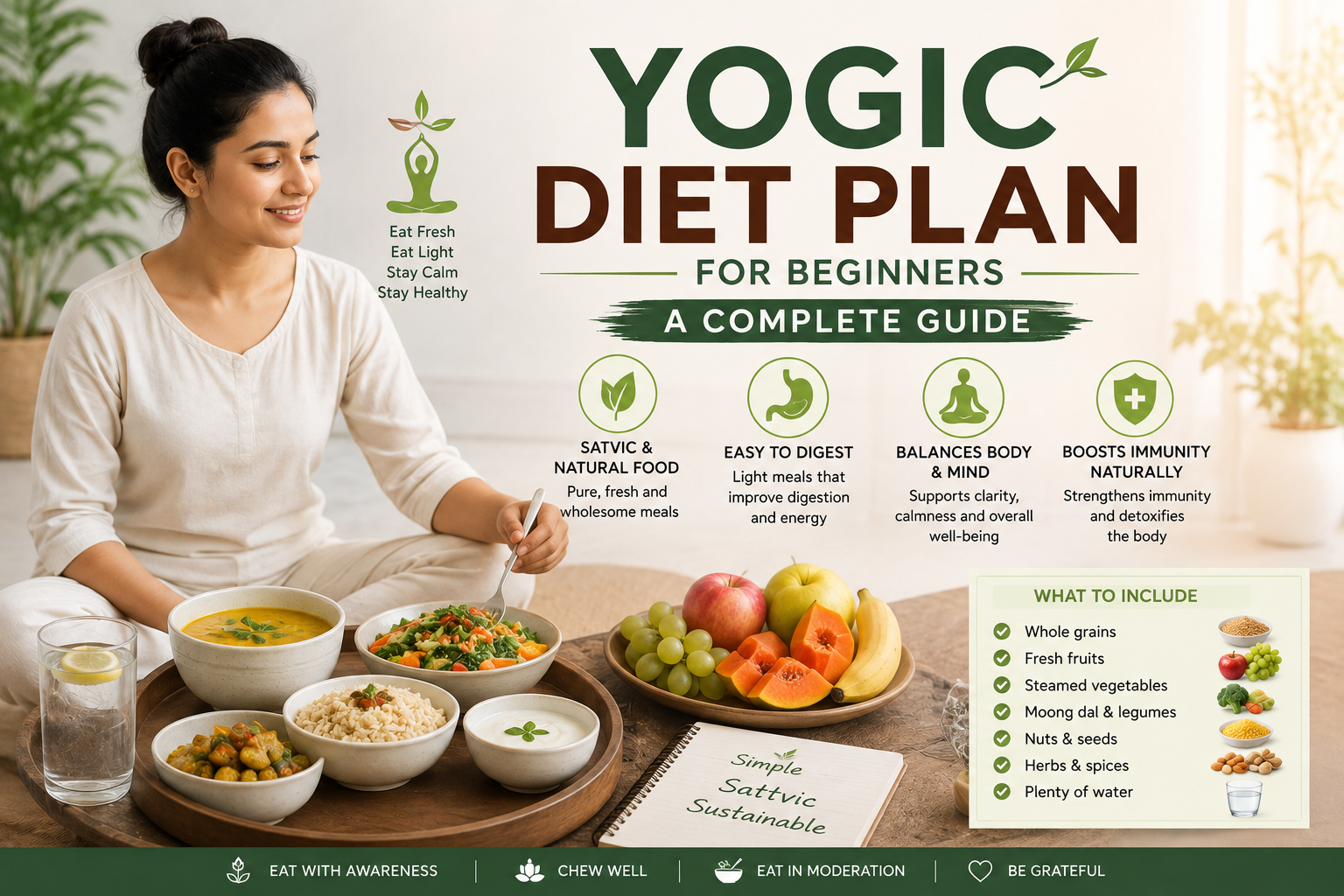
Note: This guide offers a general, informational introduction to yogic dietary philosophy for beginners. It is not medical or nutritional advice and is not a substitute for guidance from a qualified doctor or registered dietitian. Anyone with a specific health condition, nutritional need, or history of disordered eating should consult a professional before making significant changes to their diet.
For most beginners, the word “diet” tends to bring to mind counting, restriction, and rigid rules. The yogic approach to eating is built on a different foundation entirely. Rather than focusing on calories or strict meal plans, a yogic diet is organized around the quality and energetic effect of food, how it is believed to influence the mind, the nervous system, and the clarity needed for a consistent yoga and meditation practice.
This framework comes from classical yogic and Ayurvedic texts, which categorize food into three broad qualities, or gunas, and offer general principles for eating in a way that supports steadiness rather than agitation or heaviness. For beginners, the goal is not to adopt every guideline perfectly overnight, but to understand the underlying philosophy well enough to make gradual, sustainable adjustments.
This guide introduces the core principles of a yogic diet, how they connect to broader yogic practice, and practical starting points for anyone curious about eating in a way that traditionally complements yoga and meditation.
1. The Philosophy Behind a Yogic Diet
Yogic dietary philosophy is rooted in the idea that food is not simply fuel but a direct influence on the state of the mind. This connects to a broader yogic principle that everything a person takes in, whether through food, sensory experience, or thought, shapes their inner state over time. A heavy, difficult-to-digest meal is traditionally believed to dull awareness and induce lethargy, while a light, fresh meal is thought to support the mental clarity needed for meditation and sustained practice.
This is why yogic diet guidelines tend to emphasize how food affects a person, rather than prescribing rigid rules about exact quantities or calorie counts. The approach is intentionally more flexible and self-observational than many modern diet plans, asking practitioners to notice how different foods affect their own energy, mood, and mental clarity over time.
2. Understanding the Three Gunas: Sattvic, Rajasic, and Tamasic Food
Ayurvedic and yogic tradition classifies food into three broad categories based on its believed energetic quality. Sattvic foods are considered pure, light, and clarity-supporting, generally including fresh fruits, vegetables, whole grains, nuts, and dairy prepared simply. Rajasic foods are associated with stimulation and restlessness, often including spicy, salty, or highly processed foods, along with excessive caffeine. Tamasic foods are linked to heaviness and dullness, traditionally including overly processed, stale, or fried foods, along with excess meat and alcohol in many interpretations.
A beginner-friendly yogic diet generally emphasizes sattvic foods as the foundation, while gradually reducing reliance on rajasic and tamasic choices, without necessarily eliminating them entirely or immediately. This framework is meant to guide general direction rather than function as a strict checklist, and different traditions and teachers interpret these categories somewhat differently depending on regional and lineage-specific customs.
3. Common Principles of a Beginner’s Yogic Diet
Several general principles recur across most yogic dietary traditions, even though specific interpretations vary. A largely plant-based approach is common, with an emphasis on fresh, seasonal, and minimally processed foods. Freshly prepared meals are generally favored over leftovers or heavily packaged foods, based on the belief that freshly cooked food carries more vital energy.
Moderation is another recurring theme, with many traditional teachings suggesting that meals should leave a person feeling comfortably satisfied rather than either hungry or overly full. Mindful eating, meaning eating slowly, without distraction, and with genuine attention to the meal, is also widely emphasized as being just as important as the specific foods chosen.
4. How Meal Timing Fits Into Yogic Practice
Traditional yogic guidance often suggests eating in rhythm with the day’s natural energy patterns, favoring a substantial meal around midday when digestive capacity is traditionally considered strongest, with lighter meals in the morning and evening. This general pattern is echoed in many wellness traditions beyond yoga as well, though individual schedules, activity levels, and health needs naturally vary.
Leaving adequate time between eating and practicing asana is another common recommendation, since practicing yoga on a very full stomach can feel physically uncomfortable, particularly during twists, forward folds, and inversions. Many practitioners find that a gap of a few hours between a substantial meal and a vigorous practice session makes the most physical sense, though gentler practices are often more flexible in this regard.
5. Hydration and the Yogic Approach to Drinking
Adequate hydration is considered an important part of a yogic lifestyle, with warm water often preferred over cold in many traditional teachings, based on the belief that warm water is gentler on digestion. Herbal teas are commonly incorporated as well, though heavy reliance on caffeinated beverages is generally discouraged within a strictly sattvic approach, given caffeine’s classification as a rajasic stimulant in most traditional frameworks.
As with food choices, the emphasis tends to be on paying attention to how different beverages affect energy and mental clarity, rather than following a fixed and universal rule that applies identically to every person and body type.
6. The Role of Ayurveda in Shaping a Yogic Diet
Yoga and Ayurveda share deep historical roots, and many principles of a yogic diet are drawn directly from Ayurvedic understanding of individual constitution, commonly referred to as dosha. Ayurvedic philosophy suggests that dietary needs vary meaningfully from person to person based on their particular constitution, meaning a rigid, one-size-fits-all yogic diet plan does not fully reflect the tradition’s own underlying logic.
For beginners genuinely interested in this connection, exploring foundational Ayurvedic concepts alongside basic yogic dietary principles offers a more complete picture than yogic guidelines alone. Some students choose to deepen this understanding further through structured study, such as an Ayurvedic Massage Course in Rishikesh India, which introduces practical Ayurvedic concepts alongside bodywork techniques that also reflect this same underlying philosophy of individualized balance.
7. How a Yogic Diet Fits Into Daily Life During Training
For students attending an intensive program, a yogic diet is rarely optional; it is typically built directly into the daily schedule, since most residential programs serve sattvic meals as a core part of the training experience. Understanding this in advance helps set realistic expectations for anyone considering a Yoga Teacher Training in Rishikesh, where the dietary structure is usually as much a part of the curriculum as the physical asana sessions themselves.
Our detailed guide on Food and Lifestyle During Yoga Teacher Training in Rishikesh walks through what a typical day of eating actually looks like during a residential program, which is often more useful for beginners than general theory alone, since it shows how these principles translate into an actual daily routine.
8. Adjusting Gradually Rather Than All at Once
One of the most common mistakes beginners make is attempting to adopt every yogic dietary principle simultaneously, often leading to an unsustainable, overly restrictive approach that is difficult to maintain. A more sustainable path generally involves gradual adjustment, introducing one or two changes at a time and paying attention to how the body and mind respond before adding further changes.
This is particularly important for anyone with a history of restrictive eating patterns, since a framework built around food categories and purity can unintentionally reinforce an unhealthy relationship with food if approached rigidly rather than as a flexible, self-observational practice. Approaching a yogic diet with curiosity and self-compassion, rather than strict rule-following, tends to produce a far more sustainable long-term relationship with these principles.
9. Common Mistakes Beginners Make
- Treating the sattvic, rajasic, and tamasic framework as a strict checklist rather than a general guide for self-observation.
- Eliminating entire food groups abruptly instead of adjusting gradually over time.
- Ignoring individual constitution and health needs in favor of a generic, one-size-fits-all approach.
- Practicing vigorous asana immediately after a substantial meal, leading to unnecessary discomfort.
- Overlooking the emotional and mindful-eating side of the practice in favor of focusing purely on which foods are allowed.
10. A Simple Framework for Getting Started
Instead of overhauling an entire diet overnight, it helps to start with a few manageable, low-pressure steps.
- Begin by adding more fresh, whole foods rather than immediately eliminating existing favorites.
- Pay attention to how different meals affect energy and mental clarity over the following hours.
- Introduce mindful eating habits, such as slowing down and reducing distractions during meals, alongside any dietary changes.
- Revisit and adjust the approach periodically, since needs and responses often shift over time and with experience.
Anyone planning a longer stay focused specifically on this lifestyle may also find it useful to consider a dedicated Yoga Retreat in Rishikesh, where the slower pace and guided structure make it easier to experience these dietary principles firsthand, with support, rather than attempting the full transition alone.
Frequently Asked Questions (FAQs)
Q1. What is a sattvic diet? A sattvic diet emphasizes fresh, light, minimally processed foods believed to support mental clarity and calm, and it forms the general foundation of most beginner-friendly yogic dietary approaches.
Q2. Do I have to become vegetarian to follow a yogic diet? Many traditional yogic dietary frameworks lean plant-based, but the underlying principles around freshness, moderation, and mindful eating can still be applied meaningfully without committing to full vegetarianism immediately.
Q3. How soon before yoga practice should I eat? Many practitioners find leaving a few hours between a substantial meal and a vigorous asana practice more comfortable, though gentler practices tend to be more flexible around timing.
Q4. Is caffeine allowed on a yogic diet? Caffeine is generally classified as a rajasic, stimulating substance in traditional frameworks, so a strict yogic approach often recommends moderation or reduction rather than an absolute ban.
Q5. Can a yogic diet help with weight management? Some people notice supportive effects on weight and energy through more mindful, whole-food eating patterns, though a yogic diet is traditionally oriented around mental clarity and practice support rather than weight loss specifically.
Q6. Is it necessary to follow every yogic dietary rule perfectly? No, gradual, sustainable adjustment tends to work better for most beginners than attempting to adopt every traditional guideline at once, and self-observation matters more than strict rule-following.
Q7. How does Ayurveda relate to a yogic diet? Ayurveda offers a framework for understanding individual constitution and needs, which adds important nuance to general yogic dietary principles that might otherwise be applied too rigidly across different body types.
Q8. Is a yogic diet suitable for everyone? Not automatically; anyone with specific health conditions, nutritional needs, or a history of disordered eating should consult a healthcare professional before adopting significant dietary changes based on this framework.
Final Thoughts
A yogic diet, at its core, is less a fixed meal plan and more a way of relating to food with greater awareness, moderation, and attention to how eating affects the mind as well as the body. For beginners, the most sustainable starting point is rarely a complete overnight transformation, but a gradual shift toward fresher, simpler food alongside a more mindful relationship with eating itself.
Understanding the philosophy behind sattvic, rajasic, and tamasic food offers a useful lens, but it works best when treated as a flexible guide for self-observation rather than a rigid set of rules to enforce. Approached this way, a yogic diet can genuinely complement a broader yoga practice, supporting the same clarity and steadiness that the physical and meditative sides of yoga are also designed to cultivate.
This guide is intended for general educational purposes only. If you have specific health, nutritional, or medical concerns, please consult a qualified healthcare professional before making significant changes to your diet.
