 Skip to content
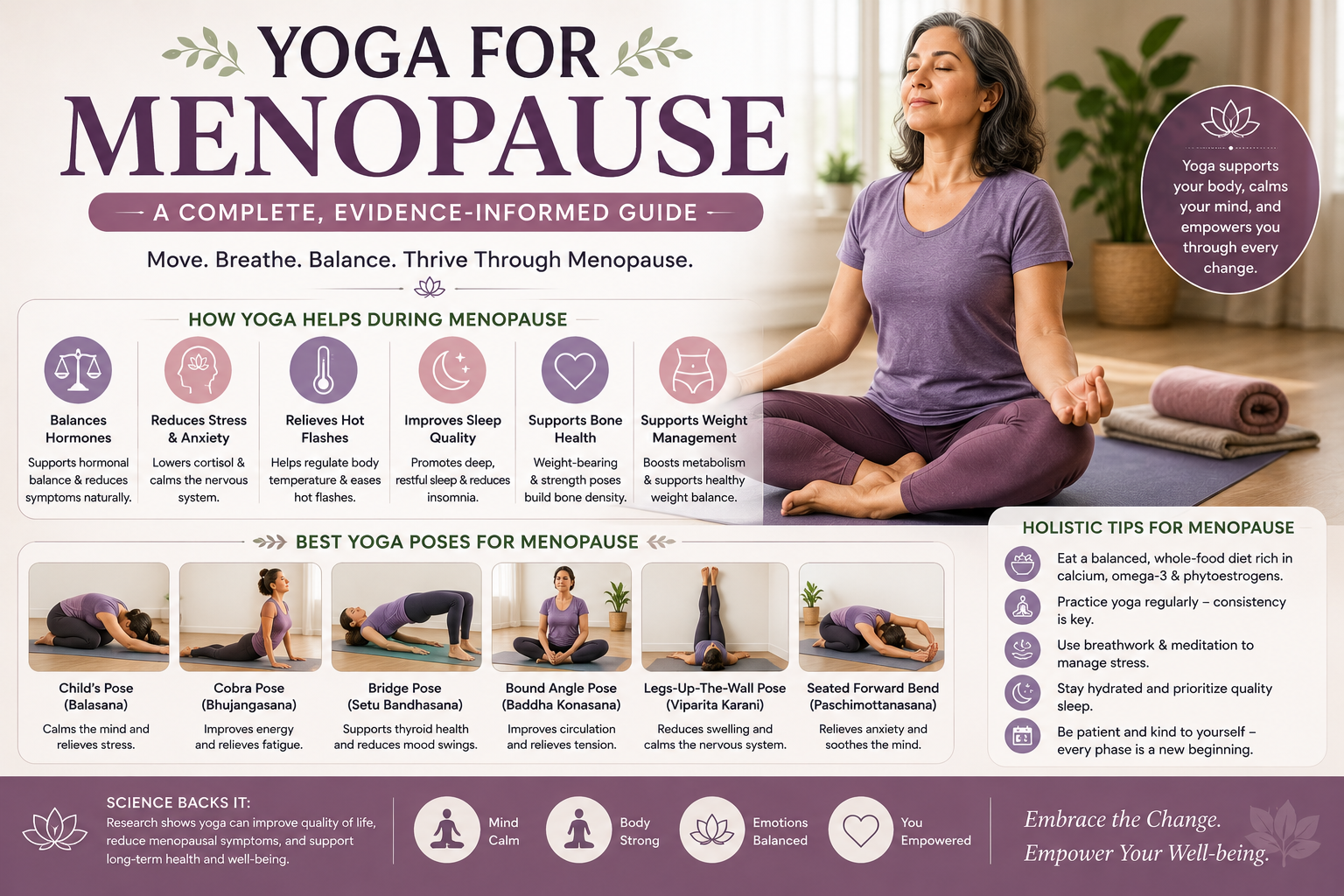
An informational guide to how yoga supports the body and mind through perimenopause and menopause — which practices help specific symptoms, how they work, and how to build a safe, sustainable routine.
Menopause is often discussed as a single event, but for most women it is a multi-year transition — perimenopause can begin in the early-to-mid forties and continue for several years before menstruation stops entirely. During this time, fluctuating and eventually declining oestrogen and progesterone levels affect far more than reproductive function: sleep, mood, temperature regulation, bone density, and cardiovascular health are all influenced by these hormones, which is why the symptoms can feel so wide-ranging and, at times, disorienting.
Yoga cannot replace medical care for menopause, and some women will need hormone therapy or other medical treatment regardless of lifestyle practice. But a substantial body of research and long-standing traditional use both support yoga as a genuinely helpful complementary approach — one that addresses the nervous system dysregulation, sleep disruption, and emotional strain that so often accompany this transition. This guide explains why that connection exists, which practices help with which symptoms, and how to build a realistic routine around them.
1. What Actually Happens to the Body During Menopause
The menopausal transition is driven by the gradual decline of ovarian hormone production, primarily oestrogen and progesterone. Oestrogen in particular has effects throughout the body: it helps regulate temperature control in the hypothalamus, supports serotonin production (which influences mood), maintains bone density, and contributes to healthy sleep architecture. As oestrogen levels fluctuate and then decline, the body’s internal thermostat becomes less stable, which is the primary driver of hot flashes and night sweats, while the drop in serotonin-supportive activity contributes to the mood changes and anxiety many women report during this period.
At the same time, the nervous system’s stress response becomes more reactive during this transition. Cortisol and adrenaline, produced by the adrenal glands, take on a larger relative role in the body’s hormonal balance once ovarian hormone production declines, which is one reason chronic stress tends to intensify menopausal symptoms rather than existing separately from them. This is the mechanism through which yoga’s well-documented effect on the nervous system becomes directly relevant to managing the transition.
2. Yoga for Hot Flashes and Temperature Regulation
While yoga cannot directly restore oestrogen levels, cooling and calming practices can reduce the frequency and intensity of hot flashes for many women by lowering overall nervous system reactivity, since stress and anxiety are well-established triggers that can intensify a hot flash once it begins.
- Sitali and Sitkari Pranayama (cooling breath techniques): draw air in through the mouth in a way traditionally used to reduce internal heat and calm the nervous system.
- Chandra Bhedana (left-nostril breathing): associated in yogic tradition with a cooling, calming effect, often practised in the evening.
- Restorative forward folds: encourage a parasympathetic shift and are commonly used to interrupt the stress response that can accompany or worsen a hot flash.
- Slow, unforced movement rather than vigorous vinyasa: intense heat-generating practice can, for some women, trigger hot flashes rather than relieve them, making gentler styles more appropriate during acute symptomatic periods.
3. Yoga for Sleep Disruption During Menopause
Sleep disturbance is one of the most commonly reported menopausal symptoms, driven by a combination of night sweats, anxiety, and the direct effect of declining progesterone, which has a naturally calming, sleep-supportive effect at healthy levels. Restorative practice performed before bed can meaningfully help here. Yoga Nidra in Rishikesh style guided relaxation, in particular, is designed to bring the body into a deeply restful state even in a short session, which many women find useful both as a sleep-preparation practice and as a way to fall back asleep after a night sweat interrupts rest.
Simple additions such as a consistent short wind-down practice — a few restorative postures combined with slow breathing — at the same time each evening can also help reinforce a more stable sleep-wake rhythm, which tends to become more fragile during this transition.
4. Yoga for Mood Changes, Anxiety, and Emotional Shifts
The emotional symptoms of menopause, ranging from irritability and low mood to genuine anxiety, are real physiological responses to shifting hormone levels, not simply a matter of mindset. Yoga for Emotional Balance explores this connection in more depth, but the core idea is that consistent practice supports the same serotonin and nervous system pathways that oestrogen decline disrupts, offering the body an alternative route back toward emotional stability.
Gentle backbends, heart-opening postures, and consistent grounding practices like seated meditation are commonly used for this purpose, alongside the breathing techniques discussed throughout this guide, which tend to have some of the most immediate calming effects available.
5. Yoga for Bone Density and Joint Health
Declining oestrogen accelerates bone density loss after menopause, making weight-bearing and alignment-focused practice particularly relevant during and after this transition. Standing postures such as Warrior poses, Tree Pose, and Triangle Pose provide weight-bearing stimulus that supports bone health, while careful attention to alignment helps protect joints that may have become more sensitive to strain. Balance-focused postures also become increasingly valuable during this period, since bone density changes raise the stakes of falls in ways they did not earlier in life.
6. Yoga for Stress and the Adrenal-Cortisol Connection
Because the adrenal glands take on a larger relative role in hormonal balance after ovarian hormone production declines, managing everyday stress becomes more directly tied to symptom severity during menopause than it was earlier in life. Pranayama for Stress Relief covers the underlying mechanism in detail, and the practices most relevant here — slow diaphragmatic breathing, extended exhale techniques, and brief daily meditation — are worth prioritising precisely because their benefit compounds with the adrenal system’s increased role during this transition.
7. Building a Realistic Weekly Routine
Menopausal symptoms fluctuate, so flexibility in routine matters as much as consistency. A realistic starting structure might include:
- 3–4 sessions per week of 30–45 minutes, favouring moderate rather than intense practice, particularly during periods of frequent hot flashes.
- A daily 5–10 minute pranayama practice, incorporating cooling techniques if hot flashes are a primary concern.
- One restorative or Yoga Nidra session per week, ideally in the evening to support sleep quality.
- Two weight-bearing standing-posture sessions per week specifically to support bone density, layered into the broader routine above.
8. Safety Notes and When to See a Doctor
Yoga is a supportive, complementary practice during menopause, not a substitute for medical evaluation. A few guidelines are worth keeping in mind:
- Severe or sudden symptoms, unusual bleeding, or significant mood changes should always be evaluated by a physician, since these can occasionally indicate issues beyond typical menopausal transition.
- Women with osteoporosis or significant bone density loss should modify or avoid deep forward folds and twists that place strain on the spine, and should consult a qualified teacher for appropriate adjustments.
- Hormone therapy and other medical treatments, where prescribed, should continue as directed; yoga is complementary and should not be used as a reason to discontinue medical treatment without professional guidance.
- Those new to weight-bearing postures for bone health should learn proper alignment from an experienced teacher to avoid strain, particularly if joint sensitivity is already present.
9. Where to Learn These Practices Properly
Because several of the techniques discussed here — cooling pranayama, restorative sequencing, and alignment-focused standing postures — benefit significantly from correct guidance, learning them under a qualified teacher offers real advantages over generic online routines. A structured Yoga Teacher Training in Rishikesh programme typically covers therapeutic sequencing and restorative practice in depth, which is valuable even for women with no interest in teaching professionally and who simply want a safer, more thorough understanding of how to navigate this transition through yoga.
10. Combining Yoga With Supporting Lifestyle Habits
As with most hormonally driven transitions, yoga tends to work best as part of a broader, consistent lifestyle pattern. A few complementary habits are commonly recommended alongside a regular menopause-focused practice:
- Consistent sleep and wake times: reinforces circadian rhythm, which becomes more fragile during hormonal fluctuation.
- Adequate calcium and vitamin D intake: supports the bone health that weight-bearing yoga postures are also working to protect.
- Limiting caffeine and alcohol, particularly in the evening: both are common hot-flash and sleep-disruption triggers that can offset the calming benefit of an evening practice.
- Regular moderate cardiovascular activity alongside yoga: supports cardiovascular health, which becomes more relevant as oestrogen’s protective cardiovascular effects decline.
These adjustments do not need to happen all at once. Introducing one or two changes alongside a new yoga routine, and allowing several months for the combined effect to become noticeable, tends to be a far more sustainable approach than attempting a complete lifestyle overhaul in a short period.
Frequently Asked Questions (FAQs)
Q1. Can yoga replace hormone therapy for menopause symptoms?
No. Yoga is a complementary practice, not a replacement for hormone therapy or other medical treatment where these are appropriate. It can meaningfully support symptom management alongside whatever medical approach a woman and her doctor decide is right for her.
Q2. How quickly can yoga help with hot flashes?
Some women notice a reduction in hot flash intensity within a few weeks of consistent cooling pranayama and calming practice, though results vary considerably and yoga tends to reduce frequency and severity rather than eliminate hot flashes entirely.
Q3. Is vigorous yoga safe during menopause?
It can be, but many women find that intense, heat-generating practice worsens hot flashes during acute symptomatic periods. Moderate, steady practice combined with cooling techniques is generally better tolerated, especially when symptoms are frequent.
Q4. Does yoga help with menopause-related weight gain?
Yoga can support metabolic health and stress-related eating patterns, but it is generally most effective for weight management when combined with broader activity and dietary changes rather than relied on alone.
Q5. Can yoga help with menopause-related bone density loss?
Weight-bearing postures such as standing poses can provide a beneficial stimulus for bone health, though yoga should be considered a complement to, not a replacement for, medical bone density monitoring and any prescribed treatment.
Q6. Is it normal for anxiety to increase during perimenopause?
Yes. Fluctuating hormone levels during perimenopause commonly affect mood-regulating neurotransmitters, and increased anxiety or irritability is a well-recognised symptom of this transition, not simply a matter of circumstance or mindset.
Q7. How often should someone practise yoga to notice meaningful menopause-related benefits?
Three to four sessions per week, combined with a short daily pranayama practice, is generally considered a sustainable starting point, with most women needing consistent practice over several months to notice significant changes in sleep, mood, or hot flash patterns.
Final Thoughts
Menopause is a genuine physiological transition, not simply something to be endured quietly, and yoga offers a well-supported way to work with the body through it rather than against it. By addressing the nervous system pathways that intersect with temperature regulation, sleep, mood, and bone health, a consistent practice can meaningfully ease this transition even though it cannot alter the underlying hormonal shift itself.
Approached with patience, realistic expectations, and appropriate medical guidance where needed, yoga can become one of the most sustainable, low-risk tools available for navigating menopause with greater stability and comfort.
