 Skip to content
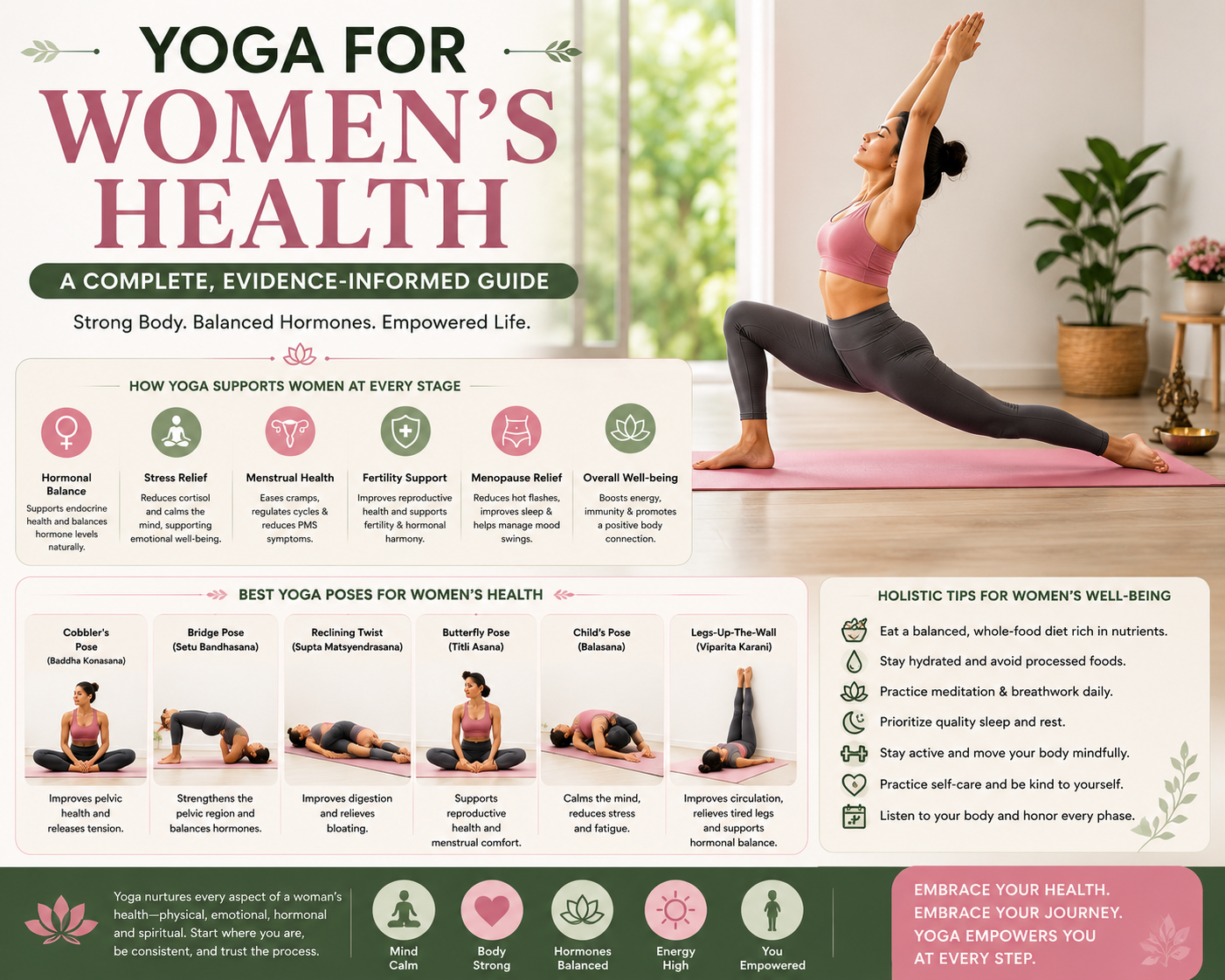
An informational guide to how yoga supports women’s health across every life stage — from menstrual and reproductive health to pregnancy, hormonal balance, and the emotional dimensions of wellbeing.
Women’s health is shaped by a uniquely dynamic hormonal landscape — one that shifts monthly through the menstrual cycle, transforms during pregnancy and postpartum recovery, and changes again through perimenopause and beyond. Few single practices are as consistently relevant across this entire arc as yoga, precisely because it works through pathways — the nervous system, circulation, and stress regulation — that remain influential at every one of these stages, even as the specific hormonal picture changes.
This guide walks through how yoga supports women’s health across the major life stages and common concerns, from menstrual regularity to emotional wellbeing to pelvic floor strength, with an emphasis on practical, evidence-informed guidance rather than sweeping claims. Yoga is not a substitute for medical care, but it is one of the more thoroughly researched and long-practised complementary approaches available for supporting the body through these transitions.
1. Why Yoga Is Particularly Relevant to Women’s Health
The connective thread running through nearly every women’s health concern — menstrual irregularity, PCOS, pregnancy discomfort, postpartum recovery, and menopausal symptoms — is the interaction between the hormonal system and the nervous system. Chronic stress elevates cortisol, which can disrupt reproductive hormone signalling, worsen insulin sensitivity, and intensify symptoms across nearly all of these conditions. Yoga’s core mechanism, activating the parasympathetic nervous system through breath and movement, addresses this shared underlying factor directly, which is why its relevance spans so many distinct concerns rather than being specific to just one.
2. Yoga for Menstrual Health and Cycle Regularity
Menstrual irregularity has many possible causes, but stress, sleep disruption, and low-grade inflammation are common contributing factors that yoga can meaningfully influence. A few categories of practice are particularly relevant:
- Hip-opening postures (Baddha Konasana, Malasana, Supta Baddha Konasana): support circulation to the pelvic region and are traditionally associated with menstrual health support.
- Gentle twists (Ardha Matsyendrasana): support digestive and circulatory function in the abdominal region.
- Restorative practice during menstruation itself: many practitioners favour gentler, supported postures during the first few days of the cycle rather than vigorous or inverted practice.
- Consistent practice timing across the month: some traditions emphasise regular practice as a way of supporting the body’s natural rhythms, rather than practising only when symptoms appear.
3. Yoga for PCOS and Hormonal Imbalances
Polycystic Ovary Syndrome and other hormonal imbalances often involve a combination of insulin resistance, elevated stress hormones, and disrupted ovulation. Yoga does not directly alter ovarian function, but its documented effect on cortisol and insulin sensitivity makes it a genuinely relevant complementary practice, particularly when combined with postures that support pelvic circulation and abdominal engagement, alongside consistent pranayama practice to manage the stress component of these conditions.
4. Yoga During Pregnancy
Prenatal yoga, when practised with appropriate modifications and ideally under qualified guidance, is widely used to support flexibility, reduce common pregnancy discomforts like lower back pain, and prepare the breath and body for labour. Certain postures and all vigorous or deep-twisting practices are generally avoided or modified throughout pregnancy, particularly in the first trimester and increasingly as the pregnancy progresses, which makes qualified instruction especially important during this stage rather than relying on a general or pre-pregnancy routine.
5. Yoga for Postpartum Recovery
After childbirth, the body is recovering physically while also adjusting to a significant hormonal shift as pregnancy hormones decline rapidly. Gentle, gradually progressive practice — often beginning with breathing and pelvic floor awareness before returning to fuller postures — supports both physical recovery and the emotional adjustment that frequently accompanies this period. Pelvic floor-focused practice is particularly relevant here, given the physical demands of pregnancy and delivery on this muscle group, and is often best guided by a teacher or therapist familiar with postpartum-specific needs.
6. Yoga for Perimenopause and Menopause
As ovarian hormone production declines through perimenopause and menopause, symptoms such as hot flashes, sleep disruption, and mood changes become common. Cooling breathing techniques, restorative practice, and weight-bearing postures that support bone density all play a role during this transition, working alongside — not in place of — any medical treatment a woman and her doctor determine is appropriate for her individual symptoms and health history.
7. Yoga for Emotional and Mental Wellbeing
Across every life stage discussed here, the emotional dimension of women’s health deserves equal attention to the physical. Hormonal fluctuation, life transitions, and the practical demands of caregiving or professional life all contribute to stress loads that can be substantial. Yoga for Emotional Balance explores this in more depth, but the core principle worth emphasising here is that consistent practice supports the same nervous system pathways implicated in mood regulation, offering a genuinely useful complement to other forms of emotional and mental health support.
For women experiencing high stress loads or symptoms of burnout, particularly during demanding life stages such as early motherhood or major career transitions, Yoga for Burnout Recovery offers a more targeted look at rebuilding nervous system resilience gradually, which is often a more sustainable approach than attempting to return to full intensity practice immediately.
8. Yoga for Sleep and Nervous System Recovery
Sleep disruption appears repeatedly across women’s health concerns — during the premenstrual phase, in early parenthood, and throughout perimenopause — making restorative sleep practice broadly relevant regardless of life stage. Yoga Nidra in Rishikesh style guided relaxation is particularly well suited here, since it supports deep nervous system rest in a way that remains accessible even during periods of significant fatigue, when a full physical practice may not be realistic.
9. Yoga for Pelvic Floor and Core Health
Pelvic floor health is relevant across a woman’s life, not only after childbirth. Postures and breathing techniques that engage this region with awareness, rather than excessive tension, support long-term core stability and can help address common concerns such as mild incontinence or a sense of reduced core support. This area of practice benefits particularly from qualified guidance, since improper engagement can worsen rather than improve pelvic floor function.
10. Yoga for Long-Term Bone and Cardiovascular Health
Two health concerns that become increasingly relevant for women with age — bone density and cardiovascular health — are also areas where consistent yoga practice offers meaningful, well-supported benefit. Weight-bearing standing postures provide the mechanical stimulus bones need to maintain density over time, which becomes particularly important once oestrogen’s protective effect on bone density declines after menopause. Regular practice also supports healthy blood pressure and stress-related cardiovascular strain through its nervous system effects, complementing rather than replacing standard cardiovascular exercise recommendations.
Because these benefits accumulate gradually and depend on consistent, correctly aligned practice, they are best approached as a long-term habit built over years rather than a short-term intervention, ideally established well before the specific health concern becomes pressing.
11. Building a Realistic Routine Across Life Stages
The specific structure of a women’s health-focused yoga routine should shift with life stage and current concerns, but a few general principles apply broadly:
- 3–4 sessions per week of 30–45 minutes, adjusted in intensity based on cycle phase, pregnancy stage, or current symptoms.
- A daily pranayama practice of 5–10 minutes, which remains relevant and beneficial across every stage discussed in this guide.
- Regular restorative or Yoga Nidra sessions, particularly during higher-stress periods or when sleep is disrupted.
- Periodic reassessment of the routine as life stage and health needs change, rather than following a single fixed sequence indefinitely.
12. Safety Notes and When to See a Doctor
Yoga is a valuable complementary practice throughout a woman’s life, but it should not replace appropriate medical care. A few guidelines apply broadly:
- Persistent or severe symptoms — whether menstrual, hormonal, or related to pregnancy, postpartum recovery, or menopause — should always be evaluated by a qualified healthcare provider.
- Pregnancy and postpartum practice should be modified appropriately and ideally guided by a teacher experienced in these specific stages.
- Pelvic floor-focused practice is best learned under qualified guidance, particularly postpartum, to avoid improper engagement.
- Yoga should complement, not replace, any prescribed medical treatment for diagnosed conditions such as PCOS, endometriosis, or menopausal symptoms.
13. Where to Learn These Practices Properly
Because women’s health-focused yoga spans such a wide range of life stages and needs, learning from a qualified teacher who understands these nuances makes a meaningful difference in both safety and effectiveness. A structured Yoga Teacher Training in Rishikesh programme typically covers therapeutic and restorative sequencing relevant to these life stages in depth, offering value even to those with no interest in teaching professionally, who simply want a safer, more comprehensive understanding of how to apply yoga to their own health across the years ahead.
Frequently Asked Questions (FAQs)
Q1. Is yoga safe for women at every life stage?
Yes, in general, though the specific postures and intensity should be adjusted for pregnancy, postpartum recovery, menstruation, and health conditions such as PCOS or osteoporosis. Guidance from a qualified teacher helps ensure practice remains appropriate for each stage.
Q2. Can yoga help with irregular periods?
Yoga can support menstrual regularity indirectly by reducing stress and supporting pelvic circulation, though persistent irregularity should always be evaluated by a doctor to rule out underlying medical causes.
Q3. Is it safe to start yoga during pregnancy if I have never practised before?
Yes, in most uncomplicated pregnancies, though beginners should start with a prenatal-specific class and inform their teacher of their pregnancy stage and any complications, since certain postures are modified or avoided throughout pregnancy.
Q4. How soon after childbirth can yoga practice resume?
This varies significantly based on delivery type and individual recovery, and should be discussed with a doctor, but gentle breathing and pelvic floor awareness practices are often appropriate earlier than a full physical practice.
Q5. Can yoga help manage stress related to balancing career and family responsibilities?
Yes. The nervous system benefits of consistent yoga and pranayama practice are directly relevant to the chronic, low-grade stress that often accompanies balancing multiple responsibilities, even in short daily sessions.
Q6. Does yoga help with pelvic floor issues beyond the postpartum period?
Yes. Pelvic floor health is relevant throughout a woman’s life, and targeted, properly guided practice can support core stability and function well beyond the postpartum recovery window.
Q7. How much yoga is needed to see meaningful benefits for women’s health concerns?
Most benefits become noticeable with three to four sessions per week combined with a short daily breathing practice, sustained over several months, though even shorter or less frequent practice offers some benefit compared to none.
Final Thoughts
Women’s health is not a single condition to be managed but an evolving landscape that changes across decades, and yoga’s particular strength lies in its adaptability to that evolution. The same underlying practice — breath, movement, and nervous system regulation — can be shaped to support menstrual health in one decade, pregnancy in another, and the menopausal transition in a third, all through the same core toolkit.
Approached with patience, appropriate modification for each life stage, and medical guidance where needed, yoga offers one of the most sustainable, adaptable practices available for supporting women’s health across a lifetime.
