 Skip to content
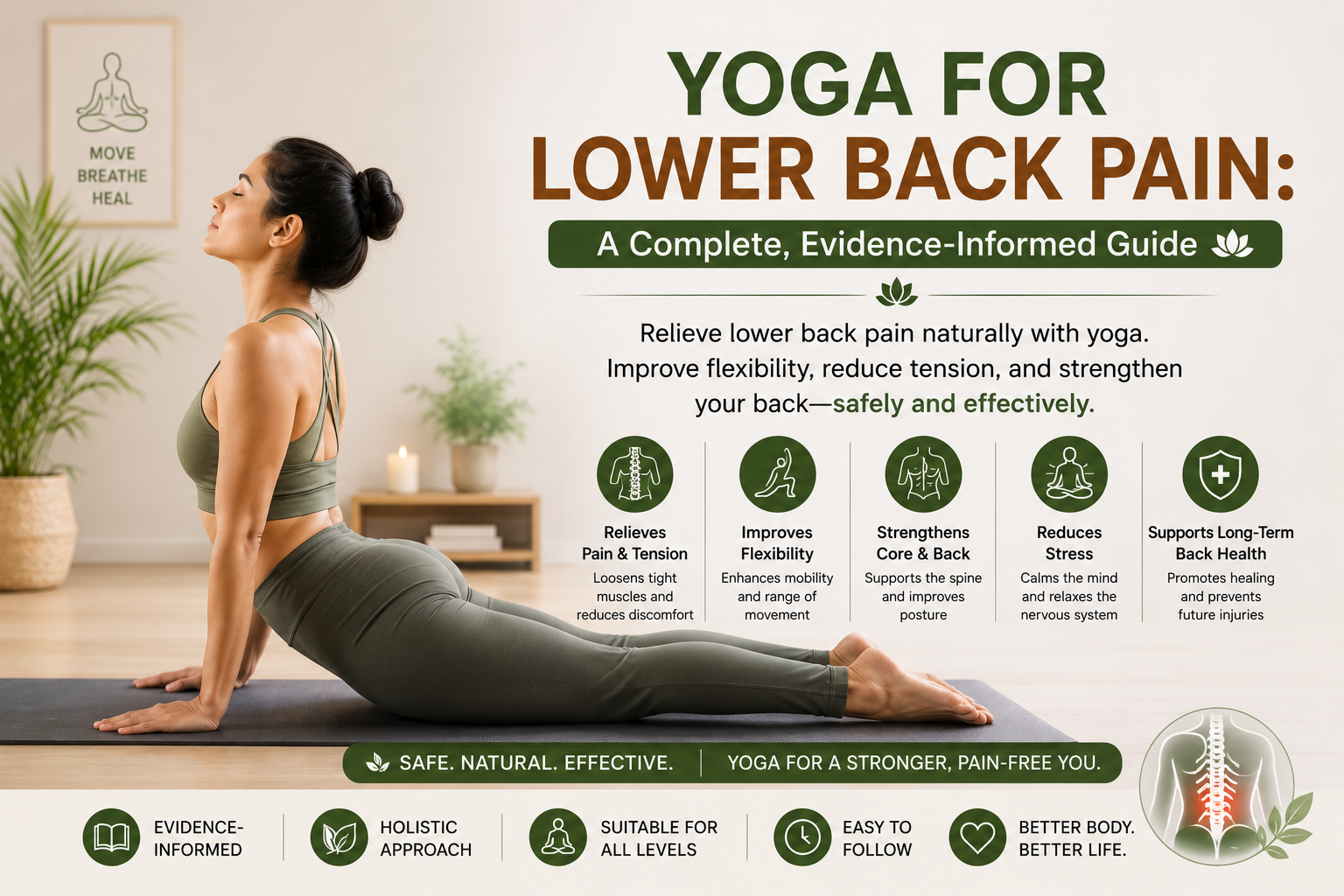
An informational guide to how yoga can support relief from lower back pain — covering common causes, safe and unsafe postures, alignment principles, and when back pain needs medical attention rather than a mat.
Lower back pain is one of the most common musculoskeletal complaints worldwide, and for many people it is closely tied to modifiable factors such as prolonged sitting, weak core and hip muscles, poor movement patterns, and stress-related muscular tension. Because yoga addresses several of these contributing factors at once — building strength and flexibility while also calming the nervous system that governs muscular tension — it has become one of the more widely studied complementary approaches for chronic, non-specific lower back pain, with a reasonable body of clinical research supporting its use alongside conventional care.
This guide walks through the common causes of lower back pain that yoga can meaningfully help with, which postures are generally supportive and which require caution, and where the boundaries of a self-directed practice clearly lie. Yoga is not a substitute for medical evaluation of back pain, particularly pain that is severe, persistent, or accompanied by other symptoms, but it is one of the more thoroughly researched movement-based practices available for supporting a healthy, resilient lower back.
1. Understanding Common Causes of Lower Back Pain
Most lower back pain falls into a category clinicians describe as non-specific, meaning it is not attributable to a single identifiable structural cause such as a fracture or nerve compression, but rather to a combination of factors including muscular imbalance, reduced hip and spinal mobility, weak core support, and prolonged static postures such as sitting at a desk for long hours. Stress and muscular tension also play a well-documented role, since chronically tense muscles around the lower back and hips can contribute meaningfully to pain even in the absence of any structural abnormality. Yoga’s relevance to lower back pain comes precisely from its ability to address this combination of factors at once, rather than targeting any single cause in isolation.
2. What the Research Says About Yoga for Back Pain
Clinical research on yoga for chronic lower back pain, while not unlimited, is more developed than for many complementary practices, with several studies and clinical guidelines noting meaningful improvements in pain and function among people who practise yoga consistently over several weeks. Major back pain treatment guidelines in a number of countries now list yoga among the reasonable first-line, non-drug options for chronic low back pain, generally alongside other forms of supervised exercise and physical therapy, reflecting a level of evidence that is genuinely stronger than for many popular wellness trends.
3. Cat-Cow for Gentle Spinal Mobility
Marjaryasana-Bitilasana, or Cat-Cow pose, is one of the most consistently recommended postures for lower back pain, since its slow, rhythmic movement between spinal flexion and extension gently mobilises the entire length of the spine without loading it under weight. This posture is often used as both a warm-up and a gentle standalone practice for easing stiffness, and is generally considered safe and appropriate even for people experiencing an active flare-up of non-specific back pain.
4. Child’s Pose and Gentle Passive Stretching
Balasana, or Child’s Pose, offers a gentle, passive stretch through the lower back and hips while allowing the body to rest in a supported position, making it a useful posture for easing tension without any active muscular effort. This kind of gentle, passive stretching is often better tolerated during an acute flare-up than more active postures, and can be modified further with props such as a bolster or cushion for additional support and comfort.
5. Core-Strengthening Postures for Long-Term Support
Beyond stretching, building core strength is central to long-term lower back support, since the deep abdominal and back muscles work together to stabilise the spine during everyday movement. Gentle core-engaging postures such as a modified Plank, Bridge Pose, and Bird Dog variations, practised with attention to alignment rather than intensity, are commonly included in back-pain-focused sequences, with the goal of building the kind of steady, functional strength that supports the spine throughout daily activity, not only during a yoga session.
6. Hip-Opening Postures and Their Role in Back Health
Tight hip flexors and hamstrings are frequently linked to lower back discomfort, since restricted mobility in these muscle groups can alter pelvic alignment and increase strain on the lower back during everyday movement. Gentle hip-opening postures such as a supported Pigeon Pose variation or a reclined figure-four stretch are often included in back-pain-focused sequences for this reason, working on a contributing factor that is easy to overlook when attention is focused only on the back itself.
7. Postures and Movements to Approach with Caution
Certain postures and movement patterns warrant particular caution for people with lower back pain, and should generally be avoided or carefully modified, especially during a flare-up:
- Deep forward folds performed with a rounded lower back, rather than hinging from the hips with a long spine.
- Deep backbends, such as full Wheel Pose, which place significant compressive load on the lower back and are best avoided without careful, individualised guidance.
- Twists performed forcefully or from a rounded spine, rather than initiated from a long, supported spine.
- Any posture that produces sharp, shooting, or radiating pain, as opposed to a mild, tolerable stretch sensation.
8. Alignment-Focused Practice and Why It Matters
For lower back pain specifically, how a posture is performed often matters more than which posture is chosen, since poor alignment can turn an otherwise beneficial pose into a source of strain. Iyengar Yoga in Rishikesh India is a style particularly well suited to back-pain-conscious practice, given its strong emphasis on precise alignment and the use of props such as blocks, bolsters, and straps to support the body correctly in each posture, an approach that is widely used in therapeutic and back-care-focused yoga settings.
9. The Role of Breath and Stress in Muscular Tension
Chronic muscular tension, including in the muscles surrounding the lower back, is closely linked to the body’s stress response, and a persistently activated nervous system can keep these muscles in a state of low-grade, ongoing contraction that contributes to pain. Pranayama for Stress Relief explores breath-regulation techniques that shift the nervous system toward a calmer state, and this shift can meaningfully ease the muscular guarding and tension that often accompanies chronic back pain, working alongside physical postures rather than replacing them.
10. Chronic Pain, Stress, and the Nervous System
For pain that has become chronic, lasting beyond the typical healing window for tissue injury, the relationship between the nervous system and pain perception becomes especially relevant, since a persistently stressed or hypervigilant nervous system can amplify pain signals independent of ongoing tissue damage. Yoga for Stress Management explores this broader relationship in depth, and the same nervous-system-calming principles are directly relevant to chronic lower back pain, where addressing the stress component alongside the physical one often produces better, more durable results than either approach alone.
11. Building a Realistic Routine for Lower Back Pain
A yoga routine aimed at easing and preventing lower back pain tends to work best when practised consistently and gently rather than reserved only for flare-ups. A few general principles apply broadly:
- A short daily sequence combining Cat-Cow, Child’s Pose, and gentle core work, adjusted based on how the back feels that day.
- Regular attention to hip and hamstring flexibility, not only direct back-focused postures.
- 5–10 minutes of daily breath work to support the nervous system regulation that eases muscular tension.
- Consistency over intensity, since regular, gentle practice tends to produce more durable improvement than infrequent, more vigorous sessions.
12. Safety Notes and When to See a Doctor
Yoga can be a genuinely valuable complementary practice for lower back pain, but certain warning signs should always prompt medical evaluation rather than a self-directed yoga routine:
- Pain following a specific injury, fall, or accident, which should be evaluated before beginning any new exercise routine.
- Numbness, tingling, or weakness radiating down one or both legs, which can indicate nerve involvement requiring medical assessment.
- Loss of bladder or bowel control accompanying back pain, which requires immediate emergency medical attention.
- Back pain accompanied by fever, unexplained weight loss, or pain that is worse at night or unrelieved by rest, which warrants prompt medical evaluation to rule out other underlying causes.
For back pain without any of these warning signs, working with a qualified yoga teacher experienced in therapeutic modifications, alongside guidance from a doctor or physiotherapist where needed, offers the safest path to a sustainable practice.
13. Learning These Practices Properly
Because back-pain-conscious yoga depends so heavily on correct alignment and individualised modification, learning from a qualified teacher who understands these principles makes a meaningful difference to both safety and results. A structured Yoga Teacher Training in Rishikesh programme typically covers therapeutic sequencing, alignment principles, and safe modification in depth, offering genuine value even to those with no interest in teaching professionally, who simply want a safer, more informed understanding of how to support their own lower back through yoga.
Frequently Asked Questions (FAQs)
Q1. Can yoga actually help with chronic lower back pain?
Yes, for many people. A reasonable body of clinical research supports yoga as a helpful complementary approach for chronic, non-specific lower back pain, and several major treatment guidelines now list it among the reasonable first-line, non-drug options alongside other supervised exercise.
Q2. Which yoga poses are best for lower back pain?
Cat-Cow, Child’s Pose, gentle core-strengthening postures such as Bridge Pose, and hip-opening stretches are among the most commonly recommended, since together they address mobility, strength, and the surrounding muscle groups that influence back pain.
Q3. Are backbends safe if I have lower back pain?
Deep backbends, such as full Wheel Pose, place significant compressive load on the lower back and are generally best avoided or approached only under individualised guidance from a qualified teacher, particularly during an active flare-up.
Q4. Why does alignment matter so much for back-pain-focused yoga?
Poor alignment can turn an otherwise beneficial posture into a source of strain, which is why alignment-focused styles that make use of props are often particularly well suited to people managing lower back pain.
Q5. Can stress really make back pain worse?
Yes. Chronic stress can keep the muscles surrounding the lower back in a state of ongoing tension, and a persistently activated nervous system can also amplify pain perception, which is part of why breath-focused, calming practices are often included alongside physical postures for back pain.
Q6. When should lower back pain be evaluated by a doctor instead of managed with yoga?
Pain following an injury, numbness or weakness radiating down the legs, loss of bladder or bowel control, fever, unexplained weight loss, or pain that worsens at night all warrant prompt medical evaluation rather than a self-directed yoga routine.
Q7. How often should I practise yoga to notice improvement in back pain?
A short daily or near-daily practice tends to offer more consistent, durable improvement than occasional, longer sessions, since the muscles and nervous system patterns involved in back pain generally respond better to regularity than to intensity.
Final Thoughts
Lower back pain is rarely explained by a single cause, and this is exactly why yoga’s combined approach — building strength, restoring mobility, correcting alignment, and calming the nervous system — offers such well-supported, practical relief for many people. Rather than chasing a single fix, a steady, alignment-conscious practice works on several contributing factors at once.
Approached patiently, with attention to alignment and appropriate medical guidance where warning signs are present, yoga offers one of the more evidence-supported, accessible complementary practices available for easing and preventing lower back pain over the long term.
