 Skip to content
An informational guide to how yoga can support relief from neck pain — covering common causes like tech neck, safe and unsafe postures, alignment principles, the stress-tension connection, and when neck pain needs medical attention rather than a mat.
Neck pain has become one of the most common musculoskeletal complaints of modern life, closely tied to hours spent looking down at phones and screens, poor workstation posture, and the muscular tension that so often accompanies chronic stress. Because the neck supports the significant weight of the head while also carrying much of the body’s stress-related tension, it is a region that responds well to a combined approach — one that builds mobility and strength while also addressing the nervous system patterns that keep the surrounding muscles chronically tight.
This guide walks through the common causes of neck pain that yoga can meaningfully help with, which postures are generally supportive and which require caution, and where the boundaries of a self-directed practice clearly lie. Yoga is not a substitute for medical evaluation of neck pain, particularly pain that is severe, persistent, or accompanied by other symptoms, but it is one of the more thoroughly researched movement-based practices available for supporting a healthy, resilient neck and upper back.
1. Understanding Common Causes of Neck Pain
Most everyday neck pain is classified as non-specific or mechanical, meaning it arises from a combination of muscular strain, joint stiffness, and postural habits rather than a single identifiable structural cause. Common contributors include prolonged forward-head posture while looking at screens, poor ergonomic setups at a desk, sleeping in an awkward position, and muscular guarding that develops in response to chronic stress. Because the neck sits at the intersection of posture, movement habits, and nervous system tension, it is a region where lifestyle-based approaches like yoga tend to offer meaningful, well-supported relief.
It is also worth noting that the neck’s relatively small, densely packed muscles and joints make it more sensitive to subtle postural shifts than larger areas of the body, which is part of why seemingly minor habits, like habitually cradling a phone between the ear and shoulder, or sleeping with a pillow that is too high or too flat, can accumulate into noticeable discomfort over time even without a single dramatic cause.
2. Tech Neck: A Modern, Largely Preventable Contributor
The term “tech neck” has emerged to describe the cumulative strain caused by looking down at phones, tablets, and laptops for extended periods, a posture that dramatically increases the effective load on the neck and upper back muscles compared with a neutral, upright head position. Over time, this repeated posture can contribute to muscular imbalance, with certain muscles becoming chronically shortened and others chronically overstretched and weak. Addressing tech neck involves both ergonomic awareness, such as raising screens to eye level, and a yoga practice that specifically counters this forward-head pattern through targeted mobility and strengthening work.
3. What the Research Says About Yoga for Neck Pain
Clinical research specifically examining yoga for chronic neck pain, while smaller in volume than research on lower back pain, has generally shown favourable results, with several studies reporting meaningful improvements in pain intensity and neck-related disability among participants who practised yoga consistently over a period of weeks. This research typically emphasises gentle, gradually progressive practice rather than intense or advanced sequences, reinforcing that a thoughtful, moderate approach tends to be both safer and more effective for this sensitive region than an aggressive one.
4. Gentle Neck Mobility: Where to Begin
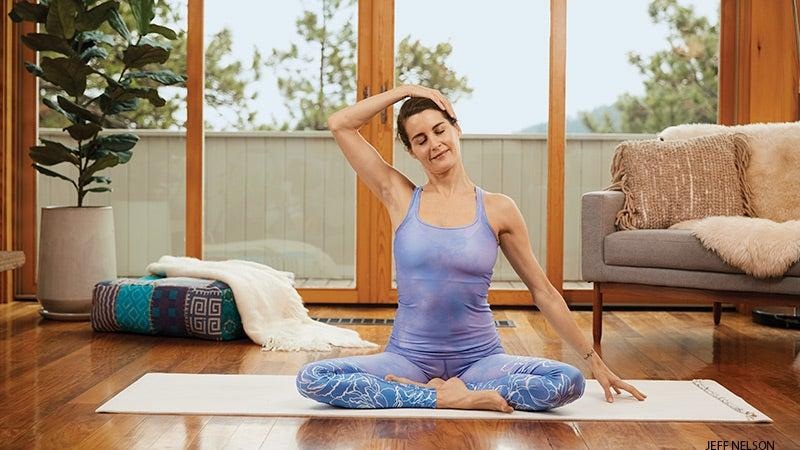
A safe starting point for neck-focused practice involves slow, controlled range-of-motion work rather than any weight-bearing posture: gentle chin tucks, which draw the head back over the shoulders to counter a forward-head posture; slow, controlled turns of the head from side to side; and gentle ear-to-shoulder tilts, performed without pulling or forcing the stretch. These movements are typically practised seated, with attention to keeping the shoulders relaxed and away from the ears throughout, and are appropriate as both a warm-up and a gentle standalone practice for easing everyday stiffness.
5. Shoulder and Upper Back Postures That Support the Neck
Because the neck, shoulders, and upper back function as an interconnected system, postures that address the shoulders and upper spine often provide meaningful relief for neck pain as well. Gomukhasana arms, or Cow Face Pose arms, and gentle eagle arms both stretch the muscles between and around the shoulder blades that frequently become tight alongside neck tension, while gentle shoulder rolls and shrugs help release the trapezius muscles that run from the base of the skull to the shoulders and are among the most commonly tense muscles associated with neck discomfort.
6. Postures for Upper Back Extension and Chest Opening
Forward-head posture is frequently accompanied by a rounded upper back and tight chest muscles, both of which pull the head further forward and increase strain on the neck. Gentle chest-opening postures, such as a supported reclined backbend over a bolster or a gentle standing chest stretch with hands clasped behind the back, help counter this pattern by encouraging the upper back to extend and the chest to open, which in turn allows the head to rest more naturally over the shoulders rather than jutting forward.
7. Postures and Movements to Approach with Caution
Certain postures and movements warrant particular caution for the neck, and should generally be avoided or carefully modified, especially for beginners or during an active flare-up:
- Full, unsupported inversions such as headstand and shoulder stand, which place significant weight and pressure directly on the cervical spine.
- Forceful or fast neck circles, which can strain the small stabilising muscles and joints of the neck when performed too quickly.
- Deep, unsupported backbends that hyperextend the neck by dropping the head back without adequate support.
- Any neck movement that produces sharp, shooting, or radiating pain, numbness, or dizziness, as opposed to a mild, tolerable stretch sensation.
8. Why Alignment Matters So Much for Neck-Conscious Practice
For neck pain specifically, precise alignment often matters more than which posture is chosen, since even a generally beneficial pose can strain the neck if the head and spine are not properly supported throughout. Iyengar Yoga in Rishikesh India is a style particularly well suited to neck-conscious practice, given its strong emphasis on precise alignment and the use of props such as blankets, bolsters, and blocks to support the head and neck correctly, an approach widely used in therapeutic yoga settings for exactly this kind of sensitive, alignment-dependent region.
9. The Role of Breath in Releasing Neck and Shoulder Tension
The muscles of the neck and shoulders are closely tied to the body’s stress response, and shallow, upper-chest breathing, common during periods of stress, can itself reinforce tension in these muscles by encouraging them to assist with breathing rather than remaining relaxed. Pranayama for Stress Relief explores breath-regulation techniques that encourage fuller, more diaphragmatic breathing, which can meaningfully ease the accessory muscle tension that so often accompanies chronic neck and shoulder discomfort, working alongside physical postures rather than replacing them.
10. Chronic Neck Pain, Stress, and the Nervous System
For neck pain that has become persistent, the relationship between the nervous system and pain perception becomes especially relevant, since a chronically activated stress response tends to keep the muscles of the neck and shoulders in a state of low-grade, ongoing guarding. Yoga for Stress Management explores this broader relationship in depth, and the same nervous-system-calming principles apply directly to chronic neck pain, where addressing the stress component alongside the physical one often produces more durable relief than stretching or strengthening alone.
11. Neck Pain, Sleep Position, and Sleep Quality
Neck pain and sleep quality often influence each other in both directions: poor sleep posture or an unsupportive pillow can contribute to or worsen neck pain, while pain itself can disrupt sleep, creating a cycle that is difficult to break without addressing both sides. How Yoga Supports Better Sleep and Relieves Insomnia looks at how an evening practice can support more restful, restorative sleep, which in turn gives the neck’s muscles and joints a better opportunity to recover overnight, particularly when combined with attention to pillow height and sleep position.
12. Restorative Practice for Deep Release
Because chronic neck tension is so often maintained by an overactive nervous system rather than active movement alone, restorative practice deserves particular attention as part of a neck-pain-conscious routine. Guided relaxation in the style of Yoga Nidra in Rishikesh supports the kind of deep parasympathetic rest in which chronically held muscular tension is more able to release, offering a genuinely useful, low-strain addition to a neck-care routine, particularly during high-stress periods when tension often intensifies.
13. Neck Tension, Anxiety, and Emotional Holding Patterns
Many people notice that their neck and shoulders are among the first places tension appears during anxious or emotionally difficult periods, a pattern sometimes described as “carrying stress” in this part of the body. Yoga for Anxiety Relief explores how consistent practice supports the nervous system pathways involved in anxiety, and addressing this emotional dimension directly, rather than treating neck tension as a purely mechanical issue, often produces more complete and lasting relief for people whose neck pain closely tracks their stress and anxiety levels.
14. Building a Realistic Routine for Neck Pain
A yoga routine aimed at easing and preventing neck pain tends to work best when practised consistently and gently rather than reserved only for flare-ups. A few general principles apply broadly:
- A short daily sequence combining gentle chin tucks, neck tilts, and shoulder-releasing postures, adjusted based on how the neck feels that day.
- Regular attention to chest-opening and upper back extension, not only direct neck-focused movements.
- 5–10 minutes of daily diaphragmatic breathing to ease the accessory muscle tension that contributes to neck discomfort.
- Ergonomic awareness throughout the day, including screen height and posture during phone use, since yoga works best as a complement to these habits rather than a replacement for them.
15. Safety Notes and When to See a Doctor
Yoga can be a genuinely valuable complementary practice for neck pain, but certain warning signs should always prompt medical evaluation rather than a self-directed yoga routine:
- Neck pain following a specific injury, fall, or accident, particularly any impact to the head or neck, which should be evaluated before beginning any new exercise routine.
- Numbness, tingling, or weakness radiating down one or both arms, which can indicate nerve involvement requiring medical assessment.
- Severe headache, dizziness, or visual disturbance accompanying neck pain, which warrants prompt medical attention.
- Neck pain accompanied by fever, unexplained weight loss, or pain that is worse at night or unrelieved by rest, which should be evaluated to rule out other underlying causes.
For neck pain without any of these warning signs, working with a qualified yoga teacher experienced in therapeutic modifications, alongside guidance from a doctor or physiotherapist where needed, offers the safest path to a sustainable practice.
16. Learning These Practices Properly
Because neck-conscious yoga depends so heavily on correct alignment, appropriate prop use, and individualised modification, learning from a qualified teacher who understands these principles makes a meaningful difference to both safety and results. A structured Yoga Teacher Training in Rishikesh programme typically covers therapeutic sequencing, alignment principles, and safe modification for sensitive areas like the neck in depth, offering genuine value even to those with no interest in teaching professionally, who simply want a safer, more informed understanding of how to support their own neck and upper back through yoga.
Frequently Asked Questions (FAQs)
Q1. Can yoga actually help with chronic neck pain?
Yes, for many people. Clinical research on yoga for chronic neck pain has generally shown favourable results, with meaningful improvements in pain intensity and neck-related disability reported among people who practise gentle, consistent yoga over several weeks.
Q2. What is “tech neck” and how does yoga help with it?
Tech neck refers to the cumulative strain caused by looking down at screens for extended periods, which increases the effective load on the neck. Yoga helps by countering this forward-head pattern through targeted mobility work, chest-opening postures, and strengthening of the upper back muscles.
Q3. Which yoga poses are best for neck pain?
Gentle chin tucks, controlled neck tilts and turns, Cow Face Pose arms, eagle arms, and supported chest-opening postures are among the most commonly recommended, since together they address mobility, muscular tension, and the postural patterns that contribute to neck discomfort.
Q4. Are yoga inversions like headstand safe with neck pain?
Full, unsupported inversions such as headstand and shoulder stand place significant pressure directly on the cervical spine and are generally best avoided during neck pain or approached only under individualised guidance from a highly experienced teacher.
Q5. Why does alignment matter so much for neck-focused yoga?
Poor alignment can turn an otherwise beneficial posture into a source of strain on such a sensitive area, which is why alignment-focused styles that make careful use of props are often particularly well suited to people managing neck pain.
Q6. Can stress and anxiety really cause physical neck pain?
Yes. The neck and shoulders are common sites for stress-related muscular tension, and a chronically activated nervous system can keep these muscles in a state of ongoing guarding, which is why breath work and stress-focused practices are often included alongside physical postures for neck pain.
Q7. When should neck pain be evaluated by a doctor instead of managed with yoga?
Pain following an injury, numbness or weakness radiating down the arms, severe headache or dizziness, fever, unexplained weight loss, or pain that worsens at night all warrant prompt medical evaluation rather than a self-directed yoga routine.
Final Thoughts
Neck pain is rarely explained by a single cause, and this is exactly why yoga’s combined approach — restoring mobility, correcting postural patterns, opening the chest and upper back, and calming the nervous system — offers such well-supported, practical relief for many people living with modern, screen-driven neck tension. Rather than chasing a single fix, a steady, alignment-conscious practice works gently on several contributing factors at once.
Approached patiently, with attention to alignment, ergonomic awareness, and appropriate medical guidance where warning signs are present, yoga offers one of the more accessible, evidence-supported complementary practices available for easing and preventing neck pain over the long term.
