 Skip to content
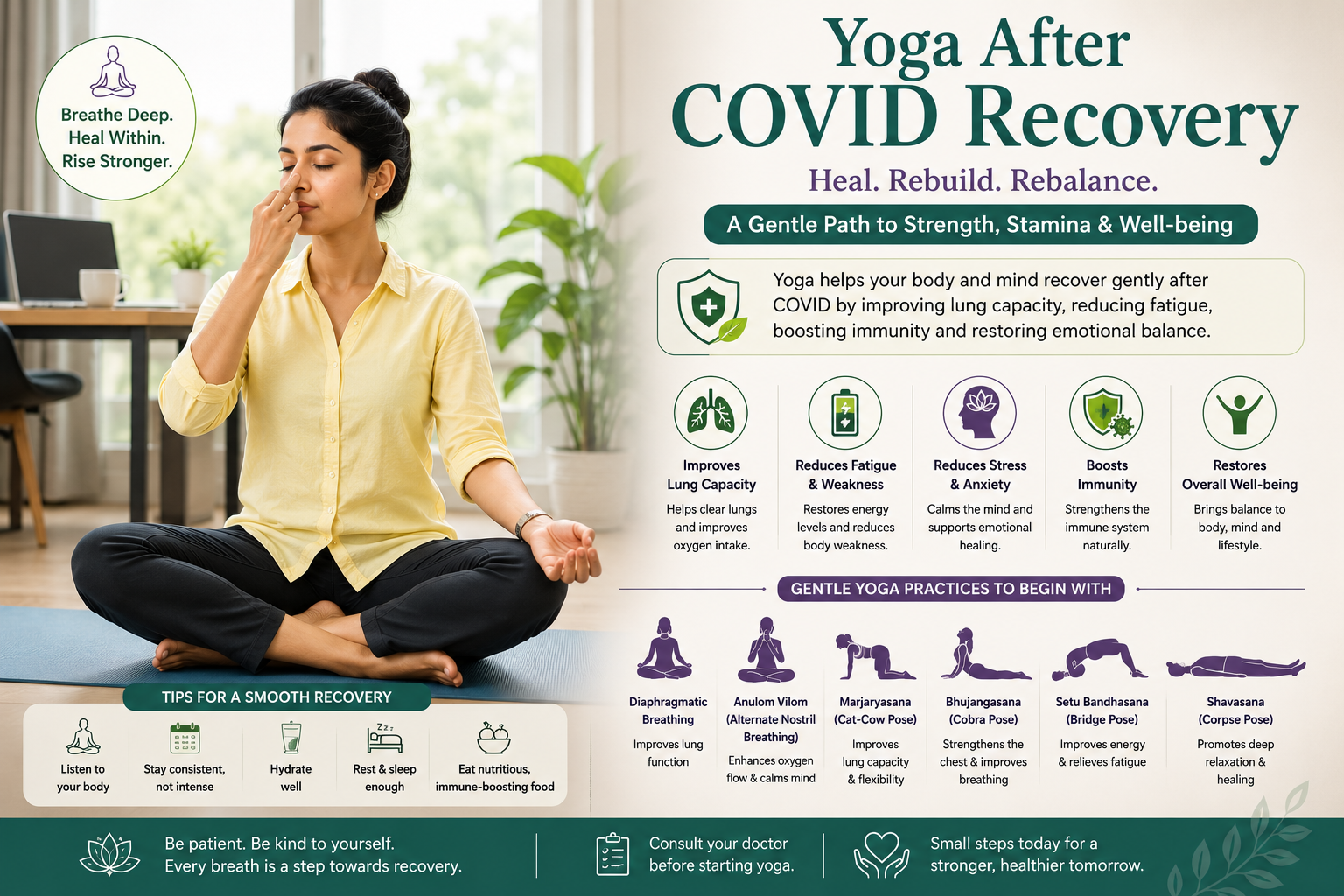
An informational guide to how the body recovers after COVID-19, which yoga practices have genuine, evidence-aligned benefits during that recovery, and where popular claims about “detoxing the lungs” or “curing long COVID” outpace the science.
Recovering from COVID-19 looks different for almost everyone. Some people feel back to normal within a couple of weeks, while others deal with lingering fatigue, breathlessness, brain fog, or a racing heart on mild exertion for months afterward, a pattern often described as long COVID. Wellness content frequently markets a particular yoga sequence or breathing pattern as a way to “detox the lungs,” “clear post-COVID inflammation,” or fully reverse long COVID, and those claims deserve a closer look. The more accurate picture is more modest: recovery depends on the underlying condition of the lungs, cardiovascular system, and nervous system, and no yoga practice repairs damaged tissue directly or cures a diagnosed post-viral condition on its own.
What yoga can genuinely offer during recovery is gentle reconditioning, a calmer nervous system, better breathing mechanics, and a structured way to pace a gradual return to movement, a real and useful role that falls well short of a cure. This guide walks through what actually happens in the body during post-COVID recovery, where yoga has an evidence-aligned role in supporting that recovery, and where popular claims go further than research supports. Yoga is not a substitute for medical care, and anyone recovering from COVID-19 with persistent or severe symptoms should treat it as a complement to, not a replacement for, appropriate medical evaluation.
1. Understanding the Body During Post-COVID Recovery
COVID-19 can affect the respiratory system, cardiovascular system, and nervous system to varying degrees, and recovery time depends heavily on how severe the initial illness was and on individual factors that are still not fully understood. Even after a mild infection, extended bed rest or reduced activity can lead to deconditioning, meaning muscles, including the diaphragm, temporarily lose some of the strength and endurance they had before illness. Some people also experience autonomic nervous system changes after COVID-19, which can show up as a faster resting heart rate, dizziness on standing, or a racing heart with minor exertion. Understanding this wide variability matters, because it clarifies what yoga can realistically do: support gentle reconditioning and nervous system regulation, not repair viral damage or resolve a diagnosed post-viral condition.
2. Why Claims That Yoga “Cures” Long COVID Go Too Far
It is easy to find content suggesting that a specific yoga sequence or breathing pattern can reverse long COVID or eliminate lingering organ-level effects of the virus. These claims are not well supported. Long COVID is now understood to be a complex, multi-system condition that may involve ongoing inflammation, immune dysregulation, or effects on the nervous and cardiovascular systems, none of which a yoga practice directly reverses. The more accurate picture is that gentle, well-paced movement and breath-focused practice can be a helpful complementary tool for managing fatigue, easing breathlessness, and reducing anxiety about lingering symptoms, offering modest, real benefits without replacing appropriate medical evaluation and treatment.
3. What the Research Actually Shows
Research specific to post-COVID recovery is still developing, but it points toward a reasonably consistent conclusion: gentle, graded movement combined with diaphragmatic breathing shows encouraging early evidence for improving perceived fatigue, breathing comfort, and quality of life during recovery, while claims about yoga reversing organ-level damage remain unsupported. One important nuance that responsible guidance should not skip is post-exertional malaise, a worsening of symptoms after physical or mental exertion that some people experience after COVID-19. For this group, a slow, symptom-guided pacing approach is generally considered safer than pushing through a fixed, progressively harder routine, and this is an area where individual guidance matters more than a generic program. The fair summary: gentle, breath-led practice has genuine supportive evidence for comfort and pacing during recovery, while broader claims about yoga curing long COVID or fully reversing post-viral damage outpace what has actually been studied.
4. Core Yoga Practices Worth Learning During Recovery
A small number of practices account for most of the evidence-aligned benefit associated with yoga after COVID-19. Restorative, supported postures, held passively with props for comfort, allow the nervous system to settle without demanding physical exertion, which makes them a sensible starting point for most people. Diaphragmatic breathing, done seated or lying down, helps retrain efficient breathing mechanics that may have been disrupted by illness or bed rest. Short, guided relaxation practices such as Yoga Nidra in Rishikesh are often introduced early in recovery, since they support rest without requiring any physical effort at all, which suits a body that is still conserving energy. Gentle seated or lying-down movement, introduced only once basic activities of daily living feel manageable, is generally prioritized over standing or flowing sequences until stamina has clearly returned.
5. Postures and Positioning During Recovery
Body position matters more during recovery than it might during ordinary practice, because the diaphragm and cardiovascular system may still be working with reduced reserve. Reclined, well-supported postures, using bolsters or folded blankets under the knees and head, tend to feel more sustainable than upright postures held for long periods, especially for anyone still experiencing dizziness on standing. Inversions, deep backbends, and any posture that involves prolonged breath-holding are generally set aside until energy and breathing have clearly stabilized. As with any recovery process, the right position varies by individual, so noticing how a posture actually feels in the moment, rather than following a fixed routine regardless of symptoms, is the safer approach.
6. Breath-Led Practices: The Most Evidence-Aligned Tool
Of all the tools discussed in this guide, slow, paced breathing has the broadest and most consistent supportive evidence for people recovering from COVID-19, since it can ease the sensation of breathlessness and support a calmer nervous system without demanding physical exertion. Structured approaches to this kind of practice, of the sort covered in Pranayama for Stress Relief, offer a sensible starting point, since they build calm, controlled breathing rather than anything forceful that could feel uncomfortable for a body still recovering. This practice requires patience rather than intensity: most people benefit more from a few minutes of gentle, unhurried breathing repeated daily than from a single long or demanding session.
7. Yoga for Specific Post-COVID Situations
Persistent fatigue is one of the most commonly reported lingering symptoms, and a pacing approach, doing a little consistently and stopping well before exhaustion, tends to work better than pushing through tiredness in the hope of building it back faster. Brain fog, a commonly reported difficulty with concentration or mental clarity after COVID-19, may respond to short periods of quiet, breath-focused rest more than to demanding mental or physical tasks. Anxiety about lingering symptoms, or health-related worry after a serious illness, is also common, and gentle, breath-centered practice such as that discussed in Yoga for Mental Health in Rishikesh India can offer a supportive, low-risk way to manage that anxiety alongside appropriate medical follow-up rather than instead of it.
8. Stress, the Nervous System, and Recovery
Recovering from a serious illness is itself a source of stress, and the relationship between the autonomic nervous system, rest, and how recovery feels day to day is well documented. Slow, controlled breathing and restorative postures activate the parasympathetic nervous system, which is associated with a calmer physiological state and, for many people, a subjective sense of steadier energy. This overlap between post-viral depletion and nervous-system exhaustion is explored further in Yoga for Burnout Recovery, which looks at how restorative practice supports a body and mind that need genuine rest rather than another demand on limited energy.
9. Practices and Situations to Approach With Caution
Not every yoga practice suits every stage of recovery. Vigorous flow sequences, hot yoga, and forceful or rapid breathing techniques are generally best avoided during active recovery, since they increase oxygen demand and heart rate at a time when the body’s reserve may already be reduced. Anyone who notices a pattern of feeling better on a given day, doing more, and then crashing for days afterward should treat that as a signal to slow down considerably rather than push through, since this boom-and-bust pattern can prolong recovery for some people. Anyone with a history of heart involvement during or after COVID-19, including reported chest pain, palpitations, or a diagnosis of myocarditis, should get individual medical clearance before resuming any physically demanding practice.
10. Building a Safe, Gradual Return-to-Practice Plan
A yoga practice that genuinely supports post-COVID recovery looks slow, gentle, and closely guided by how the body responds, rather than following a generic timeline.
- Start with restorative, supported postures and diaphragmatic breathing for a few minutes at a time, well before attempting standing or flowing sequences.
- Track how the body feels for a day or two after any new activity, rather than judging a session only by how it felt in the moment.
- Prioritize rest-based practices, including short guided relaxation, on days when fatigue, brain fog, or breathlessness feel more pronounced than usual.
- Increase duration or intensity in very small increments, and step back immediately if fatigue, breathlessness, or heart rate spike disproportionately.
- Get medical clearance before resuming vigorous practice if there was any cardiac or respiratory involvement during the illness, or if symptoms have lasted more than a few weeks.
11. Traditional Yogic Perspectives on Recovery and Healing
Traditional yogic thought has long treated rest, breath, and gradual effort as inseparable from genuine healing, an emphasis that aligns comfortably with the evidence-based, pacing-focused approach described throughout this guide. This traditional framing, of building strength gradually under proper guidance rather than forcing progress, is part of why structured learning environments such as a Yoga Teacher Training in Rishikesh programme place so much emphasis on understanding a student’s individual condition before recommending any specific sequence, particularly for anyone returning to practice after illness.
12. Red Flags in Post-COVID Yoga Claims
A few common red flags tend to signal claims about yoga and COVID recovery that outpace the evidence.
- Suggestions that a specific sequence or breathing pattern can cure long COVID or reverse organ-level damage without medical treatment.
- Encouragement to resume vigorous practice on a fixed schedule regardless of how the body is actually responding.
- Vague claims that a practice “detoxifies the lungs” or “clears the virus” without any explanation of the underlying mechanism.
- Forceful breathing techniques taught without any mention of who should avoid them during recovery.
13. Learning These Practices Properly
Because separating genuine, evidence-aligned post-COVID practice from overstated wellness marketing requires understanding both yoga technique and basic physiology, learning from a properly trained teacher makes a real difference, especially for anyone still experiencing symptoms. A structured programme at a Best Yoga School in Rishikesh typically covers pacing, restorative technique, and breath work alongside traditional practice, offering a grounded understanding of what yoga can genuinely offer someone rebuilding strength after illness.
Safety Notes and When to See a Doctor
Yoga can genuinely support comfort and pacing during recovery, but it should never replace appropriate medical evaluation.
- Chest pain, palpitations, fainting, or severe breathlessness during or after activity warrants urgent medical attention.
- A history of cardiac or respiratory involvement during COVID-19 warrants medical clearance before resuming vigorous practice.
- A repeated pattern of crashing for days after mild activity should be discussed with a doctor rather than pushed through.
- Persistent fatigue, breathlessness, or brain fog lasting more than a few weeks should be evaluated by a clinician familiar with post-COVID care.
Frequently Asked Questions (FAQs)
Q1. Can yoga cure long COVID?
No. Long COVID is a complex, multi-system condition, and no yoga practice reverses it directly. Yoga can support comfort, pacing, and anxiety management, but it does not replace medical diagnosis or treatment.
Q2. What is the safest yoga practice to start with after COVID-19?
Restorative, supported postures combined with diaphragmatic breathing are generally the safest and most evidence-aligned starting point, since they require minimal exertion.
Q3. Is it safe to do a vigorous yoga class soon after recovering from COVID-19?
Not necessarily. Vigorous practice increases oxygen demand and heart rate, and is generally best delayed until energy, breathing, and any cardiac concerns have been medically cleared.
Q4. What should I do if I feel worse a day or two after a yoga session?
This may reflect post-exertional malaise, a recognized pattern after COVID-19. Scaling back significantly and discussing the pattern with a doctor is generally safer than pushing through.
Q5. Can breathing exercises help with post-COVID breathlessness?
Slow, paced breathing can ease the sensation of breathlessness for some people, but persistent or severe breathlessness should always be medically evaluated rather than managed with breathing exercises alone.
Q6. Can yoga help with post-COVID anxiety or brain fog?
Gentle, breath-centered practice may offer supportive benefit for anxiety and mental fatigue, working alongside, not instead of, appropriate medical or psychological support when needed.
Q7. When should I get medical clearance before resuming yoga after COVID-19?
Anyone with reported cardiac or respiratory involvement during illness, or with symptoms lasting more than a few weeks, should get individual medical clearance before resuming anything beyond gentle, restorative practice.
Final Thoughts
Recovery from COVID-19 depends on the underlying condition of the lungs, heart, and nervous system, and the most honest, evidence-aligned view of yoga’s role is a supportive one: helping with pacing, breathing comfort, and the stress that often accompanies a slow recovery, rather than reversing underlying post-viral damage. This is a more modest picture than some wellness marketing suggests, but it is also a safer and more realistic one.
Approached gradually, guided by how the body actually responds, and alongside appropriate medical care when symptoms are persistent or severe, yoga can offer many people a genuinely useful, low-risk way to support a steady, sustainable return to strength and energy after COVID-19.
