 Skip to content
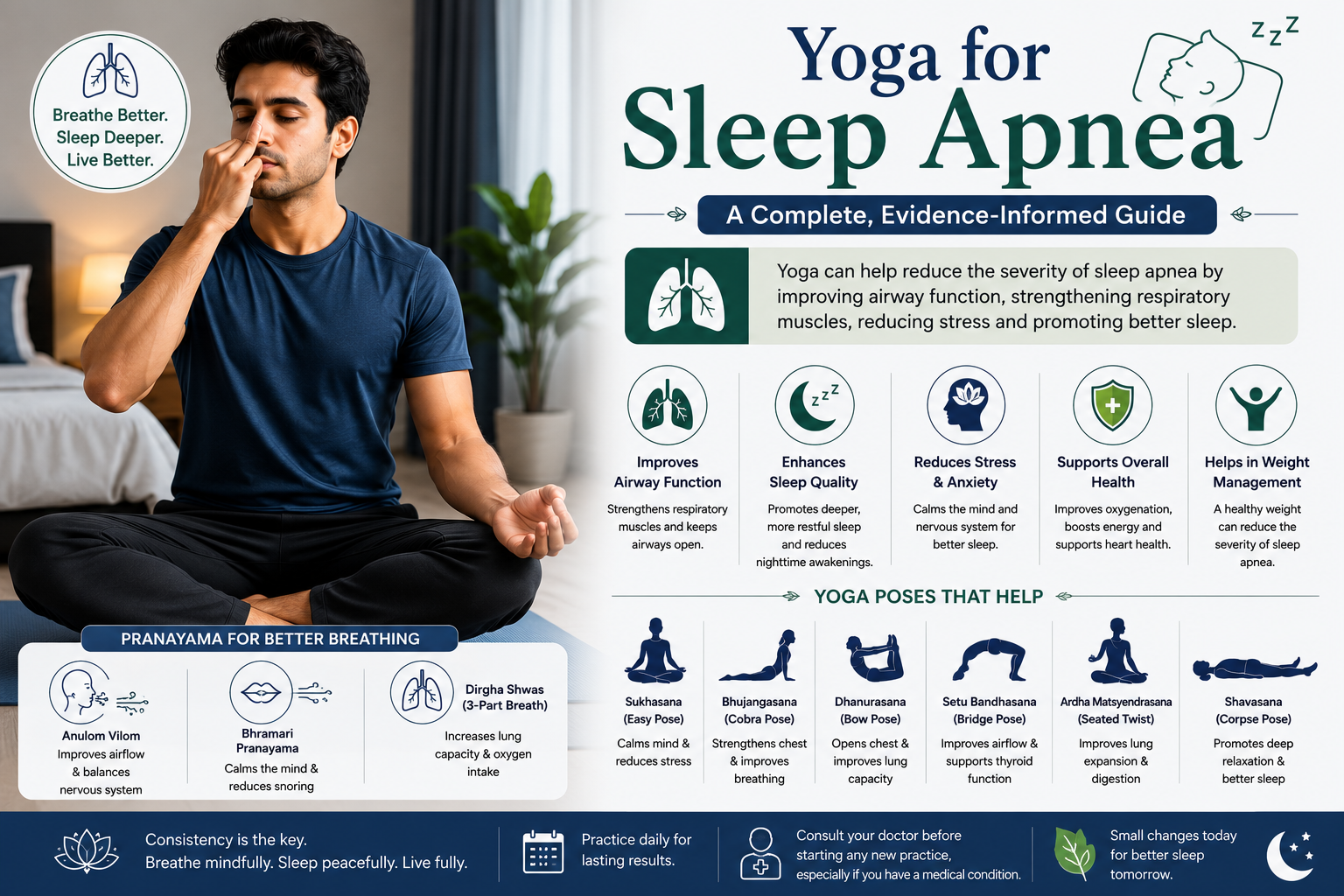
An informational guide to what yoga can and cannot do for sleep apnea — covering how the condition actually works, where breath, throat, and posture-focused practices genuinely help, and where popular claims about yoga “curing” sleep apnea outpace the evidence.
Loud snoring, gasping awake at night, and grinding daytime fatigue send many people searching for natural ways to improve their sleep, and yoga is increasingly marketed as part of that search, sometimes with claims that a particular pose or breathing sequence can eliminate sleep apnea altogether. The more accurate picture is more modest: sleep apnea is caused by repeated interruptions in breathing during sleep, most often from a physically narrowed or collapsing airway, and no yoga practice widens the airway or corrects the underlying anatomy on its own.
What yoga can genuinely offer is support for the muscles that keep the airway open, better breathing habits, stress reduction, and, for some people, weight and lifestyle changes that indirectly ease symptoms, a real and useful role that falls well short of a cure. This guide walks through how sleep apnea actually works, where yoga has an evidence-aligned role in supporting people who live with it, and where popular claims about yoga curing sleep apnea go further than the science supports. Yoga is not a substitute for medical care, and anyone with suspected or diagnosed sleep apnea should treat it as a complement to, not a replacement for, proper diagnosis and treatment such as CPAP therapy.
1. What Is Actually Happening in the Body During Sleep Apnea
Obstructive sleep apnea, the most common form, occurs when the muscles supporting the soft tissue at the back of the throat relax too much during sleep, allowing the airway to narrow or collapse and briefly stop or reduce airflow. This triggers repeated micro-awakenings, drops in blood oxygen, and fragmented sleep, even when the person does not fully remember waking. Central sleep apnea, a less common form, involves the brain briefly failing to signal the breathing muscles at all, and is a different physiological problem that yoga has no direct mechanism to address. Risk factors for obstructive sleep apnea include excess weight around the neck, structural airway anatomy, alcohol use, and sleeping position, among others, and a formal sleep study is generally needed for diagnosis. Understanding this clarifies what yoga can realistically do: support the muscles and habits around the airway, not correct the underlying obstruction directly.
2. Why Claims That Yoga “Cures” Sleep Apnea Go Too Far
It is easy to find wellness content suggesting a particular breathing technique, throat exercise, or inversion can permanently resolve sleep apnea without any other treatment. These claims are not well supported. Airway collapse during sleep is a mechanical and physiological problem, and while certain exercises can meaningfully strengthen the surrounding muscles over time, they do not reliably eliminate moderate to severe obstructive sleep apnea on their own. The more accurate picture is that yoga, particularly targeted throat and tongue exercises alongside general breath and stress-focused practice, can be a helpful complementary approach for some people with mild symptoms, offering modest, real benefits without replacing appropriate diagnosis and treatment when needed.
3. What the Research Actually Shows
Research specifically on yoga and sleep apnea is limited, but a related and better-studied area, oropharyngeal or myofunctional exercises that tone the tongue, soft palate, and throat muscles, has shown modest evidence for reducing snoring and mild to moderate obstructive sleep apnea severity in some studies. Evidence for general yoga practice, including pranayama and asana, tends to focus on improvements in sleep quality, stress, and daytime fatigue rather than directly measured reductions in apnea events, and results are mixed and preliminary. The fair summary: certain targeted throat-strengthening exercises have genuine, if modest, supportive evidence, while broader claims about yoga curing sleep apnea outpace what has actually been studied, and CPAP or other prescribed treatment remains the evidence-based standard for moderate to severe cases.
4. Throat and Tongue Exercises: The Most Targeted Practice
Myofunctional exercises, which involve deliberately strengthening and toning the tongue, soft palate, and throat muscles, are the yoga-adjacent practice most directly relevant to the mechanics of airway collapse. Simple examples include pressing the tongue against the roof of the mouth and holding, sliding the tongue backward along the palate, and practising controlled, elongated vowel sounds that engage the throat muscles. These exercises require consistency over weeks or months to produce measurable change, and they are best viewed as a supportive tool for mild cases or as an adjunct to other treatment rather than a standalone fix for moderate to severe apnea.
A gradual, structured approach to breath and body awareness, of the sort covered in Pranayama for Stress Relief, can complement these exercises by building the kind of steady, controlled breathing that supports overall respiratory tone.
5. Breathing Practices and Their Role in Sleep Apnea Support
Slow, diaphragmatic breathing practised while awake does not treat airway collapse during sleep directly, but it can support a calmer nervous system and better daytime breathing habits, both of which some people find helpful alongside other treatment. Alternate nostril breathing and other gentle pranayama techniques are sometimes recommended for their calming effect rather than any documented direct action on apnea events. Forceful or rapid breathing techniques are generally unnecessary for this purpose and are best avoided close to bedtime, since they can be stimulating rather than settling.
6. Postures Often Discussed for Sleep Apnea Support
Certain postures are frequently mentioned in connection with sleep apnea, generally because they may support better posture, upper body strength, or awareness of habitual neck and shoulder tension that can affect breathing. Gentle backbends and chest-opening postures are sometimes suggested to counteract the forward head posture common with prolonged screen use, while restorative postures that encourage relaxed, open breathing may support general sleep quality. Evidence for any specific posture directly reducing apnea events during sleep is very limited, and the right choice varies by individual; noticing how a pose actually feels and adjusting accordingly is safer than assuming any single pose meaningfully changes airway mechanics.
7. Body Position and Practical Sleep Habits
Positional therapy, the practice of avoiding sleeping on the back in favour of the side, is a well-supported, low-cost strategy for many people with mild positional obstructive sleep apnea, since gravity affects how much the tongue and soft tissue collapse into the airway. This is not strictly a yoga technique, but body awareness cultivated through yoga practice can help some people notice and adjust sleep position habits more easily. Maintaining a healthy body weight, when relevant, and limiting alcohol close to bedtime are also well-established supportive measures, since both affect airway muscle tone and collapsibility.
8. Stress, Sleep Quality, and Sleep Apnea
Chronic stress does not cause obstructive sleep apnea, but poor sleep and disrupted breathing at night can themselves become a source of stress, and there is a documented relationship between stress, sleep architecture, and how restorative sleep feels overall. This is one of the more genuinely evidence-aligned connections between yoga and sleep apnea: not that yoga treats the airway obstruction directly, but that its well-established stress-reduction and relaxation effects may support better sleep quality and daytime coping, particularly for people managing the fatigue that often accompanies the condition.
This relationship between the nervous system, rest, and physical wellbeing is discussed further in Yoga Nidra in Rishikesh, which explores how deep restorative practice supports the kind of rest the body’s regulatory systems depend on.
For people whose sleep apnea symptoms are compounded by chronic exhaustion, Yoga for Burnout Recovery looks specifically at how restorative practice can support recovery from prolonged fatigue and depleted energy.
9. Practices and Situations to Approach With Caution
Not every yoga practice suits someone with untreated or poorly managed sleep apnea. Vigorous, forceful breathing techniques close to bedtime can be overstimulating rather than settling and are generally better suited to earlier in the day. Anyone with moderate to severe sleep apnea should not view yoga, throat exercises, or lifestyle changes as a replacement for CPAP or other prescribed treatment, since untreated moderate to severe apnea carries real cardiovascular and cognitive risks. Excessive daytime sleepiness, witnessed pauses in breathing during sleep, or gasping awake are signals to prioritise a proper sleep evaluation over any self-directed practice.
10. Building a Safe, Realistic Routine
A yoga-related routine that genuinely supports sleep apnea management looks consistent and modest, layered alongside medical treatment rather than positioned as a replacement for it.
- Practise simple tongue and throat toning exercises consistently, since these require weeks of repetition to show any effect.
- Use slow, calm breathing and gentle stretching in the evening rather than vigorous or forceful techniques close to bedtime.
- Support side-sleeping habits if positional apnea has been identified as a factor.
- Pair breath and body awareness practice with any prescribed treatment, such as CPAP, rather than instead of it.
- Treat consistency and adequate rest as more valuable than an intense practice that disrupts an already fragile sleep routine.
11. Traditional Yogic Perspectives on Breath and the Throat
Traditional yogic and pranayama traditions have long paid close attention to the throat as a site of both physical and energetic significance, with practices involving controlled breath, sound, and subtle throat engagement developed over centuries. While these traditions use different language than modern sleep medicine, the underlying emphasis on deliberate, controlled use of the throat and breath aligns reasonably well with the evidence-based, muscle-toning rationale behind modern myofunctional exercises.
Practices explored in Kundalini Yoga in Rishikesh often incorporate this kind of deliberate breath and throat awareness as part of a broader traditional approach to energy and breath control.
12. Red Flags in Yoga-for-Sleep-Apnea Claims
A few common red flags tend to signal claims about yoga and sleep apnea that outpace the evidence.
- Suggestions that a posture or breathing technique can cure moderate or severe sleep apnea without medical treatment.
- Encouragement to stop using a prescribed CPAP machine in favour of a yoga-based programme.
- Throat or tongue exercise programmes promising rapid results within days rather than the weeks to months typically needed.
- Vague claims that a sequence “opens the airway permanently” without any explanation of the underlying mechanism.
13. Learning These Practices Properly
Because separating genuine, evidence-aligned supportive practice from overstated wellness marketing requires understanding both yoga and basic sleep physiology, learning from a properly trained teacher makes a real difference.
A structured Yoga Teacher Training in Rishikesh programme typically covers the physiological basis of breath work and body awareness alongside broader yogic philosophy, offering a grounded understanding of what these techniques can genuinely offer people managing sleep-related concerns.
Safety Notes and When to See a Doctor
Yoga and related breath and throat-focused practices can genuinely offer supportive benefit for some people with mild sleep apnea, but they should never replace appropriate medical diagnosis or treatment.
- Loud, habitual snoring, witnessed breathing pauses, or gasping awake at night should be evaluated with a proper sleep study.
- Moderate to severe sleep apnea generally requires prescribed treatment such as CPAP, and self-directed practice should not replace it.
- Excessive daytime sleepiness, difficulty concentrating, or morning headaches alongside snoring warrant medical evaluation.
- Anyone starting throat or tongue exercises for the first time should learn correct technique from a reliable, qualified source.
Frequently Asked Questions (FAQs)
Q1. Can yoga cure sleep apnea?
No. Sleep apnea involves a physically narrowed or collapsing airway during sleep, and no yoga practice corrects this directly. Yoga can support the surrounding muscles, breathing habits, and stress levels, but it does not replace medical diagnosis or treatment when needed.
Q2. Do throat and tongue exercises actually help with sleep apnea?
There is modest evidence that consistent myofunctional exercises can reduce snoring and mild to moderate sleep apnea severity for some people, though they generally take weeks to months of regular practice to show any effect.
Q3. Can breathing exercises replace CPAP therapy?
No. For moderate to severe obstructive sleep apnea, CPAP or another prescribed treatment remains the evidence-based standard, and breathing exercises should be viewed as a complement rather than a substitute.
Q4. Are certain yoga postures good for sleep apnea?
Some postures may support better posture and general relaxation, but evidence for any specific pose directly reducing apnea events during sleep is very limited, so it is best treated as a general wellness support rather than a targeted fix.
Q5. Can stress make sleep apnea symptoms feel worse, and can yoga help?
Stress does not cause the airway obstruction itself, but poor sleep and stress can compound each other, and yoga’s well-documented stress-reduction and relaxation effects may offer some supportive benefit for overall sleep quality and daytime coping.
Q6. Is sleeping position relevant to sleep apnea, and does yoga help with that?
Yes, side-sleeping is a well-supported strategy for many people with positional obstructive sleep apnea. Yoga does not change sleeping position directly, but body awareness cultivated through practice can help some people adjust habitual sleep position more easily.
Q7. What is the most evidence-based way to think about yoga’s role in sleep apnea?
The most accurate framing is that yoga, particularly targeted throat exercises, breath work, and stress-reduction practice, can offer modest, supportive benefit for mild symptoms, working alongside, not instead of, appropriate medical diagnosis and treatment.
Final Thoughts
Sleep apnea is a genuine physiological problem rooted in airway mechanics, and the most honest, evidence-aligned view of yoga’s role is a supportive one: helping tone the muscles around the airway, encouraging better breathing habits, and easing the stress that often compounds poor sleep, rather than resolving the underlying obstruction itself. This is a more modest picture than some wellness marketing suggests, but it is also a safer and more realistic one.
Approached gradually, alongside proper diagnosis and appropriate medical treatment when needed, yoga and related breath and throat-focused practices can offer many people a genuinely useful, low-risk way to support sleep quality and daytime wellbeing.
