 Skip to content
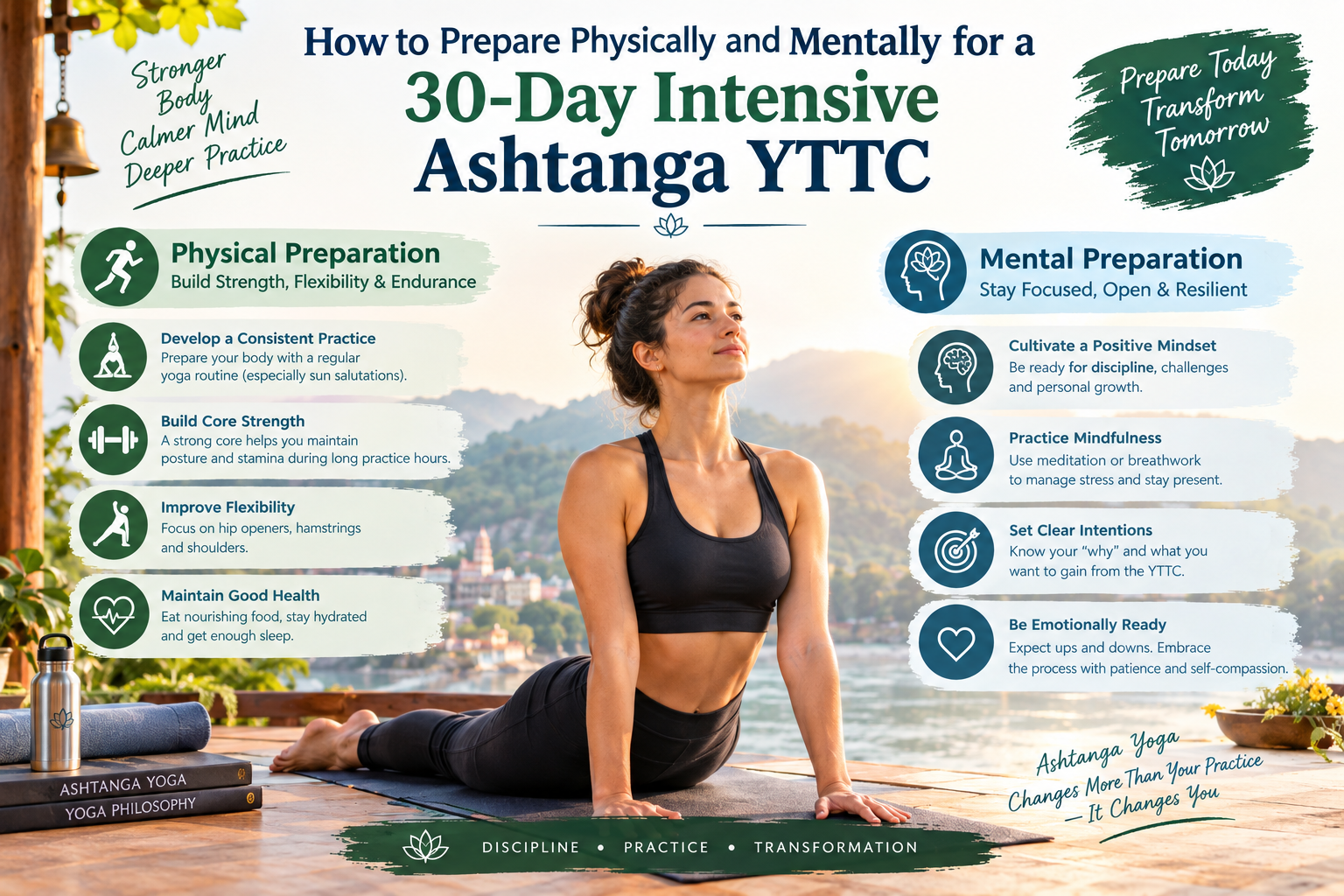
A practical, honest guide for aspiring teachers who want to arrive at an intensive Ashtanga teacher training in Rishikesh fit, rested and realistic about what a month of daily practice demands.
A 30-day Ashtanga teacher training is one of the most demanding ways to learn yoga. The days start early, the practice is physical and repetitive, and the schedule leaves little room to drift. Many students describe the first week as the hardest, mainly because their bodies and minds were not ready for the rhythm. The good news is that most of that difficulty can be softened with sensible preparation.
Ashtanga is a traditional, structured style built on a set sequence of postures linked with breath and movement. It rewards consistency more than talent, and it punishes rushing. This guide explains how to prepare your body, mind and daily habits in the weeks before you fly, what a typical day looks like, and how to look after yourself once you arrive. It is written for informational purposes and is not personal medical advice. Programme details, schedules and requirements differ between schools, so confirm specifics with your chosen school before you commit.
1. Understanding What You Are Signing Up For
Ashtanga yoga follows a fixed series of postures, with the Primary Series as the foundation. Students link movements with breath, hold a steady gaze point and engage certain muscular locks, called bandhas. The method is often taught in a “led” format, where the teacher calls each posture, and in a self-paced “Mysore” style, where students practise the memorised sequence while the teacher gives individual adjustments.
A 30-day intensive usually combines daily practice with philosophy, anatomy, teaching methodology and practice teaching. Weeks are typically long, and you should expect to be busy from early morning to evening. Ask your school for a written daily schedule, the number of contact hours and the rest-day policy so that nothing surprises you on arrival.
2. Be Honest About Your Starting Point
The most useful preparation begins with a candid self-assessment. How often do you currently practise? Can you sit comfortably on the floor for 20 minutes? Do you have any old injuries in the wrists, shoulders, hips, knees or lower back? Are you managing a health condition?
You do not need to be able to perform advanced postures. Most schools welcome students at different levels, provided they are honest and willing to work within their limits. Tell your teachers about injuries before the training starts, and consider a check-up with your doctor or a physiotherapist, especially if you have joint problems, heart or blood pressure concerns, or are pregnant or recently unwell.
3. Build a Regular Practice Six to Eight Weeks Ahead
Turning up cold is the most common mistake. Aim for a gradual build-up over at least six to eight weeks. Begin with three or four sessions a week of 45 to 60 minutes, and add a fifth or sixth as your body adapts. Include some Sun Salutations (Surya Namaskar), since they are the backbone of the Ashtanga method.
Learn the Primary Series with a qualified local teacher if you can, or join beginner-friendly Ashtanga or Vinyasa classes. The goal is familiarity, not perfection. Knowing the flow of the sequence means you can spend your energy in India on learning to teach, instead of just trying to remember what comes next. Avoid sudden jumps in intensity in the last two weeks, since overtraining before departure is a common cause of early injury.
4. Prepare the Joints and Muscles Ashtanga Loads Most
Ashtanga repeatedly loads the wrists, shoulders, hamstrings, hips, knees and lower back. Prepare these areas deliberately:
- Wrists and forearms: gentle wrist circles, palm presses and short holds in table-top and plank
- Shoulders and upper back: dolphin pose, thread-the-needle and scapular strengthening
- Hamstrings and hips: low lunges, supported forward folds and gentle hip openers, held without forcing
- Core and legs: planks, bridge pose and simple squats to support jumping and transitions
- Knees: avoid forcing lotus or half-lotus; hip mobility should lead, not the knee
Work with sensation, not pain. Sharp, pinching or joint-based pain is a signal to stop, not to push through. Flexibility improves gradually, and Ashtanga’s reputation for “forcing” the body is best answered by patience and good teaching.
5. Add Cardiovascular Fitness and Strength
A month of vigorous daily practice is a cardiovascular workload as well as a flexibility one. Walking, cycling, swimming or light jogging three times a week builds the stamina that keeps you comfortable through a full session and long days of classes.
Basic strength training helps too. Bodyweight squats, lunges, push-ups and core work protect your joints during jump-backs and transitions. You do not need to become an athlete. A modest, consistent routine of 20 to 30 minutes a few times a week is enough to make a noticeable difference.
6. Train the Breath and Focus
Ashtanga is a breathing practice as much as a posture practice. Ujjayi breath, a soft, audible breath through the nose, sets the pace of the whole sequence. Practise it slowly at first, sitting or lying down, before combining it with movement.
Add a short daily sitting practice of five to fifteen minutes. Simply observe the breath and gently return your attention when it wanders. This trains the concentration you will need in long sessions and in lectures. Avoid forceful breathing or long breath retentions unless a qualified teacher has taught them to you in person, as they are not suitable for everyone.
7. Prepare Your Mind for Discipline and Discomfort
A daily practice at the same time each morning, six days a week, will test your patience. Some days your body will feel stiff, your mind restless, and the sequence repetitive. That is part of the method. Ashtanga teaches steadiness by asking you to show up regardless of mood.
Expect emotional ups and downs. Physical intensity, unfamiliar surroundings and time away from loved ones can bring up tiredness, frustration or homesickness. Reading about yoga for stress management before you go can help you build simple habits for handling pressure. If you have a history of anxiety, depression or disordered eating, discuss your plans with a health professional and consider telling your teachers, since an intensive month can be a challenging setting.
8. Sleep, Diet and Daily Rhythm Before You Travel
Start shifting your schedule about two weeks before departure. Go to bed earlier, wake earlier and get used to a morning practice. Your body will thank you when the alarm goes off before dawn in Rishikesh.
Good sleep supports recovery, mood and learning. If you struggle with rest, this guide on how yoga supports better sleep and relieves insomnia offers gentle ideas to try, though persistent insomnia deserves a conversation with a doctor. Eat simple, balanced meals in the weeks before travel, reduce alcohol and caffeine, and practise eating lighter, vegetarian-style food if that is what your school will serve. Drink plenty of water throughout.
9. Prevent Burnout Before It Starts
Enthusiastic students often push hardest in the first week and pay for it in the third. Fatigue, irritability, niggling injuries and a sense of dread about the next class are signs that the load is too high. Rest days, adequate food and honest communication with your teachers matter more than heroic effort.
If you arrive already tired from work or life, take extra care. Those who feel run down beforehand may find it useful to read about yoga for burnout recovery, and to consider building a few relaxed weeks into your schedule before the course. Persistent exhaustion, low mood or loss of interest should be discussed with a doctor, not treated as something to push through.
10. Manage Nerves and Performance Anxiety
Practice teaching is a core part of most trainings, and it makes many students nervous. Worrying about being watched, forgetting a sequence or not being “good enough” is very common, even among experienced practitioners.
Prepare by practising cueing out loud at home, teaching a friend or family member and recording yourself. Slow breathing before you teach can settle the nervous system. To explore gentle, practical techniques, see this overview of yoga for anxiety relief, and remember that if anxiety feels overwhelming or is interfering with your daily life, professional support is the right next step.
11. Practical Preparation: Health, Travel and Packing
Check your passport validity and current visa rules, and book flights with a buffer so you can recover from jet lag before the course starts. Consult a doctor or travel health clinic about vaccinations and food and water precautions. Arrange comprehensive travel insurance that covers medical care and evacuation.
Pack light, breathable clothing, a good non-slip mat, a wide-brimmed hat, a light jacket for cool mornings, a reusable water bottle and any medication in its original packaging. Bring a small first aid kit, a notebook for lectures and comfortable shoes for walking. Confirm with your school what they supply, such as mats, props, books and meals, so you do not overpack.
12. Your First Week and Beyond
Arrive a day or two early if you can, so that you are rested and oriented. In the first week, focus on learning the routine, meeting your teachers and classmates and listening to your body. Modify postures freely, use props and take child’s pose whenever you need it.
Stay hydrated, eat regularly and keep your sleep consistent. Avoid comparing yourself with other students, since bodies and backgrounds differ. In the final week, allow time for reflection and integration, and plan how you will keep a manageable practice going after you return home. Long-term progress comes from regular, moderate practice, not from the intensity of a single month.
Frequently Asked Questions (FAQs)
Q1. Do I need to know the Ashtanga Primary Series before joining?
Not necessarily. Many schools accept beginners, but familiarity with the basic sequence and Sun Salutations makes the first week easier. Check your school’s entry requirements.
Q2. How long should I prepare before a 30-day intensive?
Six to eight weeks of regular practice is a sensible target. Build gradually, and avoid sudden increases in intensity in the last two weeks before departure.
Q3. Is Ashtanga too demanding for beginners?
It is physically demanding, but many beginners manage well with honest self-assessment, modifications and supportive teachers. Tell your teachers about injuries and never push into sharp pain.
Q4. What if I get injured during the training?
Stop, tell your teacher and rest the affected area. Seek local medical advice if pain persists or worsens, and use modifications or props to continue safely where possible.
Q5. How can I manage homesickness or stress during the course?
Keep a simple routine, stay in touch with people at home in moderation, talk to your teachers and take rest days seriously. If distress is persistent, seek professional support.
Q6. What should I pack for a yoga teacher training in India?
Pack breathable clothing, a non-slip mat, layers for cool mornings, a water bottle, essential medication and a notebook. Ask your school what is provided before you pack.
Final Thoughts
A 30-day intensive Ashtanga training is rewarding precisely because it is demanding. The students who thrive are rarely the most flexible ones. They are the ones who prepare gradually, listen to their bodies, ask for help early and stay patient when progress feels slow.
Start early, practise consistently, protect your health and go with realistic expectations. With sensible preparation, the month becomes less about surviving the schedule and more about learning, growing and building a practice you can carry home.
